DIY Dog Dental Care: Safe Homemade Toothpaste Recipes
Discover safe, effective DIY dog dental care solutions. Learn how to make homemade dog toothpaste and natural dental chews to boost oral health.
Why Dog Dental Health Matters
When we think about our dog's overall health, we often focus on diet, exercise, and joint care. However, oral hygiene is one of the most overlooked aspects of canine wellness. According to the American Veterinary Medical Association (AVMA), periodontal disease is the most common clinical condition occurring in adult dogs and cats, and it is entirely preventable. By the age of three, most dogs have some evidence of periodontal disease, which can lead to tooth loss, chronic pain, and even systemic infections that affect the heart, liver, and kidneys.
While professional veterinary cleanings are essential, daily home care is the frontline defense against plaque and tartar buildup. Many pet owners turn to DIY and homemade solutions to avoid the high costs of commercial pet dental products or to ensure complete transparency regarding the ingredients their dogs ingest. Crafting your own dog toothpaste and dental chews is not only cost-effective but also allows you to tailor the flavors to your dog's specific preferences, making the dreaded tooth-brushing routine a much more positive experience.
The Hidden Dangers in Commercial and Human Toothpastes
Before diving into homemade recipes, it is critical to understand why you must never use human toothpaste on your dog. Human dental products are designed to be spit out, whereas dogs naturally swallow their toothpaste. Human toothpastes often contain high levels of fluoride, which can cause severe gastrointestinal upset and toxicity when ingested in large amounts.
Even more dangerous is the presence of xylitol, an artificial sweetener commonly found in human toothpastes, mouthwashes, and sugar-free gums. The U.S. Food and Drug Administration (FDA) explicitly warns that xylitol is extremely toxic to dogs. Even small amounts can trigger a rapid, life-threatening drop in blood sugar (hypoglycemia) and acute liver failure. The Pet Poison Helpline reports hundreds of xylitol poisoning cases annually, emphasizing the need for strict vigilance. By making your own toothpaste, you eliminate the risk of accidental xylitol or fluoride poisoning entirely.
Safe, Natural Ingredients for DIY Dog Toothpaste
When formulating homemade dog toothpaste, the goal is to combine mild abrasives, antibacterial agents, and high-value flavor enhancers. Here are the safest, most effective ingredients to keep in your pantry:
- Virgin Coconut Oil: Rich in lauric acid, coconut oil boasts natural antibacterial, antiviral, and antifungal properties. It helps reduce the bacteria that cause plaque and bad breath while providing a smooth, paste-like base.
- Low-Sodium Bone Broth: A fantastic flavor enhancer that encourages dogs to accept brushing. Ensure it is 100% free of onions, garlic, and excess salt, as these are toxic or harmful to dogs.
- Fresh Mint or Parsley: Finely chopped fresh herbs act as natural breath fresheners and contain mild antimicrobial properties. Avoid pennyroyal mint, which is toxic to pets; stick to common peppermint or spearmint in small amounts.
- Dog-Safe Peanut Butter: A high-value treat that masks the taste of other ingredients. Always verify the label to guarantee it does not contain xylitol.
- Baking Soda (Use with Caution): While some older DIY recipes call for baking soda, many veterinarians advise against it. Because dogs swallow the paste, the high alkalinity and sodium content of baking soda can disrupt their stomach acid and cause electrolyte imbalances. It is safer to rely on the mild enzymatic action of coconut oil.
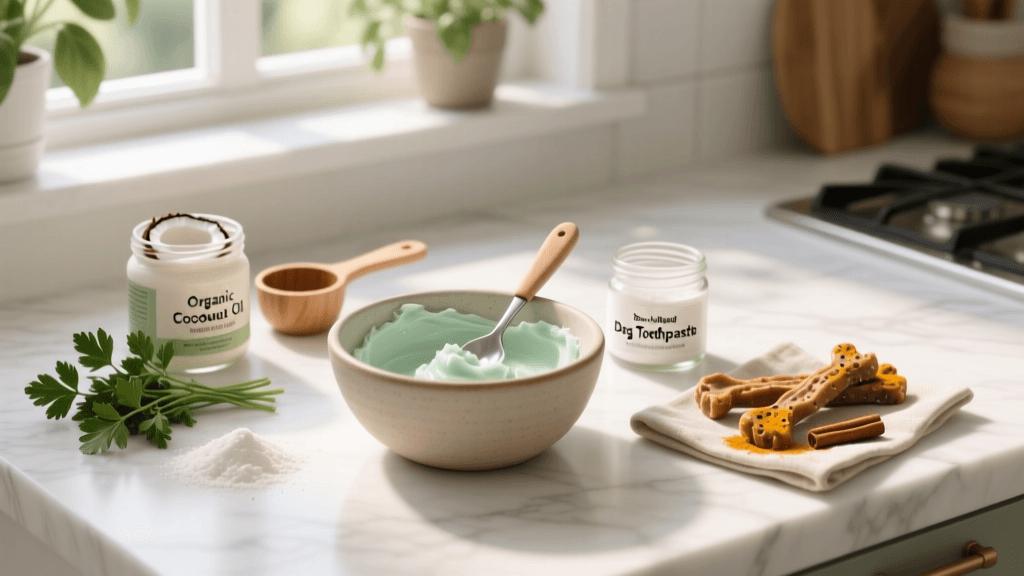
Recipe 1: Coconut Oil and Bone Broth Toothpaste
This is a simple, highly palatable recipe that leverages the antibacterial properties of coconut oil and the irresistible taste of bone broth.
Ingredients
- 2 tablespoons organic, unrefined virgin coconut oil
- 1 tablespoon low-sodium, onion-free beef or chicken bone broth
- 1/2 teaspoon finely chopped fresh parsley
Instructions
- If your coconut oil is solid, gently warm it in a microwave-safe bowl for 5-10 seconds until it softens but does not completely melt into a hot liquid.
- Mix the softened coconut oil, bone broth, and chopped parsley together until a thick, spreadable paste forms.
- Transfer the mixture to a small, airtight glass jar.
- Store in the refrigerator to keep it firm. The cold temperature will solidify the coconut oil, making it easy to scoop onto a dog toothbrush or your finger.
Cost Breakdown
This batch costs approximately $0.45 to make and will last a medium-sized dog about two weeks, compared to $8-$12 for a commercial tube of enzymatic dog toothpaste.
Recipe 2: Soothing Peanut Butter and Mint Paste
For dogs who are highly resistant to brushing, this high-value recipe uses the strong scent and taste of peanut butter to distract them while the mint works on their breath.
Ingredients
- 1 tablespoon xylitol-free, unsalted creamy peanut butter
- 1 tablespoon virgin coconut oil
- 1/4 teaspoon finely minced fresh mint leaves
Instructions
- Combine the peanut butter and coconut oil in a small bowl.
- Stir vigorously until the two ingredients are fully emulsified.
- Fold in the minced mint leaves.
- Store in a sealed container in the refrigerator. Allow it to sit at room temperature for 5 minutes before use to soften the paste for easy application.
DIY Dehydrated Sweet Potato Dental Chews
Toothpaste alone cannot reach all the crevices of your dog's molars. Mechanical scraping through chewing is vital. While rawhide is notoriously difficult to digest and poses choking hazards, dehydrated sweet potato slices offer a safe, digestible, and fibrous alternative that helps scrape plaque off the teeth.
Preparation Guide
- Preheat your oven to 250°F (120°C).
- Wash and peel two large sweet potatoes.
- Slice them lengthwise into 1/4-inch thick strips. Consistency is key; if they are too thin, they will burn; if too thick, they will remain mushy inside.
- Place the strips on a wire rack set over a baking sheet to allow air circulation.
- Bake for 2.5 to 3 hours. Check them at the 2-hour mark. You want them to be dry, leathery, and slightly bendable, but not brittle or wet in the center.
- Let them cool completely before storing them in an airtight container in the fridge for up to three weeks.
Comparison: DIY vs. Commercial Dental Solutions
Understanding the trade-offs between homemade and store-bought dental care helps you make the best decision for your pet's lifestyle and health needs.
| Feature | DIY Homemade Solutions | Commercial Dental Products |
|---|---|---|
| Cost | Very Low (Pantry staples) | High ($10-$20 per tube) |
| Ingredient Transparency | 100% Known and controlled | Varies (Preservatives common) |
| Palatability | High (Broth/PB based) | Medium (Artificial flavors) |
| Veterinary Approval | Mixed (Lacks VOHC seal) | High (Often VOHC approved) |
| Convenience | Low (Requires prep and refrigeration) | High (Ready to use, shelf-stable) |
Note: The Veterinary Oral Health Council (VOHC) seal is the gold standard for commercial dental products. While DIY solutions are excellent for daily maintenance and plaque disruption, they do not undergo clinical trials to earn this seal.
How to Brush Your Dog's Teeth: A Step-by-Step Guide
Having the right toothpaste is only half the battle; proper technique is equally important.
- Acclimate Your Dog: Start by letting your dog lick the homemade paste off your finger. Do this for a few days without attempting to brush.
- Introduce the Tool: Use a canine-specific toothbrush with ultra-soft bristles or a silicone finger brush. Let them sniff it and taste the paste on the bristles.
- Lift the Lip: Gently lift your dog's upper lip to expose the teeth and gums.
- Brush in Circles: Focus on the outer surfaces of the teeth, particularly the upper back molars and the canine teeth, where tartar accumulates fastest. Use gentle, circular motions.
- Keep it Brief: Aim for 30 to 60 seconds. Praise your dog continuously and reward them with a small piece of dehydrated sweet potato afterward.
When to Skip DIY and Visit the Vet
While DIY dental care is a fantastic preventive measure, it cannot reverse existing dental disease. If your dog exhibits any of the following symptoms, halt home brushing and schedule a veterinary exam immediately:
- Persistent bad breath that does not improve with brushing
- Red, swollen, or bleeding gums
- Reluctance to eat, dropping food, or chewing on only one side of the mouth
- Pawing at the mouth or face
- Visible brown or yellow tartar buildup along the gumline
- Loose or broken teeth
Once your veterinarian has performed a professional scaling and polishing under anesthesia to reset your dog's oral health, you can safely resume your homemade coconut oil and bone broth toothpaste routine to keep their smile bright and their body healthy for years to come.
tom-renshaw
All our authors care for dogs every day — read more of their work on the authors page.