Deep Pressure Therapy Training For Service Dogs: 2026 Guide
Learn step-by-step shaping methods to train deep pressure therapy for psychiatric service dogs, featuring 2026 gear recommendations and timelines.
Understanding Deep Pressure Therapy in 2026
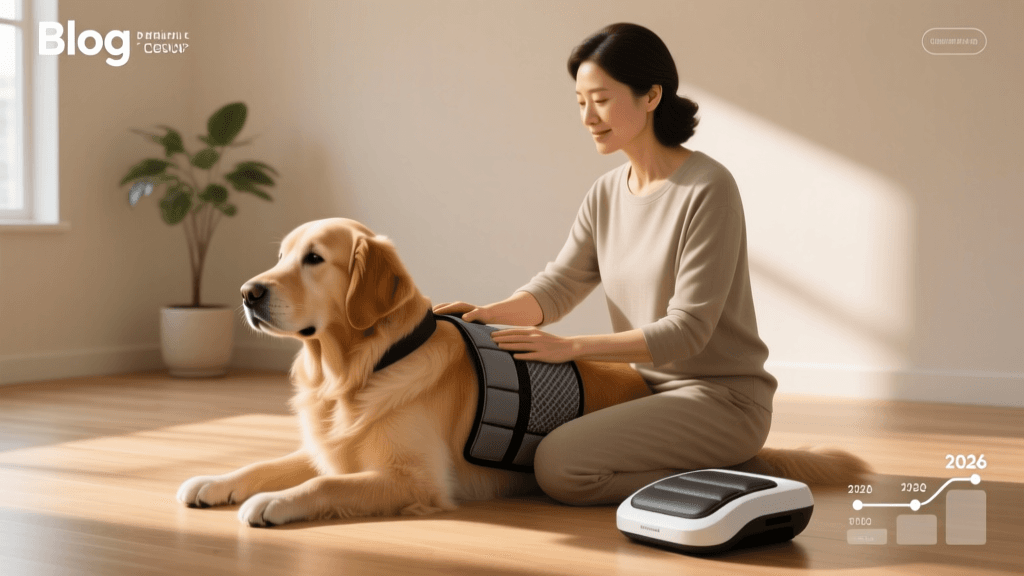
Deep Pressure Therapy (DPT) is a critical task for psychiatric service dogs, providing life-changing proprioceptive input to handlers experiencing anxiety, panic attacks, PTSD flashbacks, or sensory overload. As of 2026, the psychiatric service dog community and accredited organizations continue to refine the shaping protocols used to teach this task, prioritizing the dog's physical comfort and the handler's safety. According to Assistance Dogs International (ADI), a task-trained service dog must perform specific mitigating behaviors that directly alleviate the handler's disability. DPT achieves this by applying firm, evenly distributed weight across the handler's lap, chest, or shoulders, which stimulates the parasympathetic nervous system and helps regulate heart rate and breathing.
Training a reliable DPT response requires patience, precise marker timing, and a systematic shaping approach. Unlike simple obedience commands, DPT requires the dog to remain in a vulnerable, stationary position for extended periods while ignoring environmental distractions. This comprehensive 2026 guide will walk you through the exact shaping steps, gear requirements, and troubleshooting techniques needed to train a flawless Deep Pressure Therapy task.
The Biomechanics and Psychology of DPT
Before beginning training, it is essential to understand why DPT works. The heavy, sustained pressure mimics the effects of weighted blankets used in human occupational therapy. This pressure triggers the release of serotonin and dopamine while reducing cortisol levels. For the dog, the task must be framed as a relaxing, rewarding job rather than a restrictive confinement. If a dog feels trapped or anxious while performing DPT, they will inevitably break the position. Therefore, modern 2026 training methodologies heavily emphasize choice-based shaping and positive reinforcement, ensuring the dog actively offers the behavior and finds the physical contact inherently soothing.
Essential 2026 Gear for DPT Training
Having the right equipment is crucial for maintaining clear communication and ensuring physical safety during training sessions. Below is a comparison chart of the most highly recommended gear for service dog task training currently available in 2026.
| Gear Item | Brand / Model | Primary Use in DPT | 2026 Est. Cost |
|---|---|---|---|
| Support Harness | Ruffwear Web Master | Safe lifting, guiding, and securing the dog during lap transitions | $89.95 |
| Treat Pouch | Kurgo Go-Treats Pouch | Quick, silent reward delivery to maintain duration without breaking focus | $24.99 |
| Targeting Mat | K&H Pet Products Cool Cot | Scent and place targeting for ground-level DPT variations | $45.00 |
| Clicker | Karen Pryor i-Click | Quiet, precise marking of behavior in public access environments | $9.99 |
While the U.S. Department of Justice ADA guidelines do not mandate specific vests or harnesses for public access, utilizing a well-fitted support harness like the Ruffwear Web Master during the initial training phases protects the dog's joints when maneuvering onto the handler's lap or chest.
Phase 1: Foundation and Targeting (Weeks 1-3)
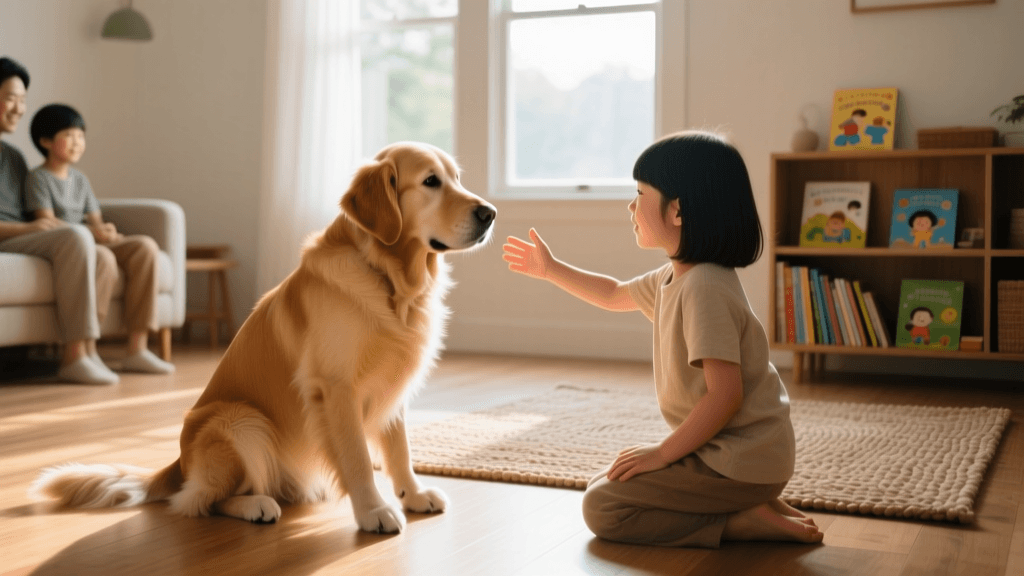
The first phase of shaping DPT focuses on teaching the dog to target specific body parts with their chin and paws. Do not rush this phase; a solid foundation prevents the dog from sliding off or adjusting uncomfortably later on.
Step 1: The Chin Rest
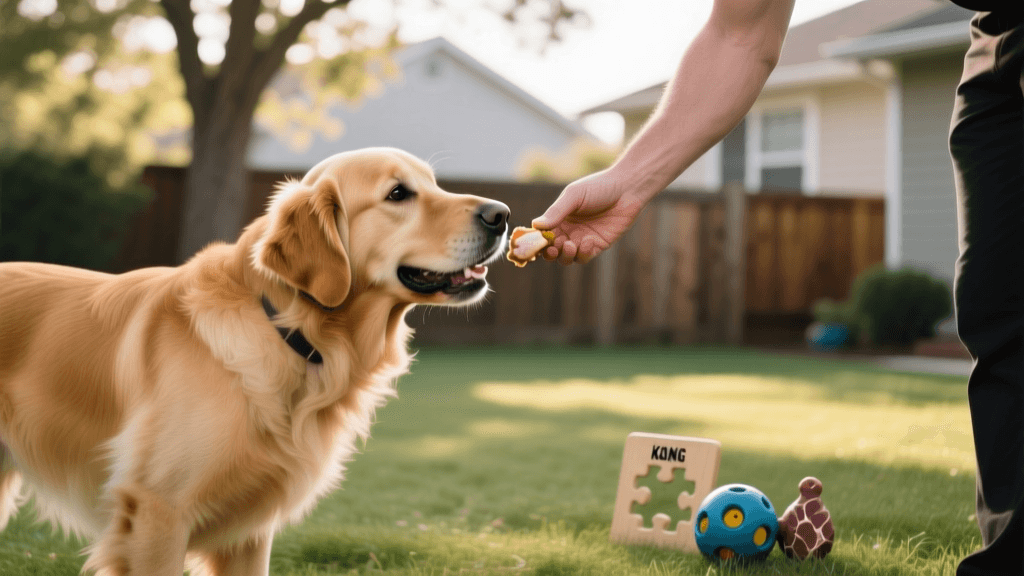
Sit in a sturdy chair with your feet flat on the floor. Hold a high-value treat (such as boiled chicken or freeze-dried liver) near your knee. The moment the dog's nose touches your knee, click your Karen Pryor i-Click and deliver the treat. Gradually raise your criteria: require the dog to rest their chin on your knee for one second, then three seconds, then five seconds before marking and rewarding. This builds the muscle memory for the head placement.
Step 2: Paws Up
Once the chin rest is fluent, introduce the front paws. Pat your lap and use a treat to lure the dog's front paws onto your thighs. Mark and reward heavily for any paw contact. If your dog is large, you may only want one or two paws on your lap to avoid joint strain. For medium-sized dogs, both front paws draped over the thighs is ideal. Practice this until the dog confidently offers the 'paws up' behavior without a lure.
Phase 2: Shaping the Full Lap-Cross (Weeks 4-7)
Now that the dog is comfortable placing their head and front paws on your lap, it is time to shape the full body cross. This is often the most challenging phase, as it requires the dog to balance and coordinate their hindquarters.
Step 3: The Swing and Settle
With the dog's front paws on your lap, hold a treat near their nose and slowly move your hand in an arc toward your opposite hip. This lures the dog to swing their back end around and drape their torso across your legs. The moment their back legs leave the floor or swing into position, mark and reward. You may need to reward in rapid succession (every 1-2 seconds) to keep them in this unfamiliar position.
Step 4: Fading the Lure
As the dog begins to understand the physical mechanics of the lap-cross, begin to fade the food lure. Use an empty hand to guide the motion, then reward from your Kurgo treat pouch only after the dog completes the movement. According to experts featured in American Kennel Club training resources, fading lures early prevents the dog from becoming dependent on seeing food before performing a critical service task.
Phase 3: Duration, Distraction, and Deployment (Weeks 8-12)
A psychiatric service dog must maintain DPT for anywhere from five to twenty minutes during a handler's panic attack or sensory episode. Building duration requires a variable reinforcement schedule.
Step 5: Building Duration
Once the dog is fully draped across your lap, delay the click and treat. Wait three seconds, mark, and feed in position. Next time, wait five seconds, then two, then eight. Feeding in position is critical; if you feed the dog off your lap, you are inadvertently rewarding them for breaking the task. Use a continuous, calm voice to praise them while they remain settled.
Step 6: Adding the Cue
Only introduce the verbal cue (e.g., 'Pressure', 'Lap', or 'DPT') and the hand signal once the dog is reliably offering the full behavior. Say the cue right before the dog begins the movement. After several weeks of pairing the cue with the action, test the cue when the dog is mildly distracted to ensure they have associated the word with the specific physical task.
Public Access and Generalization
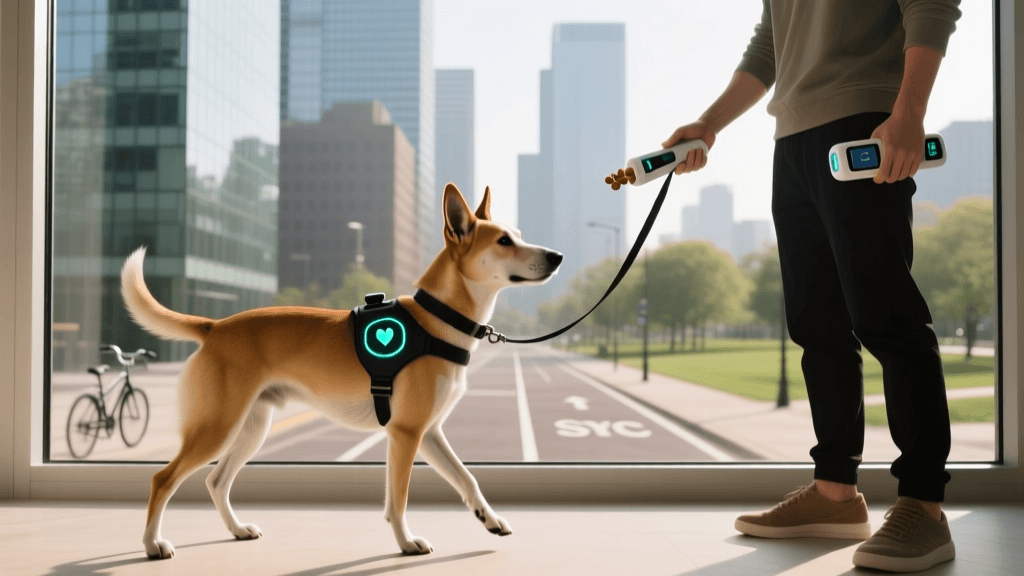
A dog that performs flawless DPT in your living room may struggle in a noisy airport terminal or a cramped restaurant booth. Generalization is the process of teaching the dog that the cue means the same thing in every environment. Start by practicing in different rooms of your house, then move to your backyard, a quiet park, and eventually pet-friendly retail stores. In 2026, many service dog teams utilize virtual reality or recorded audio tracks of crowded environments to safely desensitize their dogs to auditory triggers before attempting DPT in high-stress public locations.
Pro Tip for 2026 Handlers: When practicing DPT in public, always carry a small, portable mat. If you are in a location where lap-DPT is physically impossible (such as a high bar stool or a cramped airplane seat), train a secondary 'Ground DPT' behavior where the dog lays heavily across the handler's feet, providing grounding pressure to the ankles and lower legs.
Troubleshooting Common Training Hurdles
- The Dog Keeps Sliding Off: This is usually a balance issue or a sign that the chair is too slippery. Wear denim or textured clothing during training to give the dog's paws some grip. Ensure you are sitting with your legs slightly apart to create a stable 'cradle' for the dog's torso.
- The Dog Gets Up Too Soon: You may be increasing the duration criteria too quickly. Return to a shorter duration where the dog can succeed, and build up in smaller increments (e.g., adding only one second at a time).
- The Dog Falls Asleep Immediately: While relaxation is the goal, the dog must remain responsive to a release cue. If they fall into a deep sleep, gently wake them with a soft verbal marker before giving the release word ('Free' or 'Break') so they learn to transition out of the task consciously.
- Refusal to Perform in Public: If the dog refuses DPT in a new environment, the distraction level is likely too high. Increase your distance from the distraction, use higher-value rewards, and lower your duration expectations until the dog's confidence returns.
Conclusion
Training Deep Pressure Therapy is a profound journey that deepens the bond between handler and service dog. By utilizing modern, force-free shaping techniques, investing in high-quality 2026 gear, and respecting the dog's physical limitations, you can develop a reliable, life-saving task. Remember that consistency, patience, and a positive training environment are the true keys to success in psychiatric service dog tasking.
jonas-cole
All our authors care for dogs every day — read more of their work on the authors page.