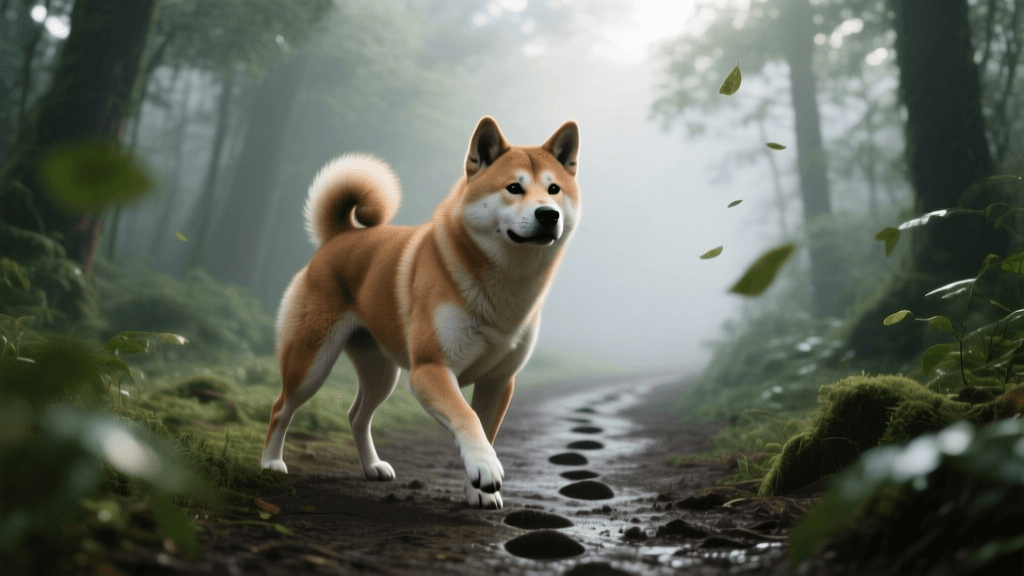
Decoding Shikoku Ken Body Language & Instincts: 2026
Discover the unique body language, primitive instincts, and behavioral traits of the rare Shikoku Ken in 2026. Expert tips for mountain dog owners.
The Mystique of the Shikoku Ken: A Primitive Breed in a Modern World
The Shikoku Ken, originating from the rugged, mountainous Kochi Prefecture of Japan, is a breed steeped in history and wild instinct. Designated as a Living National Monument in Japan, this medium-sized spitz breed was historically utilized for tracking wild boar and deer through dense, unforgiving terrain. As we navigate the canine behavioral landscape in 2026, the Shikoku Ken remains one of the most fascinating, yet profoundly misunderstood, exotic breeds entering Western households. Unlike highly domesticated companion breeds, the Shikoku retains a deeply ingrained primitive mindset. Understanding their unique body language, vocalizations, and instinctual drives is not merely an option for owners; it is an absolute necessity for a harmonious coexistence.
Integrating a mountain-bred hunting dog into modern suburban or urban environments requires a paradigm shift in how we perceive canine communication. This comprehensive guide decodes the intricate behavioral signals of the Shikoku Ken, providing actionable, up-to-date strategies for managing their intense prey drive and independent nature in 2026.
The Nihon Ken Temperament: Kan-i, Ryosei, and Soboku
To truly understand the Shikoku Ken, one must first understand the overarching standard of the Nihon Ken (Japanese Dog). According to the Fédération Cynologique Internationale (FCI), the Japanese spitz breeds are defined by three essential psychological pillars:
- Kan-i (Sensibility and Alertness): The Shikoku possesses an extraordinary awareness of its environment. They are not easily startled, but they miss nothing. This manifests as a constant, quiet scanning of their territory, making them exceptional watchdogs who rarely bark without profound cause.
- Ryosei (Loyalty and Obedience): While often mislabeled as "stubborn" by trainers accustomed to biddable retrievers or herders, the Shikoku’s loyalty is fierce. Their obedience is not rooted in a desire to please for the sake of pleasing, but rather a deep, cooperative bond with their chosen handler. They will work with you, but rarely for you.
- Soboku (Rustic Charm and Naturalness): This refers to their unrefined, wild aesthetic and unpretentious demeanor. They do not exhibit the hyper-clownish behavior of some modern breeds; they carry themselves with a stoic, dignified grace that reflects their wild ancestry.
Decoding the Shikoku’s Unique Body Language
Primitive breeds communicate in subtle, nuanced ways. Because they are hardwired to conserve energy and avoid unnecessary conflict, their body language is often much quieter than that of highly vocalized Western breeds. Understanding these micro-expressions is critical, as the American Kennel Club notes that misinterpreting primitive breed body language can lead to behavioral friction and unsafe situations.
The Tail and Ear Axis
The Shikoku Ken’s tail is a primary indicator of emotional arousal, but it does not follow the same rules as a Golden Retriever’s tail. A high, tightly curled tail resting over the back is the default, relaxed posture for a confident Shikoku. However, behavioral shifts are indicated by the base of the tail and the ears.
- The Sickle Shift: If the tail drops from a tight curl to a loose sickle shape (half-mast), the dog is either relaxing into sleep or, conversely, assessing a potential threat. Context is key.
- Ear Pivoting: Shikokus have highly mobile, pricked ears. An ear flicking backward or pivoting independently like a radar dish indicates they are tracking a specific sound or scent. If both ears pin flat against the skull, this is a severe stress signal or a precursor to defensive aggression.
- The "Whale Eye": If a Shikoku turns its head away from a stressor but keeps its eyes fixed on it, exposing the whites of the eyes (whale eye), they are exhibiting high anxiety and asking for space. Pushing a Shikoku in this state will trigger a bite.
The "Shikoku Stare" and Prey Drive Activation
One of the most intense behavioral markers of the breed is the "Shikoku Stare." When the dog locks onto a scent trail or visual prey (such as a squirrel, deer, or neighborhood cat), their entire body goes rigid. The muzzle closes, the ears pitch sharply forward, and the eyes dilate. This is not a moment for casual recall. In this state, the dog's auditory processing is temporarily overridden by the predatory motor sequence. Recognizing the onset of the stare allows owners to intervene with a physical leash block or a high-value distraction before the dog breaches the threshold of no return.
Vocalizations: Beyond the Bark
The Shikoku Ken is famously quiet in the home, leading many novice owners to believe they are mute. However, they possess a complex vocal repertoire reserved for specific triggers:
- The Alert Bark: Sharp, singular, and deafeningly loud. Used only when a genuine anomaly enters their territory.
- The Yodel/Roo: A melodic, rising and falling vocalization used to express frustration, excitement, or a demand for engagement. Often heard when the dog is separated from its handler by a glass door or gate.
- The Shikoku Scream: A high-pitched, piercing shriek usually reserved for the veterinary clinic or nail trims. It is a dramatic expression of protest rather than genuine agony, stemming from their low tolerance for forced physical restraint.
- Teeth Chattering: A unique behavior where the dog rapidly clacks its teeth. This is often a sign of intense olfactory stimulation (smelling another dog's urine) or extreme excitement, rather than cold or fear.
Managing Roaming and Prey Drive in 2026
The Shikoku Ken’s historical purpose was to range far ahead of the hunter, track boar, and hold it at bay. This translates to an extreme roaming instinct and a negligible natural recall. In 2026, managing this instinct requires a combination of robust physical infrastructure and advanced technology.
Infrastructure: The 6-Foot Rule
Standard residential fencing is entirely insufficient for a Shikoku. They are athletic climbers and diggers. A secure perimeter must consist of a minimum 6-foot privacy fence (to eliminate visual triggers that spark prey drive) with a 2-foot buried wire apron or concrete footer to prevent digging. For particularly agile individuals, inward-angled coyote rollers at the top of the fence are highly recommended to prevent them from scaling the barrier.
Technology: Next-Generation GPS Tracking
Off-leash freedom in unfenced areas is strongly discouraged for this breed. However, for owners utilizing long-lines in open spaces, the 2026 landscape of LTE-M and NB-IoT GPS collars provides a vital safety net. Modern GPS trackers now offer sub-second refresh rates and terrain-mapping features that alert your smartphone if the dog breaches a virtual geofence or accelerates beyond a walking pace (indicating prey pursuit). While technology is a backup, it is not a substitute for a secure physical leash.
Comparative Profile: Shikoku vs. Other Japanese Breeds
To contextualize the Shikoku’s behavior, it is helpful to compare them to their more common Nihon Ken cousins. The following table highlights the distinct behavioral differences prospective owners must consider.
| Behavioral Trait | Shikoku Ken | Shiba Inu | Kishu Ken |
|---|---|---|---|
| Prey Drive Intensity | Extreme (Boar/Deer) | High (Small Game) | Extreme (Boar) |
| Stranger Tolerance | Aloof, Observant | Suspicious, Vocal | Highly Reserved, Guarding |
| Handler Focus | Moderate (Cooperative) | Low (Independent) | Moderate (One-Person Bond) |
| Off-Leash Reliability | Very Poor | Poor | Very Poor |
| Same-Sex Aggression | Moderate to High | High | High |
Training the Primitive Brain: Engagement Over Compliance
Traditional, repetitive obedience training is the fastest way to lose a Shikoku Ken’s respect. If you ask a Shikoku to "sit" ten times in a row, they will likely comply the first time, offer a confused head tilt the second time, and simply walk away by the third. They view repetitive drills as pointless and insulting to their intelligence.
In 2026, the gold standard for training primitive breeds relies on engagement-based learning and operant conditioning. Instead of drilling commands, owners must become the most rewarding element in the dog's environment. This involves:
- Variable Reward Schedules: Never reward every behavior with the same treat. Use high-value, novel proteins (like freeze-dried venison or quail) intermittently to keep the dog guessing and engaged.
- Scent Work and Tracking: Channel their natural boar-hunting instincts into structured nose work. Hiding scent articles in dense brush or complex indoor environments exhausts their mental energy far more effectively than a three-mile walk.
- Choice-Based Handling: Allow the dog to opt into training sessions. If they disengage, end the session immediately. This builds trust and reinforces the Ryosei (cooperative loyalty) bond.
Socialization and the "Aloof" Guardian
A common mistake made by well-meaning owners is attempting to force a Shikoku Ken into the role of a social butterfly. The breed standard dictates an aloofness toward strangers. They are not inherently aggressive, but they are deeply suspicious of uninvited familiarity. Forcing a Shikoku to be petted by strangers at a dog park or outdoor cafe is a recipe for a fear-bite.
Proper socialization for this breed in 2026 focuses on neutrality rather than friendliness. The goal is to teach the dog that the presence of strangers, strange dogs, and urban noises is irrelevant and requires no reaction. Utilizing the "Look at That" (LAT) protocol, where the dog is rewarded for calmly observing a trigger and then looking back at the handler, helps rewire their brain to associate novel stimuli with positive outcomes without requiring physical interaction.
Conclusion: Respecting the Wild Within
The Shikoku Ken is not a dog for the faint of heart, nor is it a breed that will conform to the modern expectation of a perpetually compliant, eager-to-please pet. They are a living bridge to the ancient mountains of Japan, carrying the raw, unfiltered instincts of their ancestors. By learning to read their subtle body language, respecting their intense prey drive, and embracing their quiet, stoic loyalty, owners in 2026 can forge a profoundly deep and rewarding partnership with one of the world's most magnificent primitive breeds. Understanding the Shikoku is not about taming them; it is about learning to speak their language.
aaron-whyte
All our authors care for dogs every day — read more of their work on the authors page.