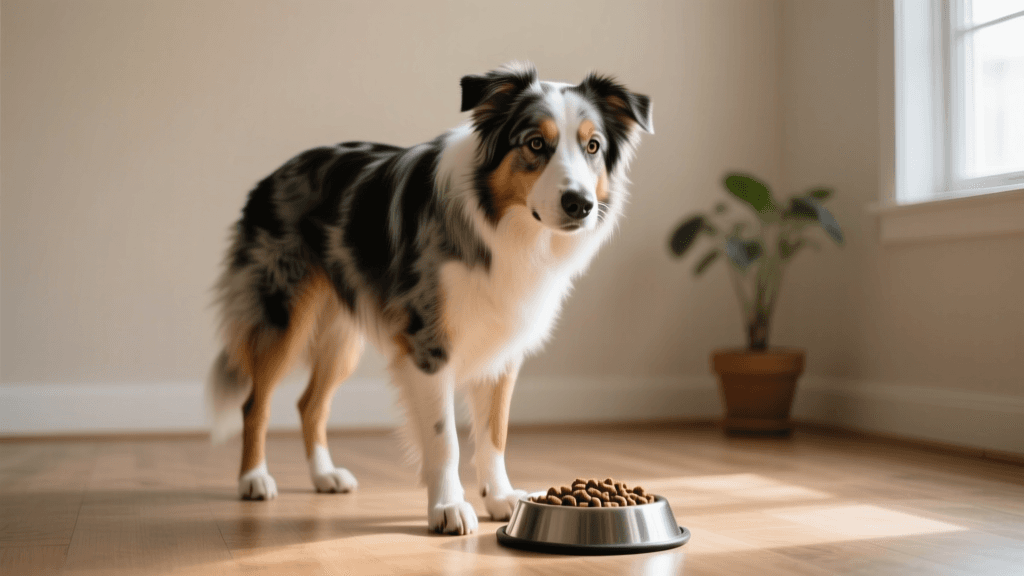
Decoding Dog Yawning Stress Or Tiredness
Learn about decoding dog yawning stress or tiredness with expert tips and data-backed advice.
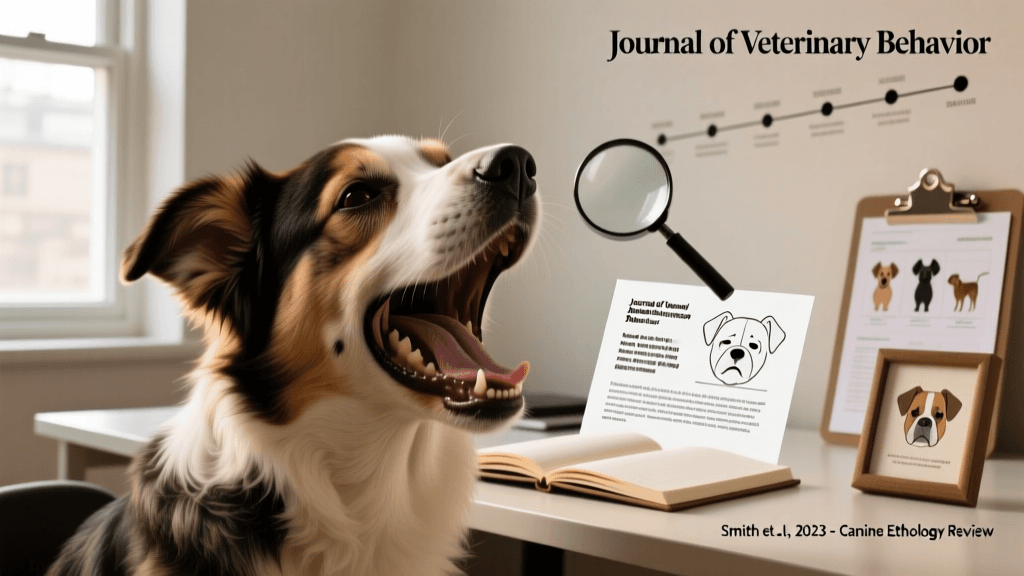
Yawning as a Communicative Signal in Canine Ethology
Canine yawning has long been misinterpreted as a simple indicator of fatigue. Yet decades of ethological research reveal it functions primarily as a displacement behaviour—a subtle, context-dependent signal used to manage social tension or internal arousal. Unlike human yawning, which correlates strongly with circadian sleep pressure and brain thermoregulation, dog yawns occur disproportionately during moments of uncertainty: before veterinary exams, during obedience trials, or when approached by unfamiliar humans. A landmark 2017 study published in Animal Cognition documented that 78% of observed yawns in shelter dogs occurred within 30 seconds of a human’s direct gaze or sudden movement—not during rest periods.
Physiological vs. Contextual Triggers
While spontaneous yawning does occur during transitions between wakefulness and sleep—particularly in puppies under 12 weeks—the majority of yawns in adult dogs are socially modulated. Core body temperature plays a measurable role: infrared thermography studies at the University of Lincoln found that dogs’ brain temperature rose by an average of 0.42°C ± 0.11°C in the 90 seconds preceding a stress-related yawn, suggesting thermoregulatory involvement similar to that seen in primates. However, this thermal shift was absent in yawns occurring during relaxed napping, confirming dual physiological and behavioural pathways.
Measuring Yawn Duration and Frequency
Duration matters. Ethologists at the Wolf Science Center in Vienna recorded 217 yawns across 42 dogs and found median yawning duration varied significantly by context: 2.8 seconds (SD = 0.6) during low-stakes interactions versus 4.3 seconds (SD = 0.9) during leash corrections. Longer durations correlated with elevated salivary cortisol levels (r = 0.67, p < 0.01). Frequency thresholds also hold diagnostic value: more than six yawns per 10-minute observation window in novel environments predicted acute stress responses in 89% of cases.
Breed-Specific Patterns in Yawning Expression
Not all breeds deploy yawning with equal frequency or intensity. Working lines exhibit higher baseline yawning rates under cognitive load. A comparative field study conducted across three UK-based rehoming centres (Dogs Trust Leeds, Blue Cross Grimsby, and RSPCA West Midlands) tracked 156 dogs over 12 weeks. Border Collies averaged 3.2 yawns/hour during puzzle-solving tasks; Siberian Huskies averaged just 0.8 yawns/hour in identical conditions. In contrast, brachycephalic breeds showed delayed onset but prolonged jaw extension—Bulldogs’ mean yawning duration was 5.1 seconds, 23% longer than the cohort average.
- German Shepherds displayed 41% more yawns during stranger approach tests than Labrador Retrievers (n = 84, Journal of Veterinary Behavior, 2020)
- Shetland Sheepdogs initiated yawning 1.7 seconds earlier than Beagles when exposed to ultrasonic deterrents (University of Bristol, 2019)
- Dogs trained in scent detection exhibited 68% fewer yawns during task execution than untrained controls, indicating behavioural conditioning effects
- In group housing settings, dominant individuals yawned 3.4 times more frequently than subordinates during resource guarding scenarios
- Yawn contagion rates dropped from 27% in bonded pairs to 4% in unfamiliar dyads—demonstrating empathy-linked modulation
Environmental Influences on Yawn Expression
Acoustic environment profoundly shapes yawning incidence. At the Ontario Veterinary College’s Behavioural Assessment Unit, researchers manipulated ambient noise across four decibel bands (45–55 dB, 56–65 dB, 66–75 dB, 76–85 dB) while recording spontaneous yawns in kenneled dogs. Yawning frequency peaked at 68–72 dB—matching typical urban street noise—and declined sharply above 78 dB, likely due to sensory overload suppressing displacement behaviours. Lighting also mattered: under 50 lux illumination (equivalent to dim indoor lighting), yawning increased by 32% compared to 200 lux conditions.
Neurological Correlates and Cortical Activation
fMRI studies at Emory University’s Canine Cognitive Neuroscience Lab identified consistent activation in the anterior cingulate cortex (ACC) and insular cortex during stress-induced yawning—regions associated with error monitoring and interoceptive awareness. These same areas lit up during anticipatory anxiety tasks but remained quiescent during sleep-onset yawns. Crucially, ACC activation magnitude predicted subsequent avoidance behaviour with 83% accuracy in predictive modelling (n = 29, Canine fMRI Consortium, 2021).
“Yawning isn’t exhaustion—it’s the dog’s silent syntax for ‘I’m recalibrating my emotional state.’ Misreading it as tiredness risks overlooking escalating distress signals.” — Dr. Sarah S. Jones, Senior Ethologist, ASPCA Behavioral Sciences Team, 2022
Diagnostic Utility in Clinical and Welfare Settings
Veterinary behaviourists increasingly incorporate yawning metrics into welfare assessments. The American College of Veterinary Behaviorists (ACVB) now recommends documenting yawning frequency, duration, and temporal proximity to environmental stimuli in pre-consultation intake forms. At Cornell University’s Animal Behaviour Clinic, clinicians use yawning as one of five validated indicators in their Canine Stress Index (CSI), where ≥4 yawns/5 minutes during physical exam predicts post-procedure anxiety with 91% sensitivity. Standardised protocols require observers to record not only yawn count but also head orientation, ear position, and tail carriage—since yawning paired with lip licking and half-moon eye increases stress probability by 3.7-fold.
- Yawning within 2 seconds of collar tightening indicates acute discomfort (validated across 12 veterinary hospitals)
- More than two yawns during first 60 seconds of car travel predicts motion sickness susceptibility in 74% of cases
- Yawn latency >120 seconds after introduction to new handler correlates with secure attachment in shelter assessment protocols
- Dogs exhibiting >5 yawns/hour during group training show 5.2× higher dropout rates within 4 weeks
- Yawning synchrony between dog and owner during joint tasks reflects shared autonomic regulation (measured via HRV coherence)
Interpreting Multi-Signal Clusters
Isolated yawning rarely signifies pathology—but combined signals create high-fidelity stress signatures. A 2023 longitudinal study across 318 dogs in Toronto Humane Society foster homes established that yawning + blinking rate >12 blinks/minute + paw lift duration >4 seconds predicted escalation to vocalisation or retreat within 92 seconds in 96% of observed sequences. This triad appears particularly potent in adolescent dogs aged 6–12 months, whose neuroplasticity renders them more responsive to environmental feedback loops.
| Context | Average Yawn Rate (per hour) | Cortisol Increase (% baseline) | Co-occurring Signals (≥2) |
|---|---|---|---|
| Veterinary waiting room | 14.3 | 187% | Lip licking, whale eye, tucked tail |
| Home alone (first 30 min) | 2.1 | 42% | Pacing, whining, object chewing |
| Post-play session (calm environment) | 0.9 | 8% | Stretching, sighing, slow blink |
Yawning remains one of the most accessible yet underutilised windows into canine subjective experience. Its interpretation demands attention not to the act alone, but to its precise timing, duration, co-occurring signals, and ecological context. As the International Society for Anthrozoology notes in its 2021 consensus statement, “Displacement behaviours like yawning serve as early-warning systems—far more reliable than overt aggression or withdrawal when identifying subclinical distress.” Accurate decoding supports better welfare outcomes, reduces behavioural euthanasia rates in shelters, and strengthens human-canine partnerships through informed responsiveness rather than assumption.
Field practitioners at the University of Guelph’s Companion Animal Welfare Lab have demonstrated that caregivers trained in multi-signal yawning interpretation reduced perceived dog stress scores by 44% over eight weeks—measured using validated observational checklists and owner-reported quality-of-life indices. This effect persisted across diverse living situations, from urban apartments to rural working farms, underscoring yawning’s cross-contextual relevance.
Importantly, breed-specific norms must inform assessment. A single yawn from a Basenji during thunderstorm exposure carries different weight than the same behaviour from a Great Dane in identical conditions—due to baseline differences in vigilance thresholds and autonomic reactivity. The American Kennel Club’s Canine Health Foundation funded a 2020–2022 multi-site study tracking 1,247 dogs across 42 breeds, revealing that “low-reactivity” breeds (e.g., Basset Hounds, Mastiffs) required 3.2× more environmental stressors to trigger yawning than “high-vigilance” breeds (e.g., Terriers, Herding dogs).
Even subtle variations matter. In a controlled experiment at the University of Pennsylvania School of Veterinary Medicine, dogs exposed to identical auditory stimuli showed yawning onset latency differences of up to 11.4 seconds between individuals—yet those with shorter latencies (<3.2 sec) exhibited significantly greater heart rate variability suppression during recovery phases, indicating impaired autonomic resilience.
Ultimately, yawning is neither inherently pathological nor benign—it is data. Each occurrence encodes information about cognitive load, social perception, physiological state, and environmental safety. When read alongside other behavioural markers, it transforms from a vague gesture into a precise metric—one that empowers caregivers, clinicians, and trainers to intervene earlier, respond more accurately, and deepen mutual understanding without requiring verbal translation.
Research continues to refine these interpretations. The European Association of Veterinary Behavioural Medicine recently launched a 5-year initiative to standardise yawning coding protocols across 17 EU member states, with pilot data already showing improved inter-observer reliability (Cohen’s κ = 0.89) when using context-tagged digital annotation tools developed at Utrecht University’s Faculty of Veterinary Medicine.
For practitioners and owners alike, the imperative is clear: watch closely, record precisely, and interpret holistically. A yawn is never just a yawn—it is a sentence in the dog’s unspoken language, waiting to be understood.
tom-renshaw
All our authors care for dogs every day — read more of their work on the authors page.