Decoding Your Dog's Trail Body Language: A Hiker's Guide
Learn to read your dog's body language on hiking trails. Discover stress signals, breed instincts, and actionable tips for safer outdoor adventures.

Hiking with your dog is one of the most rewarding ways to strengthen your bond, provide essential physical exercise, and engage their natural instincts. However, the great outdoors is not merely a playground; it is a high-stimulus environment filled with complex sensory inputs, unpredictable wildlife, and unfamiliar territorial markers. To truly excel in dog-friendly travel and outdoor adventures, you must look beyond basic obedience and dive deep into canine psychology. Understanding your dog's body language on the trail is the difference between a peaceful nature walk and a stressful, potentially dangerous encounter.
The Psychology of the Pack on the Trail
When you step onto a wooded trail, your dog is not just seeing the trees; they are reading a complex chemical bulletin board. A dog's olfactory system is up to 100,000 times more sensitive than a human's. The Jacobson's organ, located in the roof of their mouth, allows them to process pheromones left by wildlife and other dogs. This intense sensory processing can lead to rapid cognitive overload, especially in dogs not accustomed to wild environments.
From a psychological standpoint, the trail triggers ancient survival mechanisms. Your dog is constantly assessing the environment for threats, prey, and resources. When a dog encounters a novel stimulus—such as the rustling of a raccoon in the brush or the sudden approach of a mountain biker—their sympathetic nervous system activates. This triggers the release of adrenaline and cortisol, preparing the dog for fight or flight. Recognizing the subtle physical manifestations of this chemical shift is critical for any adventurous dog owner. According to the ASPCA's Dog Body Language guide, early intervention based on subtle physical cues can prevent behavioral escalation and keep your hike safe.
Decoding Early Stress Signals: The Yellow Zone
Most trail-related behavioral incidents do not happen without warning. Dogs communicate their internal state through a ladder of signals. The Yellow Zone consists of early, subtle displacement behaviors. These are actions a dog performs to self-soothe or communicate mild discomfort when faced with environmental stressors.
- Lip Licking and Yawning: If your dog repeatedly licks their lips or yawns when not tired, especially upon hearing an approaching hiker or seeing a strange dog, they are signaling anxiety. This is a calming signal meant to de-escalate potential tension.
- Whale Eye: This occurs when your dog turns their head away from a trigger but keeps their eyes fixed on it, exposing the whites of their eyes (the sclera). It indicates high vigilance and underlying stress.
- Shake-Off: Similar to how a dog shakes off water, a shake-off when they are completely dry is a psychological reset button. Dogs do this after a stressful encounter to release built-up physical tension.
When you observe Yellow Zone signals, the psychological pressure is building. The best course of action is to increase your distance from the trigger, offer a high-value treat, or allow your dog to engage in sniffari time to lower their heart rate.
Advanced Stress and Prey Drive Signals: The Red Zone
If Yellow Zone signals are ignored or the stimulus is too intense, the dog enters the Red Zone. At this stage, the thinking part of the dog's brain (the neocortex) is essentially hijacked by the emotional and survival centers (the amygdala). Training and recall commands will likely fail because the dog is operating purely on instinct.
- Raised Hackles (Piloerection): The hair along the spine and shoulders stands up. While often misinterpreted solely as aggression, raised hackles actually indicate extreme arousal and sympathetic nervous system activation. It can stem from fear, excitement, or predatory drift.
- Hard Staring and Fixation: A closed mouth, forward-leaning posture, and unblinking stare indicate high prey drive or a defensive threat assessment. The dog is lock-targeting a stimulus, such as a deer or a running child.
- Stiff, High Tail Carriage: A tail held rigidly high and vibrating slightly is a clear sign of confidence mixed with high arousal. It is a warning that the dog is prepared to react explosively to any sudden movement.
The RSPCA's guide on canine body language emphasizes that punishing a dog in the Red Zone is counterproductive and dangerous. Instead, you must manage the environment by breaking the dog's line of sight and creating physical distance.
Canine Trail Body Language Chart
Use this quick-reference chart to decode your dog's behavior on the trail and respond appropriately.
| Physical Signal | Psychological Category | Underlying Meaning | Actionable Trail Response |
|---|---|---|---|
| Whale Eye | Stress / Anxiety | Overstimulation; feeling trapped or unsure. | Increase distance from the trigger; do not force interaction. |
| Raised Hackles | High Arousal | Adrenaline dump; preparing for action (fear or prey). | Assess context calmly; step off the trail to let triggers pass. |
| Fixated Stare | Prey Drive | Predatory drift; locking onto movement or scent. | Engage emergency U-turn; use a long line to prevent chasing. |
| Intense Ground Sniffing | Calming / Gathering | Self-soothing or processing complex scent data. | Allow 30-60 seconds of uninterrupted sniffing to decompress. |
| Tucked Tail | Fear / Insecurity | Feeling vulnerable; seeking protection from the handler. | Move to a quiet area; offer high-value treats and gentle praise. |
Breed Instincts: How Genetics Shape Trail Behavior
Understanding your dog's body language requires filtering it through the lens of their breed genetics. The American Kennel Club's hiking safety guidelines note that different breed groups experience the trail in fundamentally different ways.
Scent Hounds (Beagles, Coonhounds, Bloodhounds)
For hounds, the trail is an overwhelming banquet of smells. When a hound locks onto a deer trail, their brain literally tunes out auditory processing. This is not stubbornness; it is a neurological phenomenon known as selective deafness induced by intense focus.
Trail Strategy: Never rely on an off-leash recall in unfenced wilderness areas for a scent hound. Use a 15-foot biothane long line to allow them to explore safely while maintaining physical control.
Herding Breeds (Border Collies, Australian Shepherds, Corgis)
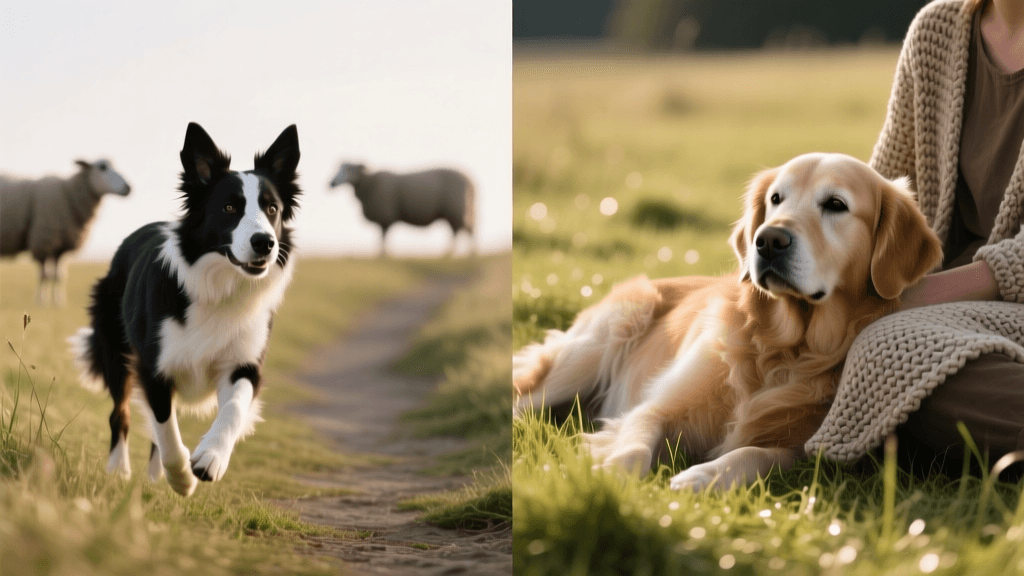
Herding breeds are genetically wired to control movement. On a busy trail, the erratic movements of mountain bikers, trail runners, or even falling leaves can trigger their instinct to herd. This often manifests as nipping at heels or darting into the path of fast-moving objects.
Trail Strategy: Train a watch me or leave it command before the trigger passes. Step off the trail, ask your dog to sit, and feed continuous high-value treats until the biker or runner has passed.
Terriers (Jack Russell Terriers, Cairn Terriers, Dachshunds)
Terriers were bred to hunt and kill burrowing pests. The rustling of leaves or the sight of a groundhog hole will trigger an immediate, explosive prey response. They are highly prone to digging under logs and squeezing into rock crevices.
Trail Strategy: Keep terriers away from the brushy edges of the trail. Utilize a well-fitted harness with a sturdy handle on the back so you can physically lift them away from dangerous wildlife dens or steep drop-offs.
Actionable Gear and Training for Trail Success
To support your dog's psychological well-being and ensure physical safety on the trail, investing in the right gear is non-negotiable. Here is a curated list of travel-tested equipment:
- The Harness: The Ruffwear Front Range Harness (approx. $39.95) is a trail staple. It features dual leash attachment points: an aluminum V-ring on the back for standard walking, and a reinforced webbing loop on the chest to gently redirect dogs that pull or lunge at wildlife.
- The Long Line: A standard 6-foot leash does not provide enough buffer for trail decompression. Invest in a 15-foot or 20-foot Biothane Long Line ($35 - $50). Biothane is waterproof, mud-proof, and will not snag on briars or tree roots like nylon or cotton lines.
- The Treat Delivery System: When a dog enters the Yellow Zone, you have seconds to redirect their attention. Fumbling in your pockets will cost you the window of opportunity. The Ruffwear Treat Trader ($34.95) features a magnetic closure for instant access to rewards.
- High-Value Currency: Standard kibble will not compete with the smell of a wild fox. Pack freeze-dried beef liver or real cheese chunks (approx. $15 per tub) in a dedicated, scent-proof silicone pouch.
Timing and Trigger Stacking
In canine psychology, trigger stacking occurs when a dog experiences multiple mild stressors in succession, causing their cortisol levels to compound until they explode over a seemingly minor event. A passing dog, a loud bird, and a stubbed toe might individually be fine, but together they cause a meltdown.
To prevent trigger stacking, plan your adventures strategically. Hike during low-traffic hours, typically between 6:00 AM and 8:00 AM or after dusk with appropriate LED collar lights. Avoid weekends on popular trails if your dog is still in the early stages of desensitization training.
Conclusion
Dog-friendly travel and trail adventures are about far more than just burning off energy; they are an exercise in interspecies communication. By learning to read the subtle shifts in your dog's posture, respecting their breed-specific instincts, and equipping yourself with the right psychological and physical tools, you transform from a simple dog walker into a trusted trail guide. The next time you hit the dirt path, remember to look at the trail through your dog's eyes, and let their body language be your compass.
marcus-aldridge
All our authors care for dogs every day — read more of their work on the authors page.