Decoding Dog Calming Signals With 2026 Smart Collars
Learn to decode dog calming signals in 2026 using visual cues and the latest biometric smart collars to reduce stress and improve canine communication.
The Evolution of Canine Communication in 2026
For decades, dog owners have relied solely on their eyes and intuition to understand their pets. We watch for a wagging tail, a tilted head, or a playful bow. However, canine communication is vastly more complex than these obvious gestures. Dogs possess a sophisticated, silent vocabulary designed to de-escalate tension, express discomfort, and maintain social harmony. These are known as "calming signals." As we navigate 2026, the way we interpret these signals has undergone a massive technological revolution. By combining traditional behavioral observation with the latest biometric smart collars, owners can now decode their dog's internal emotional state with unprecedented accuracy.
Understanding these signals is not just an academic exercise; it is the foundation of a trusting relationship. When you can identify the exact moment your dog feels overwhelmed, you can intervene before stress escalates into reactivity or fear-based aggression. In this comprehensive guide, we will explore the most critical visual calming signals and reveal how 2026's top-tier biometric wearables can provide real-time data to support your dog's mental well-being.
The Foundation: What Are Canine Calming Signals?
The concept of calming signals was popularized by Norwegian canine behaviorist Turid Rugaas. Rather than being mere signs of "submission," these signals are active communication tools dogs use to calm themselves and others in potentially stressful situations. A dog might use these signals when approaching a nervous rescue dog, when a toddler is moving too erratically, or when they feel trapped in a veterinary waiting room.
According to the American Kennel Club (AKC), recognizing these subtle cues is vital for preventing behavioral issues. When a dog offers a calming signal and the owner ignores it—or worse, punishes the dog for the behavior—the dog learns that communication is futile. This often leads to a sudden escalation to biting or lunging, leaving owners confused because they "missed" the dog's earlier warnings.
5 Critical Visual Calming Signals to Watch For
Before we dive into the biometric data, you must master the visual cues. Here are five of the most common, yet frequently misunderstood, calming signals:
1. Lip Licking and Yawning (Out of Context)
If your dog is not eating, drinking, or waking up from a nap, rapid lip licking or exaggerated yawning is a primary indicator of internal stress. You will often see this at the vet clinic or when being hugged tightly by a stranger. The dog is attempting to self-soothe and signal to the "threat" that they mean no harm.
2. Whale Eye (Showing the Whites of the Eyes)
When a dog turns its head away but keeps its eyes fixed on a stressor, the crescent of the white sclera becomes visible. This "whale eye" is a significant warning sign that the dog is guarding a resource or feels deeply uncomfortable with an interaction. It is a precursor to a defensive bite if the pressure is not removed.
3. Sniffing the Ground (Displacement Behavior)
While sniffing is a natural canine activity, sudden, intense sniffing of a barren patch of grass when another dog or a loud noise approaches is a displacement behavior. The dog is pretending to be distracted to avoid a direct, confrontational approach.
4. Turning Away and Curving
Dogs rarely approach each other in a straight, head-on line, as this is considered confrontational. If you call your dog and they walk toward you in a wide arc, or if they turn their backside to you when you are scolding them, they are using a calming signal to de-escalate your perceived anger.
5. Slow Blinking and Squinting
A soft, squinty gaze with slow blinks is a dog's way of saying, "I am relaxed, and I am not a threat." If you stare directly at a nervous dog, they will often squint and turn their head slightly to communicate their peaceful intentions.
The 2026 Biometric Revolution: Smart Collars That "Listen"
While visual cues are essential, they require the owner to be present and highly observant. What happens when you are at work, or when the stress response happens internally before any physical signal is displayed? This is where the 2026 generation of biometric smart collars bridges the gap.
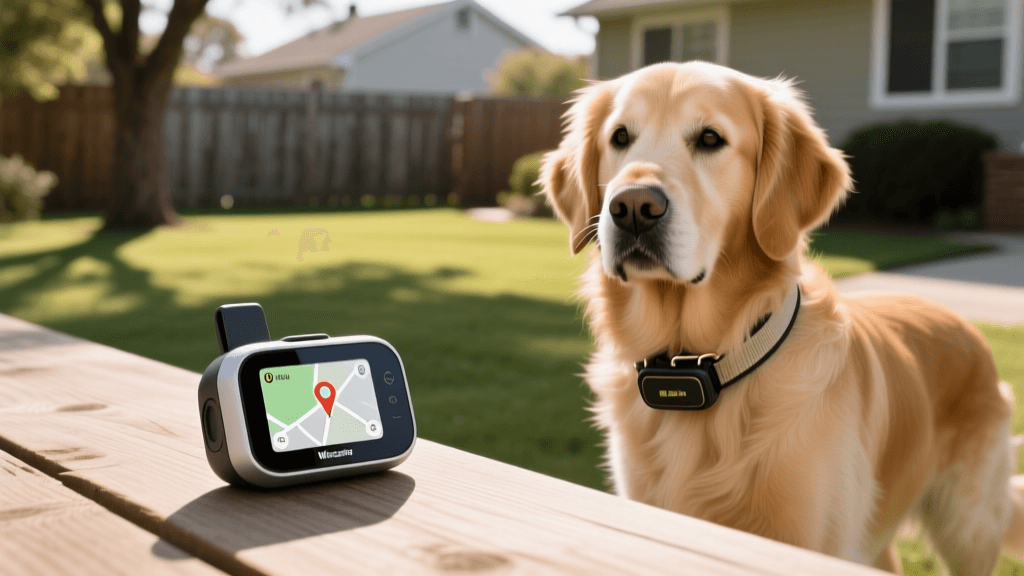
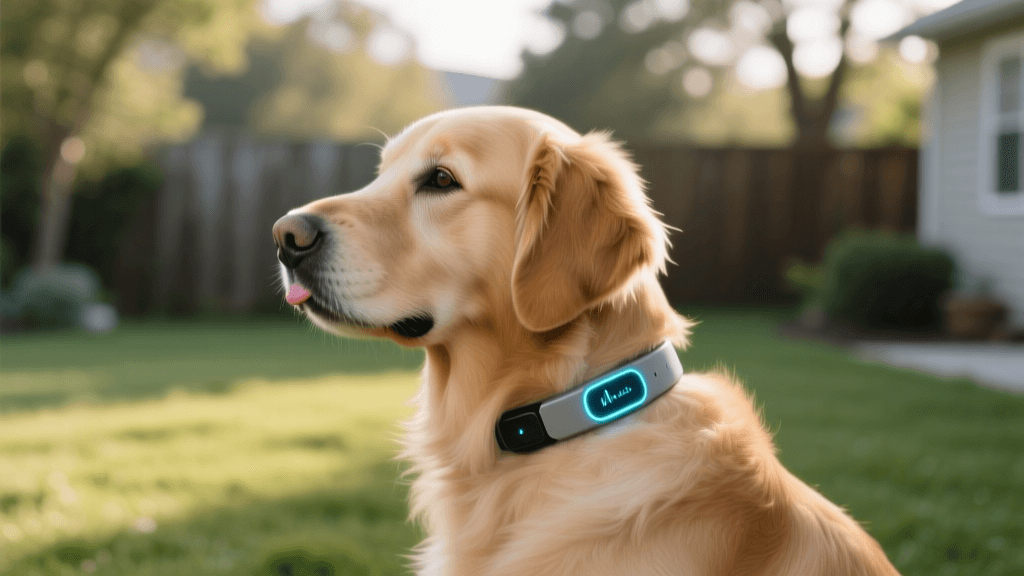
Modern devices have moved far beyond simple GPS tracking and step counting. The latest models now track Heart Rate Variability (HRV), respiratory rates, and advanced sleep staging. HRV is a scientifically validated metric that measures the variation in time between consecutive heartbeats. A high HRV indicates a relaxed, adaptable nervous system (parasympathetic dominance), while a chronically low HRV indicates chronic stress, overstimulation, or underlying illness (sympathetic dominance).
Top Biometric Trackers in 2026
- Invoxia Smart Pet Tracker: Utilizing low-power radar technology, this collar attachment measures your dog's heart and respiratory rates without requiring the device to touch the skin directly. The 2026 firmware updates have vastly improved its ability to detect micro-fluctuations in breathing that correlate with anxiety.
- Fi Series 4 Smart Collar: While primarily known for its industry-leading GPS, Fi's 2026 algorithm updates now include advanced sleep-recovery metrics. By analyzing REM vs. Deep Sleep cycles, Fi can tell you if your dog's nervous system actually recovered from yesterday's stressful fireworks or vet visit.
- Whistle Go Biometric Edition: Priced around $149 with a $99 annual subscription, this 2026 model integrates ambient temperature and humidity data with your dog's panting rate to alert you to early signs of heat stress or environmental anxiety.
Data Table: Visual Cues vs. 2026 Biometric Collar Metrics
To truly understand your dog, you must cross-reference what you see with what the technology measures. The table below illustrates how to combine these two data streams for a complete picture of your dog's emotional state.
| Canine State | Visual Calming Signals | 2026 Biometric Collar Data (HRV & Vitals) | Recommended Owner Action |
|---|---|---|---|
| Mild Stress / Uncertainty | Lip licking, yawning, slight ear pinning. | Moderate drop in HRV; slight elevation in resting respiratory rate. | Create distance from the trigger; use a cheerful, calm voice. |
| Active De-escalation | Curving approach, sniffing ground, turning away. | HRV fluctuating as the dog actively attempts to self-regulate. | Allow the dog space; do not force interaction or eye contact. |
| High Arousal / Threshold | Whale eye, frozen posture, hard stare. | Sharp spike in heart rate; low HRV; elevated core temperature (if tracked). | Immediately remove the dog from the environment; initiate decompression protocol. |
| Recovery / Relaxation | Soft eyes, slow blinking, relaxed open mouth. | High, stable HRV; deep sleep metrics showing adequate REM cycles. | Maintain current routine; reward calm behavior with low-energy praise. |
Actionable Protocol: The 2026 Decompression Routine
When your smart collar alerts you to a prolonged period of low HRV, or when you observe a cluster of visual calming signals, it is time to implement a structured decompression routine. The ASPCA's resources on canine body language emphasize that dogs need time to process cortisol out of their systems after a stressful event. In 2026, behaviorists recommend the following 3-step protocol:
Step 1: The 48-Hour Cortisol Washout
If your dog experiences a major stressor (e.g., a grooming session, a thunderstorm, or a reactive dog encounter), understand that cortisol can remain elevated in their bloodstream for up to 48 hours. During this window, avoid training sessions, crowded dog parks, or introducing new stimuli. Keep the environment predictable and quiet.
Step 2: The "Sniffari" Decompression Walk
Physical exercise like fetch or running on a treadmill does not reduce mental stress; it only tires the muscles. Instead, engage in a 20-minute "Sniffari" walk. Use a long line (15 to 30 feet) in a quiet, natural area. Allow your dog to dictate the pace and direction. Sniffing lowers a dog's heart rate and engages the parasympathetic nervous system. Watch your biometric app; you will often see the HRV metric begin to climb in real-time as the dog engages in deep, investigative sniffing.
Step 3: Licking and Chewing Therapy
Provide a frozen lick mat or a natural chew item. The repetitive motions of licking and chewing release endorphins in the canine brain, acting as a natural soothing mechanism. Pair this with the data from your Fi or Invoxia collar to identify which specific chews or environments yield the fastest biometric recovery for your individual dog.
Multi-Dog Households: Reading the Pack Dynamics
Decoding calming signals becomes exponentially more complex in multi-dog households. Often, one dog will act as the "conflict manager," stepping between two other dogs or offering intense calming signals to prevent a fight over a toy. In 2026, utilizing biometric collars on all dogs in the household can reveal hidden tensions. You might notice that your seemingly "submissive" dog actually experiences massive HRV drops every time the more boisterous dog enters the room, indicating chronic, hidden stress that visual cues alone haven't fully captured.
By respecting these signals and using technology to validate your observations, you transform from a simple pet owner into an empathetic advocate for your dog's mental health. The future of dog ownership isn't about controlling our pets; it's about finally understanding the silent language they have been speaking to us all along.
tom-renshaw
All our authors care for dogs every day — read more of their work on the authors page.