Canine OA In 2026: Decoding Pain Behavior And Treatments
Learn to decode your dog's osteoarthritis pain behavior. Discover 2026 behavioral treatments, body language cues, and environmental modifications for OA.
The Hidden Language of Canine Osteoarthritis
Osteoarthritis (OA) in dogs is frequently viewed through a strictly medical lens, focusing on joint degradation, cartilage loss, and pharmaceutical interventions. However, as we advance into 2026, the veterinary and canine behavioral communities have embraced a more holistic understanding of this condition. We now recognize that chronic pain is not just a physical ailment; it is a profound psychological and behavioral burden. To truly treat canine OA, we must first understand how it alters our dogs' minds, their communication signals, and their daily emotional well-being.
When a dog lives with chronic joint pain, their entire perception of the world shifts. Surfaces become threats, stairs become insurmountable obstacles, and once-joyful interactions can trigger defensive reactions. By decoding the subtle behavioral signs of OA and implementing modern, environmentally focused treatments, we can drastically improve the quality of life for our aging or arthritic companions.
The Psychology of Chronic Pain in Dogs
Dogs are evolutionarily hardwired to mask pain. In the wild, displaying weakness makes an animal a target. Consequently, domestic dogs rarely whine or cry when suffering from chronic conditions like OA. Instead, the pain manifests through behavioral changes that are often misinterpreted as 'slowing down' or 'getting grumpy.'
One of the most critical psychological concepts in modern pain management is central sensitization. Over time, chronic pain signals can cause a dog's nervous system to become hyper-reactive. A dog with severe OA may develop noise phobias, generalized anxiety, or spatial fears. For example, if a dog has slipped on a hardwood floor in the past and experienced a sharp spike in joint pain, they may develop a deep-seated phobia of smooth surfaces. This is classical conditioning at work, and treating the OA requires addressing this environmental anxiety alongside the physical inflammation.
Decoding the Body Language of Joint Pain
Understanding your dog requires looking past obvious limping and observing micro-expressions and postural shifts. The American Kennel Club notes that subtle changes in daily habits are often the earliest indicators of joint discomfort. Look for the following behavioral cues:
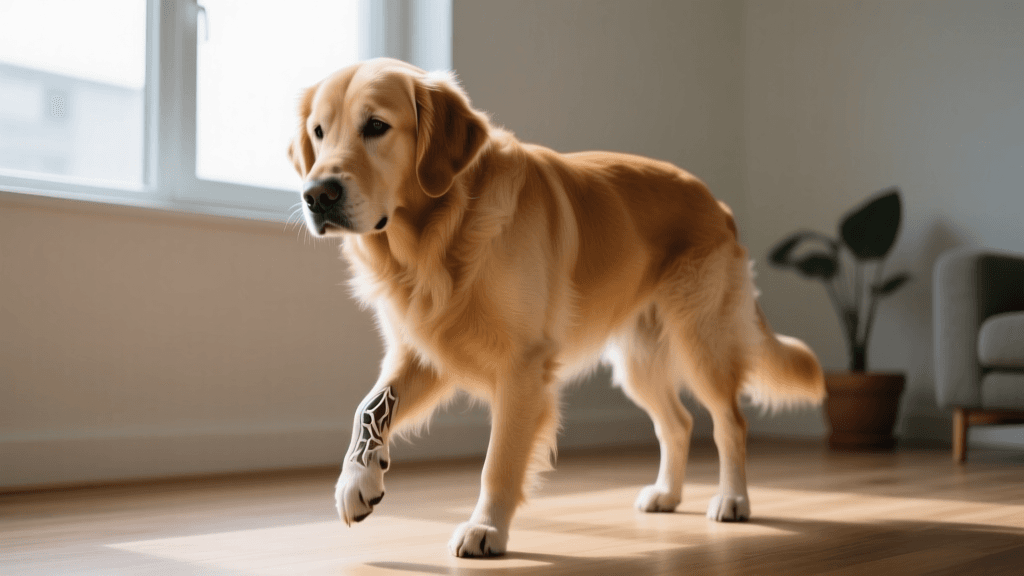
- The 'Bunny Hop' Gait: Instead of moving their hind legs independently, dogs with hip or stifle OA may move both hind legs simultaneously to minimize joint flexion.
- Altered Resting Postures: A dog that used to curl into a tight ball may now sleep stretched out on their side to avoid the discomfort of bending their spine and hips.
- Reluctance to Shake: The full-body shake is a natural canine stress-relief mechanism. Dogs with spinal or shoulder OA will often stop shaking off water or dirt because the rapid twisting motion causes acute pain.
- Micro-Expressions: Watch for 'whale eye' (showing the whites of the eyes), excessive lip licking, or sudden panting when the environment is not warm. These are classic canine calming signals that indicate internal distress or pain.
- Over-Grooming: Dogs will frequently lick the carpal (wrist) or tarsal (ankle) joints in an attempt to self-soothe localized aching.
The 'Grumpy Dog' Phenomenon: Reactivity as a Defense Mechanism
One of the most heartbreaking misinterpretations in dog ownership is labeling an arthritic dog as 'aggressive' or 'reactive.' According to guidelines supported by the WSAVA Global Pain Council, undiagnosed or under-managed pain is a leading cause of sudden-onset aggression in older dogs. If a dog is touched unexpectedly near a sore hip, or if a toddler bumps into their aching shoulder, the dog may snap. This is not a breakdown in training; it is a desperate communication signal meant to protect a vulnerable body. Recognizing this allows owners to pivot from punitive training methods to compassionate environmental management.
2026 Environmental and Behavioral Treatments for OA
While veterinary medicine offers incredible pharmaceutical options like monoclonal antibodies and NSAIDs, the behavioral and environmental treatments are what truly shape a dog's daily experience. The 2026 standard of care emphasizes proactive environmental modification to prevent pain spikes before they occur.
Strategic Flooring and Traction
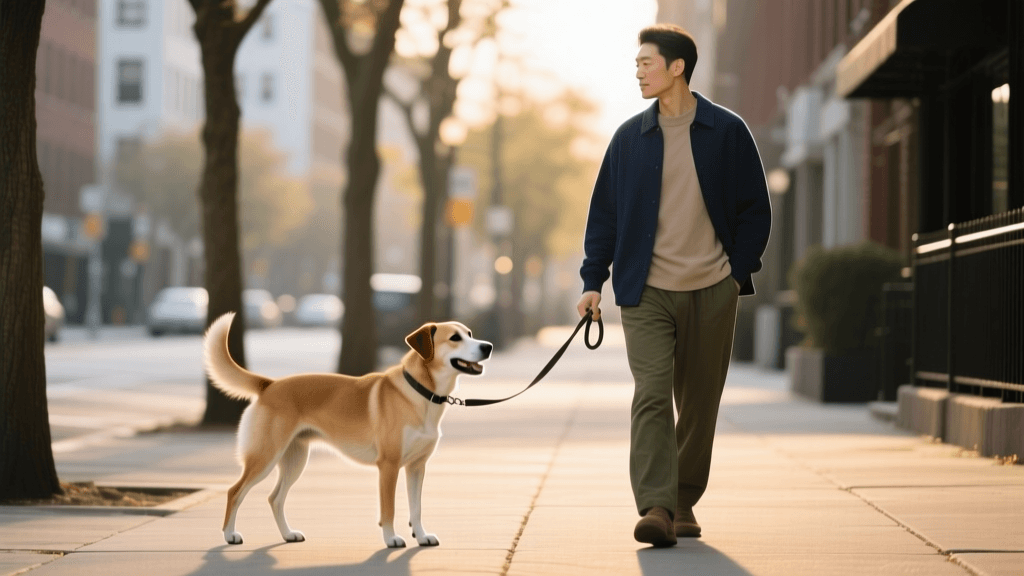
Slipping is the enemy of the arthritic dog. Micro-slips cause sudden, sharp loads on compromised joints. In 2026, behaviorists recommend creating 'traction pathways' through the home using interlocking foam mats or low-pile runner rugs. Additionally, applying a canine paw-friction wax weekly can provide the necessary grip to prevent the anxiety and physical strain associated with slippery hardwood or tile floors.
Biomechanical Ramps and Steps
Jumping on and off furniture causes immense concussive force on the carpal joints and spine. However, simply providing a ramp is not enough; the angle is critical. For large breeds, a ramp incline should not exceed 18 to 20 degrees. If your couch is 18 inches high, the ramp must be at least 54 inches long to provide a safe, gradual ascent. Training your dog to use a ramp requires positive reinforcement, treating the ramp as a 'target' mat to build confidence and eliminate the fear of the unstable surface.
Orthopedic Sleep Environments
Traditional donut-shaped beds force the spine into flexion, which can exacerbate morning stiffness in dogs with spondylosis or hip OA. Modern 2026 recommendations favor flat, high-density orthopedic beds with a minimum thickness of 4 inches. Heated beds or beds with temperature-regulating gel foams are highly recommended for winter months, as cold temperatures significantly increase joint stiffness and pain perception.
Comparison Chart: Outdated vs. 2026 OA Management Standards
Understanding how our approach to canine OA has evolved helps highlight the importance of behavioral and environmental care.
| Management Aspect | Outdated Approach (Pre-2020) | 2026 Behavioral & Environmental Standard |
|---|---|---|
| Exercise | Strict crate rest or severe exercise restriction. | Controlled, low-impact leash walking on soft surfaces to maintain muscle mass and joint lubrication. |
| Greetings | Allowing the dog to jump on owners to 'stay happy'. | Teaching hand-targeting or floor-level greetings to eliminate concussive jumping while maintaining bonding. |
| Mental Health | Ignoring the psychological loss of physical play. | Implementing daily scent-work and foraging games to replace the dopamine release previously gained from fetch. |
| Pain Cues | Waiting for vocalization or severe limping. | Monitoring micro-expressions, gait asymmetry via smartphone apps, and changes in sleep postures. |
Cognitive Enrichment: Treating the Mind When the Body is Limited
A major psychological side effect of OA is the loss of physical exercise, which often leads to boredom, frustration, and destructive behaviors. A dog that can no longer run for three miles still possesses the mental energy of an active canine. Treatment for OA must include cognitive substitution.
Replace high-impact physical games with intense mental enrichment. Snuffle mats, frozen lick mats, and DIY scent trails in the backyard engage the dog's olfactory system. Sniffing lowers a dog's heart rate and releases endorphins, providing a natural, behavioral form of pain relief. Ten minutes of intensive scent work can be as mentally exhausting for a dog as a one-hour run, fulfilling their need for activity without loading their deteriorating joints.
Modifying Training and Communication
Finally, understanding your arthritic dog means adapting your training cues. The traditional 'sit' command requires significant flexion of the hips and knees. For a dog with bilateral hip dysplasia or severe OA, sitting is agonizing. In 2026, force-free behaviorists advocate for the 'park it' or 'settle' cue, allowing the dog to remain in a comfortable standing or sphinx-like lying position during greetings and vet visits. By removing the physical demand of the 'sit,' you eliminate a major source of daily pain and compliance failure, strengthening the trust between you and your dog.
Conclusion
Treating canine osteoarthritis in 2026 goes far beyond the medicine cabinet. It requires a deep, empathetic understanding of how chronic pain alters your dog's behavior, body language, and emotional state. By learning to read the subtle signs of discomfort, modifying your home environment to prevent anxiety and physical strain, and substituting physical exertion with mental enrichment, you provide a comprehensive treatment plan. Ultimately, the greatest treatment we can offer our aging dogs is the willingness to see the world from their perspective and adapt our lives to meet their changing needs.
tom-renshaw
All our authors care for dogs every day — read more of their work on the authors page.