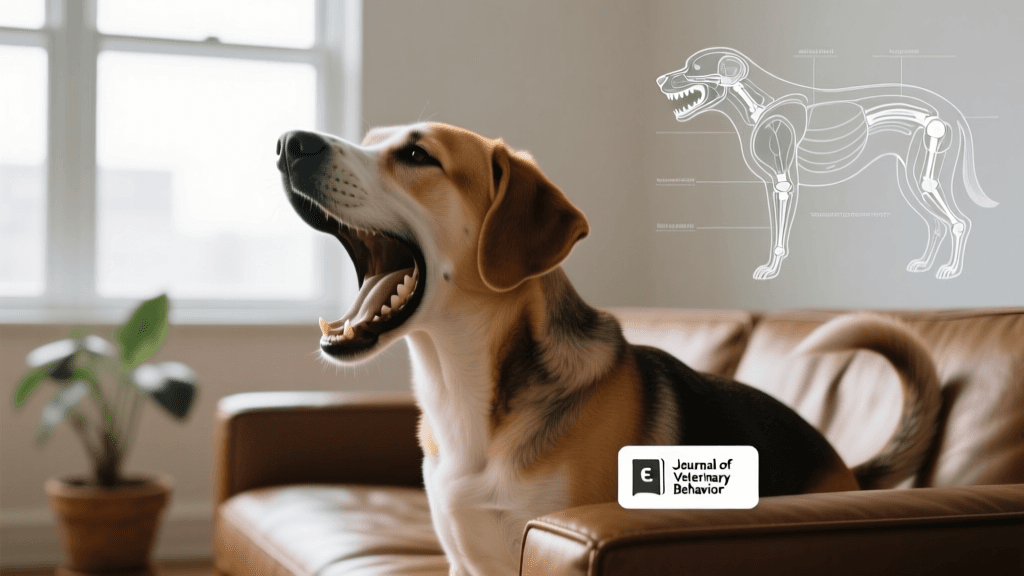
Decoding Viral Dog Talking Buttons: Science & Training
Discover the science behind viral dog talking buttons. Learn how AAC soundboards work, canine cognition, and step-by-step training tips to start.
The Viral Phenomenon of Dog Talking Buttons
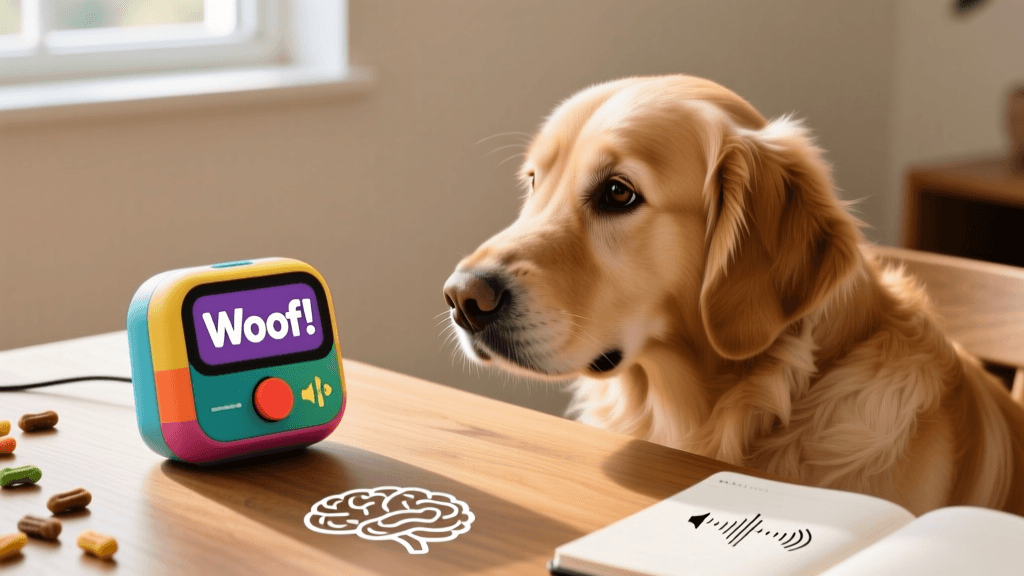
If you have spent any time on TikTok or Instagram recently, you have likely seen videos of dogs like Bunny the Sheepadoodle or Stella the Catahoula seemingly holding conversations with their owners. Using a mat covered in colorful, recordable buttons, these viral canine stars press sounds that say 'Outside,' 'Play,' 'Love you,' and even 'Stranger danger.' This trend has captivated millions, sparking a massive surge in pet owners purchasing Augmentative and Alternative Communication (AAC) soundboards for their own dogs.
But beyond the viral entertainment value, what is actually happening in the canine brain? Are dogs truly expressing complex thoughts, or are they simply performing learned tricks for a reward? As a core component of understanding your dog's psychology and communication signals, separating internet myth from cognitive science is essential for any modern dog owner.
The Science: Can Dogs Actually 'Talk'?
To understand the viral button trend, we must look at the intersection of canine cognition and behavioral psychology. Dogs do not possess the neurological hardware for human language, syntax, or grammar. Instead, their 'talking' is rooted in operant conditioning and associative learning.
When a dog presses a button that says 'Walk' and is immediately rewarded with a walk, they learn a cause-and-effect relationship. According to the TheyCanTalk research initiative at UC San Diego, led by cognitive scientist Dr. Federico Rossano, animals are capable of far more complex associative mapping than previously believed. The research suggests that while dogs are not stringing words together to form grammatical sentences, they are using the buttons to communicate specific desires, discomforts, or observations based on consistent environmental feedback.
The Role of Spatial Memory
One of the most fascinating aspects of canine psychology in this context is spatial memory. Dogs rely heavily on the hippocampus to remember where things are located in their environment. This is why modern AAC systems use hexagonal mats that lock together in a specific grid. The dog isn't just memorizing the sound of the button; they are memorizing its exact physical coordinate on the mat. Moving a button to a new location can completely disrupt a dog's ability to 'find' the word they want to use.
Getting Started: A Practical Guide to Button Training
If you want to tap into this trending communication method, patience and scientific consistency are required. Here is an actionable, step-by-step protocol to introduce soundboards to your dog.
Step 1: Selecting Your Equipment
You do not need to spend a fortune to start, but investing in a system designed for canine paws is recommended. Recordable buttons typically cost between $15 and $30 for a basic pack, while specialized kits range from $50 to $150.
- FluentPet: Designed by cognitive scientists, featuring hexagonal tiles that grip the floor and prevent sliding. Ideal for spatial mapping.
- Hunger for Words: Created by a speech-language pathologist, featuring durable, high-contrast buttons that are easy for dog paws to depress.
- Generic Recordable Buttons: Budget-friendly but often lack the structural stability required for enthusiastic canine use.
Step 2: Strategic Placement and Vocabulary Mapping
Start with a maximum of two to four high-value words. The most successful starting buttons are 'Outside,' 'Play,' 'Treat,' and 'Walk.' Place the mat in a high-traffic area where your dog naturally spends time, such as the living room or near the back door. Never place the mat in a corner or a secluded room; communication requires social context.
Step 3: The Modeling Protocol (Timing is Everything)
Dogs learn through observation and immediate consequences. You must 'model' the behavior before expecting your dog to perform it.
- The Action: Say the word out loud (e.g., 'Outside').
- The Press: Physically press the 'Outside' button yourself.
- The Reward: Immediately (within 1 to 3 seconds) open the door and go outside.
Repeat this consistently for 2 to 4 weeks. Eventually, your dog will anticipate the action and attempt to press the button with their paw or nose. The moment they initiate contact with the button, reward them instantly.
Brand Comparison Chart: Top Dog Button Systems
Choosing the right hardware is critical for long-term success. Below is a comparison of the most popular systems on the market based on canine behavioral needs.
| Brand | Price Range | Button Type | Best For |
|---|---|---|---|
| FluentPet | $50 - $150 | Hexagonal Grip Tiles | Spatial memory mapping and multi-dog homes |
| Hunger for Words | $40 - $90 | Round Foam Mats | Dogs with visual impairments or heavy paws |
| DIY Generic Buttons | $15 - $25 | Standalone Plastic | Budget testing and single-word training |
The 'Clever Hans' Effect and Anthropomorphism
As viral videos push the boundaries of what we believe dogs can say, owners must be wary of the 'Clever Hans' effect. This psychological phenomenon occurs when an animal appears to perform complex cognitive tasks (like doing math or reading) but is actually responding to subtle, unconscious physical cues from their human handler.
According to an extensive review by NPR's investigation into canine soundboards, many viral videos are heavily edited or rely on the owner prompting the dog off-camera. Furthermore, Smithsonian Magazine's coverage on animal AAC highlights that when dogs press buttons like 'Mad' or 'Sad,' they are often just repeating a sound that previously resulted in a high-value treat or intense owner attention, rather than experiencing complex human emotions like existential dread.
'We must be careful not to project human linguistic structures onto canine behavior. A dog pressing 'Love you' is expressing a deep, conditioned bond and a desire for proximity, not reciting poetry. The emotion is real, but the syntax is an illusion.'
Practical Pitfalls to Avoid
To ensure you are fostering genuine communication rather than just teaching a party trick, avoid these common mistakes:
- Button Spamming: If your dog presses a button 20 times in a row, they are likely frustrated or confused. Cover the mat and take a break.
- Inconsistent Responses: If your dog presses 'Play' and you ignore them because you are busy, the associative link breaks. You must honor the button press 90% of the time during the learning phase.
- Using Abstract Concepts Too Early: Do not introduce buttons like 'Later,' 'Why,' or 'Yesterday' until your dog has mastered concrete nouns and verbs. Dogs live in the present; abstract time concepts do not align with their psychological framework.
Conclusion: A New Window into the Canine Mind
The viral trend of dog talking buttons is more than just a fleeting internet fad; it is a gateway to a deeper understanding of canine intelligence. While your dog may not be debating philosophy or recounting their dreams, AAC soundboards offer a profound way to bridge the interspecies communication gap. By respecting the science of associative learning, honoring your dog's spatial memory, and maintaining rigorous training consistency, you can unlock a highly rewarding, interactive dialogue with your best friend. Remember, the goal is not to turn your dog into a human, but to give them a validated, empowering way to participate in their own daily care and routine.
aaron-whyte
All our authors care for dogs every day — read more of their work on the authors page.