Mastering Canine Calming Signals In 2026 Dog Training
Learn to decode canine calming signals like lip licking and whale eye to improve reactive dog desensitization training outcomes in 2026.
The Evolution of Canine Communication in Modern Training
As we navigate the dog training landscape in 2026, the industry has decisively shifted away from dominance-based theories and toward emotional regulation and force-free methodologies. At the core of this revolution is a deeper understanding of canine communication, specifically the subtle 'calming signals' dogs use to de-escalate tension, self-soothe, and communicate discomfort. For owners and professionals working with reactive dogs, recognizing these micro-expressions is no longer optional; it is the foundation of ethical and effective behavior modification.
Originally popularized by Norwegian dog trainer Turid Rugaas in the late 1990s, the concept of calming signals has been heavily validated by modern veterinary behaviorists. Today, integrating these signals into Desensitization and Counter-Conditioning (DS/CC) protocols is considered a best practice under the Least Intrusive, Minimally Aversive (LIMA) framework. According to the IAABC's official LIMA position statement, trainers must prioritize the animal's emotional state and autonomy, making the ability to read subtle stress indicators a critical skill for preventing behavioral fallout.
The Neurobiology of Canine Stress and Communication
When a reactive dog encounters a trigger—such as an unfamiliar dog, a loud noise, or a stranger—their amygdala processes the threat, activating the hypothalamic-pituitary-adrenal (HPA) axis. This results in a flood of cortisol and adrenaline. Before this chemical cascade results in an outward explosion of barking or lunging, the dog will almost always display early-warning calming signals. These signals are an attempt to self-regulate and communicate to the perceived threat (or to their handler) that they wish to avoid conflict.
Missing these early signals and forcing the dog to remain in a highly stimulating environment pushes them over their 'threshold.' Once a dog crosses this threshold, the prefrontal cortex (responsible for learning and decision-making) essentially shuts down. At this point, no operant conditioning can occur. Therefore, mastering the observation of calming signals allows handlers to keep dogs in the 'sub-threshold' zone where neuroplasticity and learning are possible.
5 Critical Calming Signals to Monitor During Training
While the ASPCA's guide on canine body language outlines dozens of postures and expressions, five specific signals are most frequently observed during reactive dog rehabilitation sessions. Recognizing these in real-time dictates your next training move.
1. Lip Licking and Tongue Flicking
A quick flick of the tongue over the nose or lips is one of the most common, yet most frequently missed, signs of canine anxiety. If a dog is eating a high-value treat, they are simply swallowing. But if a dog is sitting in front of a trigger and repeatedly flicks their tongue, they are experiencing cognitive dissonance and rising stress. In 2026, high-definition slow-motion video analysis used in behavioral consultations has shown that tongue flicking often precedes a reactive outburst by up to 45 seconds.
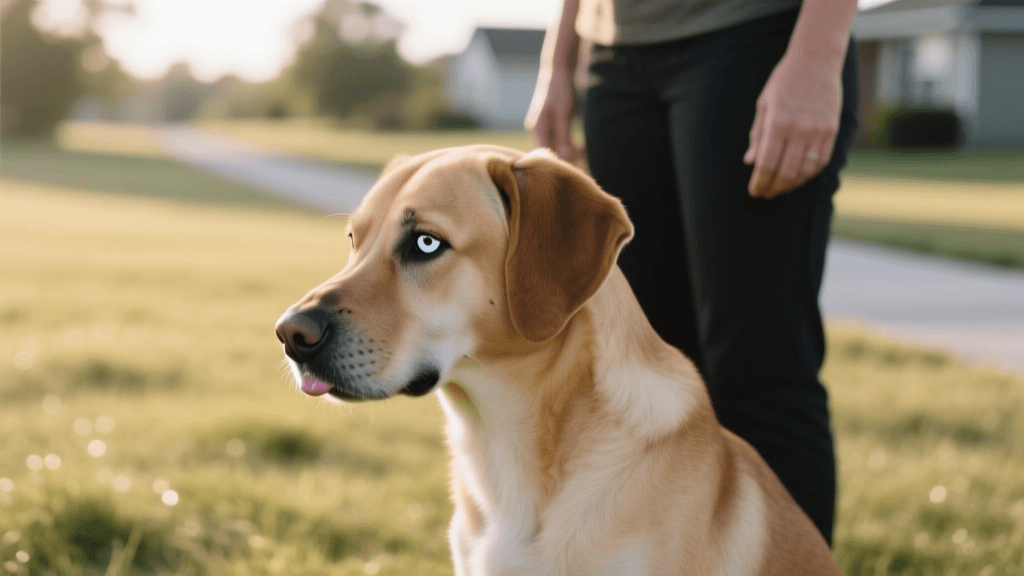
2. Whale Eye (Half-Moon Eye)
'Whale eye' occurs when a dog turns their head away from a stimulus but keeps their eyes fixed on it, exposing the white sclera in a half-moon shape. This is a severe indicator of discomfort and a plea for distance. It is frequently seen when a dog is being hugged by a child or when a reactive dog is forced into a cornered position during a training session. Ignoring whale eye is a primary precursor to defensive biting incidents.
3. Displacement Sniffing
While sniffing is a natural, enriching behavior for dogs, sudden and intense sniffing of the ground in the presence of a trigger is a 'displacement behavior.' The dog is essentially pretending to be busy to avoid making direct eye contact with the threat. It is a polite, canine way of saying, 'I am not a threat, please leave me alone.' Handlers often mistakenly jerk the leash to pull the dog's nose up, which only increases the dog's frustration and panic.
4. Head Turns and Body Curves
Dogs rarely approach things they are unsure of in a straight line. A dog that turns their head away from a trigger or curves their body is attempting to present a non-threatening profile. If you are walking your reactive dog and they actively curve their body away from an approaching stranger, they are employing a brilliant, innate de-escalation tactic. Reward this choice immediately.
5. The Tension-Breaking Play Bow
A play bow (front elbows on the ground, rear end in the air) is universally known as an invitation to play. However, in tense environments, it serves as a 'cut-off' signal or a tension breaker. A reactive dog might offer a frantic, stiff play bow toward an approaching dog to diffuse the situation. It is a sign of social anxiety and an attempt to pacify the environment rather than a genuine desire to engage in roughhousing.
Data Table: Signal Recognition and Training Adjustments
The following table outlines how to adjust your 2026 DS/CC protocol based on the specific calming signals your dog exhibits during an exposure session.
| Calming Signal | Emotional State | Immediate Training Adjustment |
|---|---|---|
| Lip Licking / Yawning | Mild to moderate stress; cognitive overload. | Increase distance from the trigger by 10-15 feet. Lower criteria for reinforcement. |
| Whale Eye | High stress; feeling trapped or threatened. | Immediately perform an emergency U-turn. Do not ask for obedience cues; just create space. |
| Displacement Sniffing | Avoidance; social discomfort. | Allow the dog to sniff for 5 seconds, then scatter high-value treats on the ground to encourage voluntary engagement. |
| Head Turn / Body Curve | Active de-escalation; polite boundary setting. | Mark and reward heavily (jackpot treats). Validate the dog's choice to disengage visually. |
| Frantic Play Bow | Social anxiety; attempted pacification. | Block the approaching trigger. Toss treats away from the trigger to redirect the dog's focus to you. |
The 2026 Desensitization and Counter-Conditioning (DS/CC) Protocol
Integrating calming signals into your training requires a structured approach to Desensitization and Counter-Conditioning. The goal is to change the dog's emotional response to a trigger from fear to anticipation of a positive outcome. Here is a modernized, actionable protocol for 2026.
Step 1: Baseline Mapping and Equipment Setup
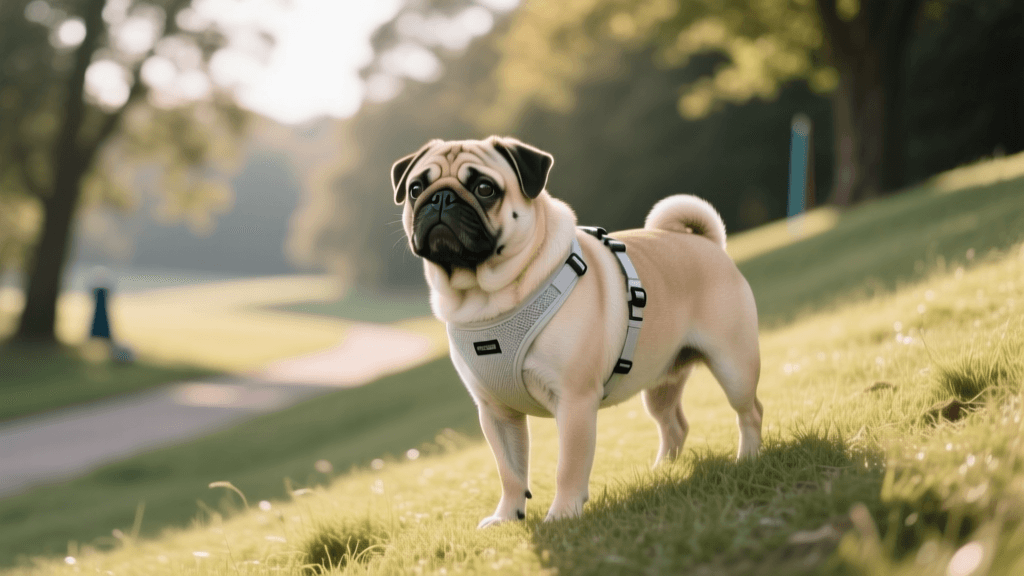
Before exposing your dog to triggers, ensure you have the right equipment. In 2026, force-free trainers overwhelmingly recommend a well-fitted Y-front harness (such as the Ruffwear Front Range, currently priced around $45) paired with a 15-foot biothane long line ($35-$45). This setup provides safety without the aversive pressure of a slip lead or prong collar, which can artificially suppress calming signals and lead to 'learned helplessness.' Map out your training environment to identify 'flight zones' where you can quickly increase distance if your dog shows whale eye or excessive lip licking.
Step 2: Sub-Threshold Exposure and the 'Engage/Disengage' Game
Find the 'sub-threshold' distance—the exact point where your dog notices the trigger but does not react with barking or lunging, and where calming signals are minimal. The moment the dog looks at the trigger, use a marker word like 'Yes!' or a clicker, and deliver a high-value treat. In 2026, premium training treats like Stella & Chewy's Raw Coated Bites (averaging $22 for a 16oz bag) or freeze-dried beef liver are essential. Kibble is rarely sufficient to compete with the neurochemical rush of a fear response. If the dog offers a head turn away from the trigger after eating, mark and reward again. This teaches the dog that looking at the trigger, and then voluntarily disengaging, pays off handsomely.
Step 3: Monitoring the HPA Axis via Signal Frequency
Keep sessions incredibly short. Modern veterinary behaviorists recommend DS/CC sessions lasting no longer than 5 to 10 minutes to prevent cortisol accumulation. If you notice a cluster of signals—for example, the dog yawns, licks their lips, and then begins displacement sniffing within a 30-second window—their HPA axis is becoming overwhelmed. End the session immediately on a positive note, perhaps by asking for a simple, highly reinforced cue like a hand target, and return to a safe, quiet space.
'A dog that is allowed to use calming signals without being punished or forced into a confrontation is a dog that learns to trust their handler as a reliable advocate for their emotional safety.' — Modern LIMA Behavioral Principles, 2026.
Common Mistakes to Avoid in Signal Recognition
Even well-meaning owners can sabotage their dog's progress by misinterpreting these signals. The most common mistake in 2026 remains 'toxic positivity'—attempting to force a dog to 'face their fears' by luring them closer to a trigger with food when they are actively displaying whale eye or stiff body curves. Food should be used to change an emotional association at a safe distance, not as a bribe to lure a terrified animal into a confrontation.
Another frequent error is correcting displacement behaviors. If your dog begins to intensely sniff the ground when a skateboard rolls by, do not pull the leash taut to force their head up. The sniffing is a coping mechanism. Instead, gently scatter a handful of treats into the grass. This validates their need to look away while keeping them in the training game, effectively bridging the gap between their instinctual calming signals and your desired operant behavior.
Conclusion: Building a Fluent, Two-Way Relationship
Mastering canine calming signals transforms dog training from a series of mechanical commands into a rich, two-way conversation. By observing lip licking, whale eye, and body curves, you empower your dog to communicate their boundaries before they feel the need to escalate to reactivity. As the science of canine behavior continues to advance in 2026, the most successful handlers are those who listen with their eyes, respect their dog's emotional thresholds, and use high-value reinforcement to build a foundation of profound, mutual trust. Whether you are working with a newly adopted rescue or a lifelong companion, tuning into these subtle frequencies is the ultimate key to a harmonious life together.
marcus-aldridge
All our authors care for dogs every day — read more of their work on the authors page.