Decoding Dog Calming Signals and Leash Reactivity in 2026
Learn to decode canine calming signals and appeasement gestures to reduce leash reactivity and stress in multi-dog households. Updated for 2026.
The Evolution of Canine Communication in 2026
As we navigate the densely populated urban environments and multi-dog households of 2026, understanding the subtle nuances of canine communication has never been more critical. Dogs are constantly speaking to us and to each other through a complex vocabulary of body language. While barking and growling are obvious, the most vital communications often happen in silence. According to the American Kennel Club, recognizing these subtle cues is the foundation of modern, force-free dog training and behavioral management.
At the heart of this silent language are 'calming signals'—a term popularized by canine behaviorist Turid Rugaas. These are appeasement gestures and stress-relief behaviors that dogs use to de-escalate tension, communicate peaceful intentions, and self-soothe in overwhelming environments. In 2026, with the rise of high-density living and increased off-leash dog park interactions, mastering the ability to read and respond to these signals is essential for preventing leash reactivity and maintaining harmony in multi-dog homes.
7 Essential Calming Signals Every Owner Must Recognize
To effectively communicate with your dog, you must first learn their vocabulary. Here are the seven most common calming signals you will observe in daily life:
1. Yawning Out of Context
While yawning certainly indicates fatigue, a sudden yawn during a veterinary visit, a tense encounter with another dog, or when being scolded is a classic stress signal. The dog is attempting to calm themselves and signal to you that they are feeling overwhelmed.
2. Rapid Lip Licking
A quick flick of the tongue over the nose or lips, especially when no food is present, is a primary appeasement gesture. It is frequently seen when a dog is being hugged tightly by a child or when an unfamiliar person looms over them.
3. Head Turning and Avoidance
Direct, sustained eye contact is considered confrontational in canine culture. When a dog turns their head away or presents the side of their face, they are actively trying to de-escalate a situation and communicate that they are not a threat.
4. Ground Sniffing (Displacement Behavior)
If two dogs are approaching each other and one suddenly becomes intensely interested in a completely barren patch of grass, they are using ground sniffing as a displacement behavior. It lowers the arousal level of the interaction and prevents a frontal, aggressive collision.
5. Sudden Scratching
An abrupt, vigorous scratch that seems entirely out of place during a training session or a tense walk is a physiological release of nervous energy. It is the canine equivalent of a human nervously running their hands through their hair.
6. The Curved Approach
Polite dogs rarely approach each other in a straight, head-on line. Instead, they use a curved trajectory to signal peaceful intentions. Forcing a dog to walk in a straight line directly toward a trigger on a tight leash violates this natural instinct and often triggers reactivity.
7. Slow Movement and Freezing
When a dog moves in slow motion or completely freezes, they are attempting to calm an escalating situation. This is often misinterpreted by owners as stubbornness, but it is actually a plea for space and time to process their environment.
Calming Signals vs. Aggression: A Comparison Chart
Understanding the difference between a dog trying to avoid conflict and a dog preparing for it is crucial. The ASPCA emphasizes that most dog bites occur when early stress signals are ignored, forcing the dog to escalate to aggression.
| Behavioral Signal | True Canine Meaning | Common Human Misinterpretation |
|---|---|---|
| Turning head away | Appeasement and avoidance of conflict | Ignoring the owner or being stubborn |
| Yawning during training | Cognitive overload or mild stress | Boredom or lack of interest |
| Slow walking toward trigger | De-escalation and caution | Defiance or refusal to obey |
| Sniffing ground during greeting | Polite introduction and lowering arousal | Distraction or poor recall |
| Lip licking when approached | Discomfort and request for space | Hunger or anticipation of a treat |
Applying Calming Signals to Leash Reactivity in 2026
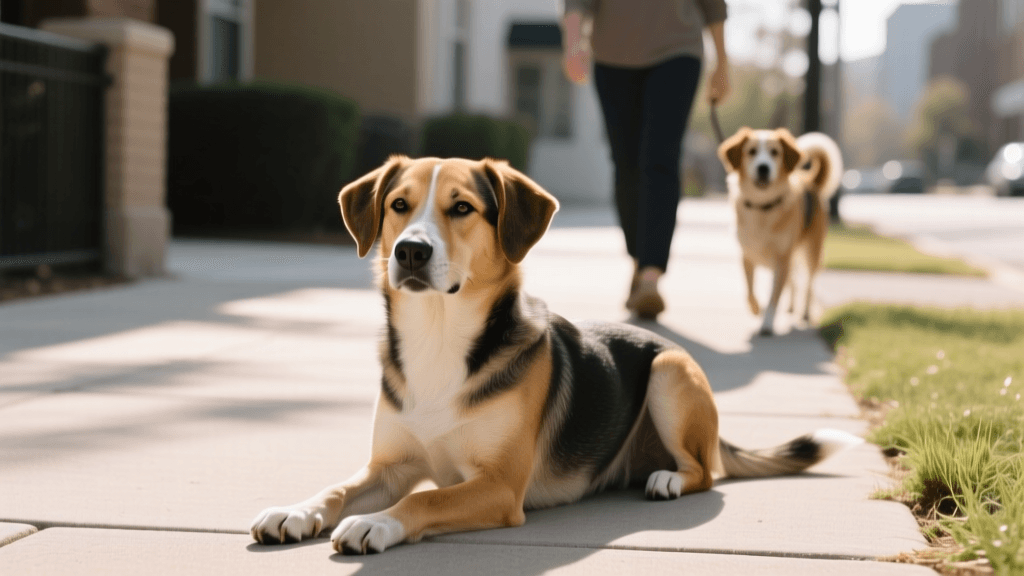
Leash reactivity remains one of the most pervasive behavioral challenges in 2026. When a dog is confined to a six-foot leash, their natural ability to use calming signals—such as curving away or increasing distance—is severely restricted. This restriction often leads to 'leash frustration,' which manifests as lunging and barking.
To combat this, modern behavioral protocols recommend using a 2026 dual-clip front-and-back harness. This equipment allows you to gently guide your dog into a natural curve rather than pulling them head-on toward a trigger. When you spot an oncoming dog, immediately lengthen the leash, allow your dog to arc away, and encourage a brief moment of ground sniffing. By facilitating their natural calming signals, you keep their sympathetic nervous system from triggering a fight-or-flight response.
Mirroring Calming Signals: How Humans Can Respond
Communication is a two-way street. Once you understand your dog's signals, you can begin to mirror them to communicate your own peaceful intentions. This is particularly effective for rescue dogs with trauma histories or highly anxious breeds.
- The Soft Blink: Instead of staring directly into your dog's eyes, soften your gaze and blink slowly. This mimics the canine signal of non-aggression.
- Turn Your Side: If your dog is overwhelmed, do not face them squarely. Turn your body sideways and avoid leaning over them, which reduces their spatial pressure.
- Move Slowly: When approaching a stressed dog, move in slow motion. Quick, jerky human movements trigger a dog's prey drive and anxiety responses.
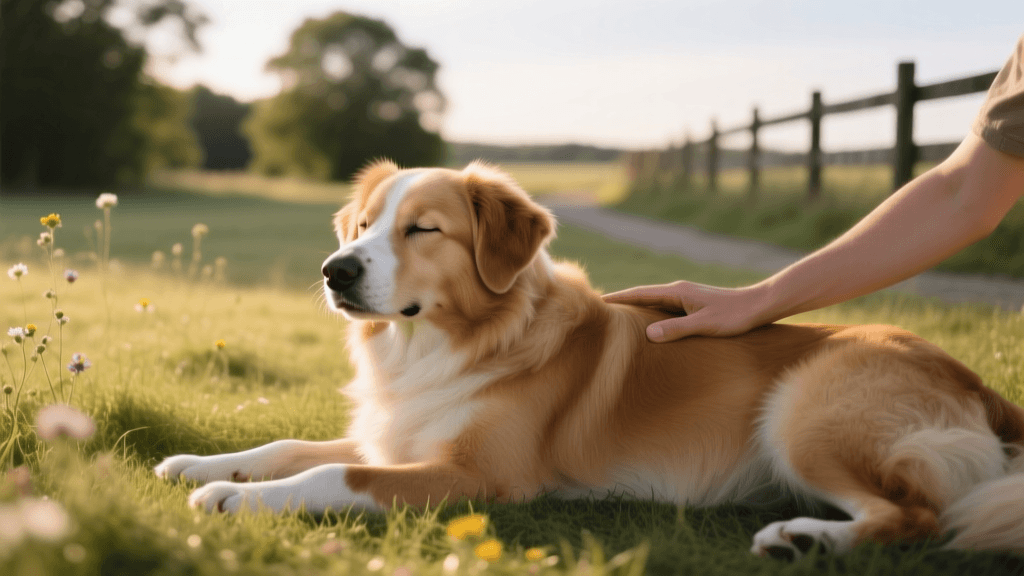
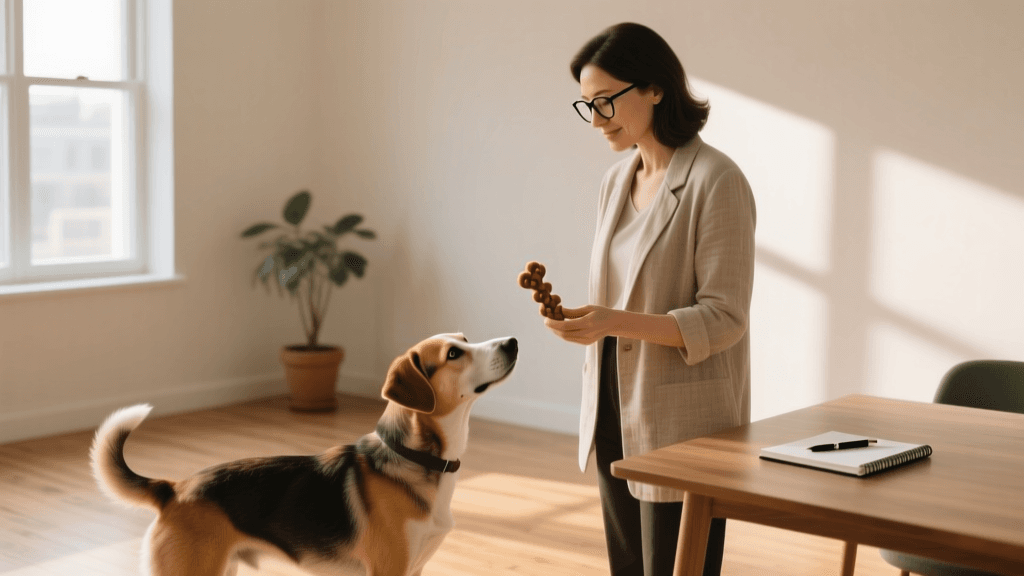
- Use Ground Scatter: Tossing a handful of high-value treats onto the grass encourages your dog to engage in ground sniffing, naturally lowering their heart rate and shifting their brain from an emotional state to a foraging state.
The Role of Biometric Smart Collars in 2026
The integration of technology into canine behavioral science has reached new heights in 2026. The latest biometric smart collars now feature advanced Heart Rate Variability (HRV) tracking and real-time stress alerts. While these devices cannot replace the necessity of learning visual calming signals, they serve as an invaluable early warning system.
Often, a dog's internal stress levels begin to spike minutes before a visible calming signal, like a yawn or lip lick, occurs. By monitoring your dog's HRV via your smartphone app during a busy walk, you can proactively create distance from a trigger before your dog reaches their reactivity threshold. This proactive approach, combining 2026 wearable technology with an intimate understanding of canine body language, represents the gold standard in modern dog ownership.
Conclusion
Decoding canine calming signals is not merely a training trick; it is a fundamental shift in how we view our relationship with dogs. By recognizing appeasement gestures, respecting their need for space, and utilizing modern tools like dual-clip harnesses and biometric collars, we can drastically reduce leash reactivity and anxiety. In 2026, the most successful dog owners are those who listen not just to what their dogs are barking, but to what they are silently saying.
jonas-cole
All our authors care for dogs every day — read more of their work on the authors page.