Decoding Canine Calming Signals & HRV Smart Collars in 2026
Learn to decode canine calming signals like lip licking and whale eye, and discover how 2026 HRV smart collars track your dog's hidden stress levels.
The Hidden Language of Dogs: Understanding Calming Signals
Dogs are constantly communicating with us, but their language is far more nuanced than simple barks and tail wags. As we navigate the evolving landscape of canine behavioral health in 2026, veterinary behaviorists are placing a renewed emphasis on 'calming signals'—a concept originally pioneered by Norwegian dog trainer Turid Rugaas. These subtle physical cues are a dog's primary mechanism for de-escalating tension, expressing internal discomfort, and maintaining social harmony. Recognizing these signals is the first critical step in proactive canine wellness.
According to the ASPCA's guidelines on canine body language, misinterpreting these early warnings often leads to chronic stress, which can manifest as gastrointestinal issues, suppressed immune function, and reactive behaviors. By learning to read the subtle whispers of your dog's body, you can intervene long before stress escalates into a behavioral or medical crisis.
The 6 Primary Canine Calming Signals
- Lip Licking and Tongue Flicks: Often mistaken for hunger or anticipation, rapid, repetitive lip licks in the absence of food are a classic sign of cognitive dissonance or mild anxiety. You will frequently see this at the veterinary clinic or when a dog is being hugged tightly by a child.
- Yawning Out of Context: If your dog yawns when they are not tired—such as during a training session, a loud thunderstorm, or an intense stare from another dog—they are attempting to self-soothe and lower their heart rate.
- Whale Eye (Half-Moon Eye): This occurs when a dog turns their head away but keeps their eyes fixed on a stressor, exposing the whites of their eyes. It is a critical indicator of high stress and a potential precursor to defensive aggression.
- Ground Sniffing: While sniffing is a natural exploratory behavior, sudden, intense sniffing of the ground when approached by another dog or a stranger is a deliberate avoidance tactic used to signal non-threatening intentions.
- Turning the Head or Body Away: A direct frontal approach is considered confrontational in canine culture. Dogs will turn their heads or present their sides to diffuse tension. The American Kennel Club (AKC) notes that forcing a dog into direct, sustained eye contact when they are offering this signal can severely damage trust.
- The Play Bow: While used to initiate play, the play bow is also utilized as an 'apology' or a tension-breaker after a minor social misunderstanding between two dogs.
The 2026 Breakthrough: HRV Tracking for Canine Stress
While visual calming signals are invaluable, they have limitations. Some dogs are 'stoic' and suppress outward signals until they reach a threshold of panic. Furthermore, owners are not always present to observe these cues during separation anxiety episodes or nighttime disturbances. This is where the 2026 generation of biometric wearable technology has revolutionized canine preventative care.
The gold standard for measuring autonomic nervous system balance in both humans and canines is Heart Rate Variability (HRV). HRV measures the microscopic variations in time between consecutive heartbeats. A high HRV indicates a dominant parasympathetic nervous system (rest, digest, and recover), meaning the dog is relaxed and adaptable. A chronically low HRV indicates sympathetic dominance (fight or flight), revealing hidden, systemic stress that may not yet be visible to the naked eye.
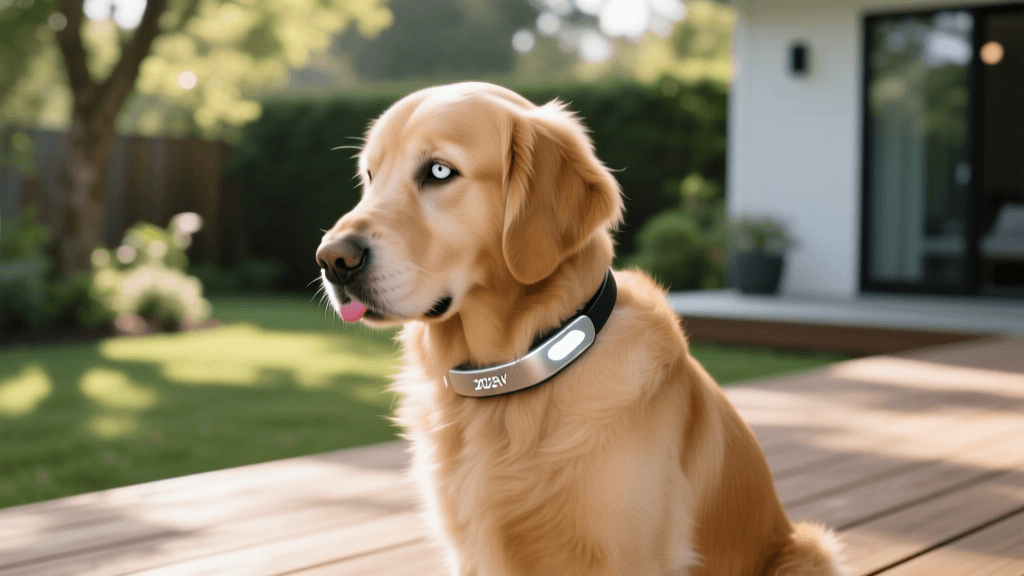
In 2026, top-tier smart collars utilize advanced photoplethysmography (PPG) and miniaturized ECG sensors capable of reading HRV through dense canine coats. By establishing a baseline HRV for your specific dog, these devices can push real-time 'Stress Spike' alerts to your smartphone, allowing you to correlate biometric data with environmental triggers and subtle calming signals.
2026 Smart Collar Comparison: HRV and Stress Monitoring
| Collar Model (2026) | HRV Sensor Type | Stress Metric Feature | Battery Life | Est. Price (Hardware + 1 Yr Sub) |
|---|---|---|---|---|
| Fi Series 4 Health | Optical PPG | Zen Score (Daily HRV Baseline) | Up to 3 Months | $198 |
| Whistle Health Pro 2026 | ECG-Grade Thread | Acute Anxiety Index Alerts | 20 Days | $215 |
| PetPace Sense 2 | Multi-Parameter (HRV/Temp/Pulse) | Vet Dashboard & Stress Heatmaps | 14 Days | $249 |
Actionable Steps: Combining Visual Cues with Biometric Data
Integrating your observational skills with 2026's wearable technology creates a comprehensive wellness protocol. The Fear Free initiative emphasizes that reducing fear, anxiety, and stress (FAS) is just as important as treating physical ailments. Here is a step-by-step protocol for managing your dog's stress in real-time.
Step 1: Acknowledge and Validate the Signal
When you notice a calming signal—such as your dog yawning repeatedly during a nail trim or lip licking when a guest enters—do not force them to push through the discomfort. Acknowledge the signal by immediately removing the pressure. Step back, lower your voice, and give them physical space.
Step 2: Check the Biometric Dashboard
Open your smart collar's app to review the HRV trend. If your dog's HRV has dropped significantly below their 30-day rolling average, their nervous system is overloaded. This data validates that the visual signal you witnessed is part of a broader physiological stress response, not just a fleeting moment of annoyance.
Step 3: Initiate a Decompression Protocol
Once a stress spike is confirmed via visual cues or app alerts, initiate an immediate decompression activity to engage the parasympathetic nervous system:
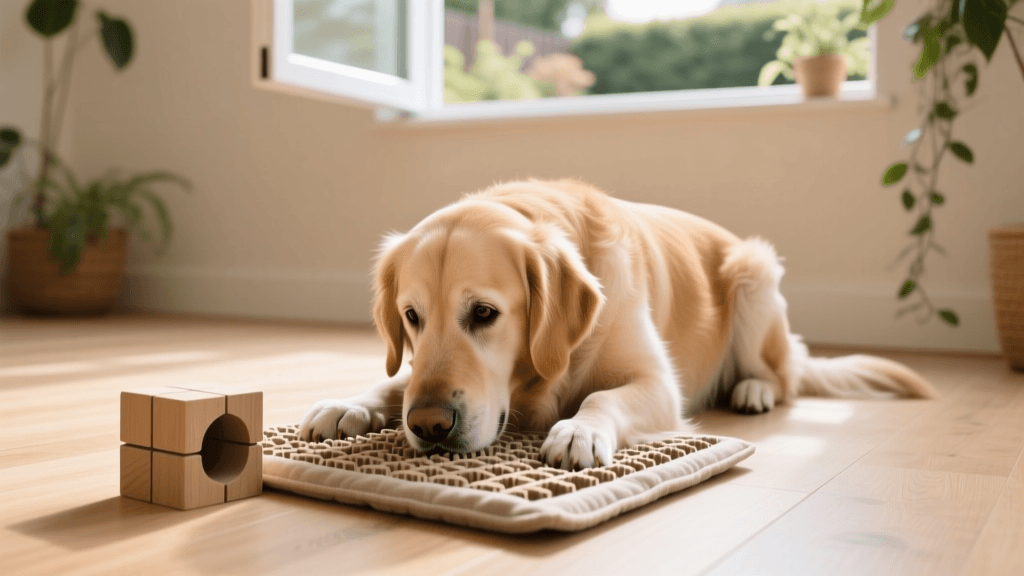
- Enzymatic Licking: Provide a frozen lick mat smeared with plain pumpkin puree or goat's milk. The repetitive motion of licking releases endorphins and naturally lowers the heart rate.
- Sniffari Walks: Take your dog to a quiet, novel environment on a long line (15-30 feet). Allow them to dictate the pace and direction. Sniffing lowers the canine pulse rate and provides essential mental enrichment that burns off anxious energy.
- Deep Pressure Therapy: Utilize a calibrated anxiety wrap or weighted canine vest. The sustained, gentle pressure stimulates the release of oxytocin, counteracting cortisol.
Step 4: Long-Term Environmental Management
If your dog's 2026 smart collar data shows a chronic downward trend in HRV over several weeks, it is time to consult a veterinary behaviorist. Chronic low HRV is a precursor to stress-induced colitis, atopic dermatitis flare-ups, and premature aging. Your vet may recommend integrating evidence-based nutraceuticals, such as L-theanine, alpha-casozepine, or specialized probiotic strains like Bifidobacterium longum BL999, which target the gut-brain axis to improve emotional resilience.
'We can no longer afford to wait until a dog growls or bites to realize they are suffering. The combination of reading subtle calming signals and utilizing continuous HRV biometrics allows us to practice true preventative behavioral medicine.' — 2026 Veterinary Behavioral Wellness Report
Conclusion: Becoming a Fluent Advocate for Your Dog
Decoding canine communication is a lifelong journey of empathy and observation. By mastering the recognition of calming signals like whale eye, ground sniffing, and contextual yawning, you validate your dog's emotional experience. When you pair this ancient language with the cutting-edge HRV tracking capabilities of 2026's smart collars, you bridge the gap between what your dog is showing you and what their body is silently enduring. This holistic approach ensures that your companion remains not just physically healthy, but deeply, fundamentally at peace in their environment.
hannah-wickes
All our authors care for dogs every day — read more of their work on the authors page.