Canine Calming Signals: Decoding Dog Stress in 2026
Learn to decode canine calming signals and appeasement behaviors in 2026. Identify dog stress indicators and improve your bond through better communication.
The Evolution of Canine Communication in 2026
Dogs do not speak our language, but they are constantly talking to us. In 2026, the science of canine ethology and behavioral psychology has advanced significantly, moving beyond basic obedience training to a profound understanding of emotional communication. At the heart of this communication are 'calming signals'—a sophisticated vocabulary of appeasement behaviors dogs use to self-soothe, de-escalate tension, and communicate their emotional state to both humans and other animals.
Originally popularized by Norwegian dog trainer Turid Rugaas in the late 20th century, the concept of calming signals has been heavily validated by modern veterinary behaviorists. Today, understanding these signals is considered a fundamental pillar of responsible dog ownership. According to the American Kennel Club's guide to dog body language, recognizing subtle stress indicators before they escalate into fear-based reactivity is the most effective way to prevent behavioral issues and ensure a harmonious household.
What Are Canine Calming Signals?
Calming signals are innate, involuntary, and sometimes voluntary physical cues that dogs exhibit when they feel stressed, conflicted, or overwhelmed. They serve two primary purposes:
- Self-Soothing: Lowering the dog's own heart rate and cortisol levels in a tense situation.
- Appeasement: Communicating peaceful intentions to a perceived threat (which could be an aggressive dog, a loud human, or an intimidating environment) to prevent conflict.
Unlike aggressive posturing or clear signs of joy, calming signals are often incredibly subtle. A dog might exhibit these signals at the veterinarian's office, during a loud thunderstorm, when being scolded, or even when a toddler hugs them too tightly. Missing these signals can lead to a breakdown in trust, as the dog feels its communication is being ignored.
The 7 Core Calming Signals Every Owner Must Know
To truly understand your dog in 2026, you must learn to read the micro-expressions and body shifts that indicate internal stress. Here are the most common calming signals:
1. Yawning Out of Context
While dogs yawn when they are tired, a sudden yawn in a stimulating or stressful environment is a classic stress indicator. If your dog yawns while being groomed, hugged, or scolded, they are not bored; they are attempting to regulate their nervous system and signal that they are uncomfortable with the interaction.
2. Lip Licking and Nose Flicking
A quick flick of the tongue over the nose or repeated lip licking (when no food is present) is a rapid-fire appeasement signal. It is often one of the very first signs of anxiety. The ASPCA's resources on common dog behavior issues frequently highlight lip licking as a precursor to more severe stress responses if the trigger is not removed.
3. Turning the Head or Looking Away
In canine culture, direct, sustained eye contact is a challenge or a threat. When a dog turns its head away from you, another dog, or a camera, it is actively trying to de-escalate the situation. They are saying, 'I am not a threat, and I find this interaction overwhelming.'
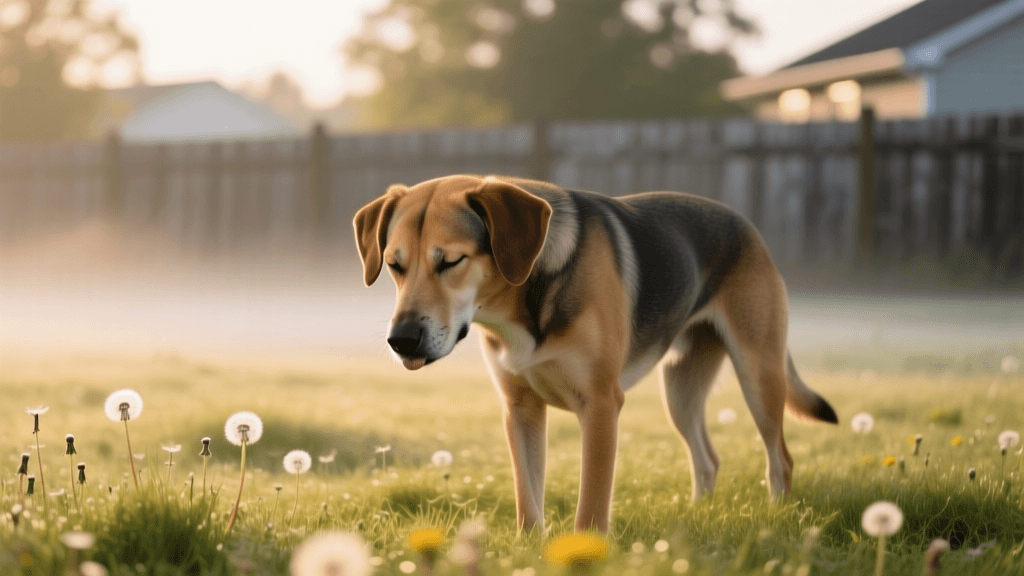
4. Sniffing the Ground
While sniffing is a natural exploratory behavior, sudden, intense sniffing of a barren floor when being approached or called is a displacement behavior. It is a polite way for a dog to avoid direct confrontation and lower the social tension in the room.
5. Curving the Approach
Dogs rarely walk in straight lines toward one another when greeting politely. Approaching in a wide arc or curve is a calming signal that communicates peaceful intentions. A dog that walks in a straight, stiff line toward another dog is often displaying rude or potentially aggressive body language.
6. The Play Bow
While universally recognized as an invitation to play, the play bow (front elbows on the ground, rear end in the air) is also used to diffuse tension. If a dog feels a social interaction is becoming too rough or serious, they may drop into a play bow to remind the other party that the interaction is meant to be friendly.
7. Freezing and Moving Slowly
When a dog feels deeply insecure or threatened, they may freeze entirely or begin moving in slow motion. This is an attempt to avoid triggering a predator's chase instinct or an aggressor's attack response. It is a critical signal that the dog is at its threshold and needs immediate space.
Stress vs. Relaxation: A 2026 Behavioral Comparison Chart
Understanding the difference between a relaxed dog and a stressed dog displaying calming signals is vital. Below is a comparison chart to help you decode your dog's current emotional baseline.
| Body Part | Relaxed & Content State | Stressed & Appeasing State |
|---|---|---|
| Ears | Neutral, relaxed, or slightly forward in interest | Pinned flat back or tightly drawn to the sides |
| Eyes | Soft gaze, normal pupil size, relaxed eyelids | Hard stare, 'whale eye' (showing whites), squinting |
| Mouth | Slightly open, relaxed jaw, soft panting | Tightly closed, lip licking, yawning, panting heavily |
| Tail | Loose, sweeping wag at mid-level or natural carriage | Tucked between legs, stiff high carriage, or rigidly still |
| Posture | Weight evenly distributed, loose muscles | Weight shifted back, cowering, trembling, or freezing |
The Danger of Misinterpreting Signals as 'Stubbornness'
One of the most common pitfalls in dog ownership is mislabeling calming signals as disobedience. Imagine calling your dog to come inside, and instead of running to you, they stop, turn their head away, and begin intensely sniffing the grass. In the past, this might have been labeled as 'stubbornness' or 'ignoring the owner.'
However, modern behavioral science reveals a different story. If your tone of voice was frustrated, loud, or sharp, your dog likely perceived your anger. The sniffing and head-turning are not acts of defiance; they are desperate calming signals meant to appease you and defuse your perceived aggression. Punishing a dog for exhibiting calming signals is deeply damaging, as it teaches the dog that their peaceful communication is无效 (ineffective), which can lead to 'learned helplessness' or sudden, unprovoked biting when the dog realizes subtle signals are being ignored.
How to Mirror Calming Signals to Soothe Your Dog
Because calming signals are a universal canine language, humans can actually mimic them to help soothe an anxious dog. In 2026, force-free trainers heavily advocate for 'mirroring' techniques to build trust:
- Yawn Back: If your dog is yawning at the vet clinic, exaggerate your own yawning. This signals to your dog that you also recognize the tension and are actively trying to keep the peace.
- Turn Sideways: Never loom directly over a fearful dog. Turn your body sideways, avoid direct eye contact, and allow the dog to approach you in their own time.
- Blink Slowly: If a dog is giving you a hard, worried stare, slowly blink your eyes and look slightly away. This mimics a canine appeasement signal and shows you are not a threat.
- Move Slowly: If your dog is overwhelmed, slow down your own movements. Jerky, fast human movements can trigger anxiety in an already stressed canine.
The Role of Biometric Tech in Monitoring Canine Stress
The year 2026 has brought remarkable advancements in pet technology that complement our understanding of canine body language. Modern biometric smart collars now track Heart Rate Variability (HRV) and respiratory rates in real-time. By correlating the data from these collars with observed calming signals, owners can pinpoint exact environmental triggers that cause their dog's internal stress levels to spike.
For example, you might notice your dog's HRV drops significantly when walking past a specific construction site, even if the dog is not barking or pulling on the leash. The dog might simply be exhibiting subtle lip licking and head turning. The biometric data validates the subtle body language, proving that the dog is internally stressed and requires a change in route or a desensitization protocol. This fusion of technology and ethology allows for unprecedented empathy and precision in dog care.
Conclusion: Listening to the Whispers
Dogs are incredibly forgiving creatures, but they rely on us to learn their language. Calming signals are the whispers of the canine world. By learning to recognize yawning, lip licking, ground sniffing, and head turning, you can intervene before your dog's stress escalates into fear or reactivity. In 2026, being a responsible dog owner means looking beyond basic commands and tuning into the rich, silent conversation your dog is having with you every single day. Respect their signals, give them space when they ask for it, and watch your bond deepen into unbreakable trust.
marcus-aldridge
All our authors care for dogs every day — read more of their work on the authors page.