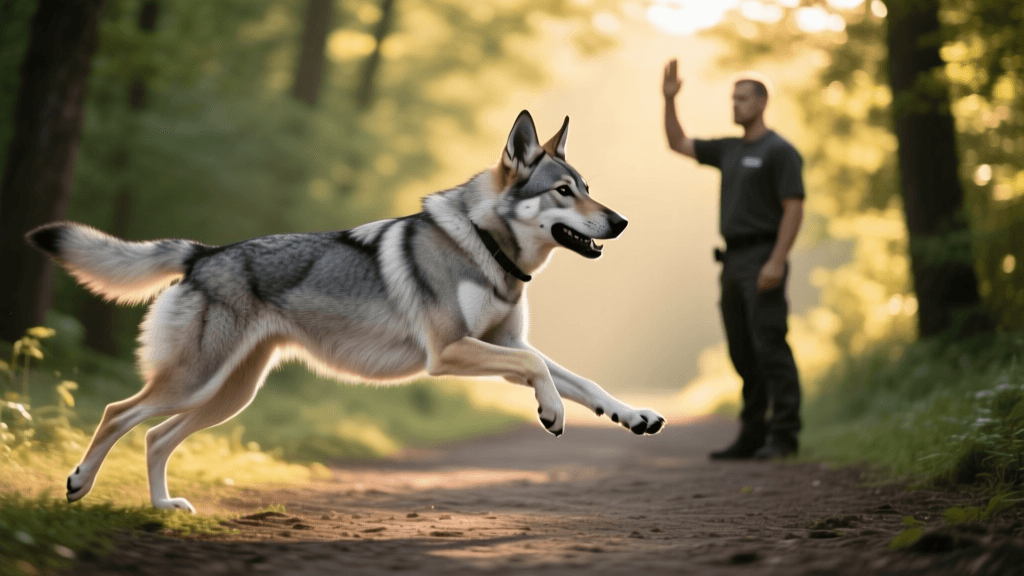
Czechoslovakian Wolfdog Training 2026: Recall and Impulse Control
Master Czechoslovakian Wolfdog training in 2026 with expert recall and impulse control techniques tailored for this exotic, high-prey-drive breed.
The Unique Challenge of the Czechoslovakian Wolfdog
The Czechoslovakian Wolfdog (CSV) is a masterpiece of exotic canine genetics, originally developed by crossing Carpathian wolves with German Shepherds. As we navigate the global dog training landscape in 2026, the CSV has surged in popularity across North America and Western Europe. However, their striking wolf-like appearance is matched only by their intense independence, high prey drive, and complex pack psychology. Training a CSV is not like training a traditional herding or retrieving breed; it requires a deep understanding of primitive canine behavior, modern behavioral conditioning, and specialized equipment.
According to the American Kennel Club's Czechoslovakian Vlciak breed profile, these dogs are immensely loyal to their pack but possess a natural wariness of strangers and an explosive prey drive. In 2026, the most critical skills a CSV owner must master are emergency recall and impulse control. Without these, off-leash freedom in open environments is virtually impossible, and the dog's safety is constantly at risk.
Essential Gear for Exotic Breed Training in 2026
Before initiating any behavioral conditioning with a high-drive exotic breed, you must equip yourself with the right tools. Standard nylon leashes and basic harnesses are insufficient for a dog that can accelerate to 35 miles per hour in seconds.
The Biothane Long Line
For recall training, a 30-to-50-foot Biothane long line is mandatory. Biothane is a waterproof, durable, and tangle-resistant material that mimics leather but withstands mud, snow, and water without degrading. In 2026, the standard recommendation for a CSV is a 1/2-inch width, which provides enough tensile strength to stop a 60-pound lunging dog without being too heavy for the dog to drag. Expect to invest between $45 and $65 for a high-quality, custom-riveted Biothane line.
GPS Telemetry and E-Collar Integration
While traditional e-collars are still used, the 2026 standard for exotic, high-prey-drive breeds involves GPS telemetry integration. The Garmin Alpha 300i series has become the gold standard, offering real-time tracking, customizable stimulation levels, and tone-based recall cues. Priced around $700 to $800, this investment is non-negotiable for owners who intend to hike or hunt with their CSV in unfenced, expansive terrains.
Mastering the Emergency Recall
Teaching a reliable recall to a Czechoslovakian Wolfdog requires moving beyond basic treat-tossing. You are competing against the dog's genetic imperative to chase. The AKC expert guide on teaching a reliable recall emphasizes the importance of high-value rewards and progressive distance training, but with a CSV, we must also incorporate whistle conditioning and prey-substitution.
Step 1: Whistle and Tone Conditioning
CSVs respond exceptionally well to high-frequency acoustic signals. Begin by pairing a specific gundog whistle sequence (e.g., two short pips) with a high-value food reward, such as 100% freeze-dried beef liver or raw venison heart. Do this in a low-distraction indoor environment for 10-minute sessions, twice daily. Once the dog associates the whistle with the reward, transition to the tone feature on your GPS collar.
Step 2: The Restrained Recall
Have a helper gently hold the dog's harness while you walk 15 feet away. Drop a high-value scent trail (like dragging a piece of raw tripe on the grass) and then call the dog using your whistle. The act of breaking away from the helper to chase you and the scent triggers their predatory chase sequence, but redirects it toward you. Reward heavily upon arrival.
Step 3: Proofing in the Wild
Attach the 50-foot Biothane line. Move to a wooded area with moderate wildlife scent. Allow the dog to sniff and explore. When they lock onto a scent and begin to pull, issue the recall whistle. If they ignore it, use the long line to gently guide them back—never yank. Once they return, reward with a 'jackpot' of treats and a brief game of tug with a real-fur flirt pole.
2026 Pro-Tip: Never use the recall command to call your CSV for something they perceive as negative, such as a bath, nail trimming, or being put into a crate. The recall must always predict a highly rewarding outcome, or the dog's independent nature will lead them to simply ignore the cue.
Impulse Control and Prey Drive Management
Impulse control is the ability of the dog to resist an immediate urge in favor of a long-term reward or command. For the CSV, managing prey drive around joggers, cyclists, and small wildlife is a matter of life and death. The AKC strategies for managing chasing and prey drive highlight the 'Engage/Disengage' game as a premier behavioral modification tool.
The Engage/Disengage Protocol
- Phase 1 (Engage): Stand at a sub-threshold distance from a trigger (e.g., a squirrel or a jogger, roughly 50 feet away). The moment your CSV looks at the trigger, click a marker word or use a clicker, and feed a high-value treat. The dog learns that noticing the trigger predicts a reward from you.
- Phase 2 (Disengage): Once the dog understands Phase 1, wait for them to look at the trigger and then voluntarily turn their head back to you before you mark and reward. This builds the neurological pathway of self-interruption.
- Phase 3 (Closing the Distance): Gradually decrease the distance to the trigger by 5 feet per week, provided the dog remains under their stress threshold. If the dog lunges or vocalizes, you have moved too close, too fast.
This protocol requires immense patience. A CSV may take 4 to 6 months of consistent daily practice to reliably disengage from a running deer at 30 yards, whereas a Border Collie might achieve this in 4 weeks.
Tool Comparison Chart for High-Drive Exotic Breeds
Selecting the right equipment is critical for safety and effective communication. Below is a comparison of the top training tools recommended for Czechoslovakian Wolfdogs and similar primitive breeds in 2026.
| Tool | Primary Use Case | Estimated Cost (2026) | Pros & Cons |
|---|---|---|---|
| Biothane Long Line (1/2 inch, 50ft) | Safe off-leash recall proofing | $50 - $75 | Pros: Tangle-free, waterproof. Cons: Can cause rope burn if grabbed bare-handed during a lunge. |
| GPS Telemetry Collar (e.g., Garmin Alpha 300i) | Tracking and remote communication | $700 - $850 | Pros: Real-time location, tone/vibrate cues. Cons: High upfront cost, requires charging. |
| Baskerville Ultra Muzzle | Veterinary visits, high-stress socialization | $25 - $40 | Pros: Allows panting/treats, bite prevention. Cons: Requires extensive positive conditioning. |
| Real-Fur Flirt Pole | Prey-drive redirection and impulse control | $35 - $60 | Pros: Satisfies chase instinct safely. Cons: Must enforce 'drop it' rules to prevent resource guarding. |
Socialization Protocols for the CSV
Socializing an exotic, wolf-hybrid breed requires a delicate balance. Unlike highly gregarious breeds, the CSV is naturally aloof. The goal of socialization is not to make them love every stranger or dog, but to teach them to remain neutral and calm in the presence of novel stimuli.
Neutrality Over Friendliness
In 2026, leading veterinary behaviorists emphasize 'neutrality training' for primitive breeds. When encountering a new person or dog on a walk, do not force your CSV to approach or be petted. Instead, maintain a 10-foot distance, ask your dog for a 'sit' or 'watch me', and reward them for ignoring the trigger. This builds confidence without triggering their defensive or predatory instincts.
Environmental Exposure
CSVs can be highly sensitive to environmental changes. Expose them to various surfaces (gravel, metal grates, wet grass), sounds (thunderstorm audio tracks played at low volume, city traffic), and objects (umbrellas opening, machinery) during their first year. Pair every novel experience with high-value food to create a positive emotional response.
Conclusion: Patience and Partnership
Training a Czechoslovakian Wolfdog is a profound commitment that tests the limits of your patience, consistency, and understanding of canine ethology. By leveraging modern 2026 GPS technology, utilizing high-value biological rewards, and strictly adhering to impulse control protocols like the Engage/Disengage game, you can forge an unbreakable bond with your exotic companion. Remember, you are not training a servant; you are negotiating a partnership with a highly intelligent, ancient spirit in a modern world.
robin-maitland
All our authors care for dogs every day — read more of their work on the authors page.