Crate vs Playpen Setup: Vet and Trainer Q&A Guide
Should new dog owners use a crate or a playpen? Our vet and trainer Q&A breaks down costs, sizing, and setup tips for a smooth transition home.
Welcome to the Expert Q&A: Crate vs. Playpen
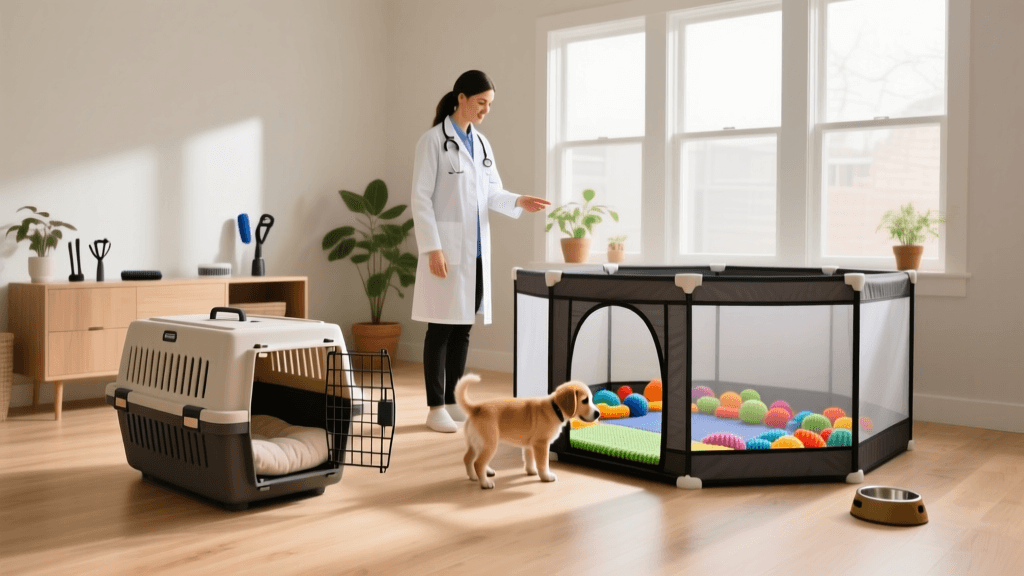
Bringing a new dog or puppy home is an exhilarating milestone, but the first 48 hours often bring a wave of logistical questions. One of the most common debates among new owners is whether to utilize a traditional wire crate or an open-top playpen for confinement and potty training. To settle the debate, we sat down with Dr. Elena Rostova, DVM, a veterinarian specializing in canine behavioral medicine, and Marcus Thorne, CPDT-KA, a certified professional dog trainer with over a decade of experience in puppy development.
In this comprehensive Q&A, our experts break down the science, safety, and practical setup of crates versus playpens, complete with specific product recommendations, exact measurements, and a first-week survival schedule.
Q1: Should I start with a crate or a playpen?
The Trainer's Perspective: Den Instinct vs. Freedom
Marcus Thorne (CPDT-KA): I always recommend having both, but they serve entirely different psychological purposes. A crate taps into a dog's natural den instinct. When introduced properly, it becomes a sanctuary where they can decompress. According to the American Kennel Club (AKC), a crate is an invaluable tool for teaching bladder control and providing a safe haven. However, a playpen is what I call a 'freedom zone.' It allows the puppy to move, play with toys, and drink water without the spatial restriction of a crate. For the first week, I use the crate for naps and nighttime sleep, and the playpen for daytime supervised downtime.
The Veterinarian's Perspective: Safety and Toxin Prevention
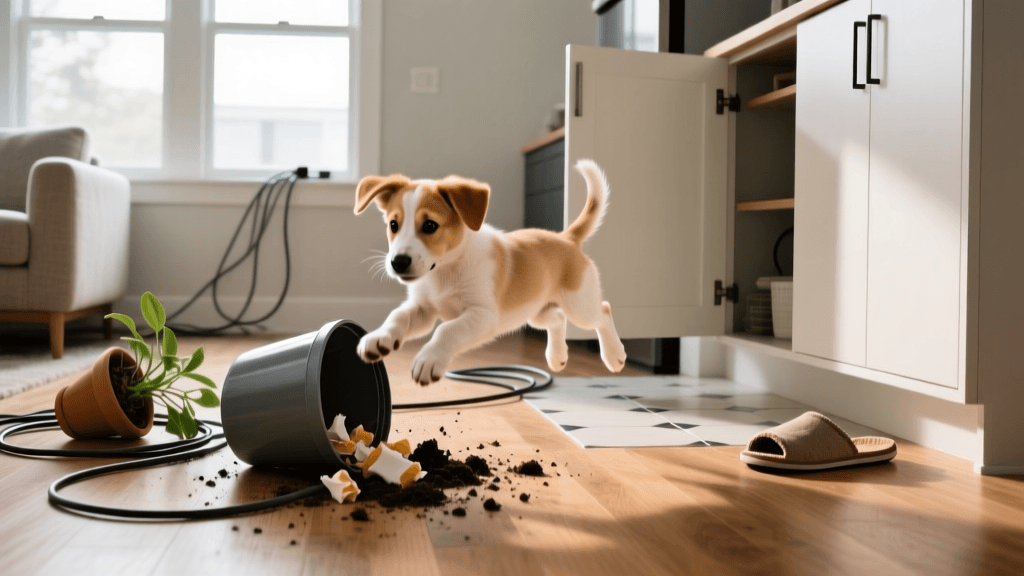
Dr. Elena Rostova (DVM): From a medical standpoint, the primary concern for a new puppy or rescue dog is environmental safety. Puppies explore the world with their mouths, and common household items like electrical cords, toxic houseplants, and dropped medications pose severe risks. A playpen is excellent for daytime containment because it prevents access to these hazards while allowing the dog to stretch their legs and regulate their body temperature better than a confined crate. However, for unsupervised periods or transport, a structurally sound crate is non-negotiable for physical safety.
Q2: Sizing, Dimensions, and Spatial Requirements
One of the most frequent mistakes new owners make is buying a crate or playpen based on the puppy's current size rather than their projected adult weight. An oversized crate can lead to a puppy eliminating in one corner and sleeping in the other, completely defeating the purpose of potty training.
Below is our expert-approved sizing chart to help you purchase the correct dimensions from day one.
| Estimated Adult Weight | Ideal Crate Size (L x W x H) | Recommended Playpen Area | Popular Product Match |
|---|---|---|---|
| 11 - 25 lbs | 24' x 18' x 21' | 8 to 16 sq. ft. | MidWest iCrate (Small) |
| 26 - 40 lbs | 30' x 21' x 24' | 16 to 24 sq. ft. | MidWest iCrate (Medium) |
| 41 - 70 lbs | 36' x 24' x 27' | 24 to 32 sq. ft. | MidWest iCrate (Large) |
| 71 - 90 lbs | 42' x 28' x 30' | 32+ sq. ft. | MidWest iCrate (X-Large) |
Marcus's Pro-Tip: If you are buying for an 8-week-old Labrador Retriever, buy the 42-inch crate immediately, but use the included wire divider panel to shrink the space to just 24 inches. As the puppy grows, move the divider back. For the playpen, the IRIS USA 8-Panel Exercise Pen is a staple in my training facility. It provides exactly 21 square feet of space and is tall enough (34 inches) to contain most medium-breed puppies up to 16 weeks of age.
Q3: Budgeting for Confinement Gear
Setting up your home doesn't have to break the bank, but investing in quality gear prevents costly replacements and veterinary bills. Here is a realistic cost breakdown for your primary confinement setup:
- Wire Crate with Divider (e.g., MidWest Homes for Pets): $60 - $85. Avoid plastic airline crates for home training, as they lack visibility and airflow.
- 8-Panel Metal or Heavy-Duty Plastic Playpen: $50 - $90. Ensure it has rubber feet to protect hardwood floors.
- Crate Bedding: $25 - $40. For heavy chewers, skip the plush beds and use a Kuranda PVC chew-proof cot or a simple folded towel until the teething phase passes.
- SmartPetLove Snuggle Puppy: $40. This includes a physical heartbeat simulator and heat pack, which is scientifically shown to reduce nighttime whining in newly separated puppies.
- Nature's Miracle Enzymatic Cleaner: $15. Essential for breaking down uric acid crystals in the playpen area to prevent repeat potty offenses.
Total Estimated Initial Investment: $190 - $270
Q4: Potty Training and Bladder Development
Dr. Rostova: A puppy's bladder sphincter is not fully developed until they are about 4 to 6 months old. The general rule of thumb is that a puppy can hold their bladder for one hour per month of age, plus one. Therefore, a 2-month-old puppy physically cannot hold it for more than 2 to 3 hours, even if they wanted to. The crate leverages a dog's natural instinct not to soil their sleeping area, making it the superior tool for active potty training.
Marcus: I use the playpen to create a 'potty zone' when I am working from home and cannot take the puppy outside every 45 minutes. I place the crate inside the playpen with the door open, and put a pee pad or a fresh grass patch (like Fresh Patch) at the opposite end of the pen. Dogs naturally avoid soiling their immediate sleeping quarters, so they will walk to the far end of the playpen to eliminate. This bridges the gap between their physical limitations and your schedule.
Q5: Managing Separation Anxiety and Nighttime Whining
New owners often panic when their dog cries in the crate at night. It is vital to differentiate between normal protest whining and true separation anxiety.
True separation anxiety involves destructive behavior, excessive salivation, and panic-induced escape attempts when the owner is absent. Protest whining is simply a dog expressing frustration over a change in their environment and routine.
Dr. Rostova: The ASPCA notes that separation anxiety is a complex behavioral condition that requires gradual desensitization and, in severe cases, pharmacological intervention. If your puppy is just whining because they miss their littermates, do not let them out of the crate while they are crying, or you will train them to cry to get out. Instead, use the Snuggle Puppy mentioned earlier, cover the crate with a breathable blanket to reduce visual stimuli, and play white noise to mask household sounds.
First-Week Protocol: Daytime vs. Nighttime
To ensure a seamless transition, follow this structured daily protocol for the first 7 days:
Daytime Schedule (Playpen Focus)
- 7:00 AM: Carry puppy directly from crate to outdoor potty spot.
- 7:30 AM - 8:30 AM: Supervised free-roam and play in the living room.
- 8:30 AM - 10:30 AM: Morning nap in the crate (door closed, covered).
- 10:30 AM: Potty trip, followed by breakfast.
- 11:00 AM - 2:00 PM: Puppy goes into the playpen with a frozen Kong toy while you work. Potty pad or grass patch is available in the corner.
- 2:00 PM - 4:00 PM: Afternoon nap in the crate.
Nighttime Schedule (Crate Focus)
- 8:00 PM: Remove water bowl to limit overnight bladder filling.
- 9:30 PM: Final potty trip outside.
- 9:45 PM: Puppy goes into the crate with a safe chew toy and the Snuggle Puppy.
- 2:30 AM: Set an alarm. Carry the puppy outside in the dark, no talking, no playing. Straight back to the crate.
Final Thoughts from the Experts
Choosing between a crate and a playpen isn't an either/or decision; it is about utilizing the right tool for the specific time of day and developmental stage. The crate is your dog's bedroom and primary potty-training mechanism, while the playpen is their daytime living room and safe play zone. By investing in the correct dimensions, managing their bladder expectations, and sticking to a rigid schedule, you will set your new dog up for a lifetime of confidence and good manners.
marcus-aldridge
All our authors care for dogs every day — read more of their work on the authors page.