Crate Training vs Puppy Pads: Best Potty Method Compared
Compare crate training and puppy pads side-by-side. Discover costs, timelines, and pros and cons to choose the best potty training method for your puppy.

The Great Potty Training Debate: Indoors vs. Outdoors
Bringing a new puppy home is an exhilarating experience, but it quickly introduces one of the most daunting challenges of dog ownership: potty training. For new puppy parents, the first major decision is choosing the right elimination strategy. The two most popular methods are crate training (which encourages outdoor elimination) and puppy pad training (which designates an indoor bathroom area). Both methods have distinct advantages, drawbacks, costs, and timelines. In this comprehensive side-by-side comparison, we will break down the mechanics, financial investments, and long-term outcomes of each approach to help you decide which potty training method is best for your lifestyle and your puppy's developmental needs.
Method 1: Crate Training (The Outdoor Route)
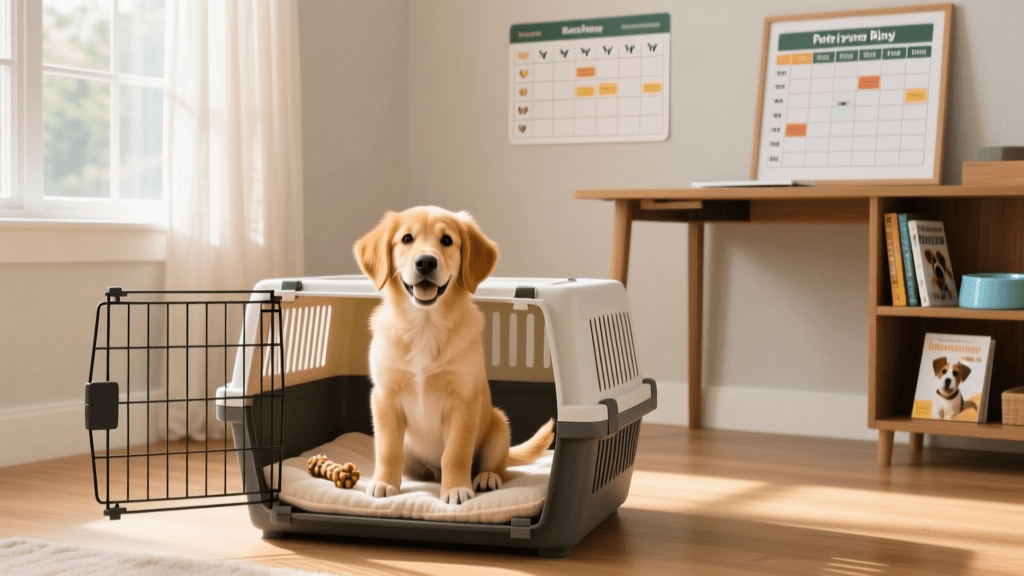
Crate training leverages a dog's natural den instinct. Dogs inherently avoid soiling the areas where they sleep and rest. By using a properly sized crate, you teach your puppy to hold their bladder and bowels until they are let outside to eliminate. This method is widely considered the gold standard for long-term house training.
How It Works and Actionable Setup
The key to crate training is sizing. If the crate is too large, the puppy will use one corner as a bathroom and sleep in the other. You should purchase a crate that will fit your dog's expected adult size, but use a divider panel to restrict the space while they are small. The puppy should have just enough room to stand up, turn around, and lie down comfortably.
- Product Recommendation: MidWest Homes for Pets iCrate (approx. $65 for a 36-inch double-door crate with a divider panel).
- Schedule: A general rule of thumb is that a puppy can hold their bladder for one hour per month of age. A two-month-old puppy needs outdoor trips every two hours, plus immediately after waking, eating, or playing.
- Reward System: Always reward outdoor elimination with high-value treats, such as Zuke's Mini Naturals (approx. $8 for a 6 oz bag), given within two seconds of the puppy finishing.
Pros and Cons of Crate Training
The primary advantage of crate training is that it establishes a lifelong habit of outdoor elimination, which is more hygienic and convenient for the vast majority of dog owners. It also aids in preventing destructive behavior when the puppy is unsupervised. However, the major drawback is the intense time commitment required during the first few months. You must be available to take the puppy outside frequently, including during the night, which can lead to sleep deprivation for the owner.
Method 2: Puppy Pad Training (The Indoor Route)
Puppy pad training involves teaching your dog to eliminate on absorbent, disposable pads placed in a designated indoor area. This method is often chosen by owners living in high-rise apartments, those who work long hours away from home, or those residing in regions with extreme, punishing weather conditions during the puppy's early months.
How It Works and Actionable Setup
Success with puppy pads requires strict environmental management. You must confine the puppy to a small, easily cleanable area (like a bathroom or a pen lined with linoleum) and cover the majority of the floor with pads. As the puppy learns to target the pads, you gradually reduce the number of pads until only one or two remain in a specific corner.
- Product Recommendation: Glad for Pets Black Charcoal Puppy Pads (approx. $28 for a 100-count box). The charcoal layer helps neutralize ammonia odors, which is critical for indoor air quality.
- Attractants: Some pads come pre-treated with pheromone attractants, but you can also use a dedicated pad training spray to encourage the puppy to use the designated spot.
- Confinement: Use a portable exercise pen (approx. $45) to restrict the puppy's access to the rest of the house, preventing them from mistaking a fluffy hallway rug for a potty pad.
Pros and Cons of Puppy Pad Training
The most significant benefit of pad training is convenience for the owner. It eliminates the need for rushed outdoor trips in the freezing rain or the middle of the night. It is also a necessity for puppies who have not yet completed their core vaccination series and cannot safely walk on public ground where parvovirus may be present. The downside is that it teaches the dog that it is acceptable to eliminate inside the house. This can lead to long-term confusion, as the dog may struggle to differentiate between a potty pad and a similarly textured bathroom rug or bedroom carpet.
Side-by-Side Comparison Chart
To help you visualize the differences, here is a direct comparison of the two methods across several critical metrics:
| Feature | Crate Training (Outdoor) | Puppy Pad Training (Indoor) |
|---|---|---|
| Primary Goal | 100% outdoor elimination | Designated indoor elimination |
| Ideal Environment | Homes with yards, accessible outdoor spaces | High-rise apartments, extreme climates, unvaccinated pups |
| Initial Setup Cost | $65 - $90 (Crate, divider, treats) | $70 - $90 (Pads, exercise pen, holder) |
| Ongoing Monthly Cost | $15 (Poop bags, enzymatic cleaner) | $30 - $50 (Continuous pad replacement) |
| Time to Basic Reliability | 4 to 6 months | 2 to 4 weeks (to learn pad location) |
| Owner Time Commitment | Very High (frequent outdoor trips) | Low to Moderate (daily pad changes) |
| Long-Term Convenience | High (dog asks to go out) | Low (must constantly buy and dispose of pads) |
The Hidden Costs and Cleanup Realities
Regardless of the method you choose, accidents will happen. The financial and olfactory reality of potty training requires an investment in high-quality cleaning supplies. Standard household cleaners often contain ammonia, which smells like urine to a dog and can actually encourage them to re-soil the same spot. You must use an enzymatic cleaner that breaks down the uric acid crystals at a molecular level.
Product Recommendation: Nature's Miracle Advanced Stain & Odor Eliminator (approx. $16 for a 32 oz bottle). According to guidelines published by the Humane Society of the United States, using specialized enzymatic cleaners is a non-negotiable step in preventing repeat offenses, as dogs possess an olfactory sense that is tens of thousands of times more sensitive than ours and will return to spots that still carry microscopic scent markers.
Transitioning from Pads to the Outdoors
Many owners start with puppy pads out of necessity (such as winter weather or incomplete vaccinations) but intend to transition their dog to outdoor elimination as they grow. This transition requires patience and a strategic approach to avoid confusing the puppy.
- Move the Pad Gradually: Shift the indoor pad a few feet closer to the exterior door every two days.
- Introduce the Outdoor Pad: Once the pad is right at the threshold, place a new pad just outside the door on the grass or balcony. Encourage the puppy to use it.
- Reduce the Pad Size: Cut the outdoor pad in half, then in quarters over the course of a week, forcing the puppy to get used to the texture of the grass beneath it.
- Eliminate the Pad: Remove the pad entirely and rely on high-value treats and verbal praise to reward direct elimination on the grass.
Expert Insights and Common Mistakes to Avoid
When executing either method, consistency is your greatest ally. Veterinary behaviorists emphasize that punishing a puppy for an accident is counterproductive and damaging to the human-animal bond. If you catch your puppy in the act, clap your hands loudly to interrupt the behavior, immediately carry them to the correct spot (outside or to the pad), and reward them if they finish. If you find an accident after the fact, simply clean it up silently. As noted by experts at VCA Animal Hospitals, dogs do not associate punishment with an action that occurred even minutes ago; they only learn to fear the owner's presence, which may cause them to hide behind furniture to eliminate in the future.
Another common mistake is giving a puppy too much freedom too soon. The ASPCA recommends keeping the puppy tethered to you with a leash indoors or confined to a single, puppy-proofed room when not in the crate. This allows you to read their body language—such as sniffing, circling, or whining—and intervene before an accident occurs.
Final Verdict: Which Method Should You Choose?
If your lifestyle allows for frequent outdoor breaks and you have safe, accessible outdoor space, crate training for outdoor elimination is overwhelmingly the best long-term choice. It aligns with a dog's natural instincts, saves money on ongoing supplies, and prevents indoor odor issues. However, if you live on the 14th floor of an apartment building, work 10-hour shifts, or are navigating a harsh winter with a vulnerable, unvaccinated puppy, puppy pad training is a highly effective, pragmatic tool. By understanding the costs, timelines, and management strategies of both methods, you can set realistic expectations and guide your puppy toward a clean, confident adulthood.
beth-carrasco
All our authors care for dogs every day — read more of their work on the authors page.