5 Crate Training Mistakes Ruining Your Dog's Safe Space
Avoid these 5 common crate training mistakes that cause anxiety. Learn expert tips on sizing, timing, and positive reinforcement for a happy pup.
The Foundation of Canine Behavioral Conditioning
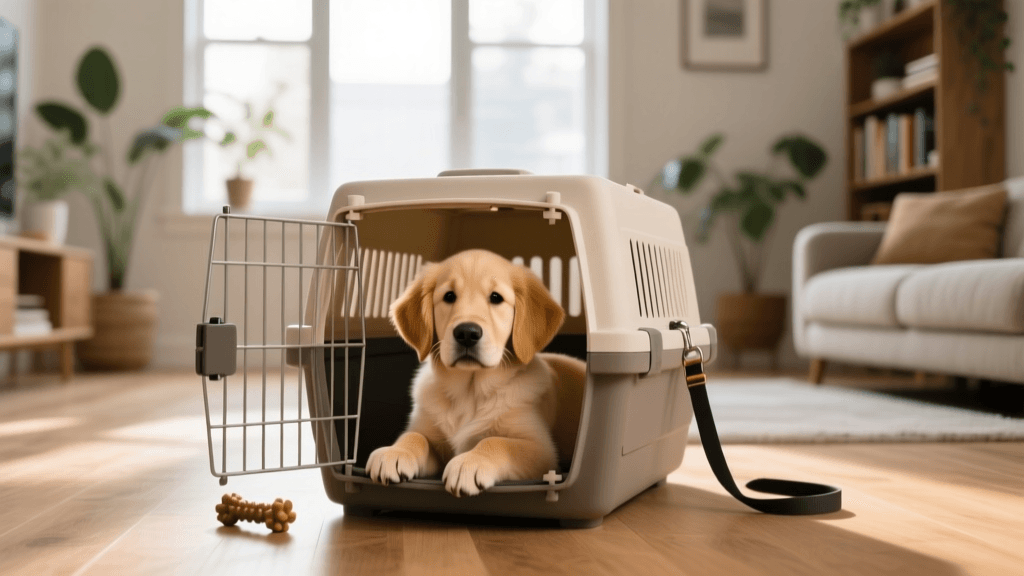
Crate training is one of the most effective tools in a dog owner's arsenal for housebreaking, preventing destructive behavior, and providing a secure den for your pet. When executed correctly, a crate becomes a sanctuary where your dog voluntarily retreats to relax. However, when executed poorly, it can become a source of severe anxiety, leading to phobias, excessive barking, and even self-injury. According to the ASPCA, the primary goal of crate training is to tap into a dog's natural instinct to seek out a small, enclosed space for safety and sleep. Unfortunately, many well-meaning pet parents inadvertently sabotage this process. Below, we break down the five most common crate training mistakes and provide actionable, data-backed solutions to ensure your dog's crate remains a positive environment.
Mistake 1: Using the Crate as a Punishment Zone
The fastest way to ruin your dog's association with their crate is to use it as a time-out zone. If you angrily march your dog to the crate after they chew up a shoe or have a house-soiling accident, they will quickly associate the enclosure with isolation and your negative emotional state. Dogs do not possess the cognitive ability to connect a past misdeed with a current confinement; they only understand that being put in the crate means they are being banished from the pack.
The Fix: The crate must only be associated with positive experiences. Feed your dog their meals inside the crate, toss high-value treats (like freeze-dried liver or small pieces of boiled chicken) into the back of the kennel, and provide long-lasting chews exclusively when they are inside. If your dog needs a time-out for behavioral correction, use a boring, safe space like a gated bathroom or a playpen, never their primary sleeping den.
Mistake 2: Guessing the Crate Size (And Ignoring the Divider)
Buying a crate that is too large is a frequent error, especially for puppy owners who buy an adult-sized crate to 'save money in the long run.' If a crate is too large, your dog will designate one corner for sleeping and the opposite corner for eliminating, completely defeating the purpose of using the crate for housebreaking. Conversely, a crate that is too small will cause physical discomfort and joint stress.
The Fix: Measure your dog accurately. Use a soft measuring tape to measure from the tip of their nose to the base of their tail (do not include the tail length), and add 2 to 4 inches. For height, measure from the floor to the top of their head (or the tips of their ears if they are erect) and add 2 to 4 inches. For example, an adult Golden Retriever typically requires a 42-inch wire crate, such as the MidWest Homes for Pets iCrate (retailing around $50-$70). If you have a growing puppy, the American Kennel Club highly recommends purchasing an adult-sized crate with an adjustable divider panel, allowing you to expand the living space incrementally as the puppy grows.
Mistake 3: Rushing the Acclimation Timeline
Many owners expect their new puppy or rescue dog to happily walk into a crate and sleep through the night on day one. Forcing a dog into a crate and immediately shutting the door triggers a claustrophobic panic response. Proper behavioral conditioning requires a gradual desensitization process that can take anywhere from a few days to several weeks.
The Fix: Implement the '3-Step Acclimation Protocol':
- Days 1-3 (Open Door Policy): Leave the crate door open in a high-traffic family area. Place a comfortable bed and a stuffed Kong Classic (approx. $15) inside. Let the dog enter and exit freely without any pressure.
- Days 4-7 (Closed Door, Short Duration): Begin closing the door while the dog is eating a meal or chewing a toy. Stay in the room. Open the door before they finish or show signs of distress. Gradually increase the time the door remains closed by 2-5 minute increments.
- Weeks 2-3 (Distance and Departure): Begin leaving the room for short periods while the dog is crated and relaxed. Practice picking up your keys and putting on your shoes without actually leaving, to desensitize them to departure cues.
Mistake 4: Releasing the Dog During an Extinction Burst
When you first start leaving your dog crated, they may whine, bark, or throw a tantrum. If you open the crate door to let them out or even just yell at them to be quiet, you have just taught them a valuable lesson: making noise makes the human interact with me or open the door. In behavioral psychology, when a previously rewarded behavior (whining for attention) is suddenly ignored, the behavior will temporarily worsen before it stops. This is known as an 'extinction burst.'
The Fix: You must completely ignore the whining. Do not make eye contact, do not speak, and do not approach the crate. Wait for a minimum of 3 to 5 seconds of absolute silence before opening the door or offering praise. If the dog is panicking to the point of injuring themselves, you may need to reset your training timeline and go back to Mistake 3, as you moved too quickly through the acclimation phases.
Mistake 5: Exceeding Maximum Confinement Limits
A crate is a management tool, not a doggy daycare. Leaving a dog crated for excessive periods leads to physical suffering (inability to relieve themselves, muscle atrophy) and severe psychological distress. The Humane Society of the United States explicitly warns against using crates as a substitute for adequate exercise, socialization, and mental stimulation.
The Fix: Adhere strictly to the biological limits of your dog's bladder and mental stamina. Use the chart below as a strict guideline for maximum continuous daytime crating.
| Dog Age | Maximum Continuous Crate Time | Notes & Recommendations |
|---|---|---|
| 8-10 Weeks | 30 - 60 Minutes | Requires frequent potty breaks; heavy supervision. |
| 11-14 Weeks | 1 - 3 Hours | Mid-day potty breaks via a dog walker or pet sitter are mandatory. |
| 15-16 Weeks | 3 - 4 Hours | Bladder control is improving; still need mid-day relief. |
| 17+ Weeks (Puppies) | 4 - 5 Hours | Do not exceed 5 hours without a physical bathroom break. |
| Adult Dogs (1+ Years) | 6 - 8 Hours (Max) | Only for overnight sleep or full workdays if properly exercised before/after. |
Note: Overnight limits can be slightly longer as a dog's metabolism slows down during sleep, but puppies will still require at least one midnight potty break.
Choosing the Right Crate: A Cost and Utility Comparison
Selecting the correct hardware is just as important as the training methodology. Different crate materials serve different behavioral needs and budgets.
| Crate Type | Average Cost | Best For | Pros & Cons |
|---|---|---|---|
| Wire Crates (e.g., MidWest iCrate) | $40 - $80 | Puppies, housebreaking, home use. | Pros: Folds flat, excellent visibility, includes divider panels. Cons: Heavy, not crash-tested for vehicles, visually industrial. |
| Plastic Kennels (e.g., Petmate Ultra Traditional) | $30 - $60 | Air travel, dogs who prefer a darker 'cave' environment. | Pros: Airline compliant (with modifications), cozy, blocks visual stimuli. Cons: Poor ventilation in hot climates, takes up permanent space. |
| Heavy-Duty/Rotomolded (e.g., RuffLand, Gunner) | $250 - $400+ | Vehicle travel, hunting dogs, severe anxiety/chewers. | Pros: 5-star crash-tested, indestructible, superior safety. Cons: Very expensive, extremely heavy, limited size options. |
| Soft-Sided (e.g., EliteField) | $30 - $50 | Fully trained adult dogs, camping, indoor playpens. | Pros: Lightweight, portable, aesthetically pleasing. Cons: Useless for housebreaking or chewers; easily destroyed. |
Final Thoughts on Positive Reinforcement
Crate training is a marathon, not a sprint. By avoiding the common pitfalls of punitive association, improper sizing, rushed timelines, accidental reinforcement of whining, and excessive confinement, you lay the groundwork for a confident, well-adjusted dog. Always prioritize positive reinforcement, utilizing high-value rewards and patience. When done correctly, your dog will view their crate not as a cage, but as their personal bedroom—a safe haven where they can decompress from the stimuli of the modern world and rest peacefully.
tom-renshaw
All our authors care for dogs every day — read more of their work on the authors page.