2026 Agility Dog Recovery: Best Wearables & Supplements
Discover the best 2026 recovery protocols for agility dogs. Compare top wearables like Whistle GO and FitBark, plus joint supplements for peak performance.
The Demands of 2026 Agility Competitions
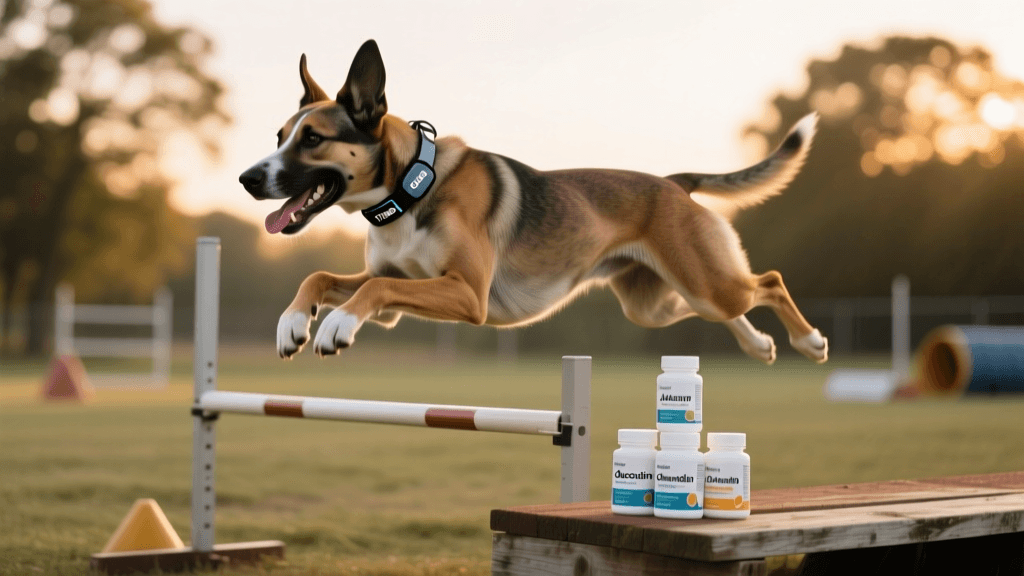
As we navigate the 2026 dog agility season, course designs have become increasingly technical, demanding explosive speed, sharp collection, and immense physical resilience from our canine athletes. Modern agility is no longer just about obedience and basic obstacle negotiation; it is a high-impact, fast-twitch muscle sport that places extraordinary biomechanical stress on a dog's carpus, stifle, and shoulder joints. Whether you are competing at the regional level or aiming for national championships, the margin between a podium finish and a career-limiting injury often comes down to your post-run recovery protocol.
The physical toll of weaving through poles at full speed, launching off A-frames, and executing tight wrap turns requires a comprehensive approach to canine sports medicine. According to guidelines published by the American Kennel Club, proactive conditioning and structured recovery are now considered mandatory for dogs competing at the Masters or Elite levels. In 2026, top handlers are moving beyond basic cool-down walks, integrating advanced biometric wearables, targeted nutraceuticals, and clinical-grade recovery modalities into their daily routines.
Top Wearable Health Trackers for Canine Athletes
You cannot manage what you do not measure. In 2026, canine wearable technology has evolved far beyond simple GPS location tracking. Today's premier devices monitor Heart Rate Variability (HRV), sleep architecture, and active caloric expenditure, allowing handlers to detect subtle signs of overtraining or systemic fatigue before an injury occurs. Monitoring a dog's HRV is particularly crucial; a sudden drop in HRV often indicates that the central nervous system is overtaxed and the dog requires an active rest day rather than high-intensity course work.
Below is a comparison of the top wearable health trackers utilized by elite agility handlers in the 2026 competition season:
| Tracker Model | Battery Life | Key Health Metrics | 2026 Retail Price |
|---|---|---|---|
| Whistle GO | Up to 20 Days | Activity Goals, Sleep Quality, HRV, Scratching | $99.95 |
| FitBark 2 | Up to 6 Months | Sleep Architecture, Caloric Expenditure, Mobility | $69.95 |
| Tractive GPS | Up to 7 Days | Live GPS, Activity Zones, Virtual Fences | $59.99 |
For pure health and recovery metrics, the FitBark 2 remains a favorite among sports medicine veterinarians due to its exceptional battery life and focus on sleep quality, which is when the bulk of muscular micro-tear repair occurs. Conversely, the Whistle GO provides excellent granular data on daily strain, making it ideal for handlers who need to balance weekend trial exertion with weekday conditioning work.
Essential Joint and Muscle Supplements for Competitors
Even with perfect conditioning, the repetitive impact of agility necessitates high-quality joint support. In 2026, the gold standard for canine joint health goes beyond basic glucosamine. Elite competitors are utilizing multi-modal nutraceuticals that combine structural support with potent anti-inflammatory agents.
1. Nutramax Dasuquin Advanced
Dasuquin Advanced continues to lead the market in 2026 due to its inclusion of ASU (Avocado/Soybean Unsaponifiables) and Boswellia serrata extract. ASU has been shown to protect cartilage from degradation and reduce the expression of inflammatory markers in synovial fluid. For a 40-pound Border Collie, the standard 2026 maintenance dosage is one chewable tablet daily, increasing to the loading dose during heavy trial weekends.
2. VetriScience GlycoFlex Max
Derived from New Zealand Green Lipped Mussel, GlycoFlex Max provides a natural source of glycosaminoglycans (GAGs) and omega-3 fatty acids. It is particularly effective for dogs showing early signs of stiffness after jumping. The green-lipped mussel extract provides a unique profile of eicosatetraenoic acid (ETA), which actively blocks the enzymes that cause joint inflammation.
3. Omega-3 Fatty Acids (EPA and DHA)
High-dose fish oil is non-negotiable for the 2026 agility dog. The goal is to achieve a therapeutic dose of 50 to 75 mg of combined EPA and DHA per kilogram of body weight. Products like Grizzly Salmon Plus or Nordic Naturals Omega-3 Pet provide the triglyceride-form oils necessary for optimal cellular absorption, aiding in muscle recovery and reducing delayed onset muscle soreness (DOMS).
Designing a Post-Competition Recovery Protocol
The American College of Veterinary Sports Medicine and Rehabilitation emphasizes that recovery begins the moment the dog leaves the course. A structured, phased approach is critical for flushing lactic acid, reducing core temperature, and initiating the tissue repair process.
Phase 1: Immediate Cool-Down (0 to 15 Minutes Post-Run)
- Active Recovery: A minimum of 10 to 15 minutes of continuous, leashed walking. This keeps the muscle pump active, aiding venous return and clearing metabolic waste products from the fast-twitch muscle fibers.
- Thermal Regulation: Apply cool (not ice-cold) water to the dog's paw pads, groin, and axillary regions. In the heat of summer 2026 trials, using a specialized canine cooling vest like the Ruffwear Swamp Cooler during the walk can prevent dangerous spikes in core body temperature.
- Hydration: Offer small, frequent sips of water enhanced with a canine-specific electrolyte powder such as K9 Power Show Stopper to replenish sodium and potassium lost through panting and exertion.
Phase 2: Soft Tissue and Joint Care (2 to 4 Hours Post-Run)
- Passive Range of Motion (PROM): Gently cycle the dog's major joints (shoulders, elbows, hips, stifles) through their full, natural range of motion. This stimulates synovial fluid production, which lubricates the joints and delivers nutrients to the avascular articular cartilage.
- Cold Laser Therapy: Portable, clinical-grade cold laser devices (photobiomodulation) have become highly accessible in 2026. Applying a Class IV laser to the carpal joints and lumbar spine for 5 to 8 minutes accelerates cellular ATP production, drastically reducing localized inflammation.
- Massage and Myofascial Release: Focus on the epaxial muscles, hamstrings, and the tensor fasciae latae (TFL). Using gentle effleurage and petrissage techniques helps break up fascial adhesions caused by the explosive twisting motions of agility turns.
Recognizing Overtraining Syndrome in Agility Dogs
One of the most insidious threats to an agility dog's health is overtraining syndrome (OTS). Because these dogs are highly driven and will often work through pain to please their handlers, OTS can manifest subtly. In 2026, sports medicine professionals urge handlers to look beyond obvious lameness.
'A dog that suddenly knocks bars on straight jumps, exhibits a wider turn radius on the flat, or shows reluctance to load into the crate after a run is not being disobedient. They are exhibiting classic neurological and muscular fatigue. Rest is a weapon, not a weakness.' - Canine Sports Rehabilitation Specialist, 2026 Symposium.
If your wearable tracker indicates a sustained drop in sleep quality, or if your dog's resting heart rate is elevated by more than 10% above their baseline for three consecutive days, it is imperative to institute a 48-hour complete rest protocol. Substitute high-impact course work with low-impact mental enrichment, such as scent work or puzzle toys, to maintain their psychological engagement without loading their skeletal system.
Core Conditioning: The Foundation of Injury Prevention
Recovery is only half the equation; proactive conditioning is the other. A robust core acts as a kinetic shock absorber, protecting the spine and extremities during high-G-force maneuvers. In 2026, the use of inflatable canine fitness equipment, such as FitPAWS Peanut Balls and K9 Fitness Donuts, is standard practice.
Incorporating just 15 minutes of core stabilization exercises three times a week can drastically improve a dog's proprioception and balance. Exercises like 'paws up' on a balance disc, lateral stepping over cavaletti poles, and 'tuck sits' to 'kickback stands' engage the deep stabilizing muscles of the abdomen and lumbar spine. This foundational strength ensures that when a dog misjudges a takeoff point on a dog walk, their core can instantly compensate, preventing a catastrophic spinal or shoulder injury.
Final Thoughts for the 2026 Season
Competing in dog agility in 2026 is a thrilling partnership between human and canine, but it demands a professional approach to health and wellbeing. By leveraging the latest biometric wearables to monitor internal strain, investing in clinical-grade joint supplements, and strictly adhering to a phased post-competition recovery protocol, you can extend your dog's competitive career by years. Remember, the ultimate goal of any dog sport is the enrichment and health of the dog. Prioritize their physical longevity, and the championship ribbons will naturally follow.
anouk-beaumont
All our authors care for dogs every day — read more of their work on the authors page.