Cavalier vs. French Bulldog: Choosing Your Apartment Dog
Compare the Cavalier King Charles Spaniel and French Bulldog for apartment living. Discover costs, daily routines, and which breed fits your lifestyle best.
Introduction
Choosing the right dog for apartment living requires balancing space constraints, noise levels, and your daily schedule. Two breeds consistently top the lists for urban dwellers: the Cavalier King Charles Spaniel and the French Bulldog. While both are compact, affectionate, and highly adaptable to small spaces, their daily care routines, health profiles, and financial requirements differ drastically. This comprehensive guide compares these two beloved breeds from the perspective of daily life, helping you decide which one truly fits your lifestyle, budget, and living situation.
Breed Profiles at a Glance
The Cavalier King Charles Spaniel
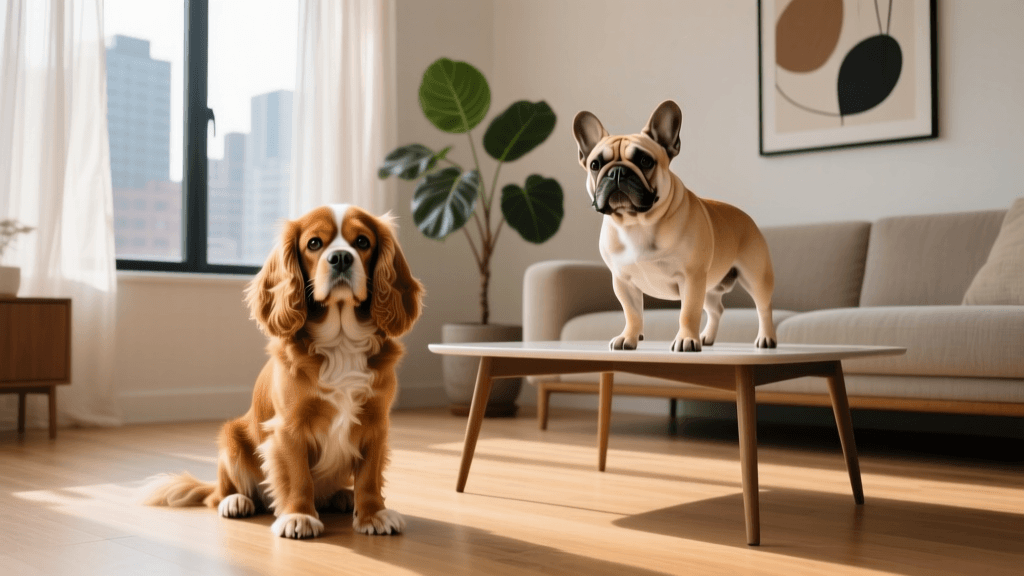
Originating as royal lap warmers in Britain, the Cavalier is a toy spaniel known for its gentle, graceful demeanor. According to the American Kennel Club (AKC), Cavaliers typically stand 12 to 13 inches tall at the shoulder and weigh between 13 and 18 pounds. They possess a moderate energy level, requiring daily walks and mental stimulation, but are equally content curling up on the sofa for a movie marathon. Their expressive, large eyes and silky coats make them visually striking, but their spaniel heritage means they still retain a mild prey drive and a love for sniffing.
The French Bulldog
The Frenchie is a sturdy, muscular companion with a distinctive bat-eared silhouette and a brachycephalic (flat-faced) structure. The AKC French Bulldog Breed Standard notes they stand 11 to 13 inches tall but are significantly heavier and denser than Cavaliers, weighing in at 28 pounds or under. Frenchies are known for their clownish personalities, low exercise needs, and intense devotion to their owners. They are heavily human-oriented and thrive on being the center of attention in a household.
Daily Routine and Exercise Needs
When sharing a small apartment, a dog's exercise requirements dictate your daily schedule and how you utilize shared building amenities like elevators and courtyards.
Cavalier Daily Routine
- Morning Routine: A brisk 20-minute neighborhood walk. Cavaliers have a hunting lineage, so allowing them 10 minutes of 'sniffari' time provides crucial mental enrichment.
- Afternoon Break: A 15-minute game of indoor fetch using a soft toy like the Kong Cozie Marvin the Moose. They are agile enough to navigate apartment hallways and living rooms without knocking over furniture.
- Evening Wind-Down: A relaxed 20-minute stroll. Total daily exercise: 45 to 60 minutes.
French Bulldog Daily Routine
- Morning Routine: A leisurely 15-minute walk. Due to their compromised airways, Frenchies must wear a well-fitted harness, such as the Puppia Soft Dog Harness, to avoid tracheal pressure and breathing difficulties.
- Afternoon Break: Short, 5-minute indoor training sessions using low-calorie treats. Frenchies overheat easily, so indoor, low-impact play is heavily preferred over outdoor exertion.
- Evening Wind-Down: A 15-minute potty walk. Total daily exercise: 30 to 40 minutes.
Space Requirements and Noise Levels
Apartment living demands a dog that can settle in small square footage without excessive vocalization, which is critical for maintaining good relationships with neighbors sharing thin walls.
Cavaliers are generally quiet dogs. They may alert-bark when someone knocks on the door, but they rarely engage in nuisance barking or howling when left alone. They do, however, require a dedicated 'safe space' like a 24-inch MidWest iCrate to retreat to when overwhelmed by household chaos.
French Bulldogs are notoriously quiet, making them ideal for buildings with strict noise ordinances. However, what they lack in barking, they make up for in snoring, snorting, and flatulence. If you are a light sleeper sharing a studio apartment, a white noise machine like the Hatch Restore is a highly recommended investment for Frenchie owners to drown out nighttime respiratory noises.
Grooming and Maintenance
Cavalier Grooming
Cavaliers boast a beautiful, silky coat that requires brushing at least three times a week to prevent matting, particularly behind the ears and in the 'feathering' on their legs. A high-quality slicker brush, such as the Chris Christensen Big G Dog Brush, is essential for maintaining their coat. They also require professional grooming every 6 to 8 weeks, costing roughly $60 to $90 per session depending on your urban market.
French Bulldog Grooming
Frenchies have a short, smooth coat that sheds moderately year-round. A weekly wipe-down with a rubber grooming mitt is usually sufficient to capture loose hair. However, their facial folds require meticulous care. You must clean their wrinkles every 2 to 3 days using unscented wipes like Vetericyn Plus Antimicrobial Wipes to prevent yeast infections and fold dermatitis. Neglecting this routine leads to foul odors and costly veterinary dermatology bills.
Health Considerations and Veterinary Costs
This is the most critical factor in breed selection. Both breeds carry significant genetic health risks, but they manifest differently and require different types of financial preparedness.
As noted by the AKC expert health resources, brachycephalic breeds like the French Bulldog suffer from Brachycephalic Obstructive Airway Syndrome (BOAS). This can lead to exercise intolerance, heatstroke, and the need for corrective airway surgery. Conversely, Cavaliers are heavily predisposed to Mitral Valve Disease (MVD). According to VCA Animal Hospitals, MVD is a progressive heart condition that affects a vast majority of Cavaliers by the time they reach 10 years of age, requiring lifelong cardiac medications.
| Health Feature | Cavalier King Charles Spaniel | French Bulldog |
|---|---|---|
| Average Lifespan | 12 - 15 years | 10 - 12 years |
| Primary Genetic Risk | Mitral Valve Disease (MVD), Syringomyelia | Brachycephalic Obstructive Airway Syndrome (BOAS) |
| Secondary Risks | Hip Dysplasia, Eye Conditions | Spinal Disorders (IVDD), Skin Allergies |
| Temperature Sensitivity | Moderate (standard dog tolerance) | Extreme (highly prone to fatal heatstroke) |
| Common Surgery Need | Cardiac interventions (rarely surgical, mostly medical) | Airway widening, spinal decompression |
Financial Breakdown: First-Year and Annual Costs
Budgeting for a dog in an urban environment requires looking beyond the initial purchase price. Here is a realistic breakdown of what to expect financially.
Initial Acquisition
- Cavalier King Charles Spaniel: $2,000 to $3,500 from a reputable, health-tested breeder.
- French Bulldog: $2,500 to $4,500+, heavily dependent on coat color, lineage, and breeder reputation.
Estimated First-Year Costs
- Veterinary Care & Vaccines: $400 (Cavalier) vs. $600 (Frenchie, due to baseline airway and allergy evaluations).
- Pet Insurance: $600/year (Cavalier) vs. $900 to $1,200/year (Frenchie, due to high breed-specific claim rates with providers like Trupanion or Healthy Paws).
- Food & Treats: $480/year (Both eat roughly 1 to 1.5 cups of high-quality kibble like Purina Pro Plan Toy Breed Formula daily).
- Grooming: $540/year (Cavalier) vs. $0 (Frenchie, as they are bathed at home).
Multi-Pet Households and Travel
If you live with cats or other dogs, the Cavalier is an exceptional choice. Their spaniel heritage gives them a gentle, sociable nature, and they integrate seamlessly into multi-pet homes. Frenchies can be more territorial and same-sex aggressive, requiring careful, slow introductions and early socialization to prevent resource guarding in small apartment kitchens.
When it comes to travel, both breeds fit comfortably under an airplane seat in an airline-approved carrier like the Sherpa Original Deluxe Pet Carrier (Size Small). However, Frenchies are highly sensitive to temperature extremes. Many major airlines have banned brachycephalic breeds from flying in cargo, and some restrict them from the cabin during summer months due to heatstroke risks at the gate. Cavaliers face no such travel restrictions, making them the superior choice for frequent flyers.
Final Verdict: Which Breed is Right for You?
Choose the Cavalier King Charles Spaniel if you want an active, quiet companion for weekend hikes, don't mind regular grooming appointments, and are prepared for potential cardiac care and medications in their senior years. They are perfect for those who want a traditional 'dog' experience scaled down to an apartment-friendly size.
Choose the French Bulldog if you prefer a low-energy, comical roommate for a small urban apartment, are diligent about daily wrinkle cleaning, and have the financial safety net to handle potential respiratory surgeries or allergy treatments. They are ideal for busy professionals who want a fiercely loyal, low-exercise companion.
Ultimately, both breeds offer unparalleled companionship. By honestly assessing your budget, schedule, and living space, you can confidently welcome the perfect furry roommate into your apartment and enjoy a harmonious life together.
jonas-cole
All our authors care for dogs every day — read more of their work on the authors page.