Quiet Apartment Puppy Care 2026: Top Breeds & First-Year Guide
Discover the best quiet dog breeds for apartments in 2026 and learn essential first-year puppy care tips for potty training, teething, and socialization.
The 2026 Urban Puppy Landscape: Why Quiet Breeds Are Thriving
As urban living spaces become more compact and shared-wall housing dominates major cities in 2026, the demand for quiet dog breeds suited for apartment living has skyrocketed. Raising a puppy in a high-rise or a densely populated apartment building presents unique challenges that suburban dog owners rarely face. Noise complaints, elevator logistics for potty breaks, and managing teething without disturbing neighbors are just a few of the hurdles new urban pet parents must navigate during a puppy's critical first year.
Choosing a naturally quiet breed is only the first step. Proper early socialization, apartment-specific potty training routines, and silent enrichment strategies are essential to ensure your puppy develops into a well-adjusted, polite canine citizen. In this comprehensive guide, we will explore the best quiet breeds for apartments and provide a detailed, month-by-month roadmap for their first year of care.
Top Quiet Dog Breeds for Apartments in 2026
Not all small dogs are quiet, and not all large dogs are loud. When selecting a companion for an apartment, you must look beyond size and focus on vocal tendencies, energy levels, and adaptability. According to the American Kennel Club (AKC), breeds like the Cavalier King Charles Spaniel are consistently ranked among the best apartment dogs due to their gentle demeanor and low barking drive.
| Breed | Adult Weight | Noise Level | Apartment Suitability | First-Year Challenge |
|---|---|---|---|---|
| Cavalier King Charles Spaniel | 12-18 lbs | Very Low | Excellent | Separation anxiety |
| Basenji | 22-24 lbs | Low (Barkless) | Very Good | Stubborn potty training |
| Greyhound | 60-70 lbs | Low | Good (Surprisingly) | Leash reactivity |
| Shiba Inu | 17-23 lbs | Moderate | Good | Independent socialization |
High-Rise Potty Training: The First 6 Months
Potty training an apartment puppy requires meticulous planning. Unlike suburban owners who can simply open a back door, apartment dwellers must factor in leashing, hallway navigation, and elevator wait times. A puppy's bladder control develops gradually, and a 5-minute elevator delay can result in an accident in the lobby.
The Elevator-Ready Potty Schedule
During the first 12 weeks, you must anticipate your puppy's needs before they become urgent. Here is a 2026-recommended schedule for high-rise potty training:
- 8 to 10 Weeks: Take the puppy out every 45 to 60 minutes. Carry the puppy in a sling or your arms through the hallway and elevator to prevent them from squatting in transit.
- 10 to 14 Weeks: Extend intervals to 90 minutes. Begin using a consistent verbal cue like 'Hurry up' or 'Go potty' while on the outdoor grass or indoor potty patch.
- 4 to 6 Months: Transition to a 2 to 3-hour schedule. Introduce a bell-training system on your apartment door handle so the puppy learns to signal when they need to go down.
Indoor Potty Solutions for Extreme Weather
In 2026, extreme weather events and high-rise living make indoor potty solutions a necessity for many. Real grass delivery services like DoggieLawn or Fresh Patch are highly recommended over synthetic pee pads. Real grass helps puppies associate the texture with outdoor elimination, making the eventual transition to outdoor-only potty breaks much smoother. Place the grass patch on a balcony or in a designated bathroom area with an odor-neutralizing enzymatic cleaner nearby.
Silent Teething Solutions for Thin Walls
Between 12 and 16 weeks of age, puppies begin losing their baby teeth and adult teeth emerge. This process causes intense gum discomfort, leading puppies to chew aggressively. In an apartment with thin walls or hardwood floors, the sound of a hard nylon bone clicking against the floor or a squeaky toy being chewed at 2:00 AM can quickly lead to neighbor disputes.
Apartment-Friendly Teething Toys
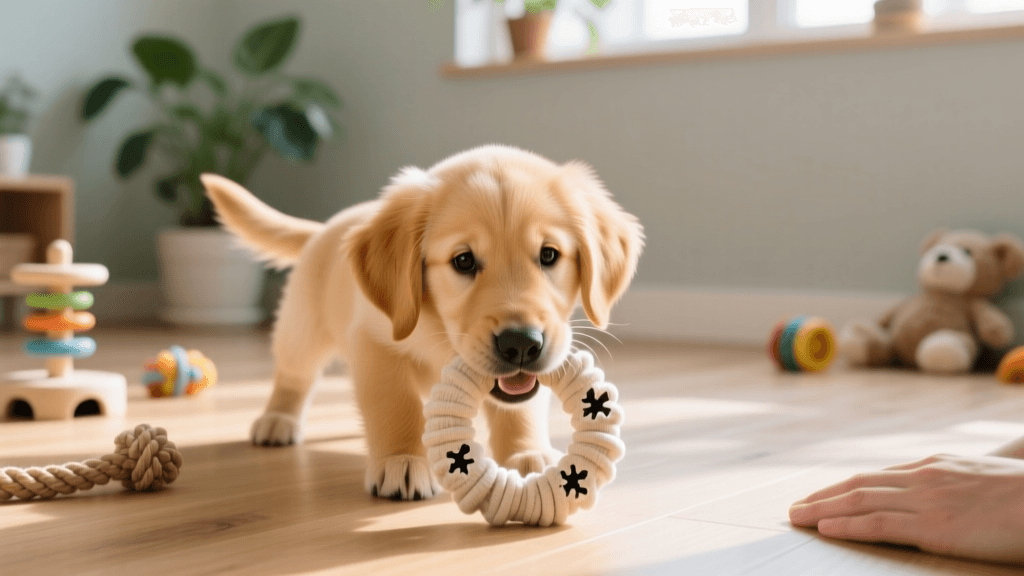
To keep your puppy's teeth busy and your neighbors happy, rely on 'silent' enrichment toys that absorb sound and provide long-lasting relief:
- The KONG Classic (Rubber): Stuff it with dog-safe peanut butter and freeze it overnight. The frozen rubber soothes inflamed gums and makes zero noise when dropped.
- West Paw Toppl: This interlocking puzzle toy can be filled with plain Greek yogurt and blueberries, then frozen. It is soft, durable, and completely silent.
- Snuffle Mats: While not a chew toy, hiding kibble in a fabric snuffle mat provides mental exhaustion, which naturally reduces anxious chewing behaviors.
Pro Tip: Avoid raw bones, antlers, or hard nylon chews. Not only are these dangerous for developing puppy teeth, but they also create loud clacking sounds on hard apartment floors.
Early Socialization in Crowded Cities
The critical socialization window for puppies occurs between 3 and 14 weeks of age. The American Veterinary Medical Association (AVMA) emphasizes that proper early socialization is vital for preventing fear-based behaviors later in life. However, in a bustling city environment, puppies are exposed to sirens, crowded sidewalks, and unfamiliar transit noises that can easily overwhelm them.
The 'Carry and Observe' Method
Until your puppy has completed their full vaccination series (usually around 16 weeks), their immune system is vulnerable to diseases like Parvovirus, which can linger on urban sidewalks. During this vulnerable period, practice the 'Carry and Observe' method:
- Invest in a high-quality, well-ventilated pet carrier sling (such as the K9 Sport Sack).
- Take your puppy to busy outdoor cafes, transit stations, and parks while keeping them securely in the sling.
- Feed high-value treats (like boiled chicken or freeze-dried liver) whenever a loud noise occurs, such as a bus braking or a siren passing. This builds positive associations with urban chaos.
- Allow friendly, vaccinated adult dogs to sniff your puppy while they remain safely elevated in your arms.
Managing Separation Anxiety Silently
Quiet breeds like the Cavalier King Charles Spaniel and the Greyhound are deeply bonded to their humans and are highly prone to separation anxiety. While they may not bark incessantly when left alone, they may resort to whining, pacing, or destructive chewing. According to the ASPCA, addressing separation anxiety early in the first year is crucial for long-term behavioral health.
Building Independence in the First Year
Start by practicing 'micro-departures.' Leave your apartment for just 30 seconds, then return without making a fuss. Gradually increase this to 2 minutes, 5 minutes, and eventually 30 minutes over the course of several weeks. Never make a grand exit or an overly emotional return.
In 2026, smart pet cameras like the Furbo 3D or modern equivalents with treat-tossing capabilities allow you to monitor your puppy's stress levels via your smartphone. If you notice your puppy pacing or whining, you can dispense a treat or use a two-way audio feature to offer a calm, reassuring word. Additionally, leaving a white noise machine or a smart speaker playing classical music can help mask the triggering sounds of neighbors walking in the hallways above or beside you.
Conclusion: Setting the Foundation for a Peaceful Home
Raising a quiet dog breed in an apartment during their first year requires a blend of proactive management, silent enrichment, and careful socialization. By utilizing indoor real-grass potty patches, providing frozen rubber chew toys, and carrying your puppy through the urban jungle during their vulnerable vaccination period, you set the stage for a harmonious living situation. Remember that every puppy develops at their own pace. Stay patient, maintain a consistent routine, and enjoy the incredibly rewarding journey of urban puppy parenthood in 2026.
beth-carrasco
All our authors care for dogs every day — read more of their work on the authors page.