2026 Guide: Low-Impact Trick Training for Dogs With OA
Discover safe, low-impact trick training and mobility conditioning routines for dogs with osteoarthritis. Keep your senior dog mentally engaged in 2026.
The Intersection of Canine OA Treatment and Mental Stimulation
Osteoarthritis (OA) is one of the most common chronic conditions affecting aging dogs, leading to joint pain, stiffness, and a significant reduction in mobility. As we navigate veterinary care in 2026, the focus of canine OA treatment has shifted from purely pharmaceutical interventions to a holistic model that includes physical therapy, weight management, and crucial mental stimulation. When a dog can no longer run for miles or engage in high-impact agility, their mental health can quickly deteriorate. Boredom and frustration often manifest as behavioral issues, making low-impact trick training an essential component of modern OA management.
According to the VCA Animal Hospitals, osteoarthritis is a degenerative joint disease that causes inflammation and the breakdown of cartilage. While medications like NSAIDs and the increasingly standard monoclonal antibody therapies (such as Librela) manage the physical pain in 2026, they do not fulfill a dog’s innate need to work, learn, and bond with their handler. By adapting traditional obedience and trick training to accommodate joint limitations, owners can provide deep mental fatigue that mimics the exhaustion of a long physical hike, all while keeping their dog’s joints safe.
Core Principles of 2026 OA-Friendly Training
Training a dog with OA requires a fundamental shift in how we view obedience and tricks. The goal is no longer speed, height, or physical endurance. Instead, the focus is on precision, scent work, and stationary behaviors. The Merck Veterinary Manual emphasizes that managing OA involves minimizing joint stress while maintaining muscle mass to support the affected joints. Therefore, training sessions must be short, highly rewarding, and conducted on supportive surfaces.
- Surface Selection: Never train on slippery hardwood or tile. Use interlocking foam mats or high-pile rugs to provide traction and prevent micro-slips that can aggravate hip and shoulder dysplasia.
- Session Duration: Limit training to 5 to 10-minute bursts. Mental fatigue sets in much faster than physical fatigue, and prolonged standing or sitting can cause joints to stiffen.
- Treat Delivery: Bring the treat to the dog’s mouth. Avoid tossing treats on the floor, which forces the dog to repeatedly bend their neck and spine or scramble for the food.
Top 5 Low-Impact Tricks for Joint-Compromised Dogs
Here are five highly engaging, low-impact tricks that provide immense mental stimulation without putting undue stress on your dog’s cartilage and ligaments.
1. Hand Targeting (The "Nose Boop")
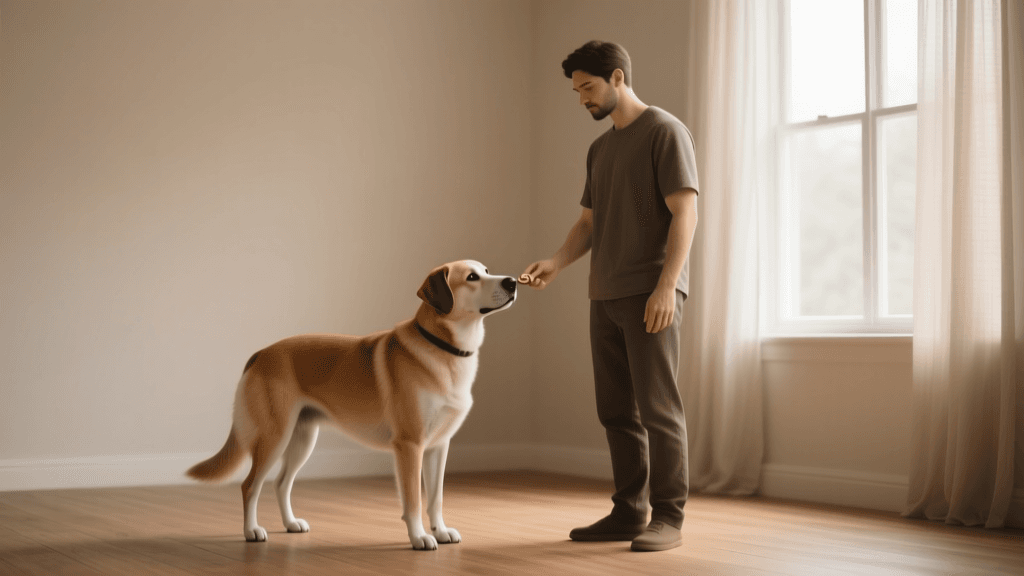
Hand targeting teaches your dog to touch their nose to your palm or a target stick. This is a foundational skill that can be used to guide your dog in and out of cars, onto veterinary scales, or through doorways without the need for a collar and leash, which can strain the cervical spine.
How to teach it: Hold your open palm an inch from your dog’s nose. The moment they sniff or investigate, click a clicker or use a verbal marker like "Yes!" and deliver a high-value treat directly to their mouth. Gradually increase the distance, requiring them to take a single step forward to touch your hand. This encourages slow, deliberate weight shifting.
2. Scent Discrimination and Snuffle Work
A dog’s olfactory system is a powerhouse. Engaging their nose for just 15 minutes can burn as much mental energy as an hour of walking. In 2026, scent work remains the gold standard for senior dog enrichment.
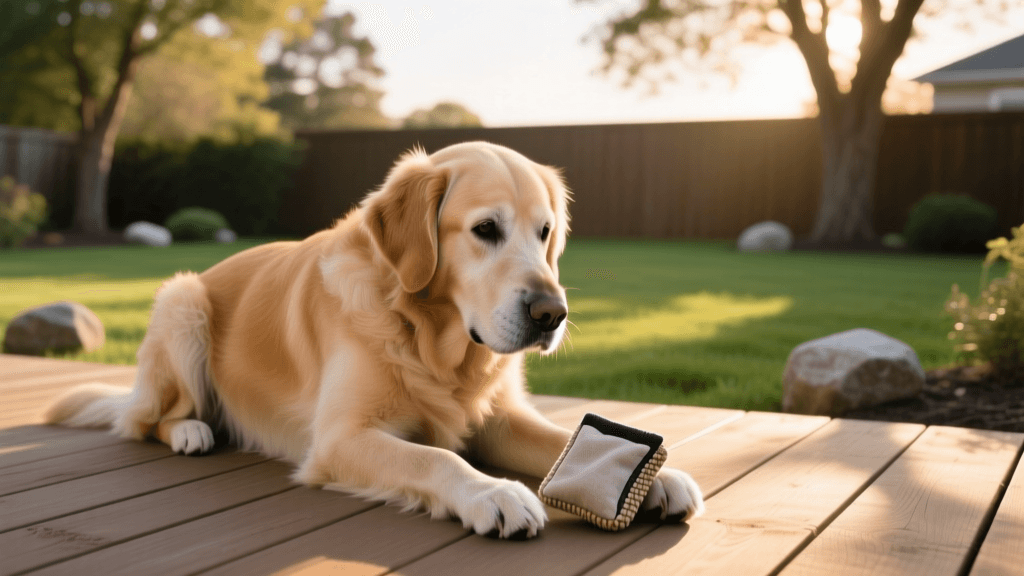
How to teach it: Start with a specialized snuffle mat or a silicone lick mat. Hide strong-smelling treats (like freeze-dried liver or low-sodium chicken crumbles) deep within the fibers or grooves. Encourage your dog to "find it." As they progress, introduce formal scent discrimination by teaching them to identify a specific essential oil (like birch or anise) placed on a cotton swab inside a small tin, rewarding them for indicating the correct tin while remaining in a comfortable standing or lying position.
3. The "Chin Rest"
The chin rest is a cooperative care behavior that is incredibly useful for dogs undergoing regular OA treatments, such as joint injections or laser therapy. It teaches the dog to rest their chin on a designated surface and hold still.
How to teach it: Sit on the floor with your dog. Hold a soft cushion or your own forearm at their natural head height. Lure their chin onto the surface using a treat, then slowly move the treat away while marking and rewarding the moment their chin stays planted. This trick builds immense focus and impulse control without requiring any spinal flexion or joint loading.
4. "Speak" and "Whisper" (Vocal Control)
Vocal tricks are entirely zero-impact and can be performed from a comfortable orthopedic bed. Teaching a dog to vocalize on cue, and more importantly, to stop on cue, engages different neural pathways than physical tricks.
How to teach it: Capture the behavior by waiting for your dog to bark naturally (perhaps when the doorbell rings), mark the behavior, and reward. Put it on cue by saying "Speak" right before they bark. Once mastered, teach "Whisper" by rewarding only low grumbles or whines, eventually shaping the behavior down to a mere exhale or "huff" for a massive reward.
5. Proprioception Paw Wipes
Proprioception is the body’s ability to sense its location and movements. OA can dull this sense, leading to clumsy foot placement. Paw targeting helps maintain neural connections between the paws and the brain.
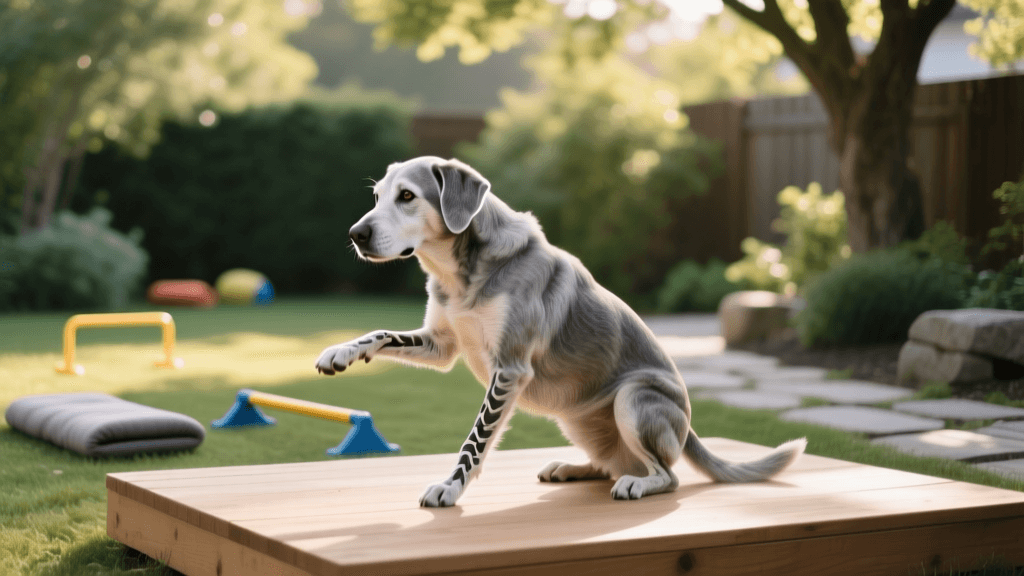
How to teach it: Place a small, textured silicone mat or a folded towel flat on the ground. Lure your dog to place just one front paw onto the mat and reward. Alternate paws. This encourages the dog to think about where their feet are placed and promotes gentle, controlled weight shifting from side to side, which acts as a mild, safe physical therapy exercise.
High-Impact vs. Low-Impact Training Comparison
Understanding what to avoid is just as critical as knowing what to teach. Below is a comparison chart detailing traditional tricks and their 2026 OA-friendly alternatives.
| Traditional Trick | Joint Strain Level | OA-Friendly Alternative | Primary Benefit |
|---|---|---|---|
| Sit Pretty / Beg | High (Lumbar/Hips) | Chin Rest on Target | Core engagement without spinal compression |
| Weave Poles | High (Spine/Hips) | Scent Work Discrimination | High mental fatigue, zero spinal twisting |
| Jump / Fetch | High (Shoulders/Hips) | Snuffle Mat Foraging | Soothes anxiety, promotes natural foraging |
| Roll Over | High (Spine/Neck) | Hand Targeting (Nose Boop) | Builds focus and safe directional movement |
| Spin in Circles | Moderate (Hips/Knees) | Paw Wipe Targeting | Improves proprioception and weight shifting |
Essential Gear for Safe 2026 Training Sessions
To facilitate safe and effective training for a dog with OA, investing in the right equipment is non-negotiable. The market in 2026 offers several specialized tools designed specifically for senior and mobility-impaired dogs.
- Orthopedic Training Mats: Look for high-density memory foam mats with a non-slip rubber base. Brands like Kuranda and Big Barker offer low-profile mats that provide joint relief while preventing the paws from sliding out during stationary tricks.
- Lick Mats and Snuffle Pads: Silicone lick mats (such as the Hyper Pet Lickimat) are excellent for delivering soft treats like plain pumpkin or bone broth. Licking releases endorphins in dogs, which naturally helps to soothe chronic pain and reduce training-related stress.
- Support Harnesses: For dogs that struggle to stand for long periods during training, a support harness like the Ruffwear Web Master or the Help ‘Em Up Harness allows the handler to gently support the dog’s hindquarters or chest without restricting their natural movement or causing discomfort.
- Raised Treat Pouches: While the handler should bring treats to the dog’s mouth, having a magnetic treat pouch that attaches to a table or counter at waist height prevents the handler from constantly bending over, making the training session more ergonomic for both human and canine.
Structuring a 15-Minute Daily Conditioning Routine
Consistency is key when managing canine OA. Rather than one long weekend session, integrate a structured 15-minute routine into your daily schedule. Here is a blueprint for a safe, mentally exhausting session:
- Minutes 1-3: The Warm-Up. Begin with gentle massage and passive range of motion (PROM) exercises if recommended by your veterinarian. Use a warm compress on stiff joints for two minutes to increase blood flow and synovial fluid lubrication.
- Minutes 4-10: Mental Heavy Lifting. Engage in scent discrimination or snuffle mat work. This requires intense concentration and olfactory processing, rapidly tiring the dog’s brain without taxing their joints.
- Minutes 11-14: Precision Tricks. Practice the "Chin Rest" or "Hand Targeting." Focus on slow, deliberate movements. Reward heavily for calm, controlled behavior rather than speed.
- Minute 15: The Cool Down. End the session with a long-lasting lick mat placed on their orthopedic bed. This transitions the dog from a state of active learning to a state of relaxation and rest, allowing their muscles to decompress.
By embracing low-impact trick training, you are not just managing your dog’s physical symptoms; you are honoring their intelligence and drive. In 2026, treating canine OA means treating the whole dog, ensuring that even as their bodies slow down, their minds remain sharp, engaged, and deeply connected to you.
jonas-cole
All our authors care for dogs every day — read more of their work on the authors page.