Training Dogs With Canine OA: 2026 Low-Impact Methods
Discover 2026 low-impact training techniques for dogs with osteoarthritis. Keep your senior dog mentally sharp and obedient without stressing painful joints.
Understanding Canine OA and the Need for Training Adaptation
Canine osteoarthritis (OA) affects a significant portion of the senior dog population, and increasingly, younger dogs with joint dysplasia or prior orthopedic injuries. As we navigate advanced dog care in 2026, veterinary medicine offers remarkable pharmacological advancements, such as anti-NGF monoclonal antibodies and targeted NSAIDs, to manage joint pain and inflammation. However, treating canine OA is not solely a medical endeavor; it requires a fundamental shift in how we approach behavioral conditioning, trick teaching, and obedience training.
Many owners mistakenly believe that a dog diagnosed with OA should stop training altogether to preserve their joints. This is a critical error. Mental stimulation is vital for a dog's cognitive health, and maintaining a baseline of obedience ensures safety, reduces anxiety, and prevents behavioral regression. The primary goal of training a dog with OA is to provide rigorous mental enrichment while entirely eliminating high-impact physical stressors. According to the American Kennel Club, managing OA requires a comprehensive multimodal approach that includes weight management, medical therapy, and environmental modifications—which absolutely extends to training environments and methodologies.
Shifting the Paradigm: Mental Fatigue Over Physical Exertion
When a dog's joints are compromised, a 30-minute brisk walk or a vigorous game of fetch may result in days of inflammation, stiffness, and pain. In 2026, certified canine behaviorists heavily advocate for "brain games" and cognitive conditioning as a direct substitute for physical cardio. Mental exertion burns calories and tires a dog out just as effectively as physical exercise, but without the mechanical wear and tear on deteriorating cartilage.
Scent Work and Nosework
Scent work is the ultimate low-impact training discipline for arthritic dogs. By teaching your dog to identify specific essential oils (like birch, anise, or clove) and playing hide-and-seek for high-value treats, you engage their primary sensory cortex. A 15-minute focused sniffing session can be as exhausting for a dog as a three-mile run. You can set up scent boxes in your living room or use snuffle mats, allowing your dog to train and succeed without ever needing to jump, run, or navigate slippery floors.
Modifying Core Obedience Cues for Joint Health
Traditional obedience training often relies on repetitive movements that can be agonizing for a dog with hip dysplasia, elbow OA, or spinal spondylosis. We must adapt our expectations and modify our physical cues to accommodate their limited range of motion. Below is a comparison of traditional training cues versus OA-friendly modifications recommended by veterinary behaviorists in 2026.
| Traditional Cue | Joint Stress Factor | 2026 OA-Friendly Modification |
|---|---|---|
| Sit | Requires deep flexion of the stifle (knee) and hock joints; can cause severe hip and lower back pain. | "Stand" or "Place" (targeting a supportive, non-slip mat). |
| Down | Getting up and down from a hard floor jars the elbows, shoulders, and carpal joints. | "Bed" or "Mat" (using an elevated, orthopedic memory foam cot). |
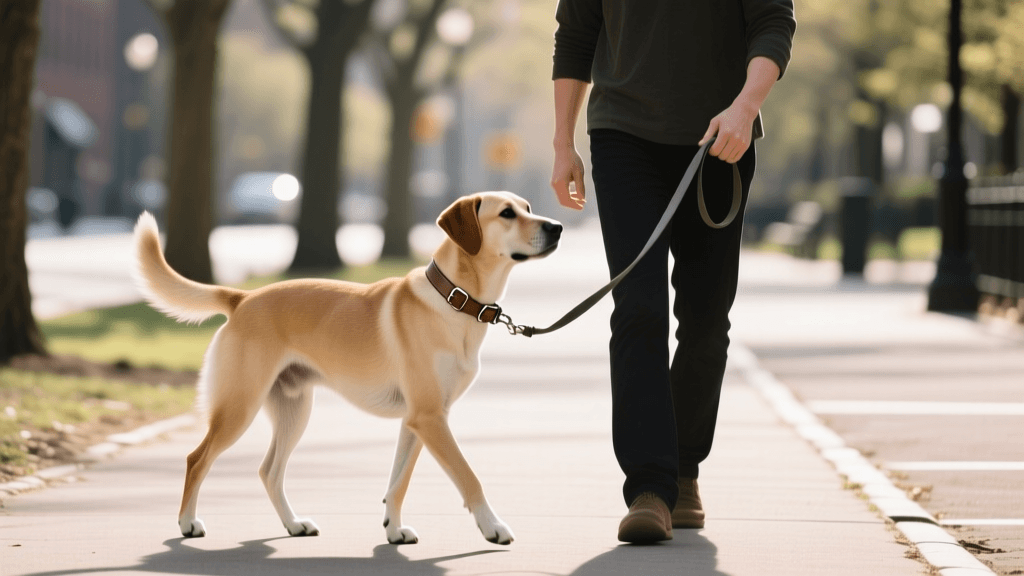
| Heel | Requires constant micro-adjustments, sudden stops, and sharp turns that tweak sensitive joints. | "Loose Leash Walk" with a front-clip support harness at the dog's own pace. |
| Come (Recall) | Dogs often sprint and perform a sliding stop, risking joint luxation or ligament strain. | Recall to a stationary target mat at a walking or trotting pace. |
The "Capturing" Method: Eliminating Painful Luring
In traditional puppy training, handlers often use a food lure to guide a dog's nose up and back to force the hindquarters into a sit, or down to the floor for a "down" cue. For a dog with OA, this luring process can force them into painful ranges of motion before they even realize what is happening. If the dog hesitates, owners sometimes push the dog's hips down—a practice that is not only outdated but deeply harmful to an arthritic dog.
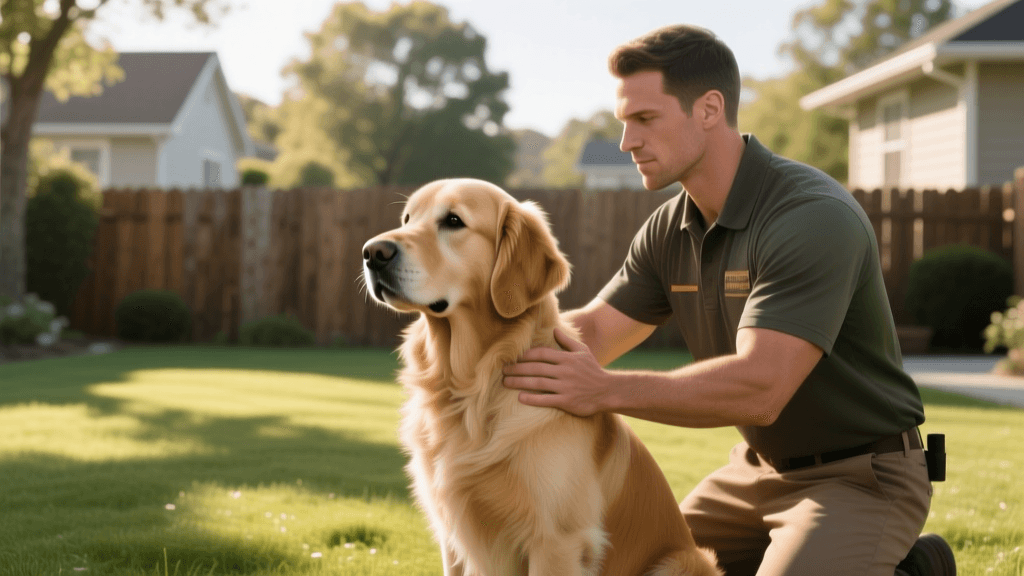
Instead, utilize the capturing method. Capturing involves observing your dog and marking (with a clicker or a verbal "yes!") the exact moment they naturally choose to perform a behavior on their own. If your dog naturally lies down on their orthopedic bed because it is comfortable, mark the behavior and deliver a treat. Over time, attach the verbal cue "settle" or "bed" to this naturally occurring, pain-free action. This ensures the dog only performs movements that their body is currently willing and able to execute without pain.
Optimizing Treat Delivery Mechanics
When rewarding a dog with OA, treat delivery mechanics matter immensely. Bending down to pick up treats from the floor requires repetitive spinal flexion and neck strain. In 2026, force-free trainers emphasize "hand-feeding at posture level." Deliver treats directly to your dog's mouth while they are in a comfortable standing or supported resting position. You can also use squeeze tubes filled with dog-safe bone broth or peanut butter, allowing the dog to lick the reward while maintaining a neutral, pain-free spine alignment.
Essential Gear for OA Training in 2026
To successfully train a dog with osteoarthritis, your equipment must support their physical limitations. The American Veterinary Medical Association (AVMA) notes that senior dogs and those with mobility issues require specialized environmental support to maintain their quality of life and willingness to engage in daily activities.
- Orthopedic Training Mats: Avoid asking your dog to lie on hardwood or tile. Use a high-density memory foam training target. This provides a tactile boundary for "place" training while cushioning vulnerable elbows and hips.
- Mobility Support Harnesses: For dogs with severe hind-end weakness, a support harness featuring rear-lift handles allows you to assist them into standing positions for training sessions without pulling on their collar or causing spinal torque.
- Lick Mats and Snuffle Pads: These are essential for stationary obedience. You can anchor a lick mat to the floor or an elevated surface, allowing you to practice "stay" or "wait" cues while the dog remains comfortably stationary and engaged.
- Non-Slip Area Rugs: Slippery floors are the enemy of arthritic dogs. Ensure your training area is covered in high-traction rugs so the dog does not fear slipping out of a stance, which causes muscle tension and secondary joint pain.
Managing Pain Signals During Training Sessions
Even with the best 2026 pain management protocols, dogs can have "flare-up" days triggered by weather changes or minor overexertion. It is imperative that handlers learn to read subtle canine body language indicating joint discomfort. According to the U.S. Food and Drug Administration (FDA), while medical treatments for canine pain are vital, owners must closely monitor their pets for adverse reactions and underlying pain signals that medication might temporarily mask.
Signs your dog's OA is flaring up during training:
- Lagging behind or refusing to move toward the training mat.
- Panting heavily when the room is cool (a primary physiological sign of canine pain).
- "Bunny hopping" or exhibiting an asymmetrical gait when moving to a new position.
- Lip licking, yawning, or avoiding eye contact when asked to change posture.
If you observe any of these signs, end the training session immediately. Switch to passive enrichment, such as gentle massage or simply sitting together, and consult your veterinarian regarding their current pain management protocol.
A Sample Weekly Low-Impact Training Schedule
Consistency is key to behavioral conditioning, but sessions must be kept short to prevent joint fatigue and mental frustration. Here is a sample weekly schedule designed for a dog with moderate OA:
- Monday: 10 minutes of indoor scent work (hiding treats in snuffle mats and cardboard boxes).
- Tuesday: 5 minutes of "Place" training on an orthopedic mat, using captured downs and stands.
- Wednesday: Rest day. Passive joint massage and gentle range-of-motion (PROM) exercises as prescribed by your vet.
- Thursday: 10 minutes of target training (teaching the dog to touch a target stick with their nose while standing comfortably).
- Friday: 5 minutes of "Wait" and "Leave It" impulse control training using a lick mat.
- Saturday: Short, 15-minute sniffari walk on a soft, flat grass surface using a support harness.
- Sunday: Rest day and cognitive puzzle toys for independent mental stimulation.
Conclusion
Training a dog with canine osteoarthritis in 2026 is not about pushing through the pain; it is about working intelligently around it. By shifting your focus from physical compliance to mental engagement, modifying your core cues, and utilizing supportive gear, you can keep your dog's mind sharp and their spirit high. Osteoarthritis may change the way your dog moves, but with compassionate, low-impact training techniques, it never has to diminish the bond you share or their enthusiasm for learning.
aaron-whyte
All our authors care for dogs every day — read more of their work on the authors page.