Canine OA in 2026: Behavioral Signs and Top Treatments
Discover how canine osteoarthritis alters your dog's behavior and psychology. Explore 2026 OA treatments, including Librela, to restore their joy.
The Psychology of Canine Pain: Why Dogs Hide Osteoarthritis
To truly understand your dog, you must first understand their evolutionary relationship with pain. In the wild, displaying weakness or physical vulnerability is an invitation for predators or a fast track to being ostracized by the pack. While our domestic dogs have traded the wild for our living rooms, this deep-seated survival instinct remains hardwired into their psychology. Dogs are inherently stoic creatures, and nowhere is this more evident than in their silent battle with canine osteoarthritis (OA).
Osteoarthritis is a degenerative joint disease that affects an estimated 80% of dogs over the age of eight. However, because dogs lack the ability to vocalize chronic, aching pain in ways humans easily recognize, owners often misinterpret the behavioral shifts associated with OA as "slowing down," "stubbornness," or even age-related cognitive decline. According to the Washington State University College of Veterinary Medicine, chronic pain fundamentally alters a dog's neurochemistry, leading to anxiety, irritability, and a decreased threshold for stress. Treating canine OA in 2026 is no longer just about preserving cartilage; it is about rescuing your dog's mental well-being and restoring their true personality.
Behavioral Shifts: Decoding Your Dog's Silent OA Signals
Because your dog will not whine or cry from chronic joint pain, you must become a student of their body language and daily routines. Veterinary behaviorists emphasize that sudden or gradual changes in behavior are often the very first clinical signs of osteoarthritis. Here are the primary psychological and behavioral shifts to watch for:
- Pain-Induced Reactivity (Grumpiness): A previously sociable dog may snap when petted, groomed, or approached while resting. This is not aggression; it is a defensive reflex triggered by the anticipation of pain when touched near sensitive joints like the hips or shoulders.
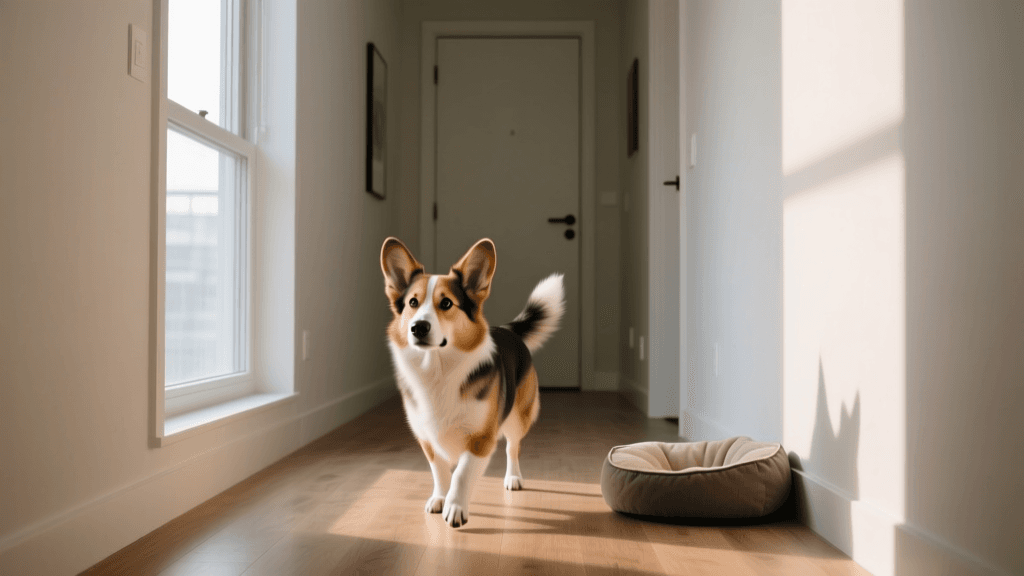
- Spatial Avoidance and Hesitation: Dogs with OA develop "spatial anxiety." They may stare at the car before refusing to jump in, avoid slippery hardwood floors, or suddenly refuse to climb the stairs to their favorite sleeping spot. They are calculating the physical cost of movement and choosing avoidance.
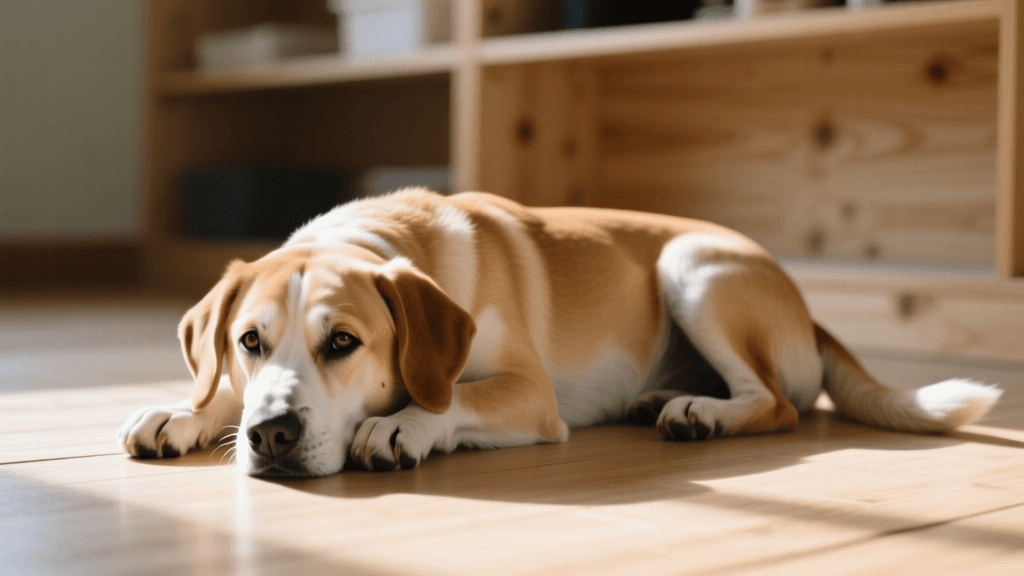
- Changes in Sleep Architecture: Joint stiffness worsens after periods of inactivity. If your dog is pacing at night, frequently changing sleeping positions, or sleeping in isolated areas away from the family, they are likely struggling to find a pain-free resting posture.
- Altered Greeting Behaviors: A dog that used to jump with joy when you returned home may now offer a subdued tail wag while remaining seated. Owners often mistake this for "mellowing out," but it is actually a calculated effort to avoid the sharp pain of jumping.
- Over-Grooming or Licking: Obsessive licking of the carpal (wrist) or tarsal (ankle) joints is a self-soothing mechanism. The act of licking releases endorphins in the canine brain, providing temporary psychological relief from localized joint discomfort.
Recognizing these signs requires deep empathy and observation. The American Kennel Club (AKC) notes that subtle changes in posture, such as a hunched back or shifting weight away from a affected limb, are critical indicators that your dog is suffering in silence.
2026 Veterinary Breakthroughs in Canine OA Treatment
The landscape of veterinary pain management has evolved dramatically. In 2026, the gold standard for treating canine OA relies on a multimodal approach that targets both the physical degradation of the joint and the neurological perception of pain. By eliminating the pain, we eliminate the anxiety and behavioral issues associated with it.
Monoclonal Antibodies: The Librela Revolution
Bedinvetmab, widely known by its brand name Librela, remains a cornerstone of OA management in 2026. Unlike traditional NSAIDs that circulate systemically and can impact the liver or kidneys, Librela is a monoclonal antibody that specifically targets and neutralizes Nerve Growth Factor (NGF) in the joints. NGF is a primary driver of pain signaling in osteoarthritis. By blocking NGF, Librela effectively "turns down the volume" on pain signals sent to the dog's brain. Administered as a monthly subcutaneous injection by your veterinarian, it has virtually no systemic side effects, making it a revolutionary option for senior dogs with concurrent organ issues. In 2026, the cost typically ranges from $90 to $160 per month, depending on the dog's weight tier.
Targeted NSAIDs: Grapiprant (Galliprant)
For dogs that require oral medication or need a different mechanism of action, Grapiprant (Galliprant) is highly favored. It is a PIPRA (prostaglandin E2 EP4 receptor antagonist) that specifically blocks the EP4 receptor, which is the primary mediator of inflammation and pain in canine OA. Because it leaves other prostaglandins intact, it maintains vital functions like gastric mucosal protection and renal blood flow. This targeted approach significantly reduces the risk of gastrointestinal upset, keeping your dog's mood and appetite stable.
Disease-Modifying Osteoarthritis Drugs (DMOADs)
Polysulfated glycosaminoglycans (PSGAGs), such as Adequan Canine, are utilized to actively inhibit the enzymes that break down joint cartilage while stimulating the production of new joint fluid. According to Cornell University College of Veterinary Medicine, utilizing DMOADs early in the disease process can alter the trajectory of joint degradation, preserving mobility and preventing the severe psychological toll of late-stage immobility.
Comparing 2026 OA Treatment Modalities
| Treatment | Mechanism of Action | Administration | Est. 2026 Monthly Cost | Behavioral Impact |
|---|---|---|---|---|
| Librela (Bedinvetmab) | Targets Nerve Growth Factor (NGF) | Monthly Vet Injection | $90 - $160 | Rapid reduction in pain-anxiety and spatial avoidance. |
| Galliprant (Grapiprant) | Blocks EP4 pain/inflammation receptors | Daily Oral Tablet | $60 - $120 | Restores playfulness without GI-related mood dips. |
| Adequan Canine | Inhibits cartilage-degrading enzymes | IM Injections (Series then maintenance) | $40 - $80 (varies by phase) | Improves long-term joint fluidity, reducing morning stiffness grumpiness. |
| Therapeutic Laser | Photobiomodulation for cellular healing | Weekly/Bi-weekly Vet Visits | $50 - $90 per session | Provides soothing psychological relief and localized relaxation. |
Environmental Modifications for the Arthritic Dog Mind
Medical treatment must be paired with environmental empathy. A dog with OA is constantly navigating a world built for the able-bodied. When a dog slips on a hardwood floor, the micro-tears in their joint capsules cause immense pain, leading to a psychological state of hyper-vigilance. They become afraid to walk in their own home.
To support your dog's mental health, implement these 2026 standard environmental modifications:
- Traction Solutions: Cover high-traffic hardwood or tile areas with non-slip rugs or interlocking foam mats. Alternatively, veterinary-approved paw grips (like Musher's Secret wax or silicone paw covers) can provide immediate confidence on slippery surfaces.
- Orthopedic Support: Discard flat, stuffed beds that bottom out. Invest in a high-density memory foam bed with a minimum thickness of 4 to 6 inches. The firm support prevents the joints from sinking and pressing against the hard floor, which is a major cause of nighttime pacing.
- Ramps and Steps: Provide foam stairs or a ramp with a high-traction surface for accessing couches, beds, and vehicles. This preserves your dog's autonomy and prevents the frustration and depression associated with losing access to their favorite family spaces.
- Elevated Feeding Stations: Raising food and water bowls by 4 to 8 inches (depending on the dog's height) prevents the severe neck and shoulder strain associated with bending down to the floor, making mealtimes a source of joy rather than a physical chore.
Conclusion: Empathy Through Understanding
Understanding your dog means looking past the surface of their behavior to uncover the physical realities shaping their daily experience. Canine osteoarthritis is a profound psychological burden as much as it is a physical one. The grumpiness, the hesitation, and the isolation are not personality flaws; they are desperate pleas for relief. By leveraging the advanced, targeted treatments available in 2026 like Librela and Galliprant, and by reshaping your home environment to reduce spatial anxiety, you can lift the heavy veil of chronic pain. When we treat the pain, we don't just save their joints—we give our best friends their joy, their confidence, and their true selves back.
aaron-whyte
All our authors care for dogs every day — read more of their work on the authors page.