Decoding Canine Leash Reactivity: Holistic Calming Signals In 2026
Discover holistic approaches to canine leash reactivity in 2026. Learn to decode calming signals and use adaptogens for natural stress relief.
Understanding Leash Reactivity Through a Holistic Lens
Leash reactivity is one of the most common behavioral challenges faced by dog owners, yet traditional training methods often treat the symptom rather than the root cause. In 2026, veterinary behaviorists and holistic practitioners increasingly view reactivity not as mere disobedience, but as a profound dysregulation of the canine nervous system. When a dog lunges, barks, or freezes at the sight of another dog or a passing cyclist, they are experiencing a sympathetic nervous system override—commonly known as the 'fight or flight' response. To truly understand and help our canine companions, we must look beyond basic obedience and embrace a holistic approach that combines ethology, somatic bodywork, and natural adaptogenic support.
A holistic perspective recognizes that a dog's behavior is deeply intertwined with their physiological state, including their gut-brain axis, endocrine system, and environmental stressors. By learning to decode subtle canine body language and integrating natural supplements, we can lower a dog's baseline anxiety, making behavioral modification not only more effective but significantly more humane.
The Neurobiology of Reactivity and the Gut-Brain Axis
Before addressing the physical manifestations of reactivity, it is crucial to understand the biological machinery driving it. When a reactive dog perceives a trigger, the amygdala hijacks the brain, flooding the body with cortisol and adrenaline. In this state, the prefrontal cortex—the area responsible for learning and impulse control—effectively shuts down. No amount of treats or commands can reach a dog whose brain is submerged in stress hormones.
Recent advancements in canine nutritional psychiatry have highlighted the critical role of the gut-brain axis in behavioral regulation. Approximately 90% of a dog's serotonin is produced in the gastrointestinal tract. An imbalanced microbiome, often caused by highly processed diets or chronic stress, can directly contribute to heightened anxiety and reactivity. Holistic behavior modification in 2026 heavily emphasizes supporting the vagus nerve and gut health through fermented foods, prebiotic fibers, and targeted amino acids to create a biological foundation for calmness.
Decoding Canine Calming Signals Before the Threshold
The key to managing reactivity holistically is intervention before the dog crosses their 'threshold'—the point at which the sympathetic nervous system takes over. Norwegian dog trainer and behaviorist Turid Rugaas pioneered the concept of 'calming signals,' a vocabulary of subtle body language cues dogs use to self-soothe and communicate peaceful intentions. According to the American Kennel Club (AKC), understanding these micro-expressions is vital for preventing behavioral escalation.
Common calming signals that precede a reactive outburst include:
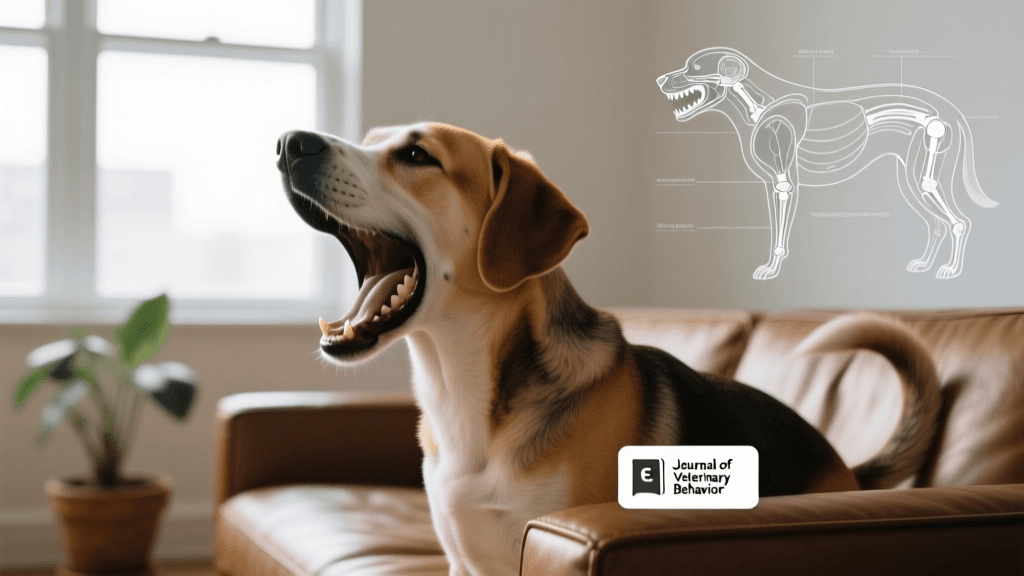
- Lip Licking and Yawning: When not related to food or sleep, these are primary indicators of rising internal tension.
- Whale Eye: The dog turns their head away but keeps their eyes fixed on the trigger, exposing the whites of their eyes.
- Shake-Off: A full-body shake, as if wet, used to discharge accumulated adrenaline after a stressful encounter.
- Sniffing the Ground: A displacement behavior used to avoid direct eye contact and lower the emotional temperature of an interaction.
- Curving: Walking in an arc rather than a straight line toward a trigger to signal non-threatening intentions.
By recognizing these signals, holistic handlers can immediately alter the environment—such as increasing distance, initiating a 'sniffari,' or performing somatic touch—before the dog's nervous system becomes overwhelmed.
Holistic Support: Adaptogens and Amino Acids in 2026
While environmental management is crucial, natural supplements can provide the biochemical support necessary to raise a dog's threshold for stress. In 2026, the use of adaptogens and amino acids has become a cornerstone of holistic behavioral protocols, with veterinary professionals frequently recommending them alongside traditional desensitization exercises. The Tufts Cummings School of Veterinary Medicine notes that integrative approaches often yield better long-term outcomes for anxiety-driven behaviors.
Ashwagandha (Withania somnifera)
Ashwagandha is a powerful adaptogenic herb that modulates the hypothalamic-pituitary-adrenal (HPA) axis, helping to regulate cortisol levels. For dogs with chronic leash reactivity, daily supplementation with a high-quality, canine-specific KSM-66 Ashwagandha extract can significantly lower baseline anxiety. The standard holistic dosage is typically 10mg to 20mg per kilogram of body weight, administered daily. Current premium formulations, such as the VetriScience Composure Pro, combine Ashwagandha with colostrum for enhanced neurological support, retailing between $40 and $55 in 2026.
L-Theanine
Derived from green tea leaves, L-Theanine promotes the production of alpha brain waves, which are associated with a state of 'wakeful relaxation.' Unlike sedatives, L-Theanine does not cause drowsiness, making it ideal for leash reactivity where the dog needs to remain alert but calm. A clinical dose ranges from 5mg to 10mg per kilogram of body weight, given 45 minutes prior to a stressful walk. Products like Zesty Paws Advanced Calming Chews utilize L-Theanine alongside organic chamomile and hemp seed, offering a palatable, holistic pre-walk ritual.
Somatic Bodywork: The Tellington TTouch Method
Holistic behaviorism extends beyond what we put into the dog's body; it encompasses how we physically interact with them. The Tellington TTouch method utilizes specific, mindful touch to activate the parasympathetic nervous system. For a reactive dog on a leash, the 'Clouded Leopard' TTouch is highly effective. This involves using the pads of your fingers to make slow, one-and-a-quarter clockwise circles on the dog's chest and shoulders, applying only the weight of a nickel. This somatic input interrupts the feedback loop of tension and signals the brain to release oxytocin, naturally counteracting adrenaline.
Comparison Chart: Holistic Supplements for Canine Reactivity
| Ingredient | Mechanism of Action | Onset Time | Best Used For |
|---|---|---|---|
| L-Theanine | Increases alpha brain waves and GABA | 30-45 Minutes | Pre-walk situational anxiety |
| Ashwagandha (KSM-66) | Modulates HPA axis and lowers cortisol | 2-4 Weeks (Cumulative) | Chronic baseline stress and reactivity |
| Full-Spectrum Hemp (CBD) | Binds to CB1/CB2 endocannabinoid receptors | 45-60 Minutes | Severe environmental triggers and inflammation |
| L-Tryptophan | Precursor to serotonin and melatonin | 1-2 Hours | Evening decompression and sleep regulation |
Building Your Daily Holistic Reactivity Protocol
To effectively understand and manage your dog's leash reactivity, consistency is paramount. The ASPCA emphasizes that predictable routines drastically reduce anxiety in reactive dogs. Below is a structured, holistic daily protocol designed for 2026.
Morning: Biological Preparation
- Gut Support: Add one tablespoon of plain, unsweetened kefir or goat's milk to your dog's breakfast to support the microbiome.
- Adaptogen Loading: Administer the daily Ashwagandha supplement with food to ensure optimal absorption and begin regulating the day's cortisol curve.
Pre-Walk: Somatic and Chemical Priming
- Amino Acid Boost: Give an L-Theanine chew 45 minutes before stepping outside.
- TTouch Session: Spend 5 minutes performing the 'Clouded Leopard' circles on the chest and the 'Ear TTouch' (gently stroking from the base of the ear to the tip) to ground the dog's nervous system before attaching the leash.
During the Walk: Environmental Management
- Use a Harness and Long Line: Avoid neck pressure, which can trigger the opposition reflex and mimic the sensation of being choked by a predator, exacerbating reactivity.
- Advocate for Space: If you spot a trigger and your dog exhibits early calming signals (lip licking, whale eye), immediately perform a 'U-turn' or step behind a visual barrier like a parked car.
- Decompression Sniffing: Allow the dog to engage in deep sniffing in grassy areas. Sniffing lowers the dog's heart rate and engages the olfactory lobe, which is naturally soothing.
Post-Walk: Nervous System Reset
- The Shake-Off: If your dog does not naturally shake off after a tense moment, gently massage their shoulders to encourage the physical release of tension.
- Licking Mats: Provide a frozen licking mat (using bone broth or pureed pumpkin). The repetitive motion of licking releases endorphins and helps process residual adrenaline.
Conclusion
Understanding canine leash reactivity requires empathy, observation, and a willingness to look beneath the surface of the behavior. By decoding calming signals, supporting the gut-brain axis with natural adaptogens, and utilizing somatic bodywork, we can help our dogs navigate a chaotic world with resilience and peace. In 2026, the most successful behavioral journeys are those that honor the whole dog—mind, body, and spirit.
hannah-wickes
All our authors care for dogs every day — read more of their work on the authors page.