Canine Separation Anxiety: 2026 Departure Cue Desensitization Guide
Learn how to cure canine separation anxiety in 2026 using departure cue desensitization. Discover actionable steps to keep your dog calm when alone.
Understanding the Root of Separation Anxiety in 2026
As we navigate the hybrid work landscapes and shifting daily routines of 2026, many dogs are experiencing highly erratic alone-time schedules. Unlike the predictable 9-to-5 absences of the past, modern dogs often face unpredictable departures, leading to a significant rise in isolation distress and true separation anxiety. To truly help our canine companions, we must first distinguish between boredom and genuine psychological panic. True separation anxiety is a profound panic disorder where a dog becomes hyper-attached to their owner and experiences extreme distress when left alone. It is not a display of spite or a lack of obedience; it is a neurobiological stress response that requires targeted behavioral intervention.
According to the ASPCA, separation anxiety is triggered when a dog becomes overly dependent on their guardian, resulting in destructive behavior, excessive vocalization, and inappropriate elimination the moment they are isolated. Understanding the psychology behind this panic is the first step toward rehabilitation. In 2026, veterinary behaviorists emphasize moving away from punitive measures and instead focusing on rewiring the dog's emotional response to the very cues that signal your departure.
The Science of Predictive Chaining and Departure Cues
Dogs are masters of pattern recognition. Through a psychological process known as predictive chaining, your dog has memorized the exact sequence of events that leads to your absence. Long before you actually walk out the door, your dog's amygdala—the brain's fear and stress center—begins to fire. The sound of a zipper, the jingle of car keys, or the specific squeak of your work shoes are not neutral objects to an anxious dog; they are terrifying harbingers of abandonment.
When a dog with separation anxiety observes these departure cues, their body floods with cortisol and adrenaline. By the time you actually leave, they are already in a state of full-blown panic. Therefore, the core of any successful 2026 behavior modification protocol involves 'decoupling' these triggers. We must systematically desensitize the dog to departure cues so that these actions no longer predict your absence, effectively short-circuiting the panic response before it even begins.
Table: Common Departure Cues and Canine Stress Responses
| Departure Cue | Dog's Internal State | Visible Behavior |
|---|---|---|
| Picking up car keys | Anticipatory panic, initial cortisol spike | Pacing, whining, shadowing the owner |
| Putting on a coat or shoes | Heightened anxiety, increased heart rate | Trembling, panting, blocking the doorway |
| Touching the doorknob | Peak adrenaline, fight-or-flight activation | Frantic jumping, scratching, vocalization |
| Opening the front door | Full panic threshold breached | Attempting to escape, severe distress |
The 2026 Desensitization Protocol: Step-by-Step
To successfully treat separation anxiety, we must break the predictive chain. This requires patience, consistency, and a willingness to move at the dog's pace. The American Kennel Club strongly advises owners to keep their dog 'under threshold' during training, meaning the dog should never reach a state of panic during these exercises.
Phase 1: Decoupling the Triggers (Neutralizing the Environment)
Begin by interacting with your departure cues without actually leaving. Pick up your keys, hold them for three seconds, and then put them down. Walk to the closet, put on your coat, sit on the couch, and take it off. Do this 10 to 15 times a day during times when you have absolutely no intention of leaving the house. Initially, your dog will pace and whine. Ignore the anxious behavior and wait for a moment of calm. Over days or weeks, the dog's brain will stop associating the jingle of keys with the terror of isolation. The keys simply become a meaningless sound.
Phase 2: Threshold Training (The Door Handle Technique)
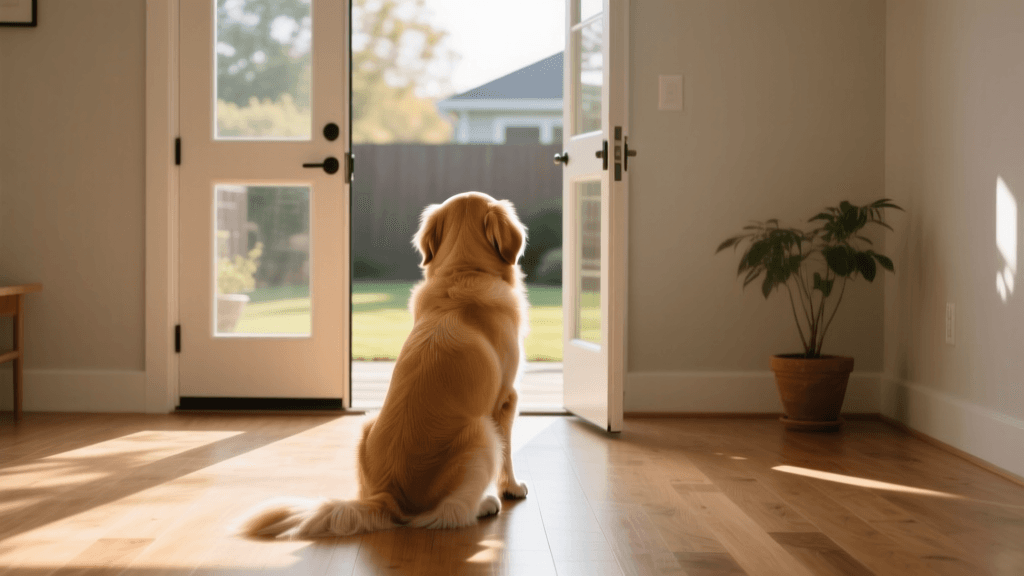
Once your dog remains relaxed when you handle your keys and coat, move to the door. Touch the doorknob, then immediately turn away and sit down. Do not open the door. Repeat this until the dog shows zero reaction to the sound of the latch. Next, turn the knob and open the door one inch, then close it. Gradually increase the door's opening over several days. If your dog shows signs of stress, you have moved too fast; close the door and return to the previous step. The goal is to make the door's movement entirely boring.
Phase 3: Duration Building (Micro-Departures)
Only when your dog is completely relaxed with the door open should you attempt a micro-departure. Step outside, close the door, and immediately step back inside. Do not make a fuss when you return. Keep your arrivals and departures incredibly low-key. Gradually increase the time you spend outside from one second to five seconds, then ten seconds, then thirty seconds. This phase is critical. You are teaching the dog that your departure always results in your return. Use a high-value treat, such as a frozen Kong stuffed with peanut oil and kibble, to create a positive association with your exit.
The Neurobiology of Stress: Why Punishment Fails
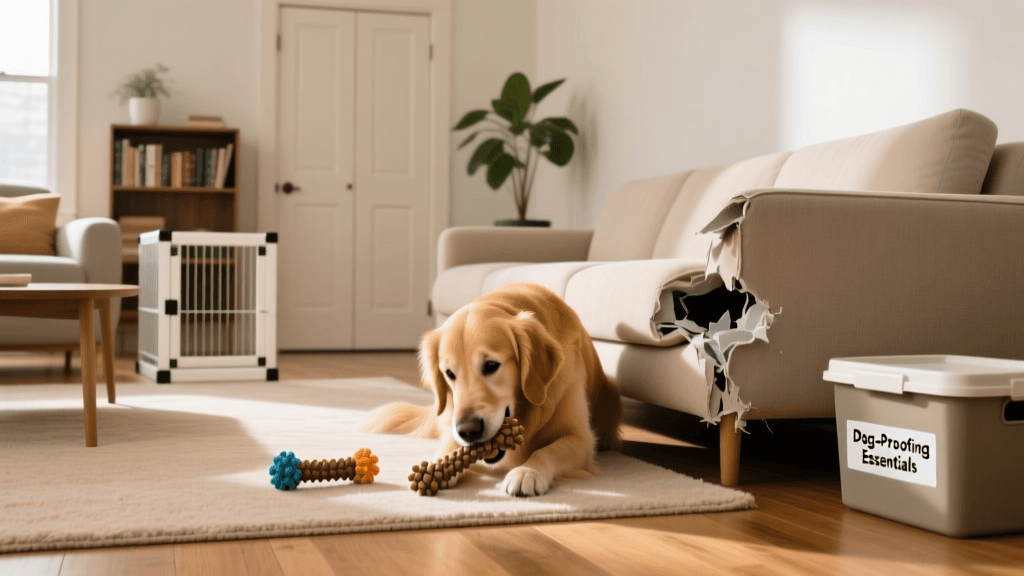
It is vital to understand that a dog destroying a doorframe or soiling the rug while alone is not acting out of revenge. They are experiencing a severe panic attack. Punishing a dog for these behaviors—whether through scolding upon your return or the use of aversive shock collars—only compounds the trauma. The dog learns that your return brings punishment, which ironically increases their overall anxiety and damages the human-animal bond. Experts at Fear Free Pets emphasize that positive reinforcement and environmental management are the only scientifically validated methods for treating canine separation anxiety.
True behavioral rehabilitation requires us to change the dog's emotional state, not just suppress their outward symptoms. A dog that is silent but trembling in a crate is still suffering from profound psychological distress.
Integrating Modern Tech for Alone Time Success
In 2026, pet technology has advanced to support behavioral protocols in unprecedented ways. Modern AI-driven pet cameras can now analyze a dog's body language and vocalizations in real-time. These smart systems can detect early signs of stress-panting, repetitive pacing, and door-scratching, sending instant alerts to your smartphone before the dog breaches their panic threshold. This allows you to intervene via two-way audio or automated treat dispensers to redirect the dog's focus and reward calm behavior.
- Smart Treat Dispensers: Program devices to release high-value treats at randomized intervals, keeping the dog engaged in foraging behaviors rather than fixating on the door.
- Adaptive White Noise Machines: Use sound-masking technology that specifically filters out external triggers like neighborhood dogs barking or delivery trucks, which can exacerbate isolation distress.
- Biometric Monitoring Collars: Track your dog's resting heart rate and respiratory rate to objectively measure their stress levels during micro-departures, removing the guesswork from your training timeline.
When to Seek Professional Veterinary Behaviorist Help
While desensitization is highly effective, severe cases of separation anxiety often require a multi-modal approach. If your dog is injuring themselves attempting to escape, or if they refuse to eat high-value treats when you begin the micro-departure phase, their anxiety is likely too high for learning to occur. In these instances, consulting a board-certified veterinary behaviorist is essential. They may prescribe short-term anti-anxiety medications, such as SSRIs or fast-acting situational anxiolytics, to lower the dog's baseline arousal level enough for the desensitization protocol to take hold. Medication does not replace training; rather, it creates the neurochemical environment necessary for behavioral modification to succeed. By combining 2026 behavioral science, modern technology, and compassionate management, you can help your dog overcome their fear of being alone and build a foundation of lasting confidence.
marcus-aldridge
All our authors care for dogs every day — read more of their work on the authors page.