Canine Consent Testing: A Force-Free Handling Guide (2026)
Discover how canine consent testing and calming signals revolutionize force-free handling in 2026. Learn step-by-step protocols for happier dogs.
The Evolution of Force-Free Handling in 2026
The landscape of canine behavior and training has undergone a massive paradigm shift as we move through 2026. Gone are the days of dominance-based theories and forced compliance. Today, the gold standard in the veterinary and behavioral communities is autonomy-based, force-free handling. At the core of this modern approach is 'consent testing'—a method that empowers dogs to communicate their comfort levels and actively participate in their own care. Understanding your dog is no longer just about reading their body language; it is about establishing a two-way communication loop where your dog's 'no' is respected just as much as their 'yes'.
When we prioritize positive reinforcement and give dogs agency over their bodies, we drastically reduce fear, anxiety, and stress (FAS). This comprehensive guide will walk you through the psychology, body language, and practical application of canine consent testing, ensuring your handling methods are as ethical as they are effective.
What Exactly is Canine Consent Testing?
Canine consent testing is a structured protocol used to determine if a dog is comfortable with physical touch, handling, or a specific environmental interaction. Rather than assuming a dog enjoys being petted, hugged, or restrained, we ask for their permission and observe their response. If the dog opts in, we proceed. If the dog opts out or displays calming signals indicating discomfort, we immediately stop and reassess.
This approach is deeply rooted in the science of operant conditioning and the psychology of learned helplessness. When dogs are repeatedly forced into uncomfortable situations without an escape route, they may shut down—a state often misinterpreted by owners as 'calm submission.' In reality, this is a trauma response. By utilizing consent testing, we keep the dog's brain in an optimal state for learning, keeping their nervous system regulated and engaged.
Step-by-Step: The 3-Second Petting Consent Protocol
The most accessible way to begin practicing force-free handling is through the 3-Second Petting Consent Test. This is especially useful when introducing your dog to new people or assessing their baseline comfort with physical affection.
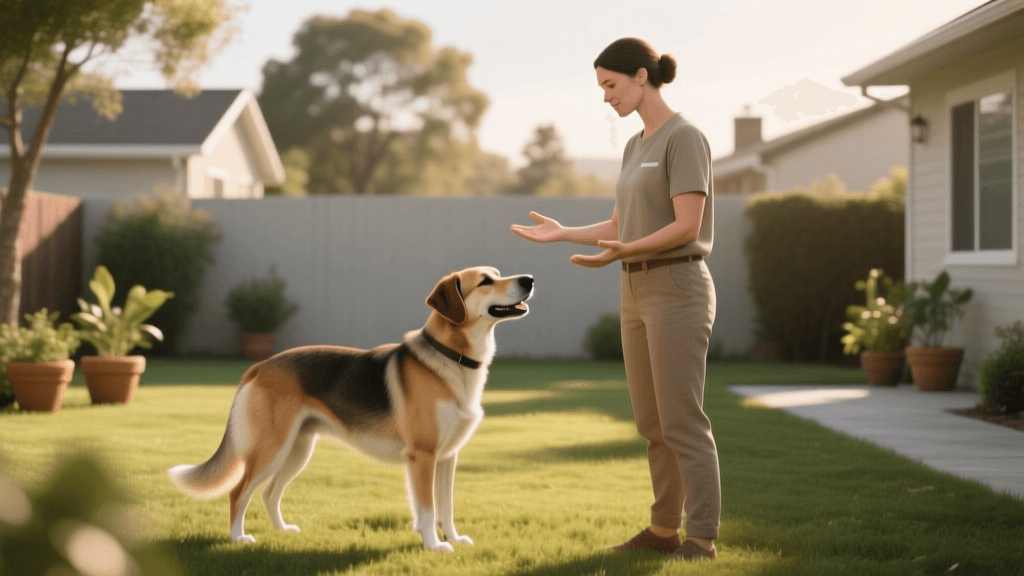
- Step 1: The Invitation. Stand or sit near the dog without leaning over them. Offer a relaxed hand or simply make gentle eye contact. Do not reach out to grab or force contact.
- Step 2: The 3-Second Pet. If the dog approaches or leans in, gently pet them for exactly three seconds. Focus on neutral zones like the chest or shoulders. Avoid the top of the head or paws initially.
- Step 3: The Pause and Observe. Stop petting and remove your hand. Wait for 3 to 5 seconds and watch the dog's body language.
- Step 4: Read the Response. If the dog leans in, nudges your hand, or paw at you, they are giving enthusiastic consent. You may resume petting for another three seconds. If the dog looks away, licks their lips, turns their body, or walks away, they have revoked consent. Respect this immediately.
Decoding Calming Signals: Is Your Dog Saying 'No'?
To successfully implement consent testing, you must become fluent in canine communication. Dogs rarely use aggression as a first resort; instead, they use subtle 'calming signals' to de-escalate tension and express discomfort. According to extensive research on canine body language cues, missing these early warnings is the primary reason handling interactions escalate to bites or severe behavioral shutdowns.
In 2026, force-free professionals emphasize the importance of recognizing micro-expressions. A slight tension in the facial muscles, a brief freeze, or a single yawn can be the difference between a dog feeling safe and a dog feeling trapped. Understanding these signals is the cornerstone of the 'Understanding Your Dog' philosophy.
Consent vs. Stress Signals: A Quick Reference Table
Use the following chart to evaluate your dog's real-time feedback during handling, grooming, or veterinary exams.
| Behavior / Signal | Consent Status | Recommended Handler Action |
|---|---|---|
| Leaning into touch, soft eyes, relaxed open mouth, nudging hand | Enthusiastic Consent (Green Light) | Continue handling; offer verbal praise or a treat. |
| Accepting touch but remaining still, neutral posture | Tolerating (Yellow Light) | Proceed with caution; keep sessions very short and reward heavily. |
| Lip licking, yawning, looking away, whale eye, lifting one paw | Revoking Consent / Stress (Red Light) | Stop immediately; give the dog space; lower criteria or change environment. |
| Freezing, stiffening, growling, snapping, hiding | Severe Distress / Over Threshold | Abort the interaction entirely; consult a certified force-free behaviorist. |
Essential Force-Free Gear for Consent-Based Training
Having the right equipment supports your dog's autonomy and makes consent testing easier to implement in daily life. Here are the top-rated force-free tools for 2026:
- Perfect Fit Harness (Approx. $85 - $95): This modular, fleece-lined harness is a favorite among force-free professionals. Because it comes in separate pieces that buckle on, you can 'ask' the dog to put their head through the loop and reward them, rather than forcing it over their head. It respects their bodily autonomy during the dressing process.
- Ruffwear Front Range Harness (Approx. $49.95): Featuring both a front and back leash attachment, this harness allows you to guide your dog without applying painful pressure to their trachea. The front clip provides gentle steering that relies on biomechanics rather than force, perfectly aligning with positive reinforcement methodologies.
- Doggone Good Rapid Rewards Pouch (Approx. $38.00): When practicing consent testing, timing is everything. This high-capacity treat pouch features a magnetic closure that allows for lightning-fast treat delivery the moment your dog opts into a handling exercise, reinforcing their brave choice.
The Psychology of Autonomy: Why Choice Reduces Reactivity
Why does giving a dog a choice make them more cooperative? The answer lies in canine psychology and neurology. When a dog feels they have no control over their environment or body, their amygdala triggers a fight-or-flight response, flooding their system with cortisol. In this state, learning is neurologically impossible.
Conversely, when we provide choices, we engage the dog's prefrontal cortex (the decision-making center). According to literature on common dog behavior issues, empowering dogs to make choices builds profound trust between the human and the animal. A dog who knows they can 'opt-out' of a nail trim is significantly more likely to 'opt-in' the next time, because they trust that their boundaries will not be violated. This is the ultimate goal of force-free training: cooperation born from trust, not compliance born from fear.
Implementing Consent Testing in Daily Scenarios
Veterinary and Grooming Visits
Advocate for your dog at the vet or groomer by requesting Fear Free handling techniques. If the veterinary staff needs to draw blood, ask if they can use cooperative care methods, such as training a chin rest or allowing the dog to stand rather than being forcibly pinned into lateral recumbency. If your dog shows stress signals, it is entirely acceptable to ask the vet to stop, reschedule, and work on desensitization at home with a certified professional.
Meeting Strangers on Walks
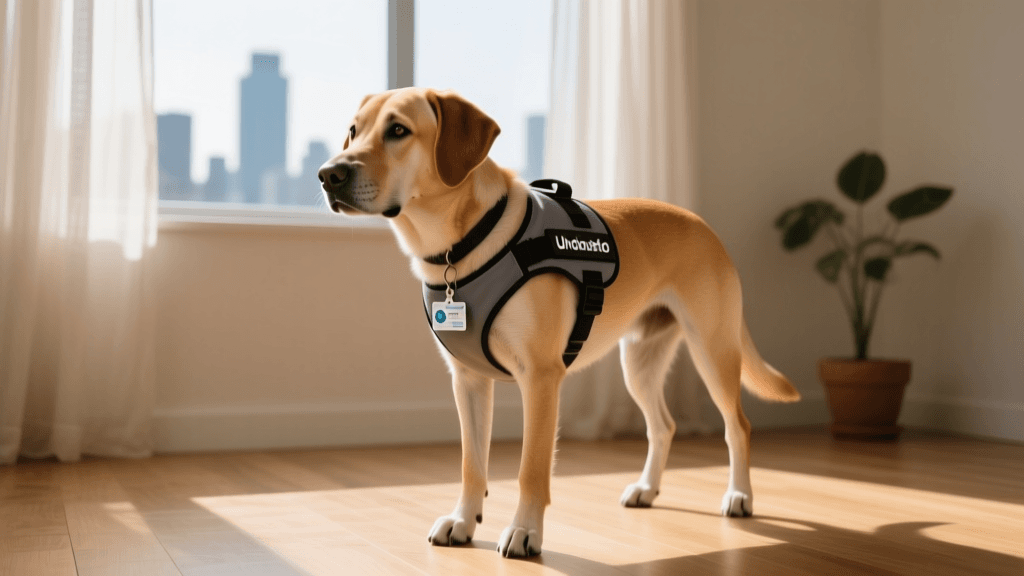
Not every dog wants to be petted by strangers, and that is perfectly okay. In 2026, the 'Advocate for Your Dog' movement encourages owners to use visual cues, such as a yellow ribbon on the leash or a 'Do Not Pet' patch on a harness, to communicate their dog's boundaries to the public. If someone approaches, step between them and your dog, and politely decline the interaction. Protecting your dog's consent in public builds their confidence and reduces leash reactivity over time.
Conclusion
Understanding your dog is a lifelong journey of observation, empathy, and respect. By integrating canine consent testing and honoring calming signals, you transition from being a dictator of your dog's behavior to a trusted partner in their well-being. The force-free methods championed in 2026 prove that when we listen to what our dogs are telling us, we unlock a deeper, more joyful, and profoundly cooperative relationship. Start with the 3-second petting test today, and watch your dog's confidence and trust in you blossom.
priya-sutaria
All our authors care for dogs every day — read more of their work on the authors page.