Canine Cognitive Dysfunction: An Expert Behavior Guide
Discover early signs of canine cognitive dysfunction from an expert behaviorist. Learn actionable enrichment and management strategies for aging dogs.
Understanding Canine Cognitive Dysfunction (CCDS)
As a certified canine behaviorist, one of the most heartbreaking transitions I witness is when owners dismiss profound neurological shifts as 'just old age.' Canine Cognitive Dysfunction Syndrome (CCDS) is not a normal part of aging; it is a progressive neurodegenerative disease closely mirroring Alzheimer's disease in humans. Characterized by the accumulation of amyloid-beta plaques and a depletion of dopamine in the brain, CCDS fundamentally alters how a dog perceives, interacts with, and navigates their environment.
According to data published by VCA Animal Hospitals, up to 68% of dogs aged 15 to 16 years show at least one clinical sign of cognitive dysfunction, yet a vast majority of these cases remain undiagnosed. Early behavioral intervention is critical. While we cannot cure CCDS, targeted behavioral modifications, environmental management, and specific nutritional protocols can significantly slow cognitive decline and improve the quality of life for your aging companion.
The DISHA Framework: Decoding Behavioral Shifts
In veterinary behavior analysis, we utilize the DISHA acronym to categorize and assess the clinical signs of cognitive decline. Recognizing these subtle behavioral shifts early allows for proactive management before the dog enters the severe stages of the disease.
1. Disorientation
Dogs with CCDS frequently exhibit spatial confusion. You may notice your dog walking into a room and immediately forgetting why they entered, staring blankly at walls, or getting 'stuck' behind furniture or in corners. They may approach the hinge side of a door, unable to figure out how to push it open, or fail to navigate around obstacles they previously cleared with ease.
2. Interactions Altered
Social withdrawal or uncharacteristic irritability are major red flags. A dog that once eagerly greeted you at the door may now barely lift their head. Conversely, some dogs develop separation anxiety later in life, becoming clingy and shadowing their owners due to a loss of environmental confidence. The ASPCA notes that altered interactions with familiar humans and other household pets are among the most distressing signs for owners.
3. Sleep-Wake Cycle Disruptions
Often referred to as 'sundowning,' dogs with CCDS frequently invert their circadian rhythms. They may sleep deeply throughout the day but pace, pant, whine, or vocalize aimlessly through the night. This disruption severely impacts the mental health of the entire household.
4. House-Soiling
This is not a regression in training or a sign of spite. The dog literally forgets the concept of housetraining or loses the ability to signal their need to go outside. They may eliminate in plain sight or even in their sleeping areas, completely unaware of the social faux pas.
5. Activity Level Changes
Activity shifts manifest in two distinct ways: apathy or purposeless repetitive behaviors. Apathetic dogs lose interest in walks, toys, and exploration. Conversely, some dogs develop compulsive behaviors, such as relentless pacing in geometric patterns or excessive, obsessive licking of their paws or the floor.
Differential Diagnosis: Normal Aging vs. CCDS
It is vital for owners to distinguish between benign senior slowing and pathological cognitive decline. The table below outlines the key behavioral differences we analyze during a functional assessment.
| Behavioral Sign | Normal Senior Aging | Canine Cognitive Dysfunction (CCDS) |
|---|---|---|
| Navigation | Slower to climb stairs; hesitates at slippery floors. | Stares blankly at walls; gets trapped behind furniture. |
| Greeting | Less physically enthusiastic but clearly recognizes family. | Fails to recognize familiar people; appears lost in own home. |
| Sleep | Naps more frequently during the day; sleeps through the night. | Paces or vocalizes at night; heavily disrupted circadian rhythm. |
| Accidents | Occasional accidents if forced to hold bladder too long. | Eliminates indoors without signaling; appears unaware of mess. |
| Play & Work | Less stamina, but still engages with favorite toys. | Apathy; drops toys mid-play; forgets how to use puzzle feeders. |
Expert Behavioral Interventions and Environmental Modifications
Once a veterinary diagnosis is secured (ruling out metabolic issues, pain, or sensory loss), behaviorists implement a structured cognitive enrichment plan. The goal is to stimulate neuroplasticity and maintain existing neural pathways.
Targeted Cognitive Enrichment
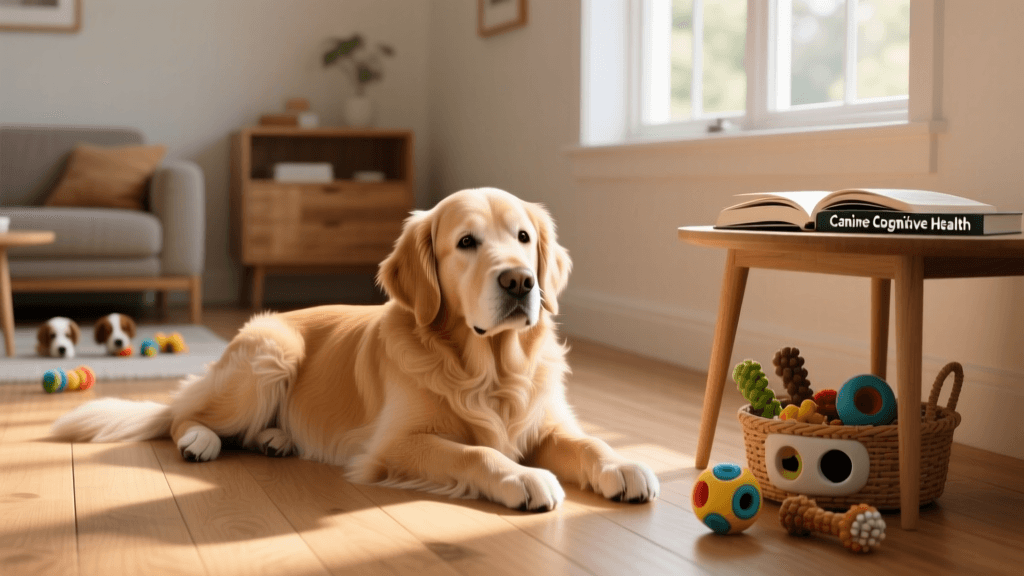
Do not rely on physical exercise alone; mental fatigue is just as important. Introduce puzzle toys like the Outward Hound Dog Brick (Cost: ~$20). Start on the easiest setting to build confidence, hiding high-value treats like Zuke's Mini Naturals. Limit these sessions to 10 to 15 minutes, twice daily. Prolonged sessions can lead to frustration and cortisol spikes, which exacerbate cognitive decline.
Sensory and Scent Work Protocols
Olfactory stimulation directly engages the limbic system, which is heavily impacted by CCDS. Create a 'scent trail' in your living room using a snuffle mat (Cost: ~$25). Alternatively, introduce novel, safe scents. Place one drop of dog-safe lavender essential oil diluted in 10 drops of fractionated coconut oil on a cotton ball and hide it for your dog to find. This 5-minute daily exercise provides immense neurological stimulation with minimal physical strain on arthritic joints.
Managing Sundowning and Sleep Hygiene
To combat inverted sleep cycles, manipulate your dog's light exposure. Use bright, 4000K LED bulbs in the main living areas during the day to suppress melatonin and encourage wakefulness. At 7:00 PM, transition to dim, 2700K warm lighting. Introduce a white noise machine, such as the Hatch Restore (Cost: ~$130), playing brown noise to mask triggering outdoor sounds that cause night-time anxiety. For severe sleep disruptions, consult your veterinarian about melatonin supplementation; typical behavioral dosages range from 3mg for dogs under 25 lbs, to 6mg for 25-50 lbs, and up to 9mg for dogs over 50 lbs, administered 30 minutes before bedtime.
Nutritional Psychiatry for the Aging Canine Brain
Behavioral modification must be supported by neuro-nutrition. The aging brain struggles to metabolize glucose, its primary energy source. Research highlighted by the American Kennel Club emphasizes the efficacy of Medium Chain Triglycerides (MCTs) in providing an alternative energy source (ketones) for the brain.
- Targeted Diets: Consider transitioning to Purina Pro Plan Bright Mind Adult 7+ (Cost: ~$60 for a 30lb bag). This formula utilizes enhanced botanical oils to provide MCTs, clinically shown to improve cognitive function in older dogs within 90 days.
- Omega-3 Fatty Acids: Supplement with a high-quality fish oil rich in EPA and DHA, such as Nordic Naturals Omega-3 Pet (Cost: ~$22). DHA is a critical structural component of the canine brain and helps reduce neuro-inflammation.
- Antioxidant Support: Look for supplements containing Vitamin E, Vitamin C, and Selenium to combat oxidative stress in brain tissue. Products like Zesty Paws Senior Advanced Bites (Cost: ~$28) offer a convenient, pre-measured delivery method for these vital nutrients.
Behaviorist's Note: Never introduce multiple supplements or dietary changes simultaneously. Implement one new variable every two weeks. This allows you to accurately track behavioral improvements and identify any gastrointestinal sensitivities, ensuring your dog's comfort remains the top priority.
Conclusion: Patience and Proactive Management
Living with a dog experiencing Canine Cognitive Dysfunction requires immense patience, empathy, and a willingness to adapt your environment. As a behaviorist, I urge owners to let go of the dog their pet used to be, and instead meet the dog they are today with grace and structured support. By combining veterinary care, targeted cognitive enrichment, precise environmental modifications, and neuro-nutrition, you can provide your senior dog with a dignified, comfortable, and engaging twilight life. If you notice any of the DISHA signs, do not wait—consult your veterinarian or a certified veterinary behaviorist immediately to begin a proactive management plan.
tom-renshaw
All our authors care for dogs every day — read more of their work on the authors page.