Canine Calming Signals: Decoding Yawns And Lip Licks 2026
Discover what your dog's yawns and lip licks really mean in 2026. Learn to decode canine calming signals and reduce stress in multi-dog and vet environments.
Understanding Canine Calming Signals in 2026
For decades, dog owners have relied on a human-centric lens to interpret canine behavior. When a dog yawns, we assume they are tired; when they lick their lips, we assume they are hungry or anticipating a treat. However, modern veterinary behavior science has thoroughly debunked these anthropomorphic assumptions. As of 2026, the gold standard in canine psychology emphasizes the recognition of "calming signals"—a repertoire of subtle body language cues dogs use to de-escalate tension, communicate peaceful intentions, and self-soothe in stressful environments.
Originally popularized by Norwegian dog trainer Turid Rugaas, the concept of calming signals has evolved significantly. Today, leading organizations like the American Veterinary Society of Animal Behavior (AVSAB) advocate for force-free, fear-free handling practices that require owners and veterinary professionals to recognize early signs of canine stress before they escalate into fear-based aggression or chronic anxiety. Understanding these micro-expressions is no longer just a niche skill for professional trainers; it is a fundamental requirement for responsible dog ownership in 2026.
The Stress Yawn: More Than Just Sleepiness
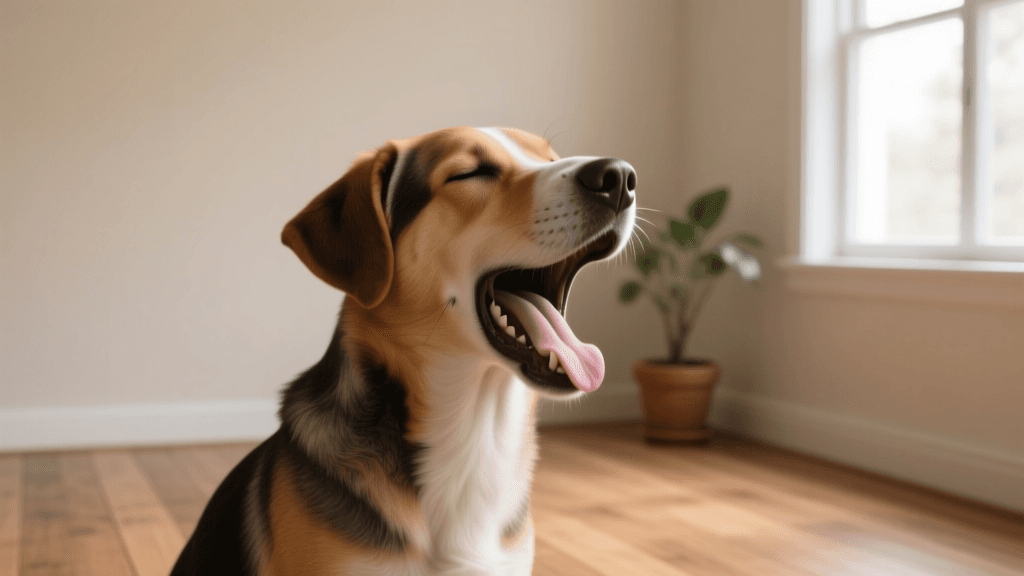
In human physiology, a yawn is primarily associated with fatigue or boredom. In canine communication, a yawn is one of the most potent appeasement gestures a dog can offer. When a dog yawns out of context—such as during a tense multi-dog introduction, while being scolded, or when a stranger leans over them to pet their head—they are not tired. Instead, they are experiencing a spike in cortisol and adrenaline.
The stress yawn serves a dual purpose. Internally, the deep inhalation and exhalation help regulate the dog's autonomic nervous system, lowering their heart rate and providing a physiological release valve for mounting anxiety. Externally, it broadcasts a clear message to other dogs (and observant humans): "I am not a threat, please do not escalate this interaction." According to recent behavioral studies highlighted by the American Kennel Club (AKC), ignoring a stress yawn and forcing a dog to remain in a high-arousal environment can lead to a breakdown in trust and an eventual bite incident, as the dog feels its polite requests for space have been ignored.
The Lip Lick (Tongue Flick): A Micro-Expression of Appeasement
While a dog licking its chops after eating a meal is purely functional, the "calming lip lick" or "tongue flick" is entirely different. This signal is characterized by a rapid, darting movement of the tongue over the nose or lips, often lasting only a fraction of a second. It is a micro-expression that occurs when a dog is mildly to moderately uncomfortable.
You will frequently observe tongue flicks in the veterinary waiting room, during grooming sessions, or when a dog is being hugged tightly by a child. In the canine world, direct approaches, looming over, and prolonged eye contact are inherently confrontational. When a human or another dog invades their personal space, a dog will often offer a rapid lip lick to signal appeasement. It is the canine equivalent of raising your hands in a peaceful gesture. If the stressor does not retreat, the dog may escalate to more pronounced signals, such as turning their head away, freezing, or eventually growling.
Breed-Specific Nuances: The Brachycephalic Challenge
Decoding these signals requires an understanding of canine anatomy, particularly in 2026, where brachycephalic breeds like French Bulldogs, Pugs, and Boston Terriers remain incredibly popular. Because of their shortened muzzles and compromised airways, these dogs often struggle to perform exaggerated yawns or continuous panting. Furthermore, their prominent eyes and naturally wrinkled brows can make them look perpetually "worried" to the untrained eye.
For brachycephalic owners, identifying calming signals requires looking beyond the muzzle. Pay close attention to "whale eye" (where the whites of the eyes are visible due to the head turning away while the eyes remain fixed on the stressor), ear positioning (pinned flat against the skull), and the tension in their facial muscles. A French Bulldog might not be able to offer a wide, sweeping lip lick, but a tight, compressed mouth combined with whale eye is a glaring red flag that the dog needs immediate distance from the current stressor.
Data Table: Human Misinterpretations vs. Canine Reality
To help you navigate your dog's emotional landscape, we have compiled a comparison chart detailing the most common calming signals, how humans typically misinterpret them, and what your dog is actually trying to communicate.
| Canine Signal | Common Human Misinterpretation | Actual Canine Meaning | Recommended Human Response |
|---|---|---|---|
| Yawning (Out of Context) | The dog is bored, tired, or ignoring me. | I am stressed and trying to calm myself down; please give me space. | Stop the current activity, increase physical distance, and speak in a soft, low tone. |
| Rapid Lip Licking | The dog is hungry or wants a treat. | I am uncomfortable with this interaction; I come in peace. | Remove the stressor (e.g., stop hugging, step back) and allow the dog to retreat. |
| Turning Head Away | The dog is being stubborn or ignoring a command. | Direct confrontation is making me anxious; I am avoiding conflict. | Approach from the side rather than head-on; avoid direct, prolonged eye contact. |
| Sniffing the Ground | The dog is distracted by a smell and losing focus. | The social pressure is too high; I am disengaging to lower the tension. | Allow the dog a few moments to decompress and sniff before gently re-engaging. |
The 2026 Fear-Free Protocol: How to Respond
Recognizing calming signals is only the first step; knowing how to respond is what separates an average owner from an exceptional canine advocate. The Fear Free Pets initiative has revolutionized how we handle stressed dogs, shifting the industry away from forced compliance and toward cooperative care. If your dog is displaying yawns, lip licks, or ground-sniffing in a high-stress environment like a vet clinic or a busy dog park, follow this actionable 2026 protocol:
- 1. Acknowledge and Validate: Do not force your dog to "tough it out." Acknowledge that their nervous system is overwhelmed. Punishing a dog for showing stress signals (e.g., scolding them for yawning or looking away) suppresses the warning signs and can lead to a dog that bites without warning.
- 2. Create Immediate Distance: If another dog or person is causing the lip licks, calmly guide your dog away. Increase the radius between your dog and the stressor until the calming signals cease and their body language softens.
- 3. Deploy a Decompression Tool: In 2026, portable decompression tools are essential for any dog owner's kit. Carry a lick mat pre-smeared with dog-safe peanut butter or a high-value snuffle mat. Licking and foraging are naturally soothing behaviors that stimulate the parasympathetic nervous system, helping to lower cortisol levels rapidly.
- 4. Utilize Modern Pheromone Support: Consider equipping your dog with an updated 2026 formula pheromone collar (such as Adaptil Optimum) before entering known stressful environments. These synthetic analogs of the canine appeasing pheromone can provide a baseline of emotional security, making your dog less reactive to environmental triggers.
- 5. Advocate at the Vet: If your dog is stress-yawning on the examination table, politely ask the veterinary staff to pause. Request that they use a Fear Free approach, such as examining the dog on the floor, using non-slip mats, and offering high-value treats to build positive associations rather than using physical restraint.
Conclusion
Mastering the language of canine calming signals transforms the way you relate to your dog. By understanding that a yawn is a plea for space and a lip lick is a gesture of peace, you can navigate the world through your dog's eyes. In 2026, the most successful human-canine relationships are built on mutual respect, consent, and a deep understanding of species-specific communication. The next time your dog yawns during a training session or licks their lips when a stranger approaches, listen to what they are silently saying. By honoring their boundaries and advocating for their emotional well-being, you build a foundation of unbreakable trust that will last a lifetime.
jonas-cole
All our authors care for dogs every day — read more of their work on the authors page.