Canine Calming Signals: 2026 Guide to Stress-Free Dog Meetings
Learn to decode canine calming signals for stress-free dog introductions in 2026. Master body language, lip licking, and yawning to keep your pup safe.
Understanding the Silent Language of Dogs
Life with a dog is a profound cross-species partnership, but it is fundamentally built on a communication barrier. While humans rely heavily on verbal language and complex syntax, dogs navigate their social world through a sophisticated matrix of body language, scent, and micro-expressions. According to the American Veterinary Medical Association (AVMA), misunderstanding these silent cues is one of the leading causes of canine behavioral issues and failed dog-to-dog introductions in multi-pet households and public parks.
In 2026, the modern dog owner has access to both foundational behavioral science and cutting-edge biometric technology to bridge this communication gap. By learning to decode 'calming signals'—a term originally popularized by Norwegian canine behaviorist Turid Rugaas—you can proactively manage your dog's stress levels, prevent reactive outbursts, and ensure that every dog meeting is safe, consensual, and positive.
The Evolutionary Purpose of Calming Signals
Calming signals are not merely signs of fear; they are active, intentional communication tools used by dogs to de-escalate potential conflict, soothe themselves in stressful environments, and signal peaceful intentions to others. In the wild, overt aggression is biologically expensive and dangerous. Therefore, canines evolved a rich vocabulary of appeasement behaviors to maintain social cohesion and avoid physical altercations.
When your dog displays a calming signal during a tense encounter at the dog park or when meeting a new canine housemate, they are effectively saying, 'I mean no harm, please do not harm me, and let us lower the temperature of this interaction.' Recognizing these signals allows you to advocate for your dog, removing them from overwhelming situations before they feel forced to escalate to defensive aggression.
The 7 Core Calming Signals Every Owner Must Recognize
To successfully navigate dog introductions in 2026, you must be fluent in the following seven primary calming signals:
- 1. Yawning: While humans yawn when fatigued, dogs frequently yawn when they are mildly stressed, confused, or feeling pressured. If your dog yawns repeatedly while being approached by an overly enthusiastic puppy, they are signaling discomfort, not sleepiness.
- 2. Lip and Nose Licking: A quick, repetitive flick of the tongue over the nose or lips is a classic appeasement gesture. It is often one of the earliest indicators of anxiety in a veterinary waiting room or during a tense dog-to-dog greeting.
- 3. Turning Away: Direct, sustained eye contact is perceived as a threat in canine culture. A dog will deliberately turn their head or entire body away from an approaching dog to signal that they are not a threat and wish to avoid conflict.
- 4. Ground Sniffing: Suddenly finding the pavement fascinating when another dog approaches is a polite way of avoiding direct confrontation. It distracts the approaching dog and lowers the social tension of the encounter.
- 5. Curved Approaches: Well-socialized dogs rarely walk in a straight, direct line toward one another, as this is inherently confrontational. Instead, they will arc their bodies and approach in a wide curve to signal peaceful intentions.
- 6. Slow Movements and Freezing: If a dog feels overwhelmed, they may slow their movements to a crawl or freeze entirely. This 'freeze' response is a plea for the other party to back off and lower their energy.
- 7. Blinking and Softening the Eyes: A hard, unblinking stare is a precursor to aggression. Conversely, slow blinking and squinting (often called 'soft eyes') is a deliberate signal of relaxation and non-aggression.
Leveraging 2026 Wearable Tech to Monitor Canine Stress
While visual observation is critical, the latest advancements in veterinary biometrics allow owners to track internal stress responses before they manifest as visible body language. In 2026, monitoring Heart Rate Variability (HRV) has become the gold standard for assessing a dog's autonomic nervous system balance in real-time.
The PetPace Sense 2026 Edition (retailing at $199.99 for the hardware, with a $19.95/month subscription) is a premier veterinary-grade smart collar. It continuously tracks HRV, pulse, respiration, and temperature. When your dog's HRV drops during a park introduction, the companion app sends an immediate 'Stress Alert' to your smartphone, prompting you to intervene and give your dog a break before they exhibit visible lip-licking or yawning.
Alternatively, the Whistle GO+ Health 2026 ($129.99) offers a more consumer-friendly approach, utilizing advanced accelerometers to track stress-induced micro-scratching and resting heart rate trends. According to data insights shared via the ASPCA Virtual Pet Behaviorist network, combining biometric collar data with traditional body language observation results in a 40% higher success rate in long-term dog-to-dog cohabitation.
The 2026 Protocol for Stress-Free Dog Introductions
Armed with an understanding of calming signals and modern biometric feedback, follow this structured protocol for introducing your dog to new canine companions:
Step 1: The Parallel Walk (15-20 Minutes)
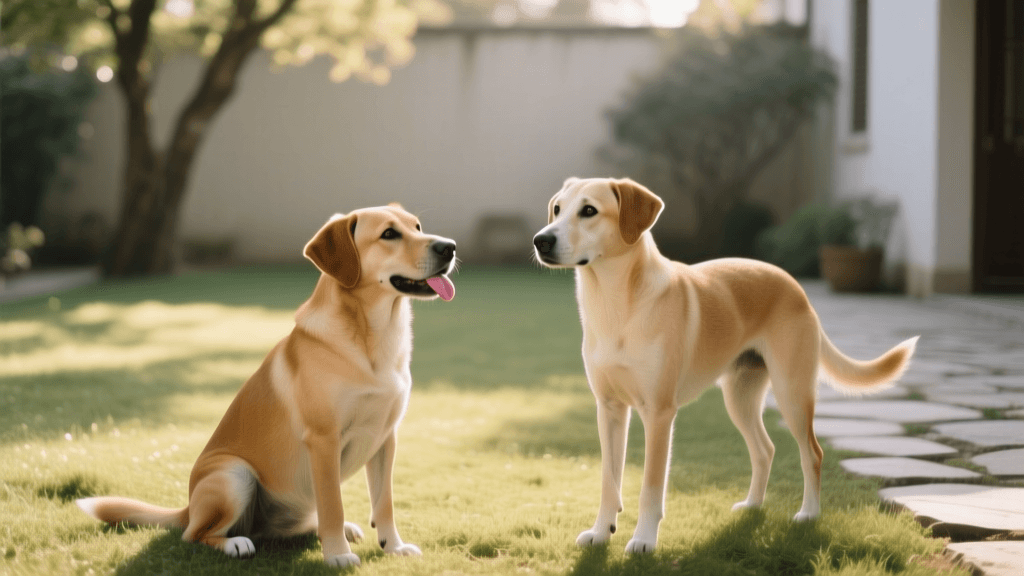
Never introduce dogs face-to-face on a leash. Instead, have both handlers walk the dogs in the same direction on opposite sides of the street. Maintain a 10-foot 'safety bubble.' This allows the dogs to gather scent information and observe each other's body language without the pressure of a direct greeting. Wait until both dogs show relaxed, loose body movements and soft eyes before closing the distance.
Step 2: The 3-Second Sniff Test
Once the dogs are walking calmly side-by-side, allow them to approach in a curved arc for a brief sniff. Count silently: one-one-thousand, two-one-thousand, three-one-thousand. After three seconds, cheerfully call your dog away and reward them with a high-value treat. This prevents the interaction from escalating into over-arousal or trigger-stacking, giving both dogs a chance to process the interaction and display any calming signals.
Step 3: The Lateral Release
If the 3-second tests yield loose, wiggly body language and no biometric stress alerts from your smart collar, drop the leashes (in a secure, fenced area) and allow lateral, side-by-side play. Avoid throwing toys, which can induce resource guarding, and closely monitor for any sudden yawning, freezing, or stiffening.
Comparison Chart: Decoding the Canine Escalation Ladder
Understanding where a dog is on the stress ladder is crucial for timely intervention. Use this chart to differentiate between healthy communication and escalating distress.
| Signal Category | Visual / Biometric Cue | Canine Meaning | Recommended Owner Action |
|---|---|---|---|
| Calming (Green Zone) | Curved approach, soft blinking, play bow | 'I am friendly and want to interact peacefully.' | Allow the interaction to continue; monitor closely. |
| Appeasement (Yellow Zone) | Yawning, lip licking, turning head away | 'I am feeling pressured; please give me space.' | Interrupt the greeting; lead your dog away for a 1-minute break. |
| Biometric Stress (Yellow Zone) | HRV drops below baseline on 2026 smart collar | Internal autonomic arousal is rising before visual cues appear. | Increase distance between dogs immediately; offer water. |
| Warning (Orange Zone) | Freezing, hard staring, raised hackles, deep growl | 'I am highly uncomfortable and will defend myself if you advance.' | Do not punish the growl. Calmly leash the dog and exit the area. |
| Aggression (Red Zone) | Snapping, lunging, biting | 'I was pushed past my threshold and am fighting for safety.' | Separate dogs safely using a barrier or water; consult a behaviorist. |
Final Thoughts on Canine Communication
Mastering canine communication is not a one-time achievement but an ongoing dialogue. By respecting your dog's calming signals and utilizing the biometric insights available in 2026, you transition from being merely a dog owner to a true canine advocate. The next time your dog yawns in the middle of a busy dog park or deliberately sniffs the ground as a boisterous Labrador approaches, recognize their brilliance. They are speaking fluently in the silent language of peace—it is up to us to listen, understand, and act accordingly.
tom-renshaw
All our authors care for dogs every day — read more of their work on the authors page.