Top Low-Anxiety Dog Breeds for Remote Workers in 2026
Discover the best low-anxiety dog breeds for remote workers in 2026. Boost your mental health and home office wellness with these calm companion breeds.
The Home Office Wellness Revolution of 2026
As we navigate the evolving landscape of remote and hybrid work in 2026, the home office has become a permanent fixture for millions of professionals. While working from home offers unprecedented flexibility, it also brings unique challenges to our mental health and daily routines. Digital burnout, virtual meeting fatigue, and the blurring of work-life boundaries are at an all-time high. Enter the ultimate wellness hack: a canine companion. However, not all dogs are suited for the quiet, focused environment of a home office. High-energy herding breeds or dogs prone to severe separation anxiety can inadvertently increase your stress levels, disrupting deep work and elevating cortisol. For remote workers prioritizing their mental health and wellbeing in 2026, selecting a low-anxiety, calm dog breed is essential. This guide explores the best breeds that seamlessly integrate into a productive home office, promoting mutual wellness for both you and your furry colleague.
The Science of Canine Companionship in the Home Office
Research consistently highlights the profound impact pets have on human mental health. According to the Centers for Disease Control and Prevention (CDC), pet ownership is linked to decreased blood pressure, reduced cholesterol levels, and lowered feelings of loneliness. Furthermore, a comprehensive review by Harvard Health Publishing notes that interacting with a calm dog can significantly reduce stress hormones and trigger the release of oxytocin, the "bonding" chemical. For remote workers in 2026, a dog that naturally exhibits a relaxed demeanor acts as a living biofeedback tool, reminding you to pause, breathe, and step away from the glowing monitor. Conversely, a dog that constantly barks at delivery drivers or demands high-intensity physical exertion every two hours can fracture your concentration and elevate workplace anxiety. Therefore, matching your dog's baseline energy and anxiety levels to your work environment is a critical component of occupational wellness.
Top 5 Low-Anxiety Dog Breeds for Remote Professionals
When selecting a dog for a home office environment, we look for breeds with low vocalization tendencies, moderate to low exercise requirements, and a high threshold for environmental stressors. Here are the top five breeds that excel in promoting a tranquil workspace.
1. The Cavalier King Charles Spaniel: The Ultimate Lap Warmer
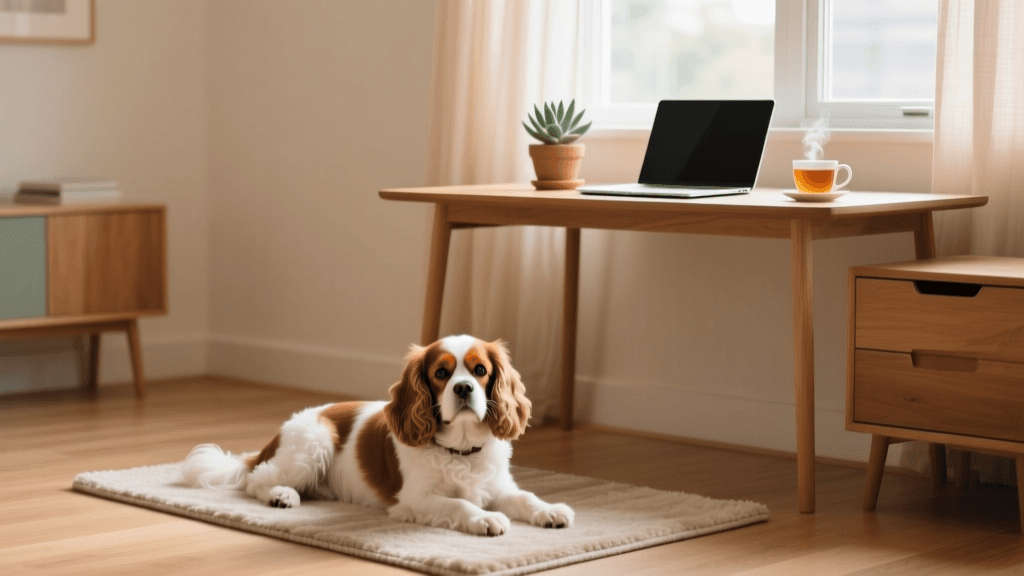
The Cavalier King Charles Spaniel is widely regarded as one of the most affectionate and adaptable breeds available. For remote workers, their primary desire is simply to be near their human. They are perfectly content to sleep on a plush orthopedic bed beneath your desk for hours, providing a grounding, calming presence without demanding constant entertainment. Their moderate energy levels mean a brisk 30-minute morning walk and an evening stroll are usually sufficient to keep them physically healthy and mentally satisfied. Because they are highly attuned to human emotions, Cavaliers often serve as intuitive emotional support animals, sensing when you are stressed during a difficult project and offering quiet comfort.
2. The Greyhound: The 45-MPH Couch Potato
It is a common misconception that Greyhounds require massive amounts of exercise. In reality, these retired racing athletes are notorious "couch potatoes." They sprint for short bursts and then sleep for up to 18 hours a day. For the remote worker in an apartment or a smaller home office, a Greyhound is ideal because they are incredibly quiet and rarely bark. Their low reactivity to household noises means your Zoom calls will not be interrupted by sudden howling. From a health perspective, their short coats require minimal grooming, reducing the time you spend on pet care and allowing you to focus on your professional and personal wellbeing.
3. The Basset Hound: The Zen Master of the Carpet
If your home office is prone to high-stress situations, the Basset Hound's unflappable, almost stubborn demeanor can be incredibly contagious. Bassets are notoriously laid-back and possess a high threshold for environmental chaos. They are not easily startled by sudden noises, making them excellent companions for busy households where family members might be moving around while you work. Their primary health consideration is joint and weight management; as a remote worker, you can easily integrate low-impact, scent-based "sniffari" walks into your lunch break, which provides excellent cognitive enrichment for the dog while getting you away from your screen to reset your own posture and eyesight.
4. The Bichon Frise: The Hypoallergenic Mood Booster
For professionals who suffer from mild allergies or are highly conscious of indoor air quality in their sealed home offices, the Bichon Frise is a top-tier choice. Their hypoallergenic, low-shedding coat means less dander circulating in your workspace, which can prevent allergen-induced fatigue and brain fog. While they are cheerful and playful, they do not possess the hyperactive drive of a terrier. They respond exceptionally well to "place" command training, meaning you can teach them to relax on their designated mat while you are in deep work sprints, fostering a structured and disciplined environment for both of you.
5. The Senior Rescue Mixed Breed: The Predictable Professional
One of the most significant wellness trends in 2026 is the adoption of senior rescue dogs. Puppies, while cute, require immense time, training, and emotional bandwidth—resources that are often depleted by a demanding remote job. A senior mixed-breed dog (typically over seven years old) offers a fully formed, predictable temperament. Rescue organizations can match you with a dog that has already been fostered in a home-office environment and proven to be calm, house-trained, and unbothered by the sounds of typing and virtual meetings. Adopting a senior dog also provides a profound sense of purpose and psychological fulfillment, knowing you are providing a comfortable sanctuary for a dog in its twilight years.
Structuring the Day: Exercise, Ergonomics, and Enrichment
A calm dog still needs a structured routine to maintain their own mental health and prevent destructive behaviors born of boredom. In 2026, occupational therapists and veterinary behaviorists recommend synchronizing your dog's care with established productivity frameworks like the Pomodoro Technique. By aligning your breaks with your dog's needs, you enforce healthy boundaries on your own workday, preventing the sedentary lifestyle that plagues remote workers.
| Time | Remote Worker Task | Dog Activity & Wellbeing Check |
|---|---|---|
| 8:00 AM | Morning Standup & Planning | Sniffari Walk (Mental Enrichment & Owner Sunlight Exposure) |
| 10:30 AM | Deep Work Sprint 1 | Chew Toy / Lick Mat on Orthopedic Bed (Canine Stress Relief) |
| 12:30 PM | Lunch Break & Screen Detox | Neighborhood Potty Walk & Basic Training Reinforcement |
| 3:00 PM | Afternoon Slump / Admin Tasks | Interactive Puzzle Feeder (Cognitive Stimulation) |
| 5:30 PM | End of Workday Transition | Long Decompression Walk (Signaling the End of the Workday) |
Ergonomics and Canine Tech in 2026
To support your dog's physical health while you work, invest in an ergonomic, memory-foam dog bed designed to support joint health, especially for breeds prone to hip dysplasia or arthritis. Furthermore, the latest 2026 biometric smart collars can track your dog's heart rate variability (HRV) and sleep quality, alerting you via your smartwatch if your dog is showing signs of hidden stress or discomfort while you are engrossed in a spreadsheet. This seamless integration of pet tech allows you to monitor their wellbeing without breaking your professional focus.
Preventing Separation Anxiety in a Hybrid World
Even if you are fully remote in 2026, hybrid meetings, off-site retreats, or simple household errands require your dog to be comfortable alone. The ASPCA's guidelines on separation anxiety emphasize that dogs must be taught independence to prevent severe psychological distress. It is vital to practice "departure desensitization." Pick up your keys, put on your shoes, and then simply sit back down at your desk. This breaks the associative chain that triggers canine panic. Additionally, utilize smart treat-dispensing cameras to check in and reward calm behavior when you do leave the house for a few hours. Ensuring your dog feels secure when alone is just as important as their behavior when you are present, safeguarding their long-term mental health.
Conclusion: A Balanced Partnership
Choosing the right dog breed for your remote work lifestyle is an investment in your mutual health and happiness. By opting for low-anxiety, adaptable breeds like the Cavalier King Charles Spaniel, Greyhound, or a senior rescue, you create a home office sanctuary that actively reduces stress and promotes mindfulness. Remember that a dog is not just a cute accessory for your video calls; they are a living, breathing partner in your daily wellness routine. With the right breed, a structured schedule, and a commitment to their physical and mental enrichment, your canine companion will become the most valuable member of your remote team in 2026 and beyond.
tom-renshaw
All our authors care for dogs every day — read more of their work on the authors page.