Budget-Friendly First Month Essentials for Your New Dog
Discover budget-friendly first-month essentials for your new dog. Learn how to save on crates, beds, and food while giving your pup the best start.
The True Cost of Bringing a Dog Home
Bringing a new dog into your life is an unforgettable milestone, but the financial reality of the first 30 days can quickly overwhelm unprepared owners. According to the ASPCA, the initial year of dog ownership can cost upwards of $1,300 to $2,000, with a massive percentage of those expenses front-loaded into the very first month. From veterinary visits to crates, leashes, and specialized diets, the costs compound rapidly. However, with strategic planning and a focus on budget-friendly dog care, you can provide a safe, enriching environment for your new companion without draining your savings. This guide breaks down the essential first-month purchases, highlighting where you should invest and where you can safely cut costs.
Adoption vs. Purchasing: The First Financial Decision
Your first major financial decision occurs before the dog even enters your home. While purchasing a puppy from a breeder can cost anywhere from $1,000 to over $3,000, adopting from a shelter or rescue typically ranges from $50 to $350. More importantly, adoption fees are heavily subsidized. According to The Humane Society of the United States, a standard adoption fee usually includes spaying or neutering, initial vaccinations, deworming, and a microchip. If you were to pay for these services out-of-pocket at a private veterinary clinic during your puppy's first month, you would easily spend $600 to $900. Adopting an adult dog can save you even more, as they often come fully house-trained, bypassing the need for expensive enzymatic cleaners and puppy pads.
Month-One Budget Breakdown: Retail vs. Budget Alternatives
It is tempting to walk into a big-box pet store and fill a cart with premium gear. Instead, use this comparison chart to prioritize your spending during the first 30 days.
| Essential Item | Traditional Retail Cost | Budget-Friendly Alternative | Estimated Savings |
|---|---|---|---|
| Orthopedic Dog Bed | $80 - $150 | Plastic rest pad + fleece blankets | $60 - $120 |
| Designer Collar & Harness | $45 - $90 | Standard nylon flat collar & front-clip harness | $30 - $60 |
| Ceramic/Smart Bowls | $30 - $60 | Stainless steel bowls (set of 2) | $20 - $45 |
| Premium Puzzle Toys | $25 - $50 each | DIY snuffle mats & frozen KONG | $20 - $40 |
| Retractable Leash | $25 - $40 | Standard 6-foot nylon lead | $15 - $25 |
Housing and Containment: Crates and Beds
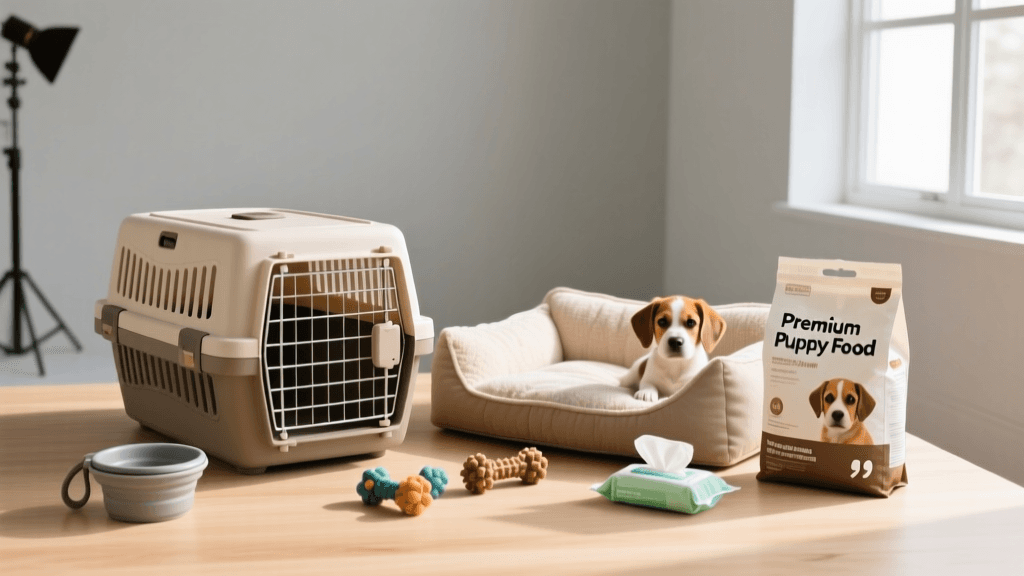
A crate is non-negotiable for house training and keeping a new dog safe when unsupervised. Do not buy multiple crates as your puppy grows. Instead, invest in a wire crate with an adjustable divider panel, such as the Midwest Homes for Pets iCrate (typically $50 to $75 depending on size). The divider allows you to shrink the interior space to the correct size for a puppy, preventing them from soiling one end and sleeping in the other, and expanding it as they reach their adult dimensions.
For bedding, avoid expensive orthopedic or plush beds during the first month. Puppies and newly adopted shelter dogs are prone to anxiety chewing, and a $120 memory foam bed can be destroyed in minutes. Opt for a $15 hard plastic rest pad lined with tightly folded, inexpensive fleece blankets. Fleece is cheap, machine-washable, and if your dog chews a hole in it, replacing a $5 blanket is far less painful than replacing a luxury bed.
Nutrition and Feeding Gear
When it comes to bowls, skip the aesthetic ceramic dishes or expensive automated smart-feeders for now. A set of two heavy-duty stainless steel bowls costs around $10 to $15. They are rust-proof, dishwasher safe, and do not harbor bacteria in microscopic scratches like plastic bowls do.
Regarding food, resist the urge to buy the smallest 4-pound bag on the shelf, which carries the highest cost-per-pound. If you know the exact brand and formula the shelter or breeder was using, purchase a 15-pound or 30-pound bag to lower your monthly overhead. Always ensure the food carries an AAFCO (Association of American Feed Control Officials) statement of nutritional adequacy. When transitioning to a new, more budget-friendly or higher-quality food, do so gradually over 7 to 10 days by mixing 25% new food with 75% old food, increasing the new ratio every few days to avoid gastrointestinal upset and costly vet visits for diarrhea.
Leashes, Collars, and Identification
Forget retractable leashes. They are expensive, prone to breaking, and offer poor control for a dog learning leash manners. A standard 4-to-6-foot nylon or leather lead costs about $8 to $12 and gives you the physical leverage needed to guide a new dog safely near roads and other animals. Pair this with a basic nylon flat collar or a martingale collar (ideal for narrow-headed breeds like Greyhounds or Whippets to prevent slipping) for under $10.
For identification, bypass the $100+ smart GPS trackers for your first month. Instead, get a durable stainless steel ID tag engraved at a local pet store kiosk for $5 to $8. Ensure it includes your dog's name and your current phone number. Combine this with the microchip provided at adoption or by your vet, which remains the most reliable, permanent form of identification.
Enrichment and Toys on a Dime
Mental stimulation is just as tiring for a dog as physical exercise, but you do not need to buy $40 electronic puzzle toys. The classic KONG rubber toy ($12 to $18) is an industry staple for a reason. Stuff it with a mixture of your dog's daily kibble allocation, a spoonful of dog-safe peanut butter (strictly xylitol-free), and low-sodium chicken broth, then freeze it overnight. This provides 30 to 45 minutes of budget-friendly enrichment.
You can also build a DIY snuffle mat for under $5. Purchase a cheap rubber sink mat with holes and a yard of fleece fabric. Cut the fleece into 6-inch strips and tie them through the holes. Scatter your dog's dry kibble into the fabric strips, forcing them to use their nose to forage for their meal. This mimics natural scavenging behaviors and costs a fraction of retail foraging toys.
Hidden Veterinary Costs in Month One
Even with a budget-friendly gear strategy, veterinary care is an area where you must never cut corners. According to the American Kennel Club, puppies require a series of core vaccinations (DHPP and Rabies) administered every 3 to 4 weeks until they are 16 weeks old. If you adopted an older dog, you will still need an initial wellness exam, a heartworm test, and a fecal float to check for intestinal parasites.
Budget approximately $150 to $250 for your first month's preventive care. This includes purchasing a monthly heartworm preventive and a topical or oral flea and tick treatment. Many veterinary clinics offer new puppy or new rescue wellness packages that bundle these initial exams, vaccines, and preventives at a 20% to 30% discount compared to a la carte pricing. Call local clinics and ask about their new pet bundles to keep these mandatory medical costs manageable.
Where to Source Discounted Gear
- Buy Nothing Groups: Join your local neighborhood Facebook Buy Nothing group. Outgrown crates, gently used leashes, and unopened bags of dog food are frequently given away for free by neighbors whose dogs have passed or aged out of puppyhood.
- Thrift Stores and Goodwill: You can often find heavy stainless steel bowls, metal crate pans, and even winter dog coats for pennies on the dollar. Always wash hard goods in a diluted bleach solution (1 part bleach to 30 parts water) and rinse thoroughly before use.
- Online Marketplaces: Facebook Marketplace and Craigslist are goldmines for heavy items like wire crates and metal exercise pens, which are expensive to ship but cheap to buy locally from owners who no longer need them.
Conclusion
Getting a dog is a long-term financial commitment, but the first month does not have to break the bank. By prioritizing safety and hygiene over aesthetics, utilizing DIY enrichment tools, and taking advantage of community resources, you can stretch your budget significantly. The money you save on luxury beds and designer collars during the first 30 days can be redirected into a dedicated emergency veterinary fund, ensuring your new best friend is protected for years to come.
tom-renshaw
All our authors care for dogs every day — read more of their work on the authors page.