Best Teething Toys for Puppy Bite Training in 2026
Discover the best teething toys for puppy bite inhibition training in 2026. Learn how to redirect chewing and stop destructive biting with expert picks.
The Intersection of Teething and Bite Inhibition Training
When bringing a new puppy home in 2026, owners quickly realize that sharp puppy teeth are a force of nature. While teething is a biological necessity, managing it is fundamentally a behavioral training challenge. The best teething toys are not merely pacifiers to soothe sore gums; they are critical tools for teaching bite inhibition and redirecting destructive chewing behaviors. According to the American Kennel Club, bite inhibition is one of the most vital lessons a dog must learn, and utilizing appropriate chew toys is the cornerstone of this conditioning process.
In modern canine behavioral science, we no longer view teething toys as simple distractions. Instead, they are classified as "redirection implements" used in operant conditioning. When a puppy bites a human hand, the training goal is to interrupt the behavior and immediately offer an alternative that satisfies the puppy's oral fixation while providing positive reinforcement. Choosing the right toy for this specific training protocol is what separates a well-mannered adult dog from a destructive chewer.
Understanding the Canine Teething Timeline
To effectively use teething toys for training, you must understand the biological timeline driving your puppy's behavior. In 2026, veterinary behaviorists emphasize matching the toy's material to the puppy's developmental stage:
- 3 to 6 Weeks: Deciduous (baby) teeth emerge. Puppies are primarily nursing and learning initial bite inhibition from their littermates.
- 12 to 16 Weeks: The peak biting and exploration phase. Puppies explore the world orally, and their needle-like teeth can cause significant damage. This is when active redirection training with soft rubber toys must begin.
- 4 to 6 Months: Adult teeth push in, causing severe gum soreness. Cold toys and textured nylon become essential training aids to soothe pain while reinforcing the "chew on this, not me" rule.
Top 3 Teething Toys for Behavioral Redirection in 2026
Based on current veterinary recommendations, durability, and effectiveness in behavioral conditioning, here are the top three teething toys for training puppies this year.
1. KONG Classic Puppy Rubber Toy (Best for Positive Reinforcement)
The KONG Classic Puppy line, specifically the softer pink and blue rubber formulations, remains the gold standard for behavioral redirection in 2026. The toy's unpredictable bounce triggers a puppy's prey drive, making it a high-value alternative to human hands. From a training perspective, the KONG is best utilized for classical conditioning. By stuffing the hollow center with puppy-safe peanut butter, plain Greek yogurt, or soaked kibble, you elevate the toy's value above the temptation of biting your fingers. When the puppy chooses the KONG over your hand, they are rewarded with a high-value food extraction puzzle, reinforcing the correct behavioral choice.
2. Nylabone Power Chew Textured Ring (Best for Heavy Chewers)
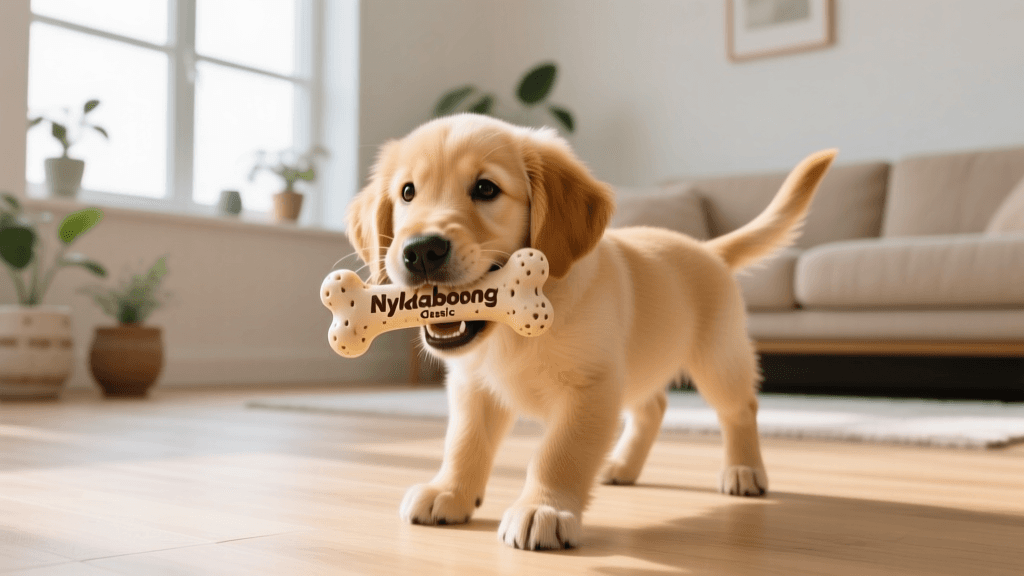
For puppies that exhibit aggressive, relentless biting, the Nylabone Power Chew Textured Ring offers a necessary sensory intervention. The raised bristles and varied textures provide intense oral stimulation that mimics the sensation of tearing and chewing, which is often what drives puppies to bite ankles and hands. In training scenarios, this toy is used as an "interrupter." When a puppy becomes over-aroused and begins nipping, presenting the textured ring satisfies their need for deep jaw pressure. The 2026 iterations of these nylon toys feature improved flavor-infusion technology that maintains its appeal longer, keeping the puppy engaged in independent play rather than seeking attention through biting.
3. Benebone Puppy Wishbone (Best for Ergonomic Grip Training)
One of the most common reasons puppies reject teething toys and return to biting humans is that they cannot figure out how to hold the toy while chewing. The Benebone Puppy Wishbone solves this with its patented ergonomic, wishbone shape. This design allows the puppy to pin the toy down with their front paws while chewing, facilitating independent play. In training, fostering independent play is crucial for reducing separation anxiety and attention-seeking nips. The real bacon infusion (sourced and manufactured in the USA) provides a strong olfactory cue that helps the puppy quickly identify the toy as the appropriate target for their chewing urges.
Step-by-Step Training Protocol: Redirecting the Bite
Owning the best teething toys is only half the equation; knowing how to deploy them in a training sequence is what yields results. Follow this four-step protocol to establish bite inhibition:
- The Interruption Marker: The moment the puppy's teeth touch your skin, use a neutral marker. This could be a clicker, a gentle "oops," or a soft "ah-ah." Avoid yelling, as loud noises can trigger fear or increase over-arousal, leading to more biting.
- The Redirection Offer: Immediately withdraw your hand and present the teething toy. Make the toy come alive by wiggling it on the floor to trigger the puppy's chase instinct.
- The Reward (Operant Conditioning): The second the puppy's mouth engages with the toy instead of your skin, offer calm, low-energy verbal praise. High-energy praise can re-excite the puppy and cause them to drop the toy and bite you again.
- The Time-Out (If Over-Aroused): If the puppy ignores the toy and continues to bite, they are likely over-tired or over-stimulated. Calmly place them in a playpen or crate with a frozen KONG for a 10-minute nap. This teaches them that biting humans results in the end of playtime, not a fun wrestling match.
Comparison Chart: 2026 Teething Toys for Training
| Toy Model (2026) | Material | Primary Training Use Case | Est. Price |
|---|---|---|---|
| KONG Classic Puppy | Soft Elastomer Rubber | Positive reinforcement & food stuffing | $16.00 |
| Nylabone Power Chew Ring | Textured Nylon | Sensory redirection for heavy biters | $12.50 |
| Benebone Puppy Wishbone | Nylon & Real Bacon | Ergonomic grip & independent play | $14.00 |
Common Training Mistakes to Avoid
Even with the best tools, owners frequently sabotage their bite inhibition training through common errors. The ASPCA notes that inconsistent rules and improper toy management are leading causes of destructive chewing habits in adult dogs.
Mistake 1: The "Toy Box" Error. Leaving all teething toys out on the floor 24/7 destroys their novelty and value. If a puppy has constant access to a KONG, it becomes background furniture. In 2026, modern behavioral conditioning emphasizes "toy rotation." Keep the high-value teething toys in a drawer and only bring them out during active training sessions or when the puppy is showing signs of inappropriate chewing. This maintains the toy's status as a premium reward.
Mistake 2: Punishing the Bite. Tapping a puppy's nose, holding their mouth shut, or yelling when they bite are outdated, aversive methods that have been thoroughly debunked by veterinary behaviorists. These actions create hand-shyness and fear, which can escalate into defensive aggression later in life. Redirection with a high-value toy builds trust and teaches the puppy what they should do, rather than just punishing them for what they shouldn't.
Mistake 3: Inconsistent Boundaries. Allowing a puppy to chew on old socks or human hands during "playtime" but scolding them for biting during "quiet time" is deeply confusing. Dogs do not understand the difference between an old sock and a new shoe, or between playful wrestling and aggressive biting. Establish a strict rule: teeth only ever touch dog-approved toys.
Hygiene and Toy Maintenance
As you utilize these toys for daily training, maintenance is critical for your puppy's health. Inspect nylon toys like the Nylabone and Benebone weekly. Once the knuckles wear down or the toy becomes small enough to pose a choking hazard, it must be replaced immediately. For rubber toys like the KONG, wash them in the dishwasher or with warm soapy water weekly to prevent bacterial buildup, especially if you are stuffing them with perishable foods like yogurt or bone broth. A clean, safe toy ensures that your training environment remains healthy and conducive to learning.
Conclusion
Mastering bite inhibition is one of the most important milestones in your puppy's early development. By viewing teething toys not as mere accessories, but as essential behavioral training tools, you set your dog up for a lifetime of good manners. Whether you are utilizing the food-dispensing capabilities of the KONG Classic, the sensory feedback of the Nylabone Ring, or the ergonomic independence of the Benebone Wishbone, the key to success in 2026 lies in consistent redirection, positive reinforcement, and understanding your puppy's biological needs. Equip yourself with the right tools, follow the redirection protocol, and watch your nippy puppy transform into a gentle, well-adjusted companion.
tom-renshaw
All our authors care for dogs every day — read more of their work on the authors page.