Top Remote Worker Dog Breeds for 2026: Behavior Guide
Discover the best dog breeds for remote workers in 2026. Learn about breed instincts, home office behavior, and managing canine psychology while working.
The 2026 Home Office Reality: Why Breed Psychology Matters
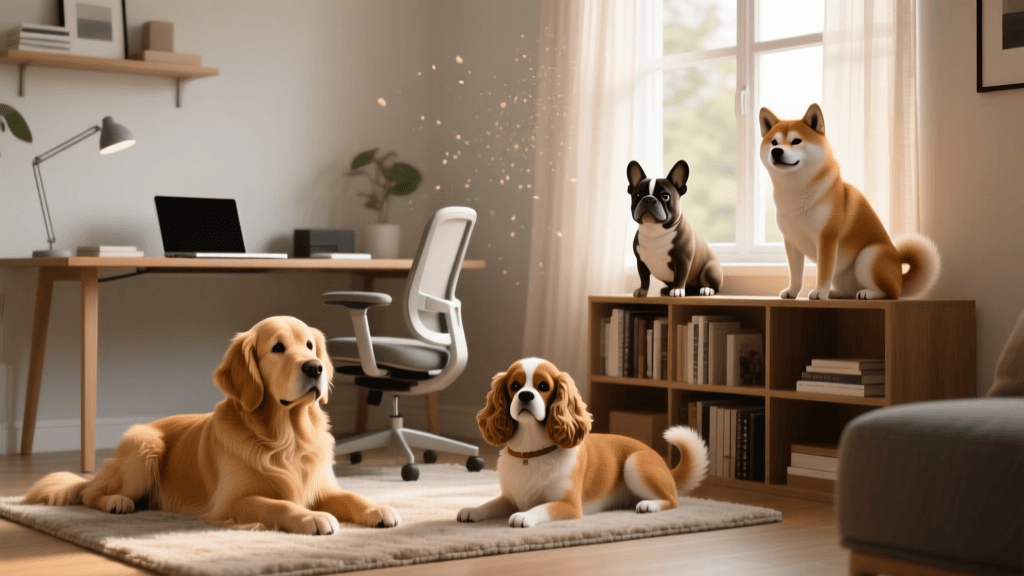
As we settle into the permanent hybrid and remote work landscapes of 2026, the home office has evolved into a shared ecosystem for humans and their canine companions. However, choosing a dog based solely on size or coat type is a recipe for professional disaster. For remote workers, understanding breed-specific instincts is no longer just a concern for farmers or hunters; it is a critical factor for software engineers, writers, and consultants who need to maintain focus during deep work blocks and project professionalism during video calls.
The psychology of a 'home office dog' revolves around three main behavioral pillars: environmental reactivity, independence versus 'velcro' tendencies, and baseline arousal levels. A dog that is genetically hardwired to alert the pack to every shifting shadow or delivery drone will turn your workday into a stressful exercise in crowd control. Conversely, a dog bred for quiet companionship or independent resting can act as a powerful co-regulator, lowering your cortisol levels between stressful meetings.
Canine Psychology and the Remote Worker
Before diving into specific breeds, it is essential to understand the concept of co-regulation. Dogs are highly attuned to human emotional states. When you are stressed by a looming deadline, an anxious or highly reactive breed will mirror that stress, resulting in pacing, whining, or destructive chewing. Breeds with a stable, confident nervous system, however, can actually help ground you. Furthermore, according to the ASPCA's guidelines on separation anxiety, understanding the difference between true separation anxiety and simple boredom or isolation distress is vital for remote workers who occasionally need to step out for errands or in-office collaboration days.
Another crucial factor is environmental reactivity. In 2026, our homes are filled with auditory triggers: smart doorbells, automated vacuum cleaners, and the hum of delivery vehicles. Breeds with high territorial instincts or acute motion sensitivity will react to these stimuli constantly. According to the AKC's resource on understanding dog body language, recognizing early signs of stress or over-arousal—such as lip licking, whale eye, or stiff posture—can help you intervene before your dog erupts into a barking fit during a crucial Zoom presentation.
Top 5 Dog Breeds for Remote Workers (2026 Behavioral Breakdown)
1. The Greyhound: The 45-MPH Couch Potato
Despite their racing background, retired Greyhounds are among the most low-energy indoor companions available. Psychologically, they operate on a 'sprint and sleep' ultradian rhythm. Once they have had a 20-minute morning walk, their instinct is to find a soft surface and sleep for up to 18 hours a day. They possess very low territorial aggression, meaning they rarely bark at the window or the doorbell, making them the ultimate silent partners for deep work sessions.
2. The Cavalier King Charles Spaniel: The Empathetic Co-Regulator
Bred exclusively for companionship, the Cavalier lacks the guarding or herding instincts that plague many home offices. Their psychological profile is defined by high empathy and a desire for physical proximity without demanding constant active engagement. A Cavalier will happily sleep under your desk, offering a calming physical presence that reduces human stress without requiring you to throw a ball every twenty minutes.
3. The Basset Hound: The Zen Master
While they are scent hounds, Bassets are notoriously low-energy indoors. Their most valuable trait for remote workers is their exceptionally high auditory threshold. A Basset Hound is far less likely to react to a smart doorbell or a neighbor's lawnmower than a terrier or herding breed. Their stubborn, relaxed nature translates to a dog that simply cannot be bothered to interrupt your workflow, preferring to snore loudly beneath your standing desk.
4. The Standard Poodle: The Intelligent Observer
Standard Poodles are highly intelligent but, unlike herding breeds, they do not feel a genetic compulsion to 'manage' the movement of their environment. They are observant and bond deeply with their owners. To keep a Standard Poodle quiet during a four-hour work block, remote workers in 2026 utilize automated puzzle feeders and snuffle mats. By satisfying their cognitive need to 'work' for their food, they remain mentally fulfilled and physically quiet.
5. The Japanese Chin: The Aristocratic Companion
Bred to sit on the laps of nobility, the Japanese Chin is a quiet, observant, and deeply affectionate toy breed. They are known for their feline-like independence mixed with intense loyalty. They rarely bark without a profound reason and are highly adaptable to the confined space of a home office, requiring only moderate indoor play to remain satisfied.
The 'Meeting Interrupters': Breeds to Approach with Caution
While every dog is an individual, certain breed instincts are fundamentally incompatible with the typical remote work environment unless the owner is a professional trainer or works highly flexible hours.
- Herding Breeds (Border Collies, Australian Shepherds, Malinois): These dogs possess intense motion sensitivity and the 'herding eye.' In a home office, this translates to staring at your pacing feet, nipping at moving chairs, and barking at the rapid movements on your computer screen. They require a 'job' and will invent one (like guarding the hallway) if you do not provide one.
- Vocal Hounds (Beagles, Huskies, Coonhounds): Bred to vocalize when they catch a scent or locate prey, these breeds are prone to 'talking,' howling, and baying. A Husky is highly likely to argue with you vocally when you use an animated tone on a conference call.
- Livestock Guardian Breeds (Great Pyrenees, Anatolian Shepherds): Their instinct is to patrol and alert. Every passing car, delivery drone, or neighborhood dog will trigger a deep, booming bark designed to warn off predators, which is disastrous for audio quality on virtual meetings.
Comparison Chart: Breed Traits for the Home Office
| Breed | Barking Level | Separation Anxiety Risk | Indoor Energy | Zoom Call Compatibility |
|---|---|---|---|---|
| Greyhound | Very Low | Low | Very Low | Excellent |
| Cavalier King Charles | Low | Moderate | Low | Excellent |
| Basset Hound | Low | Low | Very Low | Excellent |
| Standard Poodle | Moderate | Moderate | Moderate | Good (with enrichment) |
| Border Collie | High | High | Very High | Poor |
| Siberian Husky | Very High | Moderate | High | Poor |
Managing Breed Instincts in a Remote Work Environment
Even the best-suited breeds require management to thrive in a home office setting. In 2026, successful remote workers rely on a mix of behavioral training and environmental design to maintain harmony.
1. Mastering the 'Place' Command
The 'Place' command is the remote worker's best friend. Unlike 'Stay,' which requires the dog to hold a rigid posture, 'Place' asks the dog to go to a specific mat or bed and relax in any position they choose. By placing a high-value orthopedic bed just out of camera frame and rewarding your dog for settling there, you create a psychological boundary that keeps them out of your workspace and off-camera during important meetings.
2. Mitigating Smart Home Triggers
Modern smart homes are full of triggers. To prevent your dog from barking at the smart doorbell, use desensitization protocols. Record the sound of your specific doorbell chime and play it at a very low volume while feeding your dog high-value treats. Gradually increase the volume over several weeks until the sound predicts a treat rather than an intruder. Additionally, consider disabling the audible chime on your smart hub during deep work hours, relying only on push notifications to your phone or smartwatch.
3. Cognitive Enrichment Over Physical Exhaustion
You cannot exhaust a dog physically while sitting at a desk, but you can exhaust them mentally. Utilizing lick mats frozen with bone broth, or automated puzzle toys that dispense kibble every 15 minutes, engages their foraging instincts. A dog that is actively working to extract peanut butter from a textured silicone mat is a dog that is entirely silent and focused, allowing you to complete your tasks in peace.
Conclusion
Choosing the right dog for a remote work lifestyle is about aligning canine psychology with your professional demands. By prioritizing breeds with low environmental reactivity, stable nervous systems, and an 'off-switch,' you can transform your home office into a sanctuary of productivity and companionship. Whether you opt for the silent grace of a Greyhound or the empathetic warmth of a Cavalier, understanding and respecting their breed instincts will ensure a harmonious workday for both you and your best friend.
aaron-whyte
All our authors care for dogs every day — read more of their work on the authors page.