Best Puppy Teething Toys 2026: Top 5 Vet-Approved
Discover the best puppy teething toys for 2026. We review top vet-approved picks like KONG and Nylabone to save your furniture and soothe sore gums.
Surviving the Puppy Teething Phase in 2026
Bringing a new puppy home is one of the most exciting milestones in dog ownership, but it quickly introduces a challenging reality: the teething phase. As you prepare your home and stock up on first-day essentials, selecting the right gear is crucial for protecting your furniture, shoes, and sanity. In 2026, veterinary dentists and canine behaviorists have updated their recommendations for puppy teething toys, focusing on advanced materials that soothe inflamed gums while promoting long-term oral hygiene.
Puppies are born without teeth. According to the American Kennel Club, their 28 baby teeth begin to erupt around three to four weeks of age. By the time they are 12 to 16 weeks old, these sharp deciduous teeth start falling out to make way for their 42 permanent adult teeth. This transition causes significant discomfort, leading to an instinctual, relentless urge to chew. Providing appropriate, vet-approved teething toys is not just a luxury; it is a fundamental requirement for your puppy's behavioral development and physical health.
In this comprehensive guide, we break down the best puppy teething toys for 2026, evaluating them on durability, safety, gum-soothing properties, and overall value. Whether you have a gentle nibbler or an aggressive chewer, these top picks will help you navigate the teething months with ease.
The Science of Puppy Teething: What to Expect
Understanding the biological timeline of puppy teething helps you anticipate when your dog will need the most relief. The process occurs in distinct stages, each requiring different types of stimulation and comfort. During the initial eruption phase at three weeks, puppies rely on their mother and littermates to learn bite inhibition. However, once you bring your puppy home at eight to ten weeks, you become responsible for redirecting their chewing behavior.
The most intense phase of teething occurs between 12 and 20 weeks. During this window, the roots of the baby teeth are reabsorbed by the body, and the adult teeth push through the gum line. This causes swelling, bleeding, and mild pain. Puppies will seek out cold, textured, and resistant surfaces to massage their gums and alleviate the pressure. If you do not provide suitable teething toys, your puppy will inevitably find alternatives—such as baseboards, electrical cords, or your favorite sneakers.
By six months of age, most puppies have their full set of adult teeth. However, the habit of chewing can persist well into their first year as they continue to explore the world and strengthen their jaw muscles. Investing in high-quality teething toys early on establishes a lifelong habit of appropriate chewing, saving you from costly behavioral corrections and veterinary dental procedures down the line.
Top 5 Vet-Approved Puppy Teething Toys for 2026
Based on current veterinary standards, material safety testing, and thousands of owner reviews, here are the top five teething toys dominating the market in 2026.
1. KONG Puppy Toy (Classic Rubber Formula)
The KONG Puppy remains the gold standard for teething relief in 2026. Unlike the adult KONG, the puppy version is crafted from a softer, proprietary natural rubber formula specifically engineered for developing puppy jaws and delicate baby teeth. The unpredictable bounce keeps puppies mentally stimulated, while the hollow center allows for endless stuffing possibilities.
Pro Tip for 2026: To maximize the soothing effect, fill the KONG with plain, dog-safe Greek yogurt or mashed sweet potato, and freeze it overnight. The cold temperature acts as a localized anesthetic for inflamed gums, providing up to an hour of quiet, focused chewing. Priced between $14 and $19 depending on the size, it is an indispensable tool for crate training and separation anxiety management.
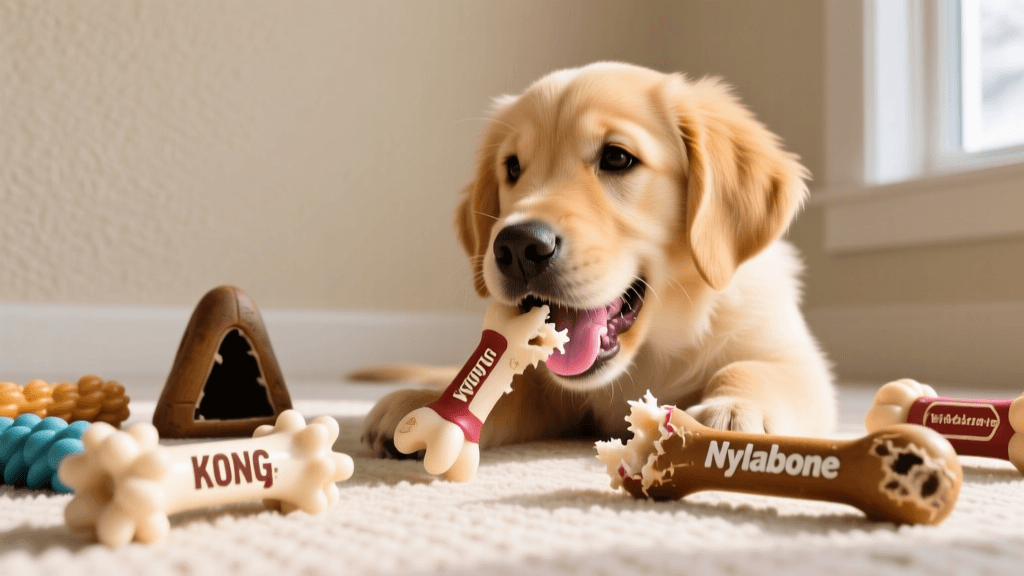
2. Nylabone Puppy Dental Chew Toy
For puppies that prefer a harder texture, the Nylabone Puppy Dental Chew is a top-tier choice. Made from a flexible, non-toxic thermoplastic polymer, this toy is designed to yield slightly under pressure, preventing tooth fractures. The surface is covered in raised dental nubs and bristles that act like a toothbrush, mechanically scraping away plaque and tartar as the puppy chews.
Infused with a mild chicken flavor throughout the material, it maintains its appeal even after weeks of use. Veterinary dentists highly recommend this toy for promoting early dental hygiene. At $8 to $12, it is highly cost-effective, though owners must monitor the toy and replace it once the knuckle ends wear down to prevent choking hazards.
3. Petstages Dogwood Cool Teething Stick
The Petstages Cool Teething Stick addresses the need for cold therapy during the most painful weeks of tooth eruption. This innovative toy features a durable, crinkly outer layer that satisfies the puppy's auditory curiosity, while the inner core is filled with a non-toxic, freezable gel. When chilled, it provides immediate, numbing relief to sore gums.
Unlike real wood, which can splinter and cause severe internal damage, the Petstages stick is made from a safe, synthetic wood-flavored material that won't shatter. It floats in water, making it an excellent transition toy for summer fetch games. Retailing for $11 to $15, it is a favorite among owners of small to medium breeds.
4. Benebone Puppy Wishbone
Benebone revolutionized the chew toy market with its ergonomic designs, and their Puppy line is perfectly tailored for teething dogs. The Wishbone shape allows puppies to easily grip the toy with their front paws, giving them the leverage needed to chew comfortably at various angles. The 2026 puppy formula uses a softer nylon blend infused with real bacon, ensuring it is gentle on emerging adult teeth.
The deep grooves and textured surface help massage the gums and clean teeth simultaneously. Priced at $13 to $18, the Benebone Puppy Wishbone is exceptionally durable, often outlasting traditional rubber toys for moderate chewers. It is important to select the correct weight-based size to ensure safe chewing mechanics.
5. Mammoth Flossy Chews Cottonblend Rope
Rope toys serve a dual purpose during the teething phase: they provide a fibrous texture that flosses the teeth, and they facilitate interactive tug-of-war games that strengthen the bond between you and your puppy. The Mammoth Flossy Chews are made from a premium, tightly woven cotton-poly blend that is highly resistant to fraying.
As the puppy chews, the individual cotton fibers gently sweep between the teeth, disrupting plaque biofilm. The ASPCA's dog dental care guidelines emphasize that while rope toys are great for mechanical cleaning, they must be used under strict supervision. If the rope begins to unravel into long strings, it must be discarded immediately to prevent intestinal linear foreign bodies. Expect to pay $10 to $16 for a high-quality Mammoth rope.
2026 Teething Toy Comparison Chart
Use the table below to quickly compare the top teething toys based on material, primary benefits, and current 2026 pricing.
| Toy Name | Primary Material | Best For | Freezable? | 2026 Price Range |
|---|---|---|---|---|
| KONG Puppy | Soft Natural Rubber | Stuffing & Crate Training | Yes | $14 - $19 |
| Nylabone Puppy Dental | Thermoplastic Polymer | Plaque Removal & Mild Chewing | No | $8 - $12 |
| Petstages Cool Stick | Synthetic Wood & Gel | Cold Therapy & Gum Soothing | Yes | $11 - $15 |
| Benebone Puppy Wishbone | Soft Bacon Nylon | Ergonomic Grip & Durability | No | $13 - $18 |
| Mammoth Flossy Rope | Cotton-Poly Blend | Interactive Play & Flossing | No | $10 - $16 |
Preparing Your Home for a Teething Puppy
Integrating these toys into your home preparation strategy is vital for a smooth transition when you first bring your puppy home. The 'Getting a Dog' phase requires proactive puppy-proofing. Before your puppy arrives, get down on your hands and knees to view your home from their perspective. Remove or secure electrical cords, toxic houseplants, and small objects that could be swallowed.
Establish designated 'chew zones' equipped with a variety of the toys listed above. When you catch your puppy chewing on an inappropriate item, avoid yelling, as this can induce fear and lead to resource guarding. Instead, calmly interrupt the behavior, offer a high-value teething toy like a frozen KONG, and praise them enthusiastically when they accept it. This positive reinforcement technique teaches the puppy exactly what is acceptable to chew.
Rotating the toys every few days is another effective strategy. Puppies, much like human toddlers, suffer from toy fatigue. By keeping three or four toys out and storing the rest in a closet, you can swap them weekly to maintain the puppy's interest and extend the lifespan of your gear.
Crucial Safety Rules for Puppy Chews
While teething toys are essential, they must be used responsibly. The ASPCA strongly advises owners to prioritize safety over durability when selecting toys for young dogs. Always choose a toy that is appropriately sized for your puppy's current weight and breed; a toy that is too small poses a severe choking hazard, while one that is too large may cause jaw strain.
Inspect all teething toys daily for signs of wear and tear. Rubber toys that develop deep cracks, nylon toys that develop sharp edges, and rope toys that begin to unravel must be thrown away immediately. Ingesting broken pieces of toys can lead to life-threatening gastrointestinal blockages that require emergency surgery.
Finally, never leave a young puppy unattended with a chew toy, especially during the first few months of ownership. Supervision allows you to monitor their chewing style, ensure they are not breaking off large chunks, and intervene if they become overly frustrated or aggressive with the toy. By combining the right 2026 teething toys with vigilant supervision and positive reinforcement, you will successfully guide your puppy through this developmental milestone and lay the foundation for a well-behaved, happy adult dog.
aaron-whyte
All our authors care for dogs every day — read more of their work on the authors page.