Top Rated Orthopedic Dog Beds for Senior Large Dogs
Discover the best orthopedic dog beds for large senior dogs. Compare top memory foam options to relieve arthritis pain and improve joint health.
As our canine companions enter their golden years, their physical needs change dramatically. For large breed dogs—such as German Shepherds, Golden Retrievers, Labrador Retrievers, and Rottweilers—aging often brings a host of musculoskeletal challenges, most notably osteoarthritis and hip dysplasia. Providing a supportive resting environment is no longer just a matter of comfort; it is a critical component of veterinary-recommended pain management and overall wellbeing. In this comprehensive buyer’s guide, we will explore the science behind orthopedic support, review the top-rated orthopedic dog beds on the market for large senior dogs, and provide actionable advice on managing your aging dog's joint health.
Why Senior Large Dogs Need Orthopedic Support
Large breed dogs carry significant weight across their joints, making them highly susceptible to degenerative joint diseases. According to VCA Animal Hospitals, osteoarthritis is a chronic, progressive disease that causes the deterioration of joint cartilage, leading to pain, inflammation, and reduced mobility. When a senior dog lies on a flat, unsupportive surface or a bed stuffed with cheap polyfill, their heavy joints press directly against the hard floor beneath the bedding. This creates painful pressure points on the hips, elbows, and shoulders.
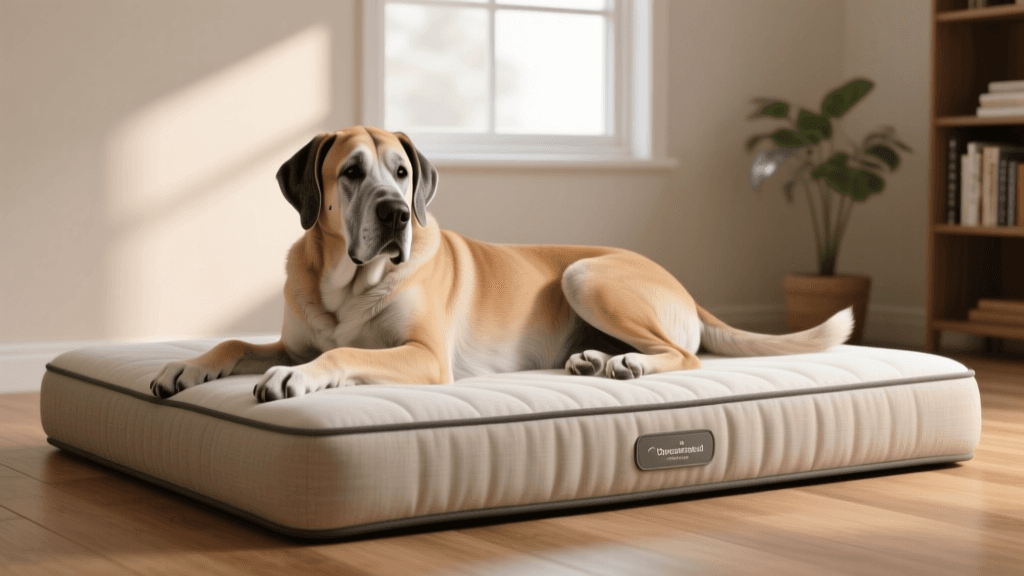
Orthopedic beds are specifically engineered to distribute a dog's weight evenly, alleviating pressure on vulnerable joints and promoting proper spinal alignment. High-quality therapeutic foam contours to the dog's body, providing a buoyant surface that makes it significantly easier for arthritic dogs to stand up after a long nap. Without this crucial support, senior dogs may experience disrupted sleep cycles, increased morning stiffness, and a rapid decline in their overall quality of life.
What to Look for in an Orthopedic Dog Bed
Not all beds labeled "orthopedic" are created equal. Many budget brands use thin layers of egg-crate foam over a hard base, which offers virtually no therapeutic benefit for a heavy, aging dog. When shopping for a bed for a large senior dog, prioritize the following features:
- High-Density Memory Foam: Look for beds made with therapeutic, high-density memory foam or a multi-layer foam system (such as a supportive base layer topped with a comfort memory foam layer). Avoid "egg-crate" or convoluted foam as the primary support layer, as it compresses too easily under heavy weights.
- Adequate Thickness: For large dogs weighing over 70 pounds, the foam core should be at least 4 to 7 inches thick. This ensures the dog's joints never "bottom out" and touch the hard floor beneath the bed.
- Waterproof Inner Liner: Senior dogs frequently experience age-related incontinence or occasional accidents. A waterproof liner encasing the foam is essential to prevent odors, mold, and the need for frequent, expensive foam replacements.
- Machine-Washable Cover: Hygiene is vital for dogs with compromised immune systems or limited mobility. Ensure the outer cover is removable, durable, and machine-washable.
- Bolstered Edges: Many senior dogs suffer from cervical (neck) arthritis or prefer the feeling of security that a raised edge provides. Bolsters act as a supportive pillow, keeping the spine aligned and giving the dog a place to rest their heavy head.
- Non-Slip Bottom: Arthritic dogs struggle with traction. A bed with a rubberized, non-skid bottom prevents the bed from sliding across hardwood or tile floors when the dog is trying to climb in or out, preventing dangerous falls and muscle strains.
Top 3 Orthopedic Dog Beds for Large Breeds (Reviews)
Based on veterinary recommendations, material quality, durability, and user feedback, here are the top three orthopedic beds for large senior dogs.
1. Big Barker 7" Pillow Top Orthopedic Dog Bed
The Big Barker is widely considered the gold standard for large breed orthopedic support. Handcrafted in the USA, this bed features a proprietary three-layer foam system designed specifically to support heavy joints without flattening over time. The 7-inch thickness guarantees that even the largest breeds, like Great Danes or Mastiffs, will never bottom out.
Pros: Unmatched joint support; backed by an industry-leading 10-year warranty that guarantees the foam will retain at least 90% of its original loft; luxurious, furniture-grade microfiber cover that is fully removable and machine-washable.
Cons: Premium price point; the 7-inch height may require a small ramp or steps for severely arthritic dogs to climb onto.
Estimated Cost: $250 - $320 (depending on size).
2. FurHaven Plush & Velvet Orthopedic Comfy Couch
For pet parents seeking a more budget-friendly option that still provides respectable support, the FurHaven Comfy Couch is an excellent choice. It utilizes a 4-inch medical-grade orthopedic foam base with a plush, quilted top. The L-shaped bolster design provides excellent neck and back support, making it ideal for dogs who like to curl up or lean against an edge.
Pros: Highly affordable; L-shaped bolsters offer great spinal and neck support; soft, plush fabric is soothing for dogs with thinning skin or coat loss; easy step-on height.
Cons: The 4-inch foam may compress over time under the weight of dogs over 90 pounds; the foam core is not inherently waterproof (requires a separate liner purchase).
Estimated Cost: $60 - $95.
3. K9 Ballistics Tough Orthopedic Dog Bed
If your senior dog still possesses a destructive chewing habit, or if you need a bed for a multi-dog household where roughhousing occurs, the K9 Ballistics Tough Orthopedic bed is the ultimate solution. It features a 5-inch CertiPUR-US certified foam core encased in a virtually indestructible, tear-resistant ballistic nylon cover.
Pros: Extremely durable and chew-resistant; waterproof inner liner included; 5-inch high-density foam provides excellent joint relief; easy to clean and highly resistant to scratching and digging.
Cons: The ballistic nylon cover, while durable, is not as soft or plush as traditional fleece or microfiber, which some senior dogs may prefer; lacks raised bolsters for head support.
Estimated Cost: $200 - $240.
Comparison Chart: Top Beds at a Glance
| Product Name | Foam Thickness | Warranty | Price Range | Best For |
|---|---|---|---|---|
| Big Barker 7" Pillow Top | 7 Inches | 10-Year | $250 - $320 | Maximum joint relief & giant breeds |
| FurHaven Comfy Couch | 4 Inches | Limited | $60 - $95 | Budget-conscious buyers & neck support |
| K9 Ballistics Tough Ortho | 5 Inches | 120-Day Chew Proof | $200 - $240 | Destructive chewers & high durability |
How to Transition Your Senior Dog to a New Bed
Senior dogs, particularly those experiencing cognitive dysfunction or sensory decline, can be resistant to changes in their environment. The American Kennel Club (AKC) recommends maintaining a predictable, stress-free environment for aging dogs. To encourage your dog to use their new orthopedic bed:
- Strategic Placement: Place the new bed in your dog's favorite resting spot, avoiding drafty areas, direct heat vents, or high-traffic zones.
- Scent Familiarity: Drape an unwashed t-shirt or their favorite old blanket over the new bed. Familiar scents provide comfort and signal that this is a safe sleeping area.
- Positive Reinforcement: Use high-value treats and praise to reward your dog whenever they investigate or step onto the bed. Never force or physically place an arthritic dog onto a new surface, as this can cause pain and create a negative association.
- Patience: It may take a few days or even weeks for a senior dog to fully abandon their old, unsupportive bed. Keep the old bed nearby initially, but gradually move it further away as the dog becomes accustomed to the new orthopedic support.
Additional Joint Care Tips for Aging Dogs
While a premium orthopedic bed is foundational to your dog's comfort, it should be part of a broader, multimodal approach to managing osteoarthritis and promoting holistic wellbeing.
First and foremost, weight management is critical. Excess body fat places immense mechanical stress on deteriorating joints and produces inflammatory cytokines that exacerbate pain. According to the Tufts University Cummings School of Veterinary Medicine, keeping an arthritic dog on the lean side of their ideal body condition score is one of the most effective ways to slow the progression of joint disease and reduce the need for pain medications.
Secondly, consider incorporating veterinary-approved joint supplements into your dog's daily routine. Look for supplements containing high-quality Glucosamine Hydrochloride, Chondroitin Sulfate, and Omega-3 fatty acids (EPA and DHA), which have been clinically shown to reduce joint inflammation and support cartilage health.
Finally, maintain a consistent, low-impact exercise regimen. Short, frequent walks on soft surfaces like grass or dirt trails help maintain muscle mass, which is essential for supporting unstable joints. Avoid activities that involve sudden stops, sharp turns, or jumping, such as playing fetch with a frisbee. By combining a high-quality orthopedic bed with proper nutrition, weight management, and gentle exercise, you can significantly enhance your senior large breed dog's mobility, comfort, and overall joy in their golden years.
marcus-aldridge
All our authors care for dogs every day — read more of their work on the authors page.