Best No-Pull Dog Harnesses For First-Time Owners 2026
Discover the best front-clip no-pull dog harnesses for new rescues in 2026. Compare Kurgo, 2 Hounds, and Rabbit Go for safe, stress-free first walks.
The First-Day Essential: Why Your Harness Choice Matters in 2026
Bringing a new dog home is one of the most exciting milestones in your life, but it also comes with a steep learning curve. Whether you have just adopted an energetic rescue from a local shelter or brought home a boisterous puppy from a breeder, preparing your home with the right gear is critical. Among the most important first-day essentials is the walking harness. In 2026, the veterinary and behavioral consensus is clear: for dogs that pull, traditional back-clip harnesses and standard flat collars are no longer the recommended standard for safe, stress-free walks.
According to ASPCA's general dog care guidelines, using the proper walking equipment can significantly reduce the risk of tracheal damage, neck strain, and leash reactivity. For first-time owners, navigating the overwhelming market of pet gear can be daunting. This comprehensive guide breaks down the biomechanics of pulling, compares the top-rated no-pull harnesses available in 2026, and provides a step-by-step protocol for your new dog's very first walk.
The Biomechanics of Pulling: Why Back-Clip Harnesses Fail New Dogs
To understand why a no-pull harness is essential, we must first look at canine biomechanics. Dogs naturally possess an 'opposition reflex,' meaning that when they feel pressure against their chest or back, their instinct is to push forward against it. This is the exact same instinct that allows sled dogs to pull heavy loads across the snow.
When you attach a leash to the back of a standard harness or a flat collar, you are inadvertently engaging this reflex. If your new rescue dog lunges at a squirrel, a back-clip harness distributes the force across their strong chest and shoulders, giving them maximum leverage to pull you down the street. Over time, this not only makes walks frustrating for the owner but can also lead to chronic joint and spinal issues for the dog.
Front-Clip vs. Dual-Clip: What First-Time Owners Need
Modern no-pull harnesses solve the opposition reflex problem by relocating the leash attachment point. In 2026, the market is dominated by two primary designs:
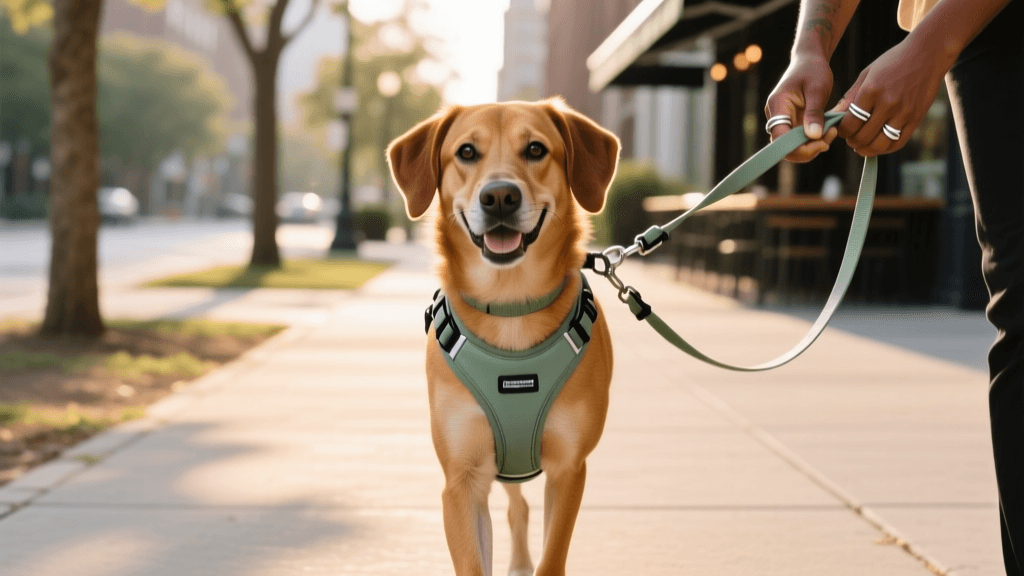
- Front-Clip Harnesses: The leash attaches to a D-ring located on the dog's sternum. When the dog pulls, the front attachment gently redirects their momentum back toward the owner, effectively turning them around and disrupting their forward drive.
- Dual-Clip Harnesses: These offer both a front and a back attachment point. First-time owners love dual-clip models because they allow you to use the front clip for training and high-distraction environments, and switch to the back clip for casual sniffaris or jogging once loose-leash walking is established.
Top 3 No-Pull Harnesses for New Dogs (2026 Comparison)
Based on durability, escape-resistance, and veterinary recommendations, here is how the top three harnesses of 2026 stack up for new dog owners.
| Harness Model | Clip Style | Best For | 2026 Price | Weight Limit |
|---|---|---|---|---|
| Kurgo Tru-Fit Smart | Dual (Front/Back) | Car travel & versatile training | $45.00 | Up to 110 lbs |
| 2 Hounds Freedom | Dual (Front/Back) | Escape artists & barrel-chested breeds | $42.00 | Up to 250 lbs |
| Rabbit Go Air-Flow V2 | Front-Clip Only | Hot climates & brachycephalic breeds | $55.00 | Up to 85 lbs |
1. Kurgo Tru-Fit Smart Dog Harness (Dual-Clip)
The Kurgo Tru-Fit remains a gold standard for new owners in 2026, largely due to its updated aerospace-grade aluminum V-ring on the chest, which prevents the hardware from snapping under the sudden lunges of large rescues. The 2026 edition features quick-release buckles that have been redesigned to prevent accidental unclipping when a dog rolls in the grass. Furthermore, it includes a 10-inch seatbelt tether, making it a crash-tested dual-purpose harness for the car ride home from the shelter.
2. 2 Hounds Design Freedom No-Pull Dog Harness
If your new dog is a notorious escape artist or a barrel-chested breed like a Greyhound or Whippet, the 2 Hounds Freedom harness is unmatched. It utilizes a patented martingale-style loop on the back that gently tightens when the dog pulls, preventing them from backing out of the harness. The Swiss velvet lining behind the leg straps eliminates the armpit chafing that plagues many cheaper nylon models. Paired with their dual-connection leash, it provides unparalleled steering control for strong pullers.
3. Rabbit Go Air-Flow V2 (Front-Clip)
Released in early 2026, the Rabbit Go Air-Flow V2 is a revelation for owners of brachycephalic breeds (like French Bulldogs and Pugs) or dogs living in hot climates. It uses a proprietary micro-mesh that promotes maximum airflow while maintaining a rigid front-clip structure. Unlike older mesh harnesses that stretched out over time, the V2 incorporates a reinforced biothane spine that ensures the front D-ring stays perfectly centered on the sternum, even during vigorous pulling.
How to Measure Your New Dog for a Perfect Fit
A no-pull harness can only work if it fits correctly. A harness that is too loose will cause chafing and allow the dog to slip out, while one that is too tight will restrict shoulder extension and alter your dog's natural gait. Before ordering your harness, grab a soft measuring tape and follow these steps:
- Measure the Girth: Wrap the tape measure around the deepest part of your dog's ribcage, usually about an inch or two behind their front legs. This is the most critical measurement for structural integrity.
- Measure the Lower Neck: Measure where the neck meets the chest, not up near the ears where a traditional collar sits.
- The Two-Finger Rule: Once the harness is on, you should be able to slide exactly two fingers flat between the harness straps and your dog's body. Any more, and it is too loose; any less, and it is too tight.
According to American Kennel Club's training resources, ensuring a proper harness fit is the foundational first step in leash training, as discomfort from a poorly fitted harness will immediately create negative associations with walking.
Your First Walk: A Step-by-Step Transition Protocol
Simply putting a no-pull harness on your dog will not magically cure pulling; it is a management tool that gives you the mechanical advantage needed to train loose-leash walking. Here is the protocol for your first week with a new dog:
Step 1: Indoor Acclimation
Do not put the harness on for the very first time right before a walk. Introduce it in your living room. Let your dog sniff it, and feed them high-value treats (like boiled chicken or freeze-dried liver) through the neck hole. Put it on for just five minutes while they eat their dinner, then take it off. Repeat this until the dog shows excitement when you pick up the harness.
Step 2: The 'U-Turn' Technique
Attach your leash to the front chest ring. The moment your dog surges forward and the leash goes taut, do not yank back. Instead, immediately stop walking and take three steps backward, encouraging your dog to turn and face you. When they look at you and the leash goes slack, mark the behavior with a 'Yes!' and reward them at your knee. This teaches the dog that pulling results in moving backward, while a slack leash results in moving forward and getting treats.
Step 3: Managing Environmental Triggers
New rescues are often overwhelmed by the sights and sounds of the neighborhood. If your dog locks onto a trigger (like another dog or a loud truck) and begins to pull, the front-clip will help you gently steer their head away. Use the 'Find It' command by tossing a treat into the grass to break their visual fixation and lower their heart rate.
Final Thoughts for New Owners
Investing in a high-quality, front-clip or dual-clip no-pull harness is one of the best decisions you can make when getting a new dog. It protects your dog's physical health, saves your shoulders from strain, and lays the groundwork for a lifetime of enjoyable adventures together. By pairing the right 2026 gear with patience, positive reinforcement, and proper measurement, you will transform chaotic leash-pulling into a peaceful, bonding experience from day one.
jonas-cole
All our authors care for dogs every day — read more of their work on the authors page.