Adopting a Fearful Rescue: A First-Week Behavior Case Study
Discover how to prepare your home and routine for a fearful rescue dog. Read our behavioral case study on managing the critical first 72 hours.

The Reality of Adopting a Fearful Shelter Dog
Bringing home a new dog is often depicted as a joyful, seamless transition filled with tail wags and instant bonding. However, for dogs rescued from high-stress shelter environments or abusive backgrounds, the first week can be a period of profound psychological vulnerability. When a dog is overwhelmed, their sympathetic nervous system triggers a fight, flight, or freeze response, leading to what behaviorists call "shutdown" behavior. Understanding how to manage this critical window is essential for long-term behavioral health.
In this article, we will explore the preparation and management of a fearful rescue dog through a behavioral case study of "Barnaby," a 45-pound, three-year-old terrier mix who arrived at his new home exhibiting severe fear-based avoidance and environmental sensitivity. By analyzing Barnaby’s first 72 hours, we can extract actionable, science-backed protocols for any prospective owner preparing to adopt a shy or fearful dog.
The Pre-Arrival Environmental Setup
Before Barnaby ever crossed the threshold, his adopters prepared a dedicated "decompression zone." According to the ASPCA, shelter environments are incredibly loud and overstimulating, causing chronic elevations in a dog’s cortisol levels. To counteract this, the home environment must be engineered for sensory reduction.
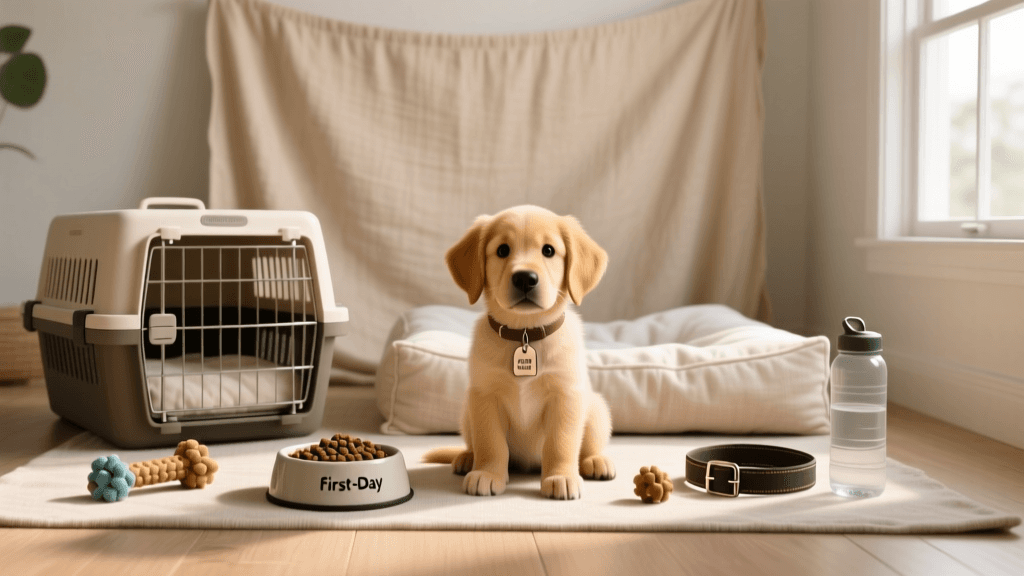
Instead of a closed crate, which can trigger claustrophobia and panic in fearful dogs, Barnaby’s adopters set up a 4x4-foot wire exercise pen in a quiet, low-traffic corner of the living room. This provided a physical boundary while allowing visual access to the family’s calm movements. Inside the pen, they placed a covered bed, a water bowl, and an Adaptil Calm Home Diffuser, which was plugged in 48 hours prior to his arrival to allow the dog-appeasing pheromones to saturate the room.
First-Week Setup: Cost & Equipment Guide
Investing in the right equipment prevents behavioral fallout and ensures safety. Below is the exact setup used for Barnaby’s transition.
| Equipment | Behavioral Purpose | Estimated Cost |
|---|---|---|
| Ruffwear Front Range Harness | Front-clip prevents escape-artistry and reduces neck strain if the dog panics and pulls backward. | $39.95 |
| 15-foot Biothane Long Line | Provides safe freedom for potty breaks without the constant tension of a retractable leash, which triggers the opposition reflex. | $24.99 |
| Adaptil Calm Home Diffuser | Releases synthetic pheromones that mimic a nursing mother dog, lowering heart rate and anxiety. | $24.99 |
| SmartPetLove Snuggle Puppy | Includes a simulated heartbeat and heat pack to mimic littermates and soothe nighttime whining. | $44.95 |
| Kong Classic (Black) | Durable enrichment toy for freezing high-value treats, promoting licking which releases endorphins. | $15.99 |
The 3-3-3 Rule of Decompression
The Best Friends Animal Society heavily promotes the "3-3-3 Rule" to set realistic expectations for new adopters. This timeline dictates that a rescue dog needs 3 days to decompress from the initial shock, 3 weeks to learn your routine and begin showing their true personality, and 3 months to fully bond and feel secure in their new home. Barnaby’s adopters used this framework to structure their first week, prioritizing decompression over obedience training or socialization.
Behavioral Case Study: Barnaby’s First 72 Hours
Day 1: The Arrival and the "Ghost" Protocol
When Barnaby arrived, he was trembling and refused to walk through the front door. His adopters utilized the "Ghost Protocol." This involves bringing the dog inside on a 15-foot biothane long line, gently guiding them to their exercise pen, and then actively ignoring them.
New owners often make the mistake of hovering, making direct eye contact, or speaking in high-pitched, soothing tones. To a fearful dog, direct eye contact is a threat, and hovering feels predatory. Barnaby’s adopters sat on the floor across the room, reading a book aloud in a calm, monotone voice. This allowed Barnaby to acclimate to their presence and scent without the pressure of forced interaction. For his first potty break, they clipped the long line to his front-clip harness, walked him to a single designated 10x10-foot grassy area, and stood completely still. Within four minutes, he eliminated, was rewarded with a piece of boiled chicken tossed on the grass, and brought back inside.
Day 2: The Freeze Response and Olfactory Enrichment
By the second morning, Barnaby exhibited a "freeze" response. He would not eat from his stainless steel bowl, a common issue in dogs experiencing environmental stress. The Humane Society of the United States notes that stress can severely suppress a dog’s appetite.
To bypass this, his adopters engaged his olfactory system. A dog’s sense of smell is directly linked to the limbic system, which processes emotion. By scattering his kibble and freeze-dried liver treats across a Snuffle Mat inside his pen, they forced him to use his nose. Sniffing naturally lowers a dog’s pulse rate and encourages foraging behaviors. Barnaby tentatively began eating the scattered food, marking a massive behavioral victory. Hand-feeding was avoided on Day 2, as reaching hands can trigger a fear-bite response in shutdown dogs.
Day 3: Threshold Testing and Noise Desensitization
On Day 3, Barnaby’s personality began to peek through the fear. He approached the edge of the pen and offered a soft tail wag when his adopter sat nearby. However, a sudden loud noise—a garbage truck backing up outside—sent him scrambling to the back of his pen, panting heavily with pinned ears.
His adopters immediately implemented a noise-desensitization protocol. They did not coddle him with physical embraces, which can inadvertently reinforce the panic state. Instead, they turned on a white noise machine to mask the outdoor frequencies and tossed a few high-value treats near his hiding spot, pairing the scary noise with a positive outcome (classical conditioning). Within ten minutes, Barnaby’s panting ceased, and he returned to his Snuggle Puppy bed to rest.
Actionable Protocols for the First Week
If you are preparing to bring home a fearful dog, implement these three actionable protocols during the first seven days:
- The "Treat and Retreat" Game: Sit outside the dog’s pen. Toss a high-value treat (like plain boiled chicken or string cheese) behind the dog. This rewards them for noticing you but allows them to retreat to a safe distance to eat it, removing the pressure of approaching your hand.
- Strict Potty Schedules: Fearful dogs will often hold their bladder until they are back in the safety of their pen. Take them out on a long line every 2-3 hours, always to the exact same quiet spot. Use a specific cue word like "go potty" in a calm tone.
- Sensory Management: Keep the television off or on a low, calm frequency. Avoid inviting friends or family over to "meet the new dog." The dog needs to map the environment and the primary caregivers before being introduced to novel stimuli.
When to Seek Professional Behavioral Help
While the 3-3-3 rule provides a roadmap, some dogs require professional intervention. If your dog exhibits severe resource guarding, redirects aggression when frightened, or refuses to eat or drink for more than 48 hours, it is time to consult a professional. Look for a certified behavior consultant through organizations that emphasize force-free, fear-free methodologies. Early intervention prevents fear-based behaviors from becoming entrenched neurological pathways.
Conclusion
Adopting a fearful rescue dog like Barnaby is not a project of "fixing" a broken animal; it is an exercise in environmental management, patience, and trust-building. By investing in the right decompression equipment, respecting the 3-3-3 timeline, and utilizing science-backed protocols like olfactory enrichment and the Ghost Protocol, you lay the foundation for a resilient, bonded companion. The first week is not about teaching a dog how to sit or stay; it is about teaching them that they are finally safe.
jonas-cole
All our authors care for dogs every day — read more of their work on the authors page.