Best Dog Breeds for Remote Workers in 2026: Top Picks
Discover the best dog breeds for remote workers in 2026. Find low-barking, affectionate companions perfect for your work-from-home setup and daily schedule.
The Evolution of the Work-From-Home Dog in 2026
As remote and hybrid work models have firmly solidified into the standard for millions of professionals in 2026, the dynamics of the home office have transformed. For many, the ultimate upgrade to their workspace isn't a standing desk or an ergonomic chair—it is a canine co-worker. However, not every dog is suited for the unique environment of a home office. A dog that demands constant attention, barks at every passing delivery driver, or requires hours of vigorous mid-day exercise can quickly turn a productive workday into a chaotic struggle.
Choosing the right breed is critical for maintaining your professional focus while providing a loving, enriching environment for your pet. In 2026, veterinary behaviorists and canine experts emphasize selecting breeds that naturally possess traits conducive to a quiet, structured home environment. According to the Humane Society of the United States, matching a dog's inherent energy levels and temperament to your daily lifestyle is the single most important factor in successful pet ownership.
Essential Traits for a Remote Work Companion
Before diving into specific breeds, it is important to understand what makes a dog an ideal work-from-home (WFH) companion. When evaluating breeds or mixed-breed rescues, look for the following characteristics:
- Low Vocalization: You need a dog that won't bark at the doorbell, the mail carrier, or the neighbor's cat while you are on a Zoom call.
- Moderate to Low Energy: While all dogs need exercise, a WFH dog should be content with a morning walk and an evening play session, rather than requiring a mid-day five-mile run.
- Independence: The best office dogs can entertain themselves with a chew toy or a puzzle feeder while you are in deep-focus mode.
- Affectionate but Not Clingy: A great companion will happily sleep under your desk or on a nearby bed without demanding constant physical contact or whining for attention.
Top 5 Dog Breeds for Remote Workers in 2026
1. Cavalier King Charles Spaniel
The Cavalier King Charles Spaniel remains a top-tier choice for remote workers due to their incredibly adaptable and gentle nature. Bred originally as lap dogs for royalty, they are perfectly content to spend a six-hour workday snoozing on a plush bed beneath your desk. They are highly attuned to their owner's emotions, offering quiet comfort during stressful workdays without being overly demanding. Their moderate energy levels mean a brisk 30-minute morning walk and a quick game of fetch in the hallway are usually sufficient to keep them happy.
2. Greyhound
It often surprises people to learn that Greyhounds—despite their reputation as racing dogs—are famously known as '45-mph couch potatoes.' In a home office setting, a retired racing Greyhound or a rescued Greyhound is an exceptional companion. They are notoriously quiet, rarely barking, and they sleep for up to 18 hours a day. As long as you provide a secure, fenced area for a short sprint or a long leash walk in the morning, they will happily act as a silent, statuesque presence in your office for the remainder of the day.
3. Basset Hound
If you want a dog with a distinct personality and a remarkably low activity requirement, the Basset Hound is an excellent pick. Their heavy bone structure and short legs mean they are not built for endurance, making them perfectly suited for a sedentary home office lifestyle. Bassets are generally very quiet indoors, though they can be prone to a melodious howl if left alone for too long. Their stubborn but deeply affectionate nature makes them a charming, if occasionally snoring, desk companion. Just be prepared for the drool and invest in a good vacuum for their shedding.
4. Shih Tzu
The Shih Tzu was bred specifically for companionship, and they excel at it in the modern home office. Unlike many small breeds that are prone to 'small dog syndrome' and excessive yapping, a well-socialized Shih Tzu is surprisingly calm and quiet. They are highly adaptable to smaller spaces, making them ideal for apartment dwellers who have converted a spare bedroom or a corner of their living room into a home office. Furthermore, their hair-like coat sheds minimally, keeping your workspace clean and allergy-free, provided you keep up with their regular grooming needs.
5. Whippet
Similar to the Greyhound but in a more compact package, the Whippet is a fantastic choice for remote workers with smaller home offices. They are incredibly quiet, sensitive, and deeply bonded to their owners. Whippets are known to 'velcro' to their favorite person, but they do so quietly, usually just resting their chin on your foot while you type. They are sprinters, not endurance athletes, so a quick trip to a local park to chase a flirt pole in the morning will easily satisfy their exercise requirements for the entire day.
WFH Dog Breed Comparison Chart
Use the table below to compare the top breeds based on their suitability for a remote work environment.
| Breed | Energy Level | Barking Level | Space Required | Grooming Needs |
|---|---|---|---|---|
| Cavalier King Charles Spaniel | Moderate | Low | Low to Medium | Moderate |
| Greyhound | Low (Indoors) | Very Low | Medium | Low |
| Basset Hound | Low | Low to Moderate | Low to Medium | Low |
| Shih Tzu | Low to Moderate | Low | Low | High |
| Whippet | Low (Indoors) | Very Low | Low to Medium | Low |
Optimizing Your Home Office for a Canine Co-Worker
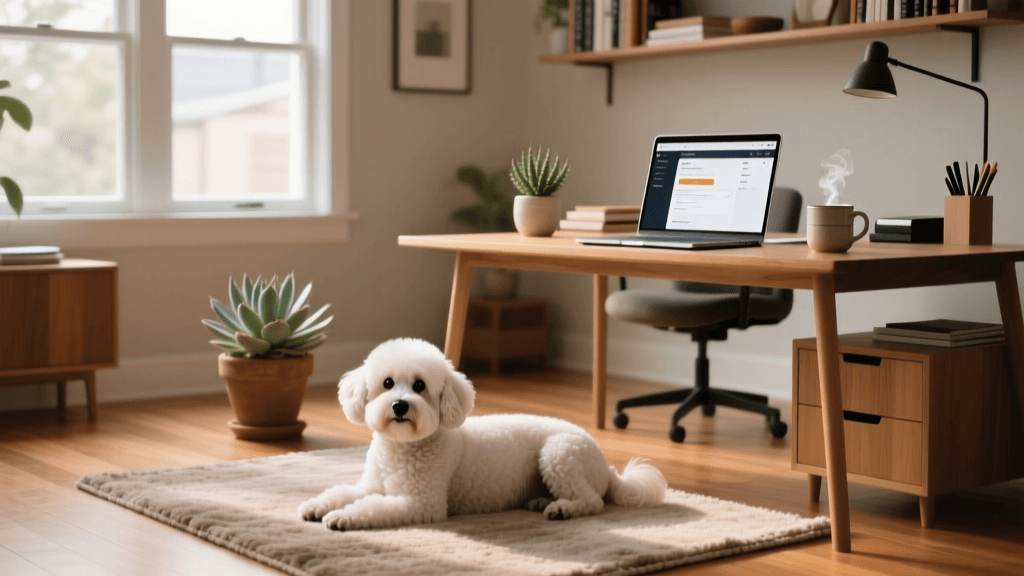
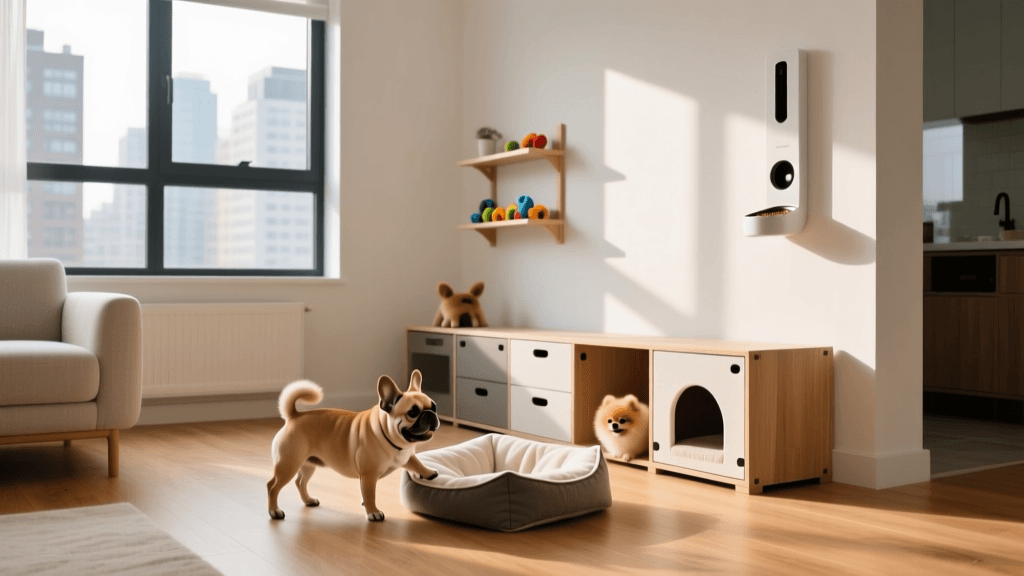
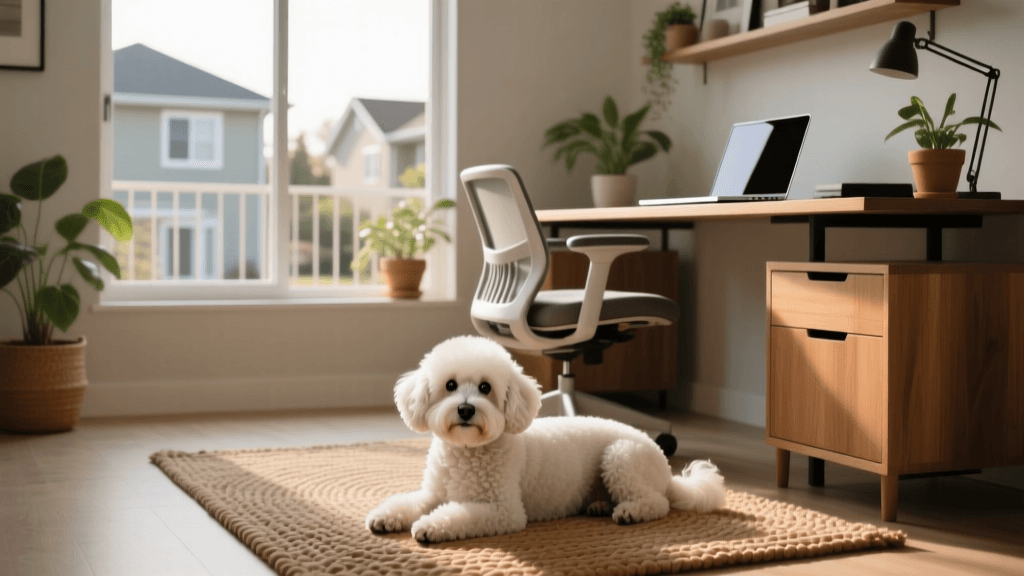
Bringing a dog into your workspace requires more than just picking the right breed; it requires setting up the physical environment for success. In 2026, pet tech and ergonomic pet furniture have made it easier than ever to integrate your dog into your office seamlessly.
1. Designate a 'Place' Command Zone
Your dog needs a specific spot that is theirs, separate from your office chair. Invest in an orthopedic dog bed, such as the Big Barker or a high-density memory foam bed from Furhaven, and place it in a low-traffic corner of your office. Train your dog using the 'place' command so they know that when you sit at your desk, it is time for them to go to their bed and settle down.
2. Interactive Enrichment Toys
To prevent boredom while you are on long conference calls, provide silent enrichment toys. The KONG Classic stuffed with frozen peanut butter and blueberries can keep a dog occupied for up to an hour. Additionally, snuffle mats and Outward Hound puzzle toys provide mental stimulation without the noise of squeakers or hard plastic clattering against the floor.
3. Smart Pet Monitoring
If you have a hybrid schedule and need to leave your dog at home on certain days, smart pet cameras are essential. Devices like the Furbo 360 Pro allow you to check in on your dog, toss treats, and even monitor for separation anxiety barking via AI-driven alerts, ensuring your dog is safe and calm while you are at the corporate office.
Managing Separation Anxiety When You Do Leave
One of the greatest risks for remote workers who get a dog in 2026 is separation anxiety. Because you are home 40+ hours a week, your dog becomes accustomed to your constant presence. When you do need to leave for a hybrid office day, a vet appointment, or a social engagement, the sudden absence can trigger panic.
The ASPCA notes that separation anxiety is a behavioral condition that requires proactive management, not just a reaction to bad behavior. To prevent this from day one, you must practice 'independence training.'
- Start Small: During your first few weeks, put your dog in their crate or a playpen with a long-lasting chew, and leave the room for 10 minutes. Gradually increase the time.
- Desensitize Departure Cues: Pick up your keys, put on your shoes, and then sit back down at your desk. This breaks the association between these actions and you leaving the house.
- Avoid Emotional Goodbyes: When you do leave the house, do not make a big fuss. Simply walk out the door. When you return, ignore your dog until they are calm and all four paws are on the floor.
Sourcing Your WFH Companion Responsibly
Whether you decide on a purebred Whippet or a mixed-breed rescue with similar low-energy traits, responsible sourcing is paramount. The American Kennel Club (AKC) emphasizes that if you are buying a puppy, you must work with a reputable breeder who performs health testing and early neurological stimulation. If you are adopting, look for rescue organizations that utilize foster homes. Foster parents can provide invaluable, real-world data on how a dog behaves in a quiet home environment, whether they are house-trained, and how they react to the sounds of a busy household.
Final Thoughts
Integrating a dog into your remote work lifestyle in 2026 is a deeply rewarding experience that can lower your stress levels, enforce healthy screen-time breaks, and provide unparalleled companionship. By selecting a breed that aligns with your professional demands—prioritizing low vocalization and moderate energy—and by thoughtfully designing your home office to meet their needs, you can create a harmonious environment where both you and your dog thrive. Take your time, do your research, and prepare your space before bringing your new co-worker home.
robin-maitland
All our authors care for dogs every day — read more of their work on the authors page.