Top Dog Breeds for Remote Workers in 2026: WFH Guide
Discover the best dog breeds for remote workers in 2026. Learn the behavioral psychology behind WFH-friendly dogs that balance companionship with calm focus.
The Psychology of the Work-From-Home Dog
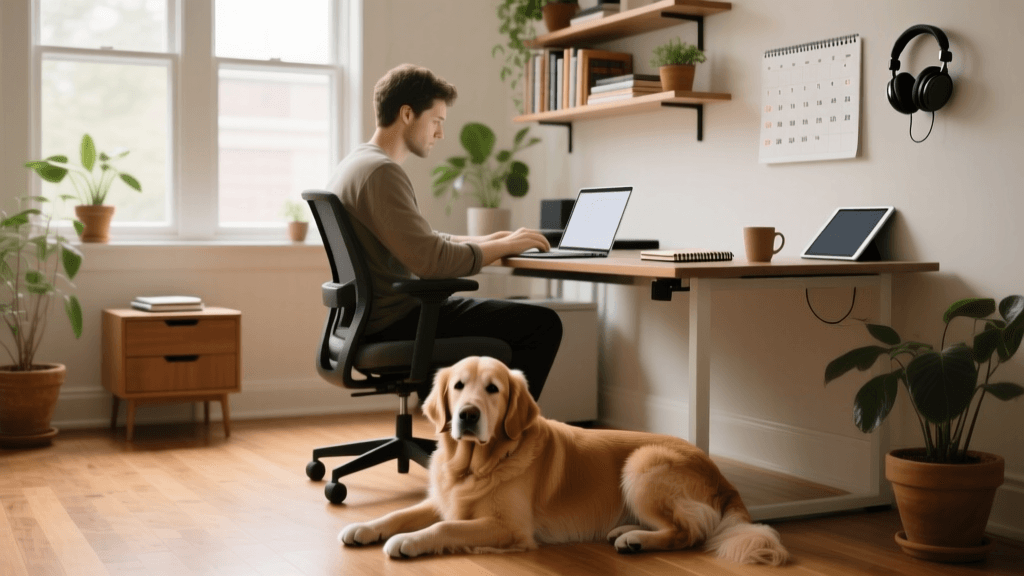
As we navigate the permanent shift toward remote and hybrid work models in 2026, the home office has become a shared space for millions of professionals and their canine companions. However, not all dogs are naturally equipped for the work-from-home (WFH) lifestyle. While the idea of a furry friend sleeping under your desk during a spreadsheet session is idyllic, the reality of canine behavioral psychology often tells a different story. Dogs are not simply small humans; they are animals driven by deeply ingrained breed instincts, arousal thresholds, and environmental sensitivities.
For a dog to thrive in a home office environment, they must possess the ability to self-soothe and exhibit what animal behaviorists call an "off-switch." This psychological trait allows a dog to transition from active engagement to passive observation without experiencing frustration or anxiety. According to the ASPCA's guide to dog behavior, a dog's ability to settle is influenced by a combination of genetics, early socialization, and daily environmental enrichment. When remote workers choose a dog breed without considering these psychological factors, the result is often a dog that barks at delivery drivers during Zoom calls, paces nervously, or develops separation anxiety the moment the owner leaves for a coffee shop run.
Why Breed Instincts Dictate Home Office Harmony
To understand which breeds make the best remote work companions, we must examine the historical jobs they were bred to perform. Herding breeds, for instance, were selectively bred for hyper-vigilance and motion sensitivity. In a home office, a herding dog may perceive your pacing, the movement of your mouse, or the arrival of a family member as a stimulus that requires a behavioral response. Conversely, sighthounds and certain companion breeds were historically selected for their ability to conserve energy, remain quiet, and offer passive affection.
The American Kennel Club breed standards highlight that understanding a breed's original purpose is the most reliable predictor of their modern indoor behavior. In 2026, with smart home devices and delivery drones creating constant low-level environmental noise, a WFH dog must have a naturally higher threshold for auditory and visual triggers. Let us explore the top five breeds that perfectly balance companionship with the psychological independence required for a peaceful home office.
Top 5 Dog Breeds for Remote Workers in 2026
1. The Greyhound: The Couch Potato Sprinter
Despite their reputation as elite racers, Greyhounds are famously known in the rescue community as "45-mph couch potatoes." Their psychological profile is built around short bursts of intense energy followed by extreme lethargy. A Greyhound will happily sleep for 18 hours a day, making them the ultimate silent coworker. They rarely bark, possess a low territorial drive, and are generally unbothered by the sounds of virtual meetings. Their primary need is a brief, high-intensity sprint in a fenced area or a long sniff-walk before your workday begins, after which they will happily melt into their orthopedic bed.
2. The Basset Hound: The Low-Energy Empath
Basset Hounds are scent hounds bred for slow, methodical tracking. This translates to a dog that is inherently unhurried and deeply relaxed indoors. Their psychological baseline is calm, and they are far more interested in the scent of your dropped lunch crumbs than they are in the mail carrier outside. Basset Hounds offer a grounding, heavy presence in a home office, often resting their chins on your feet while you type. Their stubbornness can make recall training a challenge, but in the confined space of a home office, their low roaming drive is a massive asset.
3. The Shiba Inu: The Independent Roommate
For remote workers who desire canine companionship without the clinginess of a "Velcro dog," the Shiba Inu is an exceptional choice. As a basal breed, the Shiba Inu possesses a cat-like independence. They are affectionate and loyal but do not require constant physical contact or reassurance. A Shiba will often choose to sleep in a sunny spot across the room rather than demanding to be under your desk. This psychological independence makes them highly resilient to the micro-separations that occur when you step away to cook lunch or take a private phone call in another room.
4. The Cavalier King Charles Spaniel: The Adaptable Companion
If your work involves high stress and you need a dog that provides active emotional regulation, the Cavalier King Charles Spaniel is unmatched. Bred exclusively for companionship, Cavaliers are highly attuned to human emotional states. They are quiet, eager to please, and adaptable to your schedule. However, their deep psychological need for proximity means they are best suited for remote workers who can keep them close by. To prevent separation anxiety, Cavaliers require structured mat training so they learn to settle on their own bed while you are working, rather than demanding lap time during active hours.
5. The Standard Poodle: The Intellectual Observer
Often misunderstood as merely show dogs, Standard Poodles are highly intelligent, versatile working dogs with a remarkable capacity for learning an "off-switch." Unlike their smaller toy counterparts, Standards tend to have a calmer, more observant demeanor indoors. They thrive on mental stimulation, meaning a 15-minute training session or a complex puzzle toy before your workday will leave them mentally fatigued and ready to nap. Their high emotional intelligence allows them to read the room; they quickly learn that when the webcam is on, it is time to remain quiet and still.
Breeds That Struggle in the Home Office
Just as important as knowing which breeds to adopt is understanding which breeds may turn your home office into a chaotic environment. High-drive herding and guardian breeds often struggle with the WFH lifestyle. Breeds like the Border Collie, Belgian Malinois, and Australian Shepherd possess a psychological need for constant, high-stakes employment. Without a literal flock to manage or hours of intense agility training, these dogs will invent their own jobs—such as herding your children, barking at shadows, or chewing through desk legs out of sheer frustration.
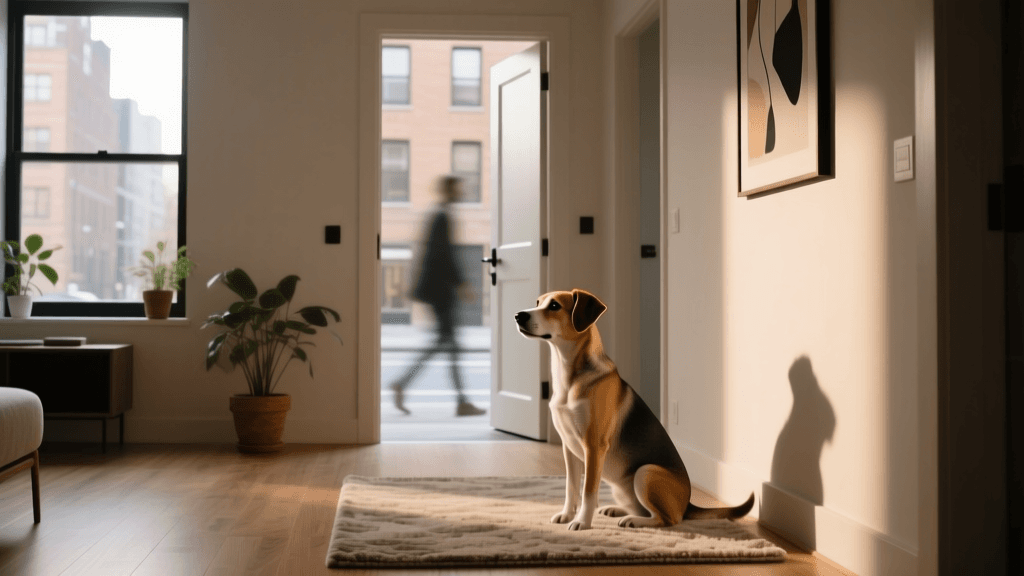
Similarly, vocal guardian breeds like the Siberian Husky or the Livestock Guardian breeds (e.g., Great Pyrenees) are genetically wired to patrol and vocalize at perceived intruders. In a modern neighborhood with constant foot traffic and delivery vehicles, these dogs will frequently interrupt your workflow with loud, instinctual alarm barking, making them poor candidates for professionals who spend their days on video conferences.
Comparison Chart: WFH Dog Breed Traits
| Breed | Indoor Energy Level | Independence Score | Meeting Interruption Risk | Primary WFH Instinct |
|---|---|---|---|---|
| Greyhound | Very Low | High | Very Low | Energy Conservation |
| Basset Hound | Low | Medium | Low | Passive Tracking |
| Shiba Inu | Medium | Very High | Low | Independent Observation |
| Cavalier King Charles | Low to Medium | Low (Velcro) | Medium | Emotional Mirroring |
| Standard Poodle | Medium | Medium | Low | Intellectual Processing |
Actionable Training for the 2026 Remote Worker
Even the most naturally suited WFH breed requires environmental conditioning to succeed in a home office. The cornerstone of remote work dog training is the "Place" command. This is not merely a trick; it is a psychological boundary that teaches the dog to self-regulate. By utilizing a raised cot or a specific textured mat, you create a designated zone where the dog learns that settling down yields high-value rewards, such as long-lasting chews or frozen enrichment toys.
Furthermore, mental enrichment is just as critical as physical exercise. The Humane Society's enrichment guidelines emphasize that foraging and scent work tire a dog's brain faster than a two-mile walk. Incorporating snuffle mats, lick mats, and automated puzzle feeders into your morning routine will ensure your dog enters a state of restful digestion just as you are logging onto your first morning sync. By aligning your dog's biological rhythms with your professional schedule, you create a harmonious, productive, and deeply fulfilling WFH environment for both you and your canine colleague.
tom-renshaw
All our authors care for dogs every day — read more of their work on the authors page.