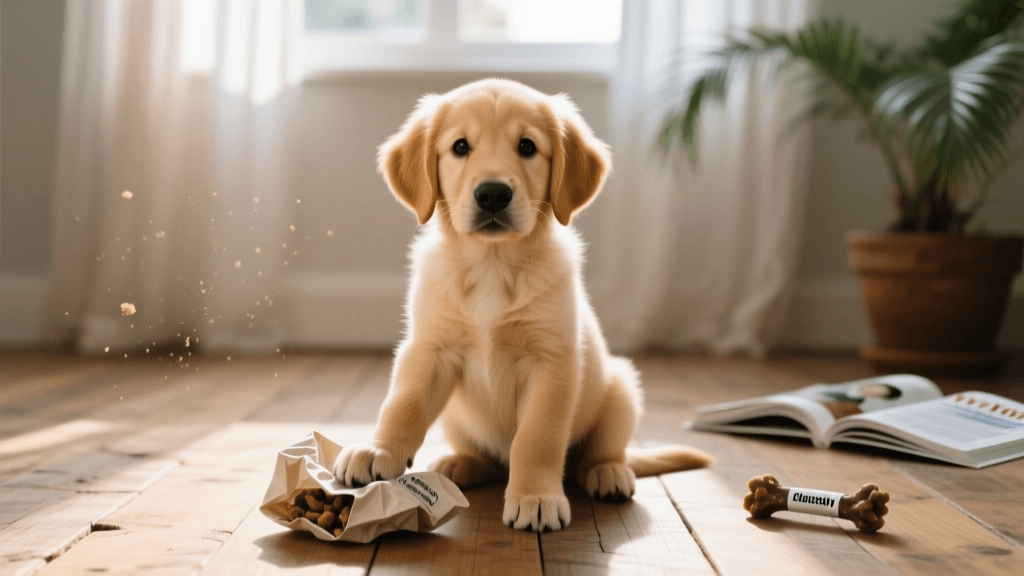
The Beginner's Handbook to Puppy Potty Training Success
Master puppy potty training with our complete beginner's handbook. Learn schedules, crate training tips, and cleanup routines for a stress-free home.

Welcome to Your Puppy Potty Training Handbook
Bringing a new puppy home is one of life's greatest joys, but it is also a test of endurance, patience, and carpet-cleaning skills. For complete beginners, potty training can feel like an insurmountable mountain of accidents and sleepless nights. However, house training is not about luck; it is a predictable science based on canine biology, consistent routines, and positive reinforcement. This comprehensive handbook is designed to take you from day one to a fully house-trained companion, providing exact schedules, product recommendations, and actionable methodologies used by professional dog trainers.
The Biology of a Puppy's Bladder
Before setting expectations, beginners must understand the physiological limitations of an eight-week-old puppy. Puppies lack full voluntary control over their urethral sphincter muscles until they are roughly 12 to 16 weeks old. Asking an eight-week-old puppy to 'hold it' for four hours is biologically impossible and sets both of you up for failure. According to the American Society for the Prevention of Cruelty to Animals (ASPCA), a general rule of thumb is that a puppy can control their bladder for about one hour for every month of age, plus one. However, this applies to resting or sleeping puppies. Active puppies will need to go much more frequently.
Puppy Bladder Capacity and Potty Intervals
| Puppy Age | Maximum Hold Time (Sleeping) | Required Potty Interval (Awake) |
|---|---|---|
| 8 Weeks | 2 to 3 Hours | Every 45 to 60 Minutes |
| 10 Weeks | 3 to 4 Hours | Every 1 to 1.5 Hours |
| 12 Weeks | 4 to 5 Hours | Every 1.5 to 2 Hours |
| 16 Weeks | 5 to 6 Hours | Every 2 to 3 Hours |
The Essential Potty Training Starter Kit
Success requires the right tools. Do not wait until after your first accident to buy these essentials. Here is a beginner's shopping list with estimated costs and specific product recommendations to ensure you are fully prepared.
- Properly Sized Crate ($45 - $70): Dogs naturally avoid soiling their sleeping area. A crate that is too large will allow the puppy to potty in one corner and sleep in the other. We recommend the MidWest Homes for Pets iCrate with an adjustable divider panel. For a medium-sized breed, start with a 24-inch or 30-inch crate and expand the space as they grow.
- Enzymatic Cleaner ($12 - $18): Standard household cleaners do not break down uric acid crystals. If a puppy can smell their previous accident, they will return to the same spot. Nature's Miracle Advanced Stain and Odor Eliminator uses bio-enzymatic bacteria to literally eat the organic waste, removing the scent marker entirely.
- High-Value Training Treats ($6 - $10): You need a treat that is incredibly smelly, soft, and small (under 3 calories each) so the puppy can consume it quickly without getting full. Zuke's Mini Naturals or small pieces of boiled chicken breast are excellent choices for immediate outdoor rewards.
- 6-Foot Nylon Leash ($10 - $15): Avoid retractable leashes during potty training. A standard 6-foot leash gives you enough slack to let the puppy sniff and find a spot, but keeps them close enough for you to deliver a treat within one second of them finishing.
The Ultimate Daily Potty Schedule
Consistency is the cornerstone of house training. Puppies thrive on routine, and their digestive systems will quickly adapt to a predictable feeding and potty schedule. Below is a sample daily schedule for a 10-week-old puppy. Keep in mind that water should be freely available during the day, but removed two hours before bedtime to help them sleep through the night.
- 6:30 AM: Wake up and immediately carry the puppy outside (do not let them walk, as walking stimulates the bladder and may cause an indoor accident on the way to the door).
- 7:00 AM: First meal of the day. Measure exactly 1/2 cup of high-quality puppy kibble mixed with warm water.
- 7:30 AM: Potty break 15-20 minutes after eating. Digestion stimulates the gastrocolic reflex, prompting a bowel movement.
- 8:30 AM: Potty break after 30 minutes of active play.
- 10:00 AM: Potty break immediately after waking from morning nap.
- 12:00 PM: Second meal.
- 12:30 PM: Potty break.
- 2:00 PM, 4:00 PM, 6:00 PM: Scheduled potty breaks after naps or intense play sessions.
- 6:30 PM: Third and final meal.
- 7:00 PM: Potty break.
- 8:00 PM: Pick up the water bowl to prepare for bedtime.
- 10:30 PM: Final potty break right before being placed in the crate for the night.
- 2:30 AM: Set an alarm for a quiet, boring midnight potty break. Keep lights dim, do not play, and immediately return to the crate.
The 'Umbilical Cord' Training Method
When you cannot place your puppy in their crate or a playpen, you must use the Umbilical Cord method. This involves attaching the puppy's leash to your belt loop or waist. By keeping the puppy physically tethered to you, they cannot wander behind a sofa or into a hallway to have a secret accident. You will be able to read their subtle body language—the sudden intense sniffing, the circling, or the abrupt pause in play—and immediately scoop them up and rush outside. This method drastically reduces indoor accidents and accelerates the learning process.
Crate Training and Nighttime Survival
The Humane Society of the United States heavily advocates for crate training as a primary house-training tool because it leverages a dog's natural denning instinct. However, the crate must be introduced as a positive, rewarding space, never as a punishment. Feed your puppy their meals inside the crate with the door open, and provide a durable chew toy, like a Kong stuffed with frozen peanut butter, to create a positive association.
Nighttime is where most beginners struggle. Expect to lose some sleep for the first three to four weeks. Keep the crate in your bedroom so the puppy does not feel isolated. If they whine at 3:00 AM, wait for a brief pause in the crying before opening the crate, so you do not accidentally reward the vocalization. Carry them outside, use a specific cue word like 'Go Potty', reward them silently, and return them to the crate.
Handling Accidents Like a Pro
Accidents will happen. How you react will determine whether your puppy learns from the mistake or simply learns to hide from you when they need to go. If you catch your puppy in the act, do not yell, rub their nose in it, or hit them with a rolled-up newspaper. Punishment after the fact only teaches the puppy that you are scary when they eliminate, leading them to sneak away to potty behind furniture.
Patience is not just a virtue in puppy training; it is a biological necessity. Every accident is a data point that tells you your schedule needs adjusting, not that your puppy is being stubborn.
Instead, interrupt the behavior with a neutral sound like 'Oops!' or a gentle clap, immediately scoop them up, and take them outside to finish. When they finish outdoors, throw a massive reward party with high-value treats and enthusiastic praise. Afterward, clean the indoor accident site thoroughly with your enzymatic cleaner, allowing it to soak into the carpet pad for at least 10 minutes before blotting it dry.
Final Thoughts for the Beginner
Potty training is a marathon, not a sprint. There will be days when you feel like you are taking steps backward, especially during periods of rapid growth or environmental changes. Stick to your schedule, manage their environment using the crate and the umbilical cord method, and celebrate the small victories. With consistency, patience, and the right tools, your new puppy will master this essential life skill, paving the way for a lifetime of trust and companionship in your home.
priya-sutaria
All our authors care for dogs every day — read more of their work on the authors page.