The Beginner's Handbook to a Perfect Daily Dog Routine
Master your dog's daily routine with our complete beginner's handbook. Learn feeding times, walk schedules, training tips, and essential product picks.
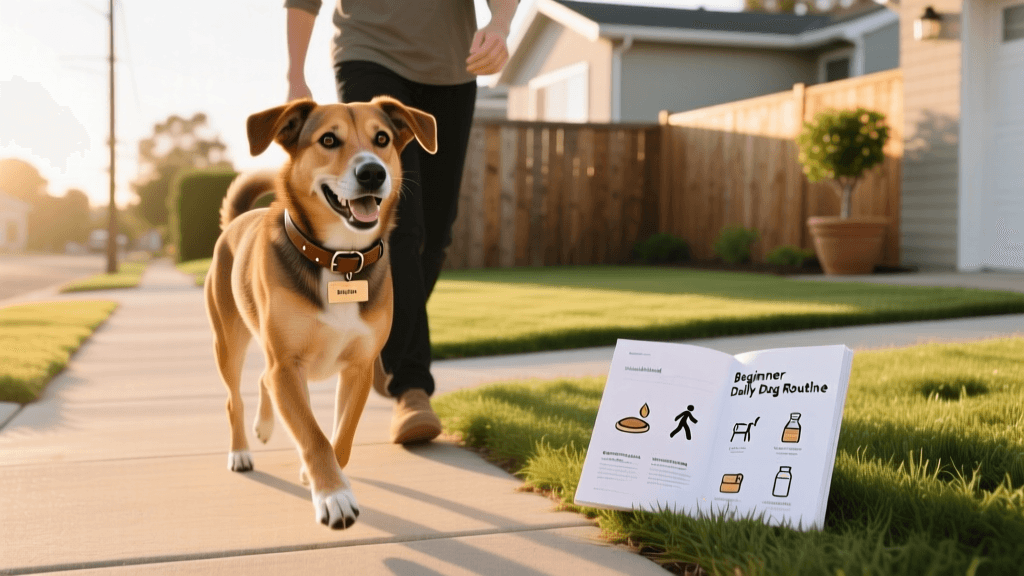
Why Dogs Crave Routine
Bringing a new dog into your home is an exciting milestone, but the transition can be overwhelming for both you and your new canine companion. Dogs are inherently creatures of habit. In the wild, their ancestors relied on predictable patterns for hunting, resting, and socializing. In a domestic setting, a predictable schedule reduces anxiety, accelerates house training, and prevents destructive behaviors born out of boredom or stress. According to the Centers for Disease Control and Prevention (CDC), establishing a consistent care and exercise routine is foundational to maintaining your dog's physical health and mental well-being.
This complete beginner's handbook will walk you through the exact timings, measurements, and product recommendations you need to establish a flawless daily routine for your adult dog, while also providing adjustments for puppies and seniors.
The Core Components of a Dog's Daily Schedule
A well-rounded daily routine is built on four pillars:
- Nutrition: Consistent meal times and precise portion control.
- Elimination: Predictable potty breaks to reinforce house training and maintain urinary health.
- Physical & Mental Exercise: Structured activities to burn energy and stimulate the brain.
- Rest and Decompression: Enforced nap times to prevent overtiredness and crankiness.
Sample Daily Schedule for Adult Dogs
Below is a baseline schedule for a healthy adult dog (1 to 7 years old) whose owner works a standard daytime schedule or works from home. Adjust the exact hours to fit your lifestyle, but try to keep the intervals consistent.
| Time Block | Activity | Duration | Details & Action Items |
|---|---|---|---|
| 6:30 AM | Wake & Potty | 15 mins | Leash walk to a designated bathroom spot. Keep it boring and business-like. |
| 7:00 AM | Breakfast | 15 mins | Serve measured breakfast. Pick up the bowl after 15 minutes to enforce meal times. |
| 7:30 AM | Morning Exercise | 30-45 mins | Brisk neighborhood walk, jogging, or fetch in a fenced yard. |
| 8:30 AM - 12:00 PM | Rest / Alone Time | 3.5 hours | Dog rests in a crate or dog-proofed room with a long-lasting chew. |
| 12:00 PM | Midday Potty & Play | 20 mins | Quick bathroom break followed by 10 minutes of training or indoor play. |
| 12:30 PM - 5:00 PM | Afternoon Rest | 4.5 hours | Enforced nap time. Use a puzzle toy if the dog wakes up early. |
| 5:00 PM | Evening Potty & Walk | 45 mins | Longer sniffari walk. Let the dog sniff to decompress from the day. |
| 6:00 PM | Dinner | 15 mins | Serve measured dinner. Incorporate training to make them 'work' for kibble. |
| 7:00 PM - 9:30 PM | Family Time / Relax | 2.5 hours | Couch time, gentle petting, and low-energy bonding. |
| 10:00 PM | Final Potty & Bed | 10 mins | Last bathroom break on a leash, then into the crate or bed for the night. |
Feeding and Hydration: Timing, Portions, and Gear
When it comes to feeding, precision is everything. Many new owners mistakenly use a random plastic scoop or a coffee mug to measure kibble. However, a standard 'cup' of dog food refers to an 8-ounce measuring cup. Overfeeding by just 10% can lead to significant weight gain over a year. The ASPCA strongly recommends monitoring your dog's body condition score and adjusting food intake based on their activity level and metabolic needs.
For a 50-pound adult dog, a daily intake might be around 2.5 to 3 cups of a high-quality food like Purina Pro Plan Savor Adult Shredded Blend (approximately $55 for a 35lb bag). To be entirely accurate, use a digital kitchen scale like the Etekcity Digital Food Scale (around $15) and weigh the food in grams according to the bag's specific feeding chart. Feed adult dogs twice a day, roughly 12 hours apart. This maintains stable blood sugar levels and prevents bilious vomiting syndrome, a condition where a dog vomits bile because their stomach has been empty for too long.
Hydration is equally critical. Ensure your dog has access to fresh water at all times. A dog should drink approximately 1 ounce of water per pound of body weight daily. For a 50lb dog, that is about 50 ounces (roughly 6 cups) of water a day. Wash their water bowl daily with hot, soapy water to prevent bacterial biofilm buildup.
Exercise and Mental Stimulation
Physical exercise keeps your dog's heart and joints healthy, but mental stimulation is what truly tires them out. Animal behaviorists often note that 15 minutes of intensive mental work (like scent tracking or puzzle solving) can be as exhausting for a dog as a 30-minute physical run.
Incorporate these tools into your routine:
- KONG Classic Red (Medium): Priced around $14.99, this is a staple for alone time. Fill it with a mix of plain Greek yogurt, peanut butter (xylitol-free), and kibble, then freeze it overnight. It provides up to 45 minutes of licking and chewing enrichment.
- Outward Hound Nina Ottosson Dog Brick Puzzle: Costing about $14.99, this intermediate-level puzzle requires your dog to slide and flip compartments to find hidden treats. Use it during the midday play block.
- Snuffle Mat (e.g., AWOOF Snuffle Mat, ~$15): Scatter your dog's dry kibble into the fabric strips. This mimics natural foraging behavior and slows down fast eaters.
Potty Training and Bathroom Breaks
Consistency is the secret to a fully house-trained dog. Always take your dog out to the exact same spot in your yard or neighborhood. The lingering scent of their previous bathroom breaks will act as a trigger, prompting them to go faster. Use a specific verbal cue like 'Go Potty' right as they begin to eliminate, and immediately reward them with a high-value treat (like Zuke's Mini Naturals, ~$6 per 4oz bag) the second they finish. Never wait until you get back inside to give the treat, or the dog will learn that coming inside is what earns the reward, which can lead to holding it outside and having accidents indoors.
Essential Gear for Maintaining the Routine
Investing in the right tools can automate your routine and save you time and stress. Here are three highly recommended products for beginners:
- PETLIBRO Automatic Pet Feeder (2L): Priced around $89.99. If you work late or want to sleep in on weekends, this feeder allows you to schedule exact portion sizes down to the tablespoon. It ensures your dog's breakfast is served at 7:00 AM sharp, every single day.
- Furbo 360 Dog Camera: Priced around $199.00. This camera rotates to follow your dog around the room, features two-way audio, and includes a treat-tossing mechanism. It is invaluable for monitoring your dog's alone-time routine and checking if they are resting or exhibiting separation anxiety.
- Ruffwear Front Range Dog Harness: Priced around $39.95. A high-quality, dual-clip harness is essential for your morning and evening walks. The front chest clip gently discourages pulling, making your 45-minute evening walks much more enjoyable.
Adjusting the Routine for Puppies and Seniors
While the adult schedule above is a great template, puppies and senior dogs require significant modifications. As highlighted by resources from the Humane Society of the United States, age dictates a dog's physical limitations and bladder capacity.
Puppies (8 weeks to 1 year)
Puppies have tiny bladders and high energy bursts followed by sudden crashes. A general rule of thumb for bladder control is one hour per month of age (e.g., a 3-month-old puppy can hold it for about 3 hours maximum). You will need to add mid-morning and mid-afternoon potty breaks. Furthermore, puppies require three to four small meals a day to support their rapid growth and prevent hypoglycemia. Replace long, sustained walks with short, 10-minute play sessions to protect their developing growth plates.
Senior Dogs (7+ years)
Senior dogs sleep more and may suffer from canine cognitive dysfunction or arthritis. Their routine should prioritize comfort. Switch to two shorter, gentler walks (e.g., 20 minutes in the morning, 20 minutes in the evening) rather than one long, exhausting hike. Consider adding an orthopedic memory foam bed (like the Big Barker 7-inch Pillow Top Orthopedic Dog Bed, ~$250) to their rest area. You may also need to add a late-night potty break if they develop age-related incontinence.
Conclusion: Consistency is Your Best Tool
Establishing a daily routine is not about restricting your dog; it is about giving them the gift of predictability. When your dog knows exactly when they will eat, walk, play, and sleep, they can fully relax during their downtime. Stick to your chosen schedule for at least 30 days to allow your dog's circadian rhythm to adapt. With patience, precise measurements, and the right enrichment tools, you will build a harmonious, stress-free life with your new best friend.
hannah-wickes
All our authors care for dogs every day — read more of their work on the authors page.


