2026 Guide: Decompression Setup for Anxious Rescue Dogs
Learn how to set up a decompression safe room and manage the first 72 hours for your newly adopted anxious or reactive rescue dog in 2026.
Welcoming a Reactive or Anxious Rescue Dog Home
Bringing a new dog into your home is a monumental and joyful decision, but when you choose to adopt a rescue dog with a history of anxiety, fear, or reactivity, the transition requires a highly strategic approach. In 2026, veterinary behaviorists and certified force-free trainers universally agree that the traditional 'show them the whole house' method is detrimental to nervous dogs. Instead, the gold standard for getting a dog with behavioral challenges is the 'Decompression Protocol.' This method prioritizes nervous system regulation over immediate obedience or socialization, setting the foundation for a confident, well-adjusted companion.
If you are preparing to adopt an anxious or reactive dog, your home preparation must begin weeks before their paws cross your threshold. This comprehensive guide will walk you through designing a sensory-safe decompression room, selecting the right 2026 gear, and navigating the critical first 72 hours to ensure your new dog feels secure from day one.
The Science of Canine Decompression
Decompression is the process of allowing a dog's nervous system to return to a baseline state of calm after experiencing chronic stress, such as living in a noisy shelter environment or enduring an unstable home life. When a dog is highly stressed, their body is flooded with cortisol and adrenaline. In this state, they are biologically incapable of learning new routines, forming secure attachments, or processing environmental triggers without reacting with fear or aggression.
According to the Humane Society of the United States, newly adopted dogs often experience profound sensory overload when brought into a bustling household. The widely accepted '3-3-3 Rule' dictates that a rescue dog needs three days to decompress from the initial shock, three weeks to learn your routine, and three months to truly feel at home. For reactive dogs, this timeline is often extended. By confining their initial environment to a single, carefully curated 'safe room,' you drastically reduce the cognitive load and sensory input they must process, allowing their stress hormones to dissipate safely.
Designing the Ultimate 2026 Safe Room
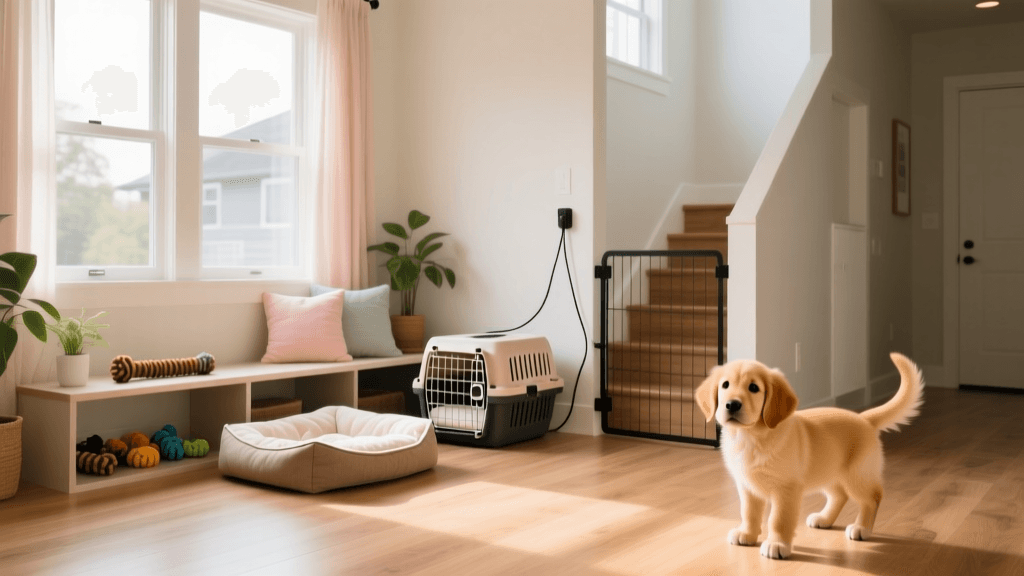
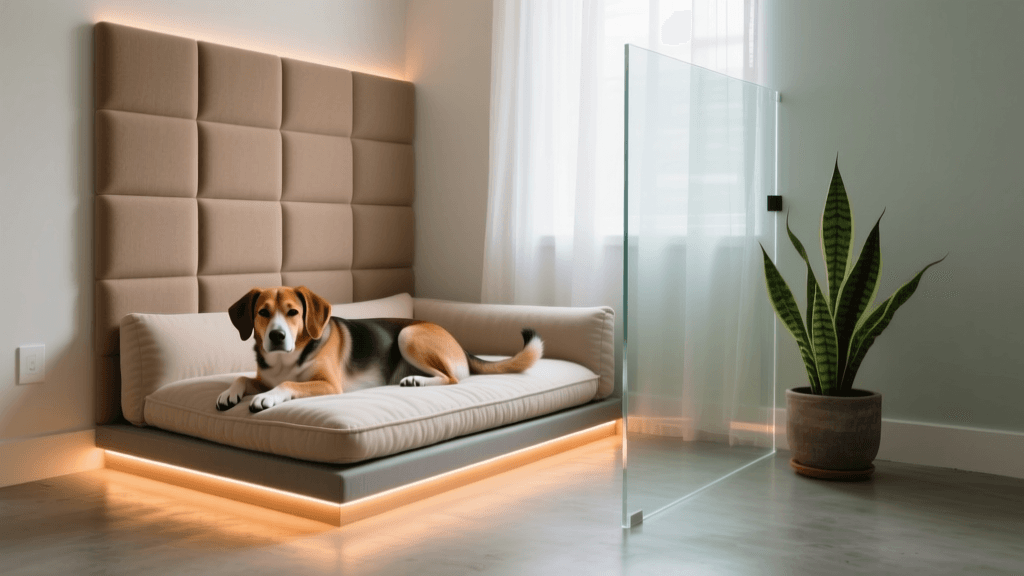
Your decompression room should not be a high-traffic area like a kitchen or a living room. Choose an interior bedroom, a quiet home office, or a large walk-in closet that can be completely closed off. The goal is to create a predictable, low-stimulus sanctuary.
Sensory Control and Soundproofing
Reactive dogs are often hyper-vigilant, meaning they are constantly scanning and listening for threats. You must control the auditory and visual environment. Blackout curtains are non-negotiable to prevent the dog from reacting to passing cars, pedestrians, or neighborhood wildlife. To mask unpredictable household and outdoor noises, utilize a modern smart sound machine. The 2026 models of devices like the Hatch Restore or specialized pet white-noise machines offer continuous, non-looping brown noise frequencies, which are proven to be more effective at masking low-frequency rumbles (like thunder or heavy trucks) than standard white noise.
Chemical and Pheromonal Support
Canine appeasing pheromones mimic the comforting pheromones released by a nursing mother dog. Plugging in an Adaptil Calm Home Diffuser in the safe room at least 48 hours before the dog arrives helps establish an immediate biological signal of safety. Additionally, Fear Free Pets recommends utilizing washable calming mats infused with silvervine or valerian root to encourage natural, stress-relieving sniffing and rolling behaviors.
Essential Gear for Reactive Dog Decompression
Equipping your safe room with the right tools is critical for building positive associations without forcing direct interaction. Below is a comparison chart of essential decompression gear for 2026, focusing on items that promote independent relaxation and mental enrichment.
| Equipment Type | Specific 2026 Recommendation | Primary Purpose for Anxious Dogs | Estimated Cost |
|---|---|---|---|
| Calming Bed | Best Friends by Sheri Donut Bed (Orthopedic) | Provides deep-pressure therapy and a raised rim for head resting, mimicking den security. | $65 - $95 |
| Smart Pet Camera | Furbo 360 Dog Camera with AI Bark Alerts | Allows you to monitor stress levels and toss treats remotely without entering the room and triggering arousal. | $199 - $249 |
| Foraging Mat | AWOOF Snuffle Mat (Heavy Duty, Non-Slip) | Encourages natural foraging instincts, which naturally lowers heart rate and builds confidence. | $25 - $40 |
| Licking Mat | LickiMat Soother Pro (Freezer Safe) | Licking releases endorphins in the canine brain, acting as a natural self-soothing mechanism during high stress. | $12 - $18 |
| Long Line Harness | Perfect Fit Harness with 15ft Biothane Line | Essential for safe, low-pressure 'sniffaris' without the restrictive tension of a standard 6-foot leash. | $50 - $75 |
The First 72 Hours: A Strict Timeline
The initial three days are the most fragile period in your new dog's life. Your primary objective is to be boring, predictable, and entirely non-demanding. Do not invite friends over, do not introduce other pets immediately, and do not attempt to teach obedience commands.
Day 1: The Silent Arrival
When you bring your dog home, keep them on a secure leash and harness. Walk them directly into the pre-prepared safe room. Unclip the leash, offer a high-value treat (such as boiled chicken or freeze-dried liver), and calmly exit the room, closing the door behind you. For the first 24 hours, interaction should be limited to brief, quiet entries to replenish food, water, and LickiMats. Avoid direct eye contact, do not attempt to pet them, and speak only in a soft, low-register whisper. Let the dog realize that this space is entirely theirs and that you are not a threat to their autonomy.
Day 2: Scent Introduction and Routine Building
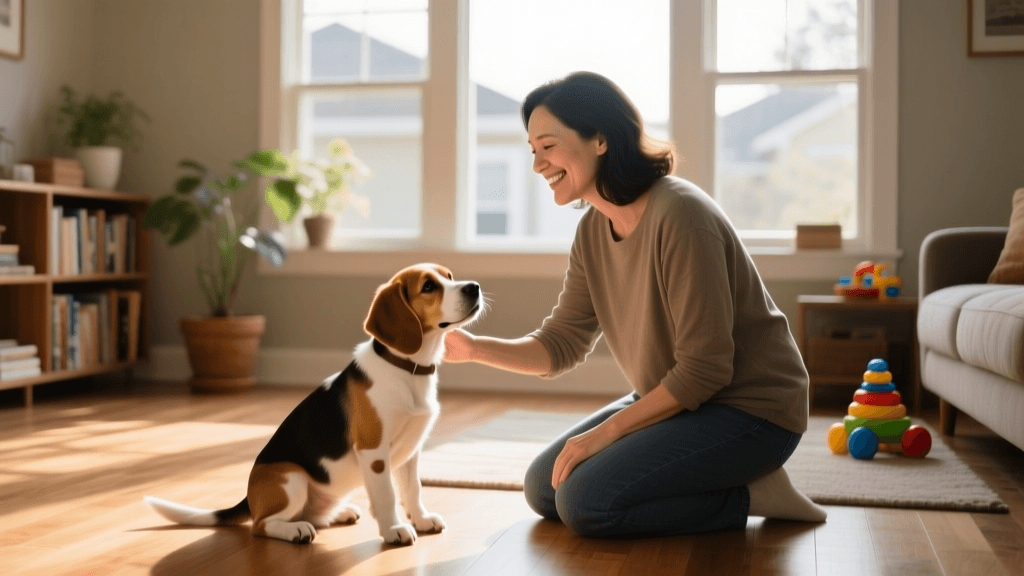
On the second day, begin establishing a predictable routine. Anxious dogs thrive on predictability because it allows them to anticipate what will happen next, reducing their need to remain hyper-vigilant. Feed them at the exact same times, and introduce your scent by leaving a worn, unwashed t-shirt in their bed. If the dog approaches you, allow them to sniff your hands and legs without reaching out to pet their head or back. Let the dog initiate and control the physical distance of all interactions.
Day 3: The Decompression Sniffari
By day three, if the dog is showing relaxed body language (soft eyes, loose wagging, normal appetite), you can introduce a brief 'sniffari.' According to the American Kennel Club, allowing a rescue dog to explore their environment at their own pace is vital for building confidence. Attach a 15-foot long line to a well-fitted harness and take them to a quiet, enclosed, or low-traffic area. The goal is not physical exercise or walking on a loose leash; the goal is purely olfactory enrichment. Let them sniff every blade of grass, tree root, and bush. Sniffing lowers a dog's pulse rate and tires them out mentally, which is far more effective for an anxious dog than a stressful, trigger-filled neighborhood walk.
Managing Environmental Triggers During the Transition
Even inside the home, environmental triggers can cause a reactive dog to regress. Doorbells, knocking, and the sound of keys jingling are common triggers that signal unpredictable events. During the decompression phase, it is highly recommended to disconnect your physical doorbell or switch it to a silent, visual flashing alert if your smart home system supports it. Place a polite sign on your front door asking delivery drivers and visitors to text you instead of knocking.
Furthermore, manage window access. If your safe room has a window that faces the street, apply a temporary frosted privacy film to the lower half of the glass. This allows natural sunlight to enter while completely blocking the dog's line of sight to passing dogs, mail carriers, or joggers, preventing the rehearsal of barrier-frustration and territorial barking.
Conclusion: Patience is the Ultimate Tool
Getting a dog with a history of reactivity or severe anxiety is not a sprint; it is a marathon of trust-building. By investing the time to set up a proper decompression safe room, utilizing 2026's best sensory-calming gear, and strictly adhering to a low-demand timeline for the first 72 hours, you are giving your new rescue the profound gift of emotional safety. Remember that setbacks are a normal part of the process. Celebrate the micro-victories—a deep sigh, a relaxed ear flick, or a willing approach—and trust that the foundation you build in these quiet, early days will support a lifetime of loyalty and companionship.
priya-sutaria
All our authors care for dogs every day — read more of their work on the authors page.