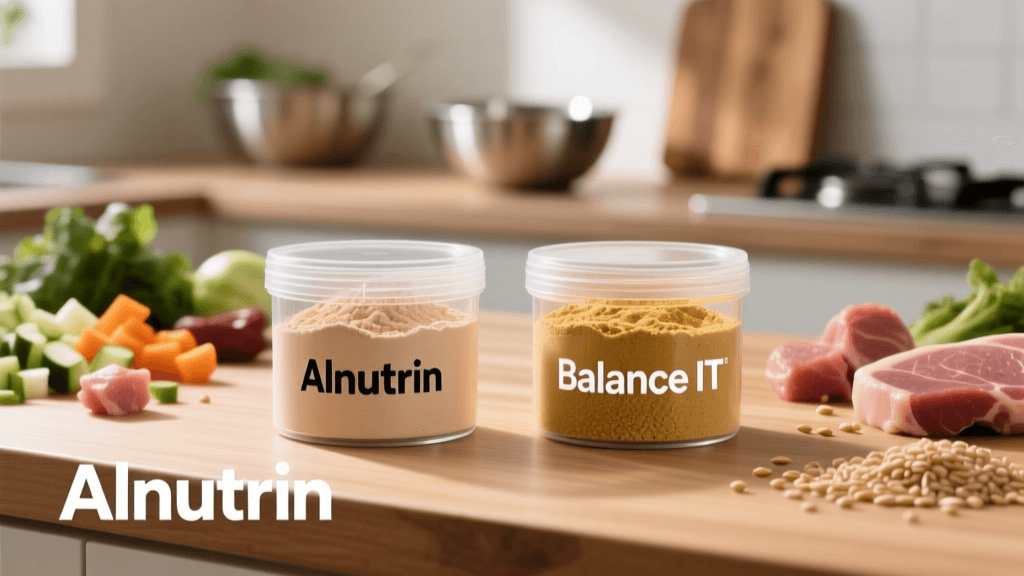
Alnutrin vs Balance IT 2026: Best Homemade Dog Diet Balancers
Compare Alnutrin and Balance IT in 2026 to safely balance your dog's homemade fresh diet. Expert tips, costs, and transition guides for pet owners.
The Rise of Homemade Fresh Diets in 2026
As we navigate through 2026, the shift toward fresh, whole-food diets for dogs has moved from a niche trend to a mainstream standard of care. Pet parents are increasingly ditching ultra-processed kibble in favor of gently cooked or raw homemade meals. However, this culinary freedom comes with a massive biological responsibility. Feeding your dog a bowl of plain chicken, rice, and carrots is not a complete diet; it is a recipe for severe nutritional deficiencies. To bridge the gap between whole foods and complete nutrition, canine supplement balancers have become essential tools in the modern dog owner's kitchen. Among the most trusted names in the veterinary nutrition space are Alnutrin and Balance IT. In this comprehensive guide, we break down how these two powerhouse brands compare in 2026, helping you choose the right formulation to keep your dog thriving on a fresh diet.
The Science of Canine Nutrition: Why DIY Diets Fail Without Balancers
Many well-meaning dog owners assume that if a meal looks healthy to a human, it must be healthy for a dog. This is a dangerous misconception. The National Research Council (NRC) outlines stringent nutrient requirements for dogs and cats, detailing exact ratios of macronutrients, essential amino acids, fatty acids, and micronutrients required for canine health. A diet consisting solely of muscle meat and vegetables is notoriously deficient in calcium, iodine, zinc, copper, and Vitamin D.
When a dog consumes a diet high in phosphorus (found abundantly in meat) and low in calcium, the body leaches calcium from the bones to maintain blood calcium levels. This condition, known as secondary nutritional hyperparathyroidism, can lead to devastating bone fractures and skeletal deformities, particularly in growing puppies. Furthermore, the American Veterinary Medical Association (AVMA) consistently warns about the risks associated with unbalanced raw and homemade diets, emphasizing that without precise scientific formulation, dogs are at high risk for metabolic bone disease, dilated cardiomyopathy (linked to taurine and L-carnitine deficiencies), and compromised immune function. This is precisely where pre-measured balancer supplements step in to save the day.
Alnutrin Complete: 2026 Formulation and Usage Guide
Alnutrin has long been a favorite among raw feeders and home cooks who prefer a straightforward, no-fuss approach to balancing meals. In 2026, the flagship Alnutrin Complete powder remains a top-tier choice for owners who want to use a wide variety of whole foods without running complex spreadsheet calculations. Alnutrin Complete is designed to balance meals that include muscle meat, organ meats (like liver and kidney), and bone or bone meal, along with dog-safe vegetables and healthy fats.
What sets Alnutrin apart in 2026 is its commitment to bioavailability. The calcium source is derived from highly digestible calcium carbonate and dicalcium phosphate, ensuring optimal absorption without causing gastrointestinal upset. The 2026 formulation also includes a robust profile of chelated trace minerals (zinc, iron, copper, and manganese), which are bound to amino acids for superior uptake in the canine digestive tract.
How to Use: Alnutrin Complete is dosed based on the total weight of the food being prepared. Generally, you will use about 1.5 to 2 tablespoons of Alnutrin Complete per pound of prepared meat and vegetable mix. It is best mixed into the food after cooking and slightly cooling the meal to preserve the integrity of the heat-sensitive vitamins (like Vitamin E and B-complex).
2026 Pricing: A 1 lb (454g) bag of Alnutrin Complete retails for approximately $48.99. For a 50 lb moderately active dog consuming about 1.5 lbs of fresh food daily, a single bag will last roughly two to three weeks, bringing the monthly supplement cost to around $85.00.
Balance IT: Custom Recipes and 2026 Pricing
While Alnutrin offers a broad-spectrum "catch-all" balancer, Balance IT takes a highly customized, veterinary-formulated approach. Developed by board-certified veterinary nutritionists, Balance IT offers a suite of specific blends (such as Canine, Canine Plus, Canine K, and Canine Plus K) tailored to different base ingredients and life stages. Their standout feature in 2026 remains the Balance IT Custom Recipe Builder, a free online tool that allows you to input your exact ingredients and their precise weights, generating a custom supplement blend and dosing schedule.
Balance IT is particularly favored for dogs with specific health conditions, such as kidney disease, food allergies, or pancreatitis, because the formulation can be adjusted to restrict phosphorus, fat, or specific protein sources. The 2026 formulations have also improved their palatability, utilizing natural yeast extracts and hydrolyzed proteins to make the powder more appealing to picky eaters.
How to Use: Because Balance IT relies on specific recipes, you must follow the exact output generated by their Recipe Builder or the printed recipe cards. You cannot simply swap out beef for chicken without altering the required amount of supplement, as different meats have vastly different mineral profiles. The supplement must be added to the food after it has been cooked and cooled to room temperature.
2026 Pricing: A standard 1 lb container of Balance IT Canine blend costs around $54.99. However, because the dosing is highly specific to the recipe's calcium and phosphorus content, usage rates vary wildly. On average, balancing a diet for a 50 lb dog will cost between $90 and $110 per month, making it slightly more expensive than Alnutrin but offering unparalleled precision.
Head-to-Head Comparison Chart (2026)
| Feature | Alnutrin Complete | Balance IT (Standard Blends) |
|---|---|---|
| Formulation Style | Broad-spectrum, flexible ingredient swapping | Strict recipe adherence or custom builder |
| Calcium Source | Calcium Carbonate & Dicalcium Phosphate | Calcium Carbonate & Tricalcium Phosphate |
| Best For | Owners who like to rotate proteins/veggies daily | Dogs with medical conditions or strict allergies |
| Palatability | Neutral, easily hidden in wet food | Enhanced with natural flavors (yeast/liver) |
| Avg. Monthly Cost (50lb Dog) | ~$85.00 | ~$100.00 |
| Veterinary Endorsement | Widely accepted for healthy adult dogs | Gold standard for therapeutic & custom diets |
Critical Micronutrients Missing in Unbalanced Fresh Diets
Whether you choose Alnutrin or Balance IT, understanding why you are adding these powders is crucial. Here are the most common deficiencies found in DIY diets that these balancers correct:
- Iodine: Essential for thyroid function. Meat and veggies contain virtually zero iodine. Balancers use kelp or potassium iodide to prevent hypothyroidism.
- Zinc & Copper: Crucial for skin health, coat quality, and immune function. High-calcium diets can inhibit zinc absorption, which is why balancers use chelated forms to ensure bioavailability.
- Vitamin D: Dogs cannot synthesize Vitamin D from sunlight like humans do. It must be obtained through the diet to regulate calcium and phosphorus metabolism.
- Vitamin E: An essential antioxidant. Fresh foods, especially those high in polyunsaturated fats (like fish or certain poultry), increase the body's demand for Vitamin E to prevent oxidative stress and pansteatitis.
- Taurine & L-Carnitine: While not always strictly essential for all breeds, certain dogs (especially large breeds and those on high-legume or grain-free fresh diets) require supplemental amino acids to prevent diet-related dilated cardiomyopathy (DCM).
Step-by-Step 10-Day Transition Protocol
Switching your dog from commercial kibble to a balanced homemade diet requires patience to avoid gastrointestinal distress. Follow this 2026-approved transition schedule:
- Days 1-3: 75% old kibble, 25% new balanced fresh food. Monitor stool consistency closely.
- Days 4-6: 50% old kibble, 50% new balanced fresh food. Introduce a high-quality canine probiotic to support the shifting gut microbiome.
- Days 7-9: 25% old kibble, 75% new balanced fresh food. Ensure the balancer powder is thoroughly mixed into the wet portion of the meal.
- Day 10: 100% balanced fresh food. Weigh your dog to ensure they are maintaining their ideal body condition score.
Expert Consensus: What Veterinary Nutritionists Advise
The consensus among experts is clear: good intentions are not enough when it comes to canine nutrition. According to the Tufts University Cummings Veterinary Medical Center Clinical Nutrition Service, homemade diets can be excellent for dogs, but only when formulated by a board-certified veterinary nutritionist or when utilizing rigorously tested, scientifically validated balancer supplements. Guessing the amount of calcium or relying on eggshells (which offer calcium but zero trace minerals) is a gamble with your dog's long-term health. By utilizing precise tools like Alnutrin or Balance IT in 2026, you can confidently serve fresh, whole foods while ensuring every single cellular requirement your dog has is met safely and deliciously.
jonas-cole
All our authors care for dogs every day — read more of their work on the authors page.