Understanding Agility Dog Stress Signals: A 2026 Guide
Learn to read your dog's stress and arousal signals in agility competitions. Our 2026 guide covers canine body language, psychology, and decompression.
The Evolution of Canine Sports Psychology in 2026
As we navigate the 2026 agility competition season, the canine sports world has undergone a massive paradigm shift. Gone are the days when physical conditioning and rote obstacle training were the sole focus of elite handlers. Today, the American Kennel Club (AKC) and global agility federations heavily emphasize the psychological welfare and emotional state of the canine athlete. Understanding your dog's internal emotional landscape is no longer just a 'nice-to-have'—it is the fundamental key to achieving clean runs, preventing injuries, and ensuring your dog genuinely loves the sport.
Agility is a high-pressure environment filled with sensory overload: barking dogs, slamming paws, shouting handlers, and complex spatial challenges. To truly understand your dog, you must learn to read the subtle micro-expressions and body language cues that indicate their psychological state. This guide dives deep into the neurobiology of canine arousal, decodes the stress signals that precede a 'run-off', and provides actionable decompression strategies for the modern competitor.
The Yerkes-Dodson Law: Arousal and Performance
To understand why a dog might blow a contact zone or miss a weave pole entry, we must look to the Yerkes-Dodson Law, a psychological principle that dictates the relationship between arousal and performance. Imagine a bell curve. On the left side, the dog is under-aroused (bored, distracted, lacking motivation). At the peak of the curve, the dog is in the 'optimal arousal zone'—focused, driven, and responsive to handler cues. On the right side, the dog is over-aroused (frantic, unable to process complex information, operating purely on adrenaline).
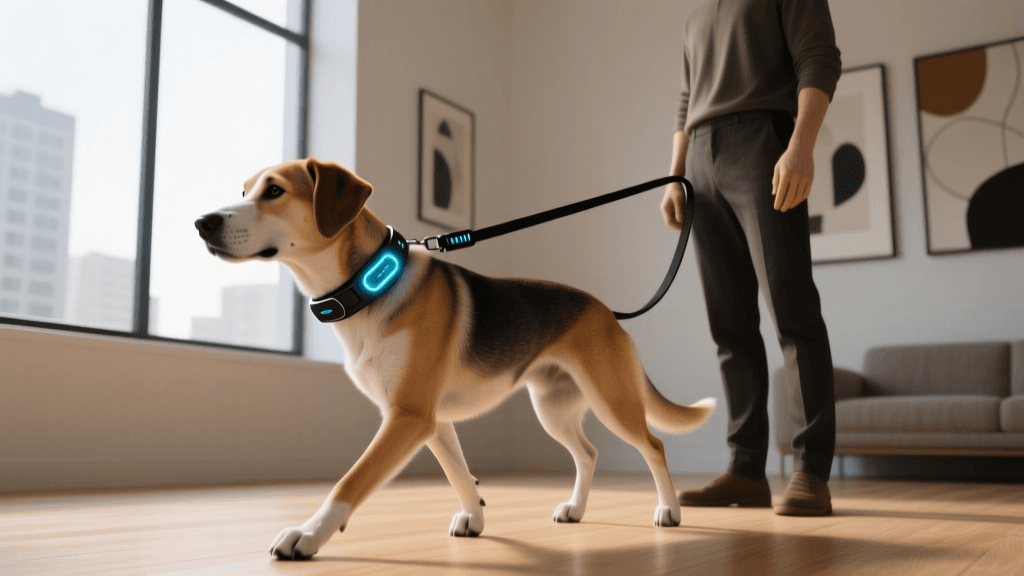
In 2026, elite sports behaviorists utilize Heart Rate Variability (HRV) monitors adapted for canine harnesses to track this arousal curve in real-time during training. However, in the competition ring, your eyes are your best tool. Recognizing whether your dog is sliding up the arousal curve into 'red zone' panic, or dropping into 'shut down' avoidance, allows you to intervene before a mistake occurs.
Decoding the Subtle Signs of Canine Stress
Dogs do not experience stress the way humans do; they cannot verbalize their anxiety. Instead, they rely on a complex vocabulary of body language, often referred to as 'calming signals' or 'displacement behaviors.' According to the ASPCA's comprehensive guide on canine body language, these signals are a dog's way of communicating internal conflict or attempting to de-escalate a stressful situation.
In agility, internal conflict often arises when a dog is unsure of the next obstacle, feels pressured by the handler's body position, or is overwhelmed by the environment. Below is a critical reference table for identifying these signals on the course.
| Stress Signal | Physical Manifestation | Psychological Meaning in Agility |
|---|---|---|
| Whale Eye | Showing the whites of the eyes while turning the head away. | High anxiety; the dog feels trapped or pressured by the handler's proximity. |
| Lip Licking / Flicking | Rapid, repeated tongue flicks over the nose. | A self-soothing displacement behavior indicating cognitive overload or confusion. |
| Displacement Sniffing | Suddenly obsessively sniffing the ground mid-run. | Avoidance; the dog is opting out of the pressure to self-medicate with environmental odors. |
| Tight Muzzle / Pinned Ears | Corners of the mouth pulled tight back, ears flattened. | Fear or anticipation of correction; the dog is bracing for negative outcomes. |
| Shake-Off | Shaking the entire body as if wet, when dry. | An attempt to 'reset' the nervous system and shed accumulated cortisol after a stressful sequence. |
Over-Arousal vs. Under-Arousal: A Comparative Analysis
Misdiagnosing your dog's arousal state is a common pitfall. An over-aroused dog and an under-aroused dog might both knock a jump bar, but the underlying psychology and the required handler responses are diametrically opposed.
Signs of Over-Arousal (The 'Red Zone')
- Physicality: Pupil dilation, frantic panting, high tail carriage with stiff wagging, muscle tension.
- Course Behavior: Blowing past obstacles, spinning, barking at the handler, inability to hold a start-line stay, taking off too early for jumps.
- Psychology: The dog's prefrontal cortex (responsible for logic and learning) is essentially hijacked by the amygdala (the fight-or-flight center). They are reacting, not thinking.
- Handler Fix: Lower your energy, speak in a low, soothing register, and engage in pattern games that require cognitive processing rather than physical exertion.
Signs of Under-Arousal (The 'Blue Zone')
- Physicality: Soft eyes, closed mouth, relaxed or low tail, slow movement, drooping posture.
- Course Behavior: Wandering off-course, sniffing, scratching, slow approach to contact zones, looking away from the handler.
- Psychology: The dog lacks dopamine drive or feels that the environmental rewards are more valuable than the agility game. They may also be experiencing 'learned helplessness' if past training involved excessive frustration.
- Handler Fix: Increase your energy, use high-value toy play, incorporate quick sprints, and shorten training sessions to build intense desire.
Environmental Pressures and Mirror Neurons
One of the most profound discoveries in canine behavioral science over the last few years is the extent to which dogs utilize 'mirror neurons' to read human emotional states. If you are standing at the start line feeling nervous about qualifying, your heart rate elevates, your breathing becomes shallow, and your leash tension micro-adjusts. Your dog senses this physiological shift immediately.
In the 2026 competitive landscape, sports psychologists work extensively with handlers on 'emotional regulation.' Your dog's stress is often a direct reflection of your own internal state. Understanding this feedback loop is crucial. If your dog begins to display stress signals at the start line, the first step is to regulate your own nervous system. Take a deep, diaphragmatic breath, relax your shoulders, and consciously release tension from the leash. Often, you will see your dog physically mirror your relaxation, offering a deep exhale or a shake-off to reset.
Actionable Decompression Strategies for the 2026 Competitor
When you recognize that your dog has crossed the threshold into a stressed or over-aroused state, pushing through the training session will only deepen the negative emotional association with the agility equipment. Instead, implement these immediate decompression strategies:
1. The 1-2-3 Pattern Game
Developed by behaviorists to help dogs process environmental triggers, this game forces the dog to use their thinking brain. Count out loud 'One, two, three,' and on 'three,' toss a treat to the ground. Repeat this rhythmically. The predictability of the pattern lowers the dog's heart rate and shifts their brain activity from the emotional amygdala back to the logical prefrontal cortex.
2. Tactical Sniffaris
Sniffing is a biologically ingrained behavior that naturally lowers a dog's pulse rate. Move your dog away from the agility equipment to a grassy area and scatter high-value treats. Allow them to sniff continuously for at least five minutes. This 'sniffari' acts as a neurological reset button, burning off excess cortisol.
3. Mat Work and Chin Rests
Teaching a dog to perform a 'chin rest' on your knee or a designated mat gives them a clear, physically grounding job that requires stillness and focus. In the chaotic environment of an agility trial, a reliable chin rest provides the dog with a 'safe harbor' where they can predict exactly what is expected of them, thereby reducing anxiety.
Conclusion: Prioritizing the Canine Mind
Success in modern dog sports is inextricably linked to our ability to understand and respect the canine mind. By learning to read the subtle stress signals, respecting the Yerkes-Dodson arousal curve, and prioritizing emotional decompression, you do more than just improve your course times. You build a profound, trust-based partnership with your dog. As the 2026 season progresses, let the true measure of your success be the joy, confidence, and emotional resilience your dog displays every time they step up to the start line.
aaron-whyte
All our authors care for dogs every day — read more of their work on the authors page.