Understanding Agility Dog Stress Signals: 2026 Guide
Learn to read subtle canine stress and arousal signals in agility competitions. Our 2026 guide helps you protect your dog's mental health on the course.
The Psychology of High-Arousal Dog Sports in 2026
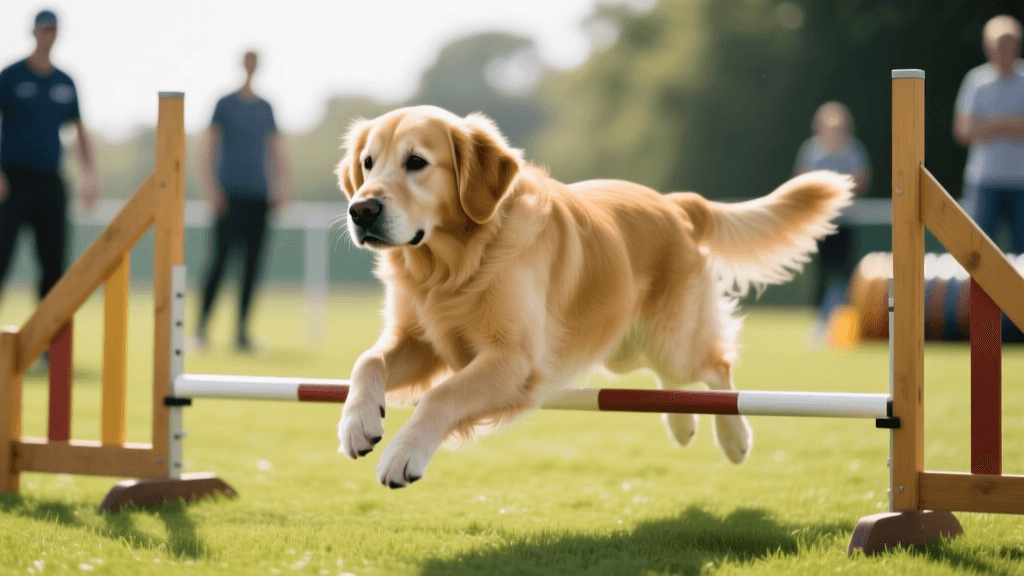
Dog agility is a breathtaking display of athleticism, teamwork, and canine cognition. However, as the sport continues to evolve in 2026, the competitive community is undergoing a vital paradigm shift: prioritizing the psychological welfare of the dog over the pursuit of ribbons. Understanding your dog's internal emotional state is no longer optional for serious handlers; it is a fundamental requirement for ethical competition. According to the American Kennel Club's agility guidelines, a successful run relies on a dog that is not only physically conditioned but also mentally balanced and enthusiastic.
To truly understand your dog in a high-stakes environment, we must look through the lens of the Yerkes-Dodson Law, a psychological principle that dictates the relationship between arousal and performance. In canine sports, a certain level of arousal (drive) is necessary for speed and focus. However, once arousal crosses a specific threshold, performance degrades, and the dog enters a state of cognitive overload and distress. Recognizing the exact moment your dog transitions from 'optimal drive' to 'toxic stress' is the hallmark of an elite, empathetic handler.
Differentiating 'Drive' from 'Distress'
One of the most common pitfalls in dog sports is misinterpreting stress-induced behaviors as enthusiasm. A dog that is frantically barking, spinning, or biting the leash at the start line is often praised for being 'high drive.' In reality, these are frequently displacement behaviors indicating that the dog's sympathetic nervous system is in overdrive. True drive is characterized by focused intensity, clear-headedness, and an ability to respond to subtle handling cues. Distress, on the other hand, manifests as frantic, repetitive, or avoidant behaviors. The American College of Veterinary Behaviorists emphasizes that chronic over-arousal in working dogs can lead to long-term anxiety disorders and a breakdown of the human-animal bond.
Key Canine Body Language Cues to Monitor
Because dogs cannot verbalize their discomfort, they rely on a complex vocabulary of body language. In the loud, chaotic environment of an agility trial, subtle signals are easily missed. The ASPCA's comprehensive guide to canine body language highlights several critical indicators of stress that every agility handler must memorize.
| Body Language Cue | Physical Description | Psychological Meaning in Agility | Handler Action Required |
|---|---|---|---|
| Whale Eye | The whites of the eyes (sclera) are visible in a crescent shape. | Anticipatory anxiety; the dog is tracking a stressor while trying to look away. | Increase distance from the stressor; lower training criteria immediately. |
| Lip Licking | Quick, repetitive tongue flicks over the nose, not related to food. | Appeasement signal or internal conflict; often seen when a dog is confused by handling. | Stop the sequence; reward for calmness; simplify the handling cue. |
| Piloerection | Hair standing up along the spine and shoulders (hackles raised). | Involuntary adrenaline dump. Indicates high arousal, which could be excitement or fear. | Assess context. If paired with stiff movement, initiate a decompression break. |
| Displacement Zoomies | Frantic, unstructured running, often ignoring the handler's recall. | Cognitive overload; the dog's brain is 'short-circuiting' from environmental pressure. | Do not chase. Use a calm, low-pitch recall; remove the dog from the ring gently. |
| Shake-Off | Shaking the entire body as if wet, when completely dry. | An attempt to 'shake off' accumulated tension or reset after a stressful encounter. | Allow the dog to finish the shake; offer a low-value treat to ground them. |
The Role of Biometric HRV Monitoring in 2026
The year 2026 has brought remarkable advancements in veterinary sports medicine, specifically regarding biometric monitoring. Many top-tier agility handlers now utilize veterinary-approved biometric harnesses that track Heart Rate Variability (HRV) in real-time. HRV is the measure of the variation in time between each heartbeat, controlled by the autonomic nervous system. A high HRV indicates a relaxed, adaptable dog (parasympathetic dominance), while a suddenly dropping HRV indicates stress and sympathetic nervous system activation. By pairing real-time HRV data with observable body language, handlers can objectively identify when their dog is approaching the 'red zone' of stress, allowing them to pull the dog from a warm-up ring before a behavioral meltdown occurs.
Actionable Decompression Protocols Post-Run
Understanding your dog's stress signals is only half the battle; knowing how to actively lower their cortisol levels after a run is equally critical. A dog that has just completed an agility run is flooded with adrenaline and dopamine. If immediately crated and left to 'stew' in those chemicals, the dog can develop chronic ring stress. Implementing a structured decompression protocol is essential.
The 15-Minute 'Sniffari' Protocol
Sniffing is not merely a way for dogs to gather information; it is a physiological mechanism for stress reduction. The act of intense sniffing lowers the dog's heart rate and activates the parasympathetic nervous system. After leaving the agility ring, follow this protocol:
- Minutes 1-5: Leash the dog on a long line (15-20 feet) in a quiet, grassy area away from the main trial grounds. Allow them to sniff the ground uninterrupted. Do not issue commands or ask for obedience behaviors.
- Minutes 5-10: Scatter a handful of high-value, aromatic treats (like freeze-dried liver or tripe) in the grass to encourage foraging. Foraging engages the brain's seeking system, which is inherently calming and rewarding.
- Minutes 10-15: Engage in gentle, long-stroke massage along the dog's back and shoulders, avoiding the head and neck, which can be overstimulating. Speak in a low, soothing register.
Pattern Games for Ring Entry
Popularized by canine behavior experts, pattern games are predictable, structured interactions that give the dog a sense of control in chaotic environments. One highly effective game for agility dogs is '1-2-3-Treat'. As you approach the start line, count out loud 'One, two, three,' and place a treat on the ground or deliver it to the dog's mouth. This predictable rhythm acts as an anchor, keeping the dog's brain engaged with the handler rather than fixating on the scary judge, the barking dogs, or the intimidating A-frame. If the dog breaks the pattern by exhibiting stress signals (like whale eye or lip licking), it is a clear metric that the environmental pressure is too high, and you should voluntarily withdraw from the run to protect the dog's confidence.
Conclusion
Competing in dog agility is a privilege, not a right. As we navigate the competitive landscape of 2026, the most successful teams are not necessarily those with the fastest dogs, but those with the deepest mutual understanding. By learning to read the subtle nuances of canine body language, leveraging modern biometric insights, and committing to rigorous post-run decompression, you ensure that your dog remains a willing, joyful partner for years to come. Remember, a dog that feels understood is a dog that will run with its heart, safely and happily, by your side.
tom-renshaw
All our authors care for dogs every day — read more of their work on the authors page.