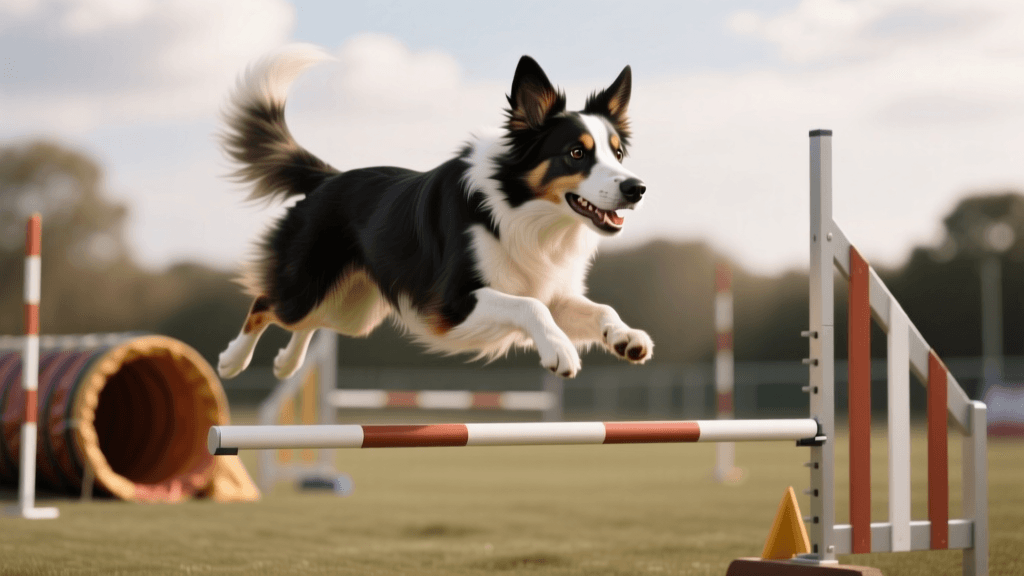
Understanding Canine Drive And Stress In Agility 2026
Learn to differentiate between high drive and stress in dog agility. Master canine body language and arousal management for competition success in 2026.
The Evolution of Canine Sports Psychology in 2026
Dog agility has evolved significantly over the past decade, transitioning from a purely physical test of speed and obedience to a highly nuanced psychological partnership between handler and dog. In 2026, the competitive landscape places an unprecedented emphasis on canine mental health, behavioral welfare, and the science of arousal management. As handlers, we are no longer just training dogs to navigate weave poles and A-frames; we are managing complex neurochemical states. Understanding the fine line between high drive and acute stress is the most critical skill a modern agility competitor can develop. According to the American Kennel Club's agility guidelines, the most successful teams are those that prioritize the dog's emotional baseline over raw speed, ensuring that the dog is not just performing, but genuinely thriving in the competition environment.
The Psychology of Canine Drive vs. Distress
To the untrained eye, a dog exhibiting high drive and a dog experiencing distress can look remarkably similar. Both states involve elevated heart rates, rapid breathing, intense focus, and explosive physical energy. However, the underlying psychological mechanisms are vastly different. Drive is a state of high motivation and positive anticipation, rooted in the brain's reward centers. Distress, on the other hand, is a state of overwhelm, rooted in the amygdala's fight-or-flight response. When a dog is in drive, they are resilient to mistakes and recover quickly from errors. When a dog is in distress, minor environmental changes or handler mistakes can trigger a complete behavioral shutdown or frantic, unsafe obstacle performances.
The Yerkes-Dodson Law in Dog Sports
The Yerkes-Dodson law, a foundational principle in psychology, dictates that performance increases with physiological or mental arousal, but only up to a certain point. When arousal levels become too high, performance decreases, and stress behaviors emerge. In agility, finding your dog's 'optimal arousal zone' is the holy grail. A dog that is under-aroused may appear sluggish, sniff the ground, or ignore handler cues. A dog that is over-aroused may blow past obstacles, slip off contact zones, or exhibit displaced behaviors like spinning or barking at the handler. Recognizing where your dog sits on this bell curve before you even step up to the start line is essential for a safe and successful run.
Decoding Start Line Body Language
The start line is where the psychological battle is won or lost. It is the moment where the dog's internal state is most visible to a handler who knows what to look for. Mastering canine body language allows you to read your dog's emotional state in real-time. The AKC's comprehensive resources on dog body language emphasize that subtle micro-expressions often precede overt behavioral outbursts, giving handlers a crucial window to intervene.
Signs of Healthy, Focused Drive
When your dog is in the optimal arousal zone, their body language will communicate readiness, focus, and physical relaxation despite the mental intensity. Look for the following indicators:
- Soft, Engaged Eyes: The dog maintains eye contact with you or locks onto the first obstacle without a hard, unblinking stare.
- Relaxed Facial Muscles: The mouth may be slightly open in a relaxed 'smile', with ears held in a natural, forward-leaning position.
- Fluid Body Movements: Weight is evenly distributed, and the dog may exhibit a gentle, rhythmic wagging of the tail or a loose, wiggly posture.
- Quiet Anticipation: While some vocalization is normal for certain breeds, a dog in healthy drive can usually maintain a sit or down stay without frantic whining or breaking position.
Signs of Over-Arousal and Hidden Stress
Conversely, when a dog crosses the threshold from drive into distress, their body language becomes tense, fragmented, and chaotic. Stress signals can be subtle, and missing them can lead to a dangerous run. Watch closely for these red flags:
- Whale Eye and Hard Staring: The dog shows the whites of their eyes, or their gaze becomes locked and unblinking, indicating cognitive overload.
- Displacement Behaviors: Sudden, out-of-context scratching, intense sniffing, lip licking, or repetitive yawning.
- Physical Tension: A rigid spine, tucked tail, pinned ears, or trembling muscles, particularly in the hindquarters.
- Frantic Vocalization: High-pitched, continuous screaming or barking that does not cease when the handler attempts to redirect focus.
- Breaking Stays: Inability to hold the start line position, spinning in circles, or lunging at the leash or handler.
Comparison Chart: Drive vs. Stress Behaviors
Because some behaviors can manifest in both states depending on the context, it is vital to look at the entire cluster of signals. The table below breaks down how to interpret common agility behaviors through the lens of canine psychology.
| Behavior Observed | Interpretation: Healthy Drive | Interpretation: Over-Arousal / Stress |
|---|---|---|
| Vocalization | Single, alert barks; quiet whining that stops on cue. | Continuous, high-pitched screaming; frantic barking at handler. |
| Start Line Stay | Relaxed sit/down; muscles loose; waits for release cue. | Trembling; breaking stay repeatedly; anticipating release frantically. |
| Eye Contact | Soft focus; checks in with handler; tracks motion fluidly. | Hard stare; 'whale eye'; completely ignores handler's physical cues. |
| Course Errors | Recovers quickly; resets and looks for the next cue. | Shuts down; sniffs; runs away; or becomes aggressive/frustrated. |
| Post-Run Cool Down | Shakes off; seeks water; relaxes quickly in the crate. | Pants heavily for extended periods; paces; cannot settle in crate. |
Breed-Specific Arousal Profiles
Understanding your dog's breed-specific instincts is crucial for managing arousal in 2026. Different breeds process environmental stimuli in fundamentally different ways, meaning a 'calm' Border Collie might still be operating at a higher baseline arousal than a 'hyper' Golden Retriever.
Herding Breeds (Border Collies, Shetland Sheepdogs)
Herding breeds are highly visually stimulated. In agility, their drive is often triggered by motion. A Border Collie may become over-aroused simply by watching other dogs run the course. For these breeds, handlers must focus on 'arousal down' exercises, such as mat work, chin rests, and deep-pressure therapy, to lower their heart rate before entering the ring.
Working and Protection Breeds (Belgian Malinois, German Shepherds)
These breeds possess high tactile and physical drive. Their stress often manifests as frustration or redirected biting (e.g., nipping the handler's legs when confused). They require clear, predictable boundaries and 'arousal up' games like tug-of-war to build confidence and focus, ensuring their physical energy is channeled into the obstacles rather than the handler.
Terriers and Spaniels
Often overlooked in agility, these breeds have high prey drive and environmental sensitivity. Their stress signals are frequently misread as stubbornness. If a Spaniel begins sniffing the turf mid-run, it is rarely an act of defiance; it is a displacement behavior indicating that the environmental pressure has exceeded their coping threshold.
Modern Arousal Management Techniques
The 2026 approach to dog sports heavily integrates biometric data with traditional behavioral science. While reading body language remains paramount, technology now offers objective insights into a dog's internal state.
Biometric Tracking and HRV
Many top-tier competitors now utilize smart collars equipped with Heart Rate Variability (HRV) monitors. HRV is a proven metric for assessing a dog's autonomic nervous system balance. A high HRV indicates a relaxed, adaptable dog ready for learning and competition. A plummeting HRV indicates sympathetic nervous system dominance (fight-or-flight). By checking your dog's HRV via a smartphone app during the morning warm-up, you can make data-driven decisions about whether to engage in high-energy play or stick to calm, decompression walks before your run.
The 'Decompression' Protocol
Warm-ups in 2026 look vastly different than they did a decade ago. Instead of simply revving the dog up with intense tug games and rapid-fire obedience, handlers now employ structured decompression protocols. This involves 15 minutes of unstructured sniffing on a long line away from the loud, chaotic ringside environment. Sniffing lowers a dog's heart rate and engages the parasympathetic nervous system, effectively 'resetting' their brain and clearing cortisol buildup from the car ride and crating.
Knowing When to Scratch a Run
The ultimate test of a handler's understanding of their dog is the willingness to scratch a run. Ego is the enemy of canine welfare. If you are in the on-deck circle and you observe clustered stress signals—whale eye, frantic panting, and a rigid spine—the most responsible action is to leash your dog, leave the ring, and initiate a cool-down protocol. Pushing a distressed dog through an agility course not only risks physical injury due to poor proprioception and blown contacts, but it also severely damages the dog's trust in you and their long-term confidence in the sport. Organizations like the American Veterinary Society of Animal Behavior (AVSAB) consistently advocate for prioritizing the animal's emotional welfare over competitive placement, a philosophy that has become the gold standard in modern dog sports.
Conclusion
Mastering the nuances of canine drive and stress is an ongoing journey that requires empathy, observation, and a willingness to adapt. As the sport of agility continues to evolve in 2026, the most celebrated handlers will not necessarily be those with the fastest dogs, but those who possess the deepest understanding of their dog's psychological landscape. By learning to read the subtle shifts in body language, respecting breed-specific arousal profiles, and utilizing modern management techniques, you can forge a partnership built on trust, clarity, and mutual joy. Remember, a truly successful agility run is one where the dog crosses the finish line with a wagging tail, eager and confident to do it all over again.
beth-carrasco
All our authors care for dogs every day — read more of their work on the authors page.