Adopting A Senior Dog With OA: 2026 Care And Treatment Guide
Learn how to prepare your home and manage treatment when adopting a senior dog with osteoarthritis in 2026, featuring Librela, orthopedic beds, and cost guides.
The Rewarding Journey of Adopting a Senior Dog with Osteoarthritis
When browsing shelter profiles and rescue rosters in 2026, prospective pet parents frequently encounter senior dogs labeled with 'special needs' or 'osteoarthritis.' Choosing to adopt one of these deserving animals is a beautiful, life-changing decision. However, bringing a dog with pre-existing joint disease into your home requires immediate preparation, a solid understanding of modern veterinary medicine, and a commitment to ongoing management. According to the American Kennel Club, senior dogs often face longer shelter stays, making their adoption a critical act of compassion. Yet, to ensure their golden years are truly golden, new owners must bridge the gap between the 'getting a dog' phase and the immediate implementation of advanced medical and environmental care.
Canine Osteoarthritis (OA), also known as degenerative joint disease, is a progressive condition characterized by the deterioration of joint cartilage, bone changes, and inflammation. It affects an estimated 20% to 25% of all dogs, with the prevalence skyrocketing in senior populations. If you are preparing to welcome an older dog with OA into your family, this comprehensive 2026 guide will walk you through the latest breakthrough treatments, essential home modifications, and the financial realities of managing this condition from day one.
Understanding Canine Osteoarthritis in 2026
Osteoarthritis is not simply 'getting old'; it is a complex, painful disease that alters a dog's biomechanics and quality of life. The American College of Veterinary Surgeons notes that OA can stem from previous injuries, hip dysplasia, cranial cruciate ligament tears, or general wear and tear over a lifetime. In 2026, veterinary science has shifted away from merely masking the pain of OA to actively targeting the inflammatory pathways and nerve growth factors that cause chronic discomfort.
When you adopt a dog with OA, your first step should be scheduling a comprehensive mobility assessment with your veterinarian. This assessment will establish a baseline for your dog's joint health, utilizing advanced diagnostic tools like 3D gait analysis and high-resolution digital radiography to pinpoint exactly which joints are compromised. From there, you can build a multimodal treatment plan tailored to your new companion's specific needs.
Modern Veterinary Treatments for Canine OA
The landscape of canine OA treatment has evolved dramatically. In 2026, veterinarians rely on a multimodal approach, combining pharmaceuticals, biologics, and nutraceuticals to maximize comfort while minimizing side effects. Here are the cornerstone treatments you should discuss with your vet when bringing your newly adopted senior dog home:
Monoclonal Antibodies: The Librela Revolution
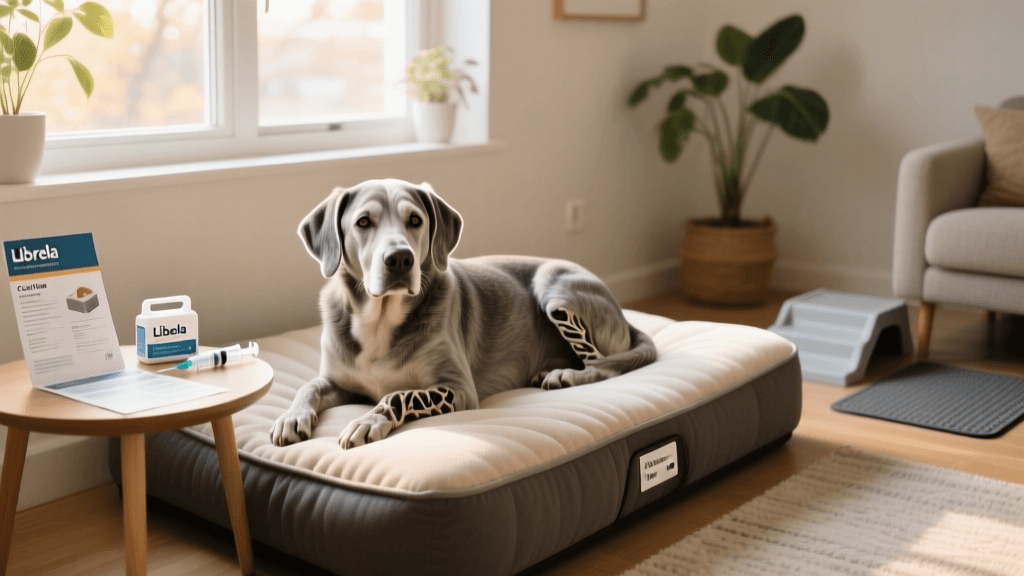
Perhaps the most significant breakthrough in recent years is the widespread adoption of anti-Nerve Growth Factor (anti-NGF) monoclonal antibodies, specifically bedinvetmab (brand name Librela). Administered as a monthly subcutaneous injection by your veterinarian, Librela targets the NGF protein that plays a primary role in pain signaling. Unlike traditional NSAIDs, which are metabolized by the liver and kidneys, Librela is broken down into amino acids, making it exceptionally safe for senior dogs with pre-existing renal or hepatic conditions. Most adopters report a noticeable improvement in their dog's mobility and enthusiasm within the first two to three weeks of the initial injection.
Targeted NSAIDs: Galliprant
For dogs that require oral medication or need an alternative to traditional non-steroidal anti-inflammatory drugs (NSAIDs), grapiprant (Galliprant) remains a top choice in 2026. Galliprant is an EP4 receptor antagonist. Instead of broadly blocking COX enzymes—which can lead to gastrointestinal and kidney issues—Galliprant specifically targets the prostaglandin E2 receptor responsible for pain and inflammation in osteoarthritic joints. This targeted approach provides effective relief with a much higher safety margin for aging organs.
Injectable Joint Protectants
Polysulfated glycosaminoglycan (PSGAG) injections, commonly known as Adequan Canine, are frequently prescribed to help slow the progression of cartilage degradation. Administered as a series of intramuscular injections, Adequan helps stimulate the production of joint lubrication and inhibits the enzymes that break down cartilage. Many holistic and integrative veterinarians in 2026 combine Adequan with regenerative therapies like Platelet-Rich Plasma (PRP) or stem cell therapy for severe cases.
Essential Home Modifications for Your First Week
Medical treatment is only half the battle; the other half is environmental management. The American Veterinary Medical Association emphasizes that modifying your home environment is crucial for reducing the daily strain on an arthritic dog's joints. Before your new dog arrives, implement the following modifications:
Orthopedic Sleeping Surfaces
Standard dog beds offer little support for compromised joints. Invest in a high-quality, human-grade memory foam orthopedic bed. Brands like Big Barker offer beds specifically engineered with a 7-inch foam base that prevents the dog from 'bottoming out' and hitting the hard floor. Ensure the bed has a waterproof liner and a machine-washable cover. Place beds in draft-free areas, and consider adding a heated pet mat underneath during colder months to soothe stiff joints.
Ramps, Stairs, and Elevation
Jumping on and off furniture or navigating steep staircases is disastrous for OA joints. Install pet ramps with high-traction surfaces next to beds and sofas. For vehicles, use a telescoping aluminum ramp to help your dog enter and exit the car without being lifted, which can torque their spine and hips. Additionally, elevate their food and water bowls to shoulder height to prevent them from crouching and placing undue stress on their neck and front shoulders.
Flooring and Traction
Slippery hardwood, tile, or laminate floors are a major hazard for dogs with weak hindquarters. When a dog slips, the micro-traumas to the joint capsule exacerbate inflammation. Cover high-traffic pathways with interlocking foam puzzle mats, non-slip yoga mats, or secured area rugs. You can also apply paw-grip pads or use canine traction boots to give your dog the confidence to walk without fear of splaying their legs.
2026 Cost Breakdown: Managing OA on a Budget
Adopting a dog with a chronic condition requires financial foresight. Below is an estimated breakdown of the costs associated with managing canine OA in 2026. Prices may vary based on your dog's weight, geographic location, and specific veterinary clinic pricing.
| Treatment / Modification | Frequency | Estimated 2026 Cost (Medium/Large Dog) |
|---|---|---|
| Librela (Monthly Injection) | Monthly | $80 - $160 per dose |
| Galliprant (Oral NSAID) | Daily | $90 - $180 per month |
| Adequan Canine (Loading Dose) | Bi-weekly (Initial) | $60 - $100 per injection |
| Orthopedic Memory Foam Bed | One-time | $150 - $350 |
| High-Traction Pet Ramp | One-time | $75 - $150 |
| Joint Supplements (e.g., Dasuquin) | Daily | $40 - $70 per month |
Note: Many pet insurance providers in 2026 will cover OA treatments like Librela and Galliprant, provided the condition was not diagnosed or symptomatic prior to the policy's effective date. If you are adopting from a shelter, inquire if the dog comes with a complimentary trial of pet insurance.
Diet, Weight Management, and Physical Therapy
No medication in the world can fully compensate for the mechanical stress caused by excess body weight. Keeping your senior dog at a lean, optimal body condition score (BCS of 4 out of 9) is arguably the most effective, non-pharmaceutical treatment for osteoarthritis. Work with your vet to calculate the exact caloric needs of your dog, factoring in their reduced activity level. Transitioning to a prescription joint-support diet, which is fortified with high levels of EPA and DHA omega-3 fatty acids, can significantly reduce joint inflammation.
Exercise remains vital, but the type of exercise must change. Replace long, high-impact hikes with multiple short, 10-to-15-minute leash walks on flat, even terrain. If your budget and location permit, canine hydrotherapy (underwater treadmill or swimming) is the gold standard for physical rehabilitation in 2026. The buoyancy of the water supports the dog's weight, allowing them to build muscle mass and maintain cardiovascular health without loading their painful joints.
Conclusion: A Commitment to Comfort
Deciding to adopt a senior dog with osteoarthritis is a profound commitment to providing comfort, dignity, and love to an animal in their twilight years. By leveraging the advanced 2026 treatments like Librela, making thoughtful modifications to your living space, and maintaining a strict weight management protocol, you can drastically alter the trajectory of your dog's disease. The 'getting a dog' phase for a special-needs senior is not just about bringing them home; it is about building a sanctuary where their pain is managed, and their spirit is free to thrive.
jonas-cole
All our authors care for dogs every day — read more of their work on the authors page.