Adopting a Dog With Osteoarthritis: 2026 Treatment Guide
Discover how to adopt and care for a dog with osteoarthritis in 2026. Explore the latest treatments like Librela, home prep tips, and cost guides.
The Reward of Adopting a Senior or Arthritic Dog
Getting a dog is a life-changing decision, and many prospective owners find themselves drawn to the soulful eyes of senior rescue dogs. However, seeing 'osteoarthritis' or 'degenerative joint disease' listed on a shelter dog's medical profile can cause hesitation. The good news is that veterinary medicine has advanced remarkably. As of 2026, canine osteoarthritis treatment is more effective, accessible, and targeted than ever before. Adopting a dog with joint issues no longer means accepting a poor quality of life for your new companion; it simply means preparing your home and budget for a manageable, chronic condition.
When you choose to bring home a dog with osteoarthritis (OA), you are providing a comfortable retirement for an animal that might otherwise be overlooked in the shelter system. With the right combination of modern biologic therapies, environmental modifications, and weight management, arthritic dogs can still enjoy daily sniffaris, gentle play, and deep bonding with their new families. This comprehensive guide will walk you through the latest 2026 treatment protocols, essential home preparations, and the true costs of managing canine OA.
Breakthrough Canine Osteoarthritis Treatments in 2026
The days of relying solely on traditional painkillers that carry heavy gastrointestinal or renal risks are fading. Today's veterinary approach focuses on multimodal pain management, targeting the specific nerve growth factors and inflammatory pathways that cause joint pain. According to the American Animal Hospital Association (AAHA), a multimodal approach is the absolute gold standard for canine pain management in 2026.
Anti-NGF Monoclonal Antibodies (Librela)
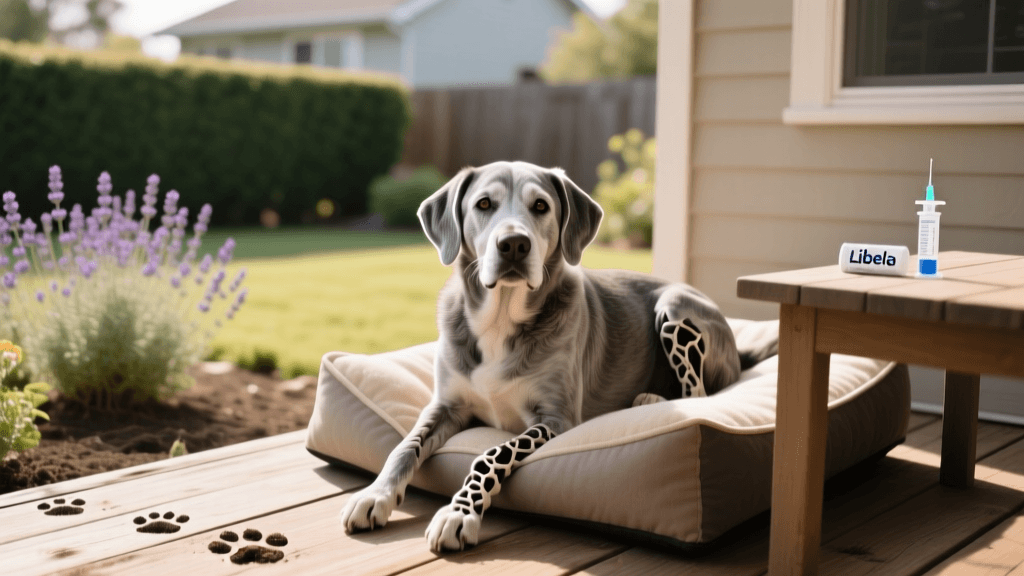
The most significant game-changer in recent years is bedinvetmab, marketed under the brand name Librela by Zoetis. Unlike NSAIDs that process through the liver and kidneys, Librela is a monoclonal antibody that specifically targets Nerve Growth Factor (NGF), a protein that amplifies pain signals in damaged joints. Because it is a protein-based biologic, it is broken down into amino acids and does not burden the liver or kidneys, making it exceptionally safe for senior dogs with underlying organ issues. Administered as a simple monthly subcutaneous injection by your veterinarian, Librela has allowed thousands of previously immobile dogs to walk comfortably again. In 2026, the cost typically ranges from $85 to $130 per month, depending on your dog's weight and regional veterinary pricing.
Next-Generation Targeted NSAIDs
For dogs that need additional breakthrough pain control, or for those who do not fully respond to biologics, next-generation Non-Steroidal Anti-Inflammatory Drugs (NSAIDs) remain a vital tool. Grapiprant (brand name Galliprant) is a piprant drug that specifically targets the EP4 prostaglandin receptor, which is the primary mediator of inflammation and pain in canine OA. Because it is highly targeted, it spares the COX-1 and COX-2 enzymes that protect the stomach lining and maintain kidney blood flow. The VCA Animal Hospitals network frequently recommends this targeted approach for long-term management in aging pets.
Advanced Nutraceuticals and Joint Supplements
While prescription medications handle the heavy lifting for pain, high-quality joint supplements provide the building blocks for cartilage health and joint fluid viscosity. In 2026, veterinary nutritionists heavily favor supplements containing undenatured type II collagen (UC-II), high levels of EPA/DHA omega-3 fatty acids, and ASU (Avocado/Soybean Unsaponifiables). Products like Dasuquin Advanced with EPI or Glyde Mobility chews are excellent daily additions to an arthritic dog's regimen, typically costing between $40 and $70 per month.
2026 Osteoarthritis Treatment Comparison Chart
| Treatment Type | Brand Examples (2026) | Administration | Estimated Monthly Cost | Best For |
|---|---|---|---|---|
| Anti-NGF Biologic | Librela (bedinvetmab) | Monthly Vet Injection | $85 - $130 | Senior dogs, dogs with kidney/liver disease |
| Targeted NSAID | Galliprant (grapiprant) | Daily Oral Tablet | $70 - $110 | Dogs needing targeted inflammation control |
| Traditional NSAID | Carprofen, Meloxicam | Daily Oral/Chew | $30 - $60 | Budget-conscious management (requires bloodwork) |
| Joint Supplement | Dasuquin Advanced, Glyde | Daily Chew/Capsule | $40 - $70 | Cartilage support and mild stiffness |
| Omega-3 Fatty Acids | Nordic Naturals, Welactin | Daily Liquid/Capsule | $25 - $45 | Systemic inflammation reduction |
Preparing Your Home Before Arrival
Getting a dog with OA requires environmental modifications to ensure their safety and comfort from day one. Slippery floors and high jumps are the enemies of arthritic joints. Before bringing your new dog home, invest in the following essentials:
Orthopedic Bedding
Do not skimp on the dog bed. Standard poly-fill beds flatten out and offer zero joint support. Invest in a high-quality, human-grade orthopedic bed made from supportive polyurethane foam. The Big Barker Orthopedic Dog Bed remains a top-tier choice in 2026, featuring a 10-year 'won't flatten' guarantee and a bolstered edge that allows dogs to rest their heads and relieve neck strain. Expect to invest around $250 to $320, but consider it a vital medical expense rather than a luxury.
Ramps and Stairs
If your new dog will be riding in an SUV or sleeping on a low human bed, jumping is strictly prohibited. Purchase a sturdy, folding pet ramp with a high-traction surface. The PetSafe Happy Ride Folding Pet Ramp (approx. $55) is lightweight and supports up to 150 pounds. For indoor furniture access, foam-based pet stairs with a gentle incline are safer than steep, hard plastic steps.
Flooring Solutions
Hardwood, tile, and laminate floors are incredibly dangerous for dogs with compromised traction and weak hindquarters. You do not need to replace your flooring, but you must create 'safe pathways' using interlocking EVA foam puzzle mats or non-slip rubber runner rugs. Place these mats in high-traffic areas, near the dog's food and water bowls, and leading out to the yard to prevent catastrophic slips that could cause a torn CCL (cranial cruciate ligament).
Alternative and Adjunct Therapies
Beyond medication and home prep, the American Kennel Club (AKC) notes that physical rehabilitation is a cornerstone of modern OA management. Once your dog has settled in and their pain is controlled by medication, consider these adjunct therapies:
- Hydrotherapy: Underwater treadmills allow dogs to build muscle mass without bearing full weight on their joints. This is crucial because muscle atrophy is a primary side effect of chronic OA.
- Cold Laser Therapy (Photobiomodulation): Many 2026 veterinary clinics offer Class IV cold laser therapy, which uses specific wavelengths of light to reduce cellular inflammation and promote tissue healing. It is painless and highly relaxing for dogs.
- Acupuncture: Certified veterinary acupuncturists can help stimulate nerve endings and release natural endorphins, providing excellent complementary pain relief.
Your First 30 Days: Building a Care Routine
The first month with an arthritic rescue dog is all about observation, baseline establishment, and routine building. Here is your 30-day action plan:
- Days 1-3 (Decompression): Keep the environment quiet. Limit walks to short, 10-minute leash strolls on soft grass. Let them explore their non-slip pathways and get used to their orthopedic bed. Do not force exercise.
- Days 4-7 (The Baseline Vet Visit): Schedule a comprehensive veterinary exam. Request a full senior blood panel to check kidney and liver function before starting any NSAIDs. Discuss starting Librela or a targeted pain management protocol. Weigh your dog to establish a baseline.
- Days 8-14 (Diet and Weight Management): Excess weight is the single worst enemy of canine osteoarthritis. Work with your vet to calculate your dog's ideal resting energy requirement (RER). Switch to a joint-support or senior-specific weight management kibble, and use a digital food scale to measure meals precisely.
- Days 15-30 (Controlled Conditioning): Once pain medications have taken full effect, begin short, frequent, and controlled walks. Avoid 'weekend warrior' syndrome, where a dog overexerts themselves on Saturday and cannot stand up on Sunday. Consistency is far more important than distance.
Conclusion
Getting a dog with osteoarthritis is a deeply rewarding experience that requires a shift in perspective. You are not adopting a 'broken' dog; you are adopting a resilient companion who simply needs a little extra help navigating the world. With the miraculous advancements in 2026 veterinary medicine, particularly the advent of anti-NGF biologics, and a thoughtfully prepared home environment, your new dog can look forward to years of comfortable, pain-free living. By committing to a multimodal treatment plan and prioritizing joint health from day one, you will give your senior rescue the golden years they truly deserve.
beth-carrasco
All our authors care for dogs every day — read more of their work on the authors page.