Getting a Dog During a Major Move: 2026 Relocation Guide
Planning a move and adopting a dog? Discover our 2026 guide on timing, pet-friendly housing, travel gear, and helping your new dog decompress.
The Reality of Adopting a Dog During a 2026 Relocation
Moving to a new home is universally ranked as one of life’s most stressful events. Now, imagine adding a new four-legged family member to the mix. Getting a dog during a major life transition—such as a cross-country move, a shift to a new city for work, or transitioning from a house to an apartment—requires meticulous planning, emotional bandwidth, and the right gear. In 2026, the landscape of pet-friendly housing and travel technology has evolved, making it more feasible than ever to relocate with a new dog, provided you approach the transition strategically.
According to recent pet demographic studies, millions of households acquire a new pet during periods of major life change. However, the dual stress of unpacking boxes and potty training a rescue dog in an unfamiliar environment can lead to owner burnout and, unfortunately, pet surrender. This comprehensive guide will walk you through the exact steps, timelines, and 2026-specific products you need to successfully adopt and relocate with your new dog.
Timing Your Adoption: Before, During, or After the Move?
The most critical decision you will make is when to bring your new dog home. Timing dictates the level of stress both you and the dog will experience.
Scenario A: Adopting 60+ Days Before the Move (Recommended)
If you have at least two months before your relocation date, adopting early is highly advantageous. This window allows the dog to go through the initial “3-3-3 decompression rule” (3 days to decompress, 3 weeks to learn your routine, 3 months to feel at home) in a stable environment. By the time moving day arrives, your dog views you as a secure attachment figure, making the physical relocation much less terrifying for them.
Scenario B: Adopting During the Move (High Risk)
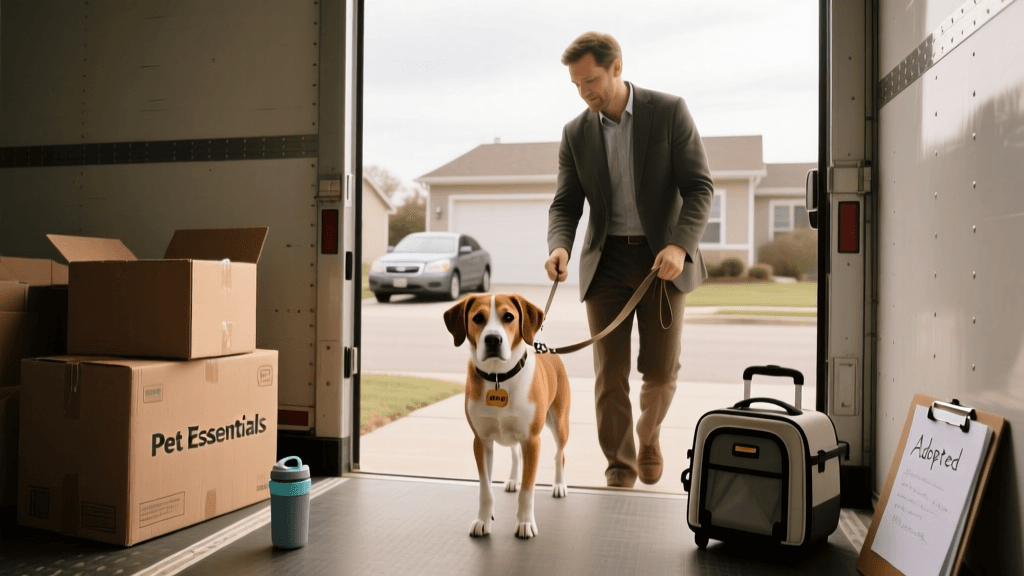
Adopting a dog in the exact week of your move is strongly discouraged. Moving days involve open doors, heavy furniture, loud noises, and chaotic foot traffic. A newly adopted dog, already experiencing the trauma of leaving a shelter, is at a high risk of bolting out an open door or developing severe anxiety. If your timeline forces this overlap, you must arrange for the dog to stay with a professional pet sitter or a trusted friend in a quiet, secure environment for at least the first 72 hours of the move.
Scenario C: Adopting 30+ Days After the Move (Safest)
Waiting until your new home is fully unpacked, cleaned, and secured is the safest route for the dog. You can establish your own routine, locate the nearest emergency vet, and identify local walking routes before introducing a new pet to the space.
Navigating the 2026 Pet-Friendly Housing Market
The rental and real estate markets in 2026 have become increasingly accommodating to pets, but hidden hurdles remain. When searching for a new home, utilize advanced filters on platforms like Zillow and Apartments.com that specifically screen for “True Pet-Friendly” properties, rather than those that merely “allow” pets with exorbitant fees.
- Pet Rent vs. Pet Deposits: In 2026, the national average for pet rent hovers between $35 and $55 per month per pet. Many states have recently passed legislation capping non-refundable pet deposits, but you must verify local tenant laws in your destination state.
- Breed and Weight Restrictions: Despite modern advocacy, many corporate property management firms still enforce outdated breed-specific legislation (BSL) and weight limits (often capping at 40 lbs). Always request the official “Pet Addendum” in writing before signing a lease.
- Private Landlords: Renting from private owners often yields more flexibility. Offering a “Pet Resume” that includes your dog’s vaccination records, training certificates, and a letter of recommendation from your previous landlord or shelter can sway a hesitant owner.
Essential Relocation Gear for Your New Dog
Traveling with a newly adopted dog requires gear that prioritizes safety and anxiety reduction. The market in 2026 offers advanced GPS tracking and crash-tested containment systems that are essential for interstate moves.
| Gear Category | Top 2026 Recommendation | Key Features & Price Estimate |
|---|---|---|
| GPS Smart Collar | Fi Series 4 GPS Collar | 30-day battery, cellular + Bluetooth tracking, escape alerts. ($149 + sub) |
| Travel Crate (Auto) | Gunner G1 Intermediate Kennel | 5-Star crash-tested, double-walled rotomolded construction, lifetime warranty. ($599+) |
| Anxiety Aid | Adaptil Transport Spray | Synthetic dog-appeasing pheromones to reduce travel stress and panting. ($22) |
| Spill-Proof Bowl | Ruff Wear Quencher Cinch Top | Packable, waterproof, secure carabiner clip for rest stops. ($20) |
For deep dives into safe transit, always consult the American Veterinary Medical Association (AVMA) guidelines on traveling with pets, which emphasize the necessity of secured, crash-tested crates rather than relying on standard seatbelt harnesses for long highway drives.
The Moving Day Survival Checklist
Whether you are hiring professional movers or enlisting friends, moving day is chaotic. Follow this strict protocol to keep your new dog safe:
- The “Safe Room” Protocol: Designate one room (preferably a bathroom or small bedroom) as the dog’s sanctuary. Place their crate, water, and a familiar-smelling blanket inside. Put a bright sign on the door that reads: “DOG INSIDE - DO NOT OPEN.”
- Pheromone Prep: Spray the crate and the safe room with Adaptil pheromone spray 30 minutes before bringing the dog inside.
- Microchip Verification: Before the dog enters the vehicle for the final trip to the new house, ensure their microchip is registered to your new address and current cell phone number. If the dog escapes during unloading, this is your only lifeline.
- Travel Kit: Pack a dedicated “Dog Go-Bag” containing 3 days of their current food, a collapsible bowl, poop bags, a long-line leash (15ft), and their favorite chew toy. Do not pack this in the moving truck; keep it in your personal vehicle.
The 3-3-3 Decompression Rule in a New Environment
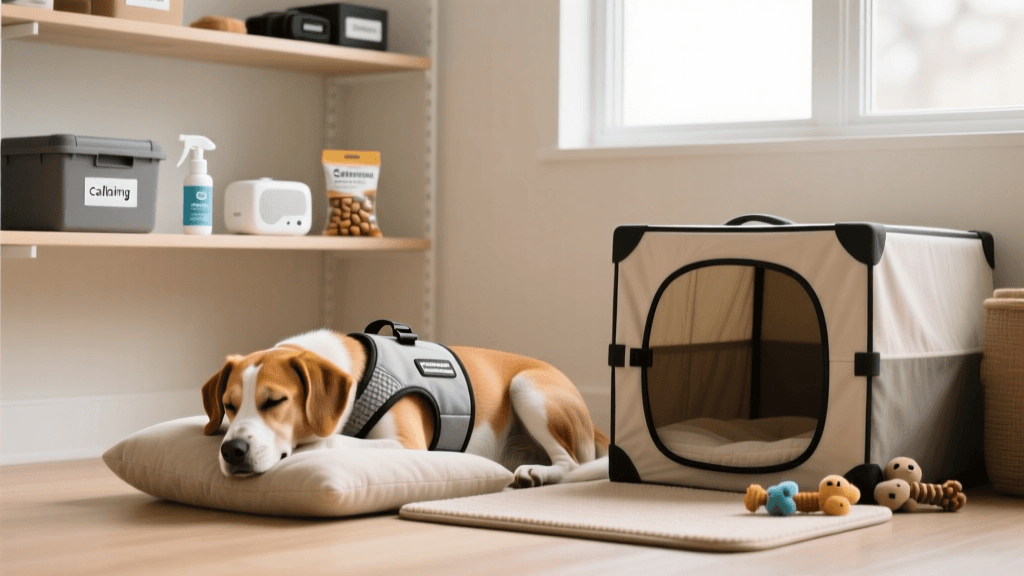
When a rescue dog enters a new home, they go through a recognized psychological timeline known as the 3-3-3 rule. When you combine this with a geographic relocation, patience is your most valuable tool.
First 3 Days: Overwhelm and Shutdown
Your dog may refuse to eat, hide under furniture, or sleep excessively. This is normal. Do not force them to explore the neighborhood or invite friends over to “meet the new dog.” Keep their world incredibly small: just you, their crate, and a designated potty spot in the yard or on a leash.
First 3 Weeks: Testing Boundaries and Learning Routines
Your dog will start to show their true personality. You may see the emergence of behavioral quirks, such as resource guarding or separation anxiety. This is the time to establish firm, positive-reinforcement-based routines. Enroll in a local 2026 force-free obedience class to build confidence and bond in your new city.
First 3 Months: True Attachment
By month three, the dog should understand that your new house is their permanent home. They will anticipate your work schedule, know the route to the local park, and exhibit secure attachment behaviors. If behavioral issues persist past this window, consult a certified veterinary behaviorist.
Finalizing the Transition: Vets, Microchips, and Licensing
Administrative tasks are easily overlooked during a move, but they are critical for a new pet. Within your first 48 hours at your new address, complete the following:
- Update Microchip Registries: Log into HomeAgain, 24PetWatch, or the specific registry tied to your dog’s chip. Update your physical address and emergency contacts. The ASPCA’s guide on moving with pets heavily emphasizes this step as the primary defense against lost pets in unfamiliar neighborhoods.
- Local Licensing: Most municipalities require dogs to be licensed within 30 days of establishing residency. Fines in major metropolitan areas in 2026 can exceed $250 for unlicensed pets. Check your county animal control website for digital registration.
- Establish a Veterinary Baseline: Even if your dog is perfectly healthy, schedule a “Meet and Greet” wellness exam with a local veterinarian. This establishes a baseline weight, records their microchip number in the local clinic’s system, and gives you a direct line to a local emergency vet should an issue arise.
Pro-Tip for 2026 Movers: If you are moving across state lines, ensure you have a physical or digital copy of your dog’s Rabies certificate and a recent Certificate of Veterinary Inspection (CVI) issued within 10 days of travel. Many state borders and airlines strictly enforce these health documentation requirements.
Conclusion
Getting a dog during a major move is undoubtedly a challenge, but it is also a profoundly rewarding experience. By respecting the dog’s need for decompression, investing in modern safety gear, and carefully navigating the pet-friendly housing market, you can provide a stable, loving foundation for your new companion. Plan ahead, lean on the 3-3-3 rule, and look forward to exploring your new city with your best friend by your side.
aaron-whyte
All our authors care for dogs every day — read more of their work on the authors page.