Adopting Reactive Rescue Dogs: 2026 Prep & Management Guide
Learn how to safely adopt, assess, and manage a reactive rescue dog in 2026. Discover essential decompression setups, gear, and cost breakdowns.
The Rise of the Imperfect Adoption in 2026
As we navigate the animal welfare landscape in 2026, a beautiful shift is occurring: more prospective owners are intentionally seeking out 'imperfect' dogs. Shelters are increasingly transparent about canine behavioral challenges, and adopters are stepping up to provide homes for dogs labeled as 'reactive' or 'highly anxious.' However, bringing a reactive rescue dog into your home requires far more preparation than adopting a confident, easy-going puppy. It demands a strategic environment, specialized gear, and a deep understanding of canine body language.
If you are preparing to adopt a dog with a history of leash reactivity, resource guarding, or severe shelter-induced anxiety, this comprehensive guide will walk you through the essential preparation, assessment, and management strategies required for a successful transition.
Understanding Reactivity vs. Aggression
Before evaluating shelter dogs, it is critical to distinguish between reactivity and true aggression. According to the American Kennel Club, reactivity is typically an overreaction to specific stimuli—such as other dogs, strangers, or loud noises—driven by fear, frustration, or over-arousal. A reactive dog is often attempting to increase the distance between themselves and the perceived threat.
Aggression, conversely, involves the intent to cause harm or assert control, often accompanied by a higher bite threshold and fewer warning signals. Most dogs labeled as 'aggressive' in high-stress shelter environments are actually displaying fear-based reactivity. The shelter environment is notoriously overstimulating; concrete walls, echoing barks, and lack of sleep can push even a moderately anxious dog into a reactive state. Recognizing this difference is the first step in advocating for a misunderstood shelter dog.
Assessing Shelter Dogs: Reading Stress Signals
When visiting a shelter, you cannot rely solely on the kennel behavior of the dog. The Fear Free Shelter Program emphasizes that chronic stress masks a dog's true personality. To accurately assess an anxious or reactive dog, you must look for subtle, micro-behavioral stress signals that indicate a dog is overwhelmed but trying to cope.
- Whale Eye: Showing the whites of the eyes while keeping the head turned away from the stressor.
- Lip Licking & Yawning: Repeated, out-of-context yawning or quick tongue flicks when approached by strangers.
- Freezing: A complete cessation of movement, often misinterpreted by untrained volunteers as a dog being 'calm' or 'well-behaved.'
- Displacement Behaviors: Sudden, intense scratching or sniffing the ground when asked to perform a task or when a new dog walks past.
If you observe these signs, the dog is not necessarily 'bad'; they are communicating that their threshold for stress has been met. This means your home preparation must prioritize nervous system regulation above basic obedience training.
Building the Decompression Zone: 2026 Home Setup
A reactive dog cannot learn new coping skills if their nervous system is trapped in a 'fight or flight' state. Before bringing your new dog home, you must establish a dedicated Decompression Zone. This is a low-stimulus sanctuary where the dog can process the massive environmental shift without demands.
Physical Boundaries and Soundproofing
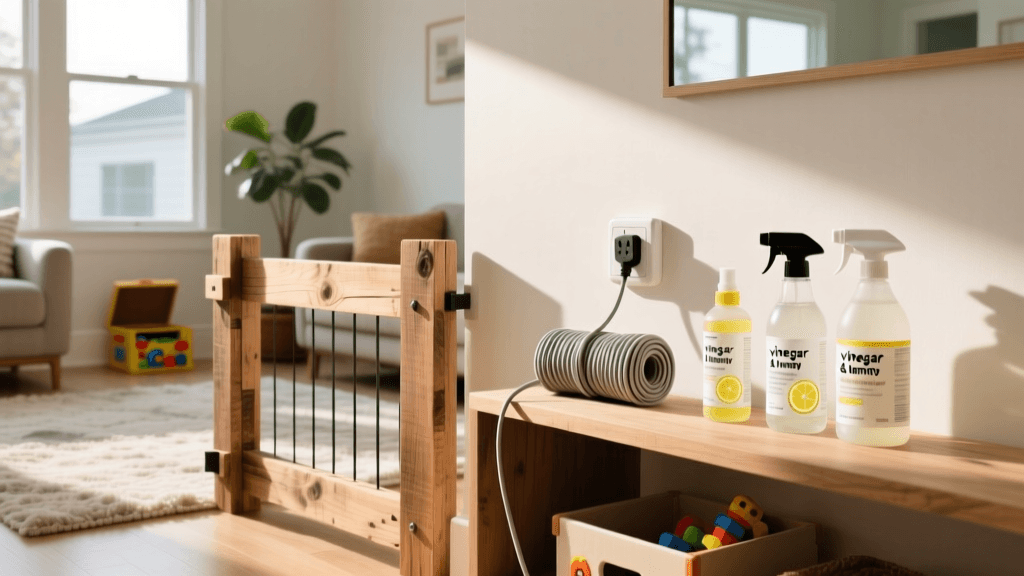
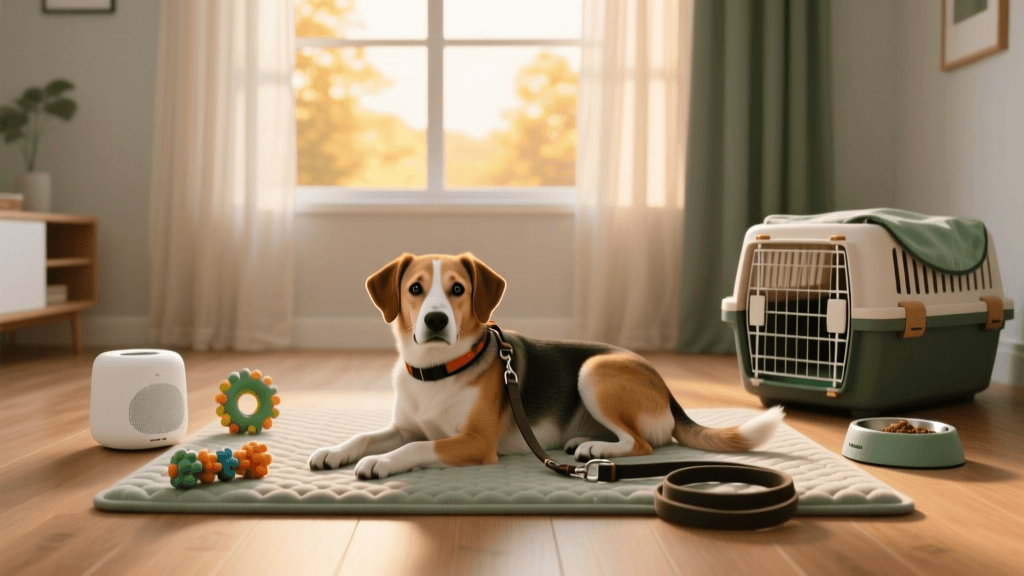
Do not give a newly adopted reactive dog free roam of the house. Use hardware-mounted baby gates to restrict access to a single, quiet room or a large, comfortable exercise pen (x-pen) setup. In 2026, acoustic management is easier than ever. Utilize a smart white noise machine, such as the Hatch Restore 3, to mask outdoor triggers like delivery trucks, neighborhood dogs, or hallway foot traffic. Keep the room dimly lit; blackout curtains can prevent visual triggering from passing cars or pedestrians.
Olfactory and Pheromonal Support
Scent is deeply tied to a dog's emotional center. Plug in an Adaptil Optimum diffuser in the decompression room at least 48 hours before the dog arrives. This synthetic pheromone mimics the nursing mother's calming signals. Additionally, introduce 'sniffari' elements: scatter feeding on a high-pile snuffle mat or using lick mats smeared with frozen bone broth to encourage natural, soothing foraging behaviors.
Essential 2026 Gear for Reactive Dogs
Managing a reactive dog on walks requires equipment that provides control without causing pain or increasing fear. Aversive tools like prong collars or e-collars will only suppress the outward symptoms of reactivity while increasing internal anxiety, often leading to a 'fallout' where the dog bites without warning.
- Escape-Proof Harness: The Ruffwear Web Master Multi-Use Harness remains a top choice in 2026. Its dual-strap belly design prevents anxious dogs from slipping out when they panic, and the top handle offers secure support for guiding dogs over obstacles or into vehicles.
- Dual-Clip Leash: A 6-foot biothane leash with clips at both the chest and the back of the harness provides steering control while preventing the tension that triggers leash reactivity.
- High-Value Treat Pouch: A magnetic-closure training pouch (like the Dog Treat Training Pouch by Tractive) ensures instant access to high-value rewards (boiled chicken, freeze-dried liver) for counter-conditioning exercises.
- Calming Caps: For dogs with severe visual triggers, a mesh calming cap that gently restricts peripheral vision can lower arousal levels during necessary transit from the shelter to your home.
2026 Cost Breakdown for Reactive Dog Ownership
Adopting a dog with behavioral challenges requires a financial commitment that extends beyond the initial adoption fee. Below is a realistic breakdown of the estimated costs for setting up and managing a reactive dog in 2026.
| Item / Service | 2026 Estimated Cost | Frequency / Notes |
|---|---|---|
| Initial Veterinary & Behavioral Intake | $250 - $450 | One-time; rules out pain-induced reactivity |
| Ruffwear Web Master Harness | $100 - $120 | One-time; essential for secure handling |
| Adaptil Optimum Diffuser Starter Kit | $65 - $85 | Initial purchase; refills every 30 days ($35) |
| Hatch Restore 3 Smart White Noise | $130 - $150 | One-time; crucial for acoustic masking |
| Private Certified Behaviorist Sessions | $180 - $250 / hr | Weekly for first 2 months; tailored BAT/LAT protocols |
| Force-Free Reactive Rover Group Class | $250 - $350 | 6-week course; starts after private foundation work |
Note: Many 2026 pet insurance policies now offer optional behavioral therapy riders. Check your provider's updated policy documents to see if consultations with a certified behaviorist are partially reimbursable.
The Expanded 3-3-3-6 Rule for Anxious Adoptions
The traditional 3-3-3 rule of dog adoption is a great baseline, but for reactive and highly anxious dogs, the timeline must be extended to account for neurological decompression and threshold building.
The First 3 Days (Overwhelm): The dog may refuse to eat, hide, or display intense pacing. Keep the environment incredibly quiet. No walks, no visitors, no demands. Just potty breaks in a secure, private yard or on a long line in an empty area.
The First 3 Weeks (Settling): The dog's true personality begins to surface, which often means reactivity triggers become apparent. Establish a predictable daily routine. Begin low-level counter-conditioning inside the home.
The First 3 Months (Bonding): Trust is established. The dog learns that you are a safe advocate who will not force them into terrifying situations. You can begin structured outdoor desensitization.
The 6-Month Milestone (Neurological Rewiring): For a reactive dog, true behavioral modification takes time. At six months, consistent application of Behavior Adjustment Training (BAT) and 'Look At That' (LAT) games will show measurable decreases in baseline cortisol levels and increased recovery times after a trigger encounter.
Finding the Right Professional Support
You should not attempt to rehabilitate a highly reactive dog alone. Seek out a professional who adheres strictly to LIMA (Least Intrusive, Minimally Aversive) principles. The International Association of Animal Behavior Consultants (IAABC) maintains a directory of certified professionals who specialize in fear and reactivity. Avoid trainers who guarantee 'quick fixes' or advocate for dominance-based theories, as these methods will severely damage the fragile trust you are building with your rescue dog.
Final Thoughts on the Reactive Adoption Journey
Adopting a reactive rescue dog in 2026 is not for the faint of heart, but it is one of the most rewarding experiences a dog lover can undertake. By preparing your home with intentional decompression zones, investing in force-free management gear, and committing to a long-term behavioral modification plan, you are offering a lifeline to a dog who has been misunderstood by the world. Patience, empathy, and scientific-based training will transform your anxious rescue into a resilient, deeply bonded companion.
robin-maitland
All our authors care for dogs every day — read more of their work on the authors page.