Adopting Reactive Rescues: 2026 Decompression Gear & Protocols
Discover essential 2026 decompression gear and protocols for adopting a reactive rescue dog. Ensure a calm, safe transition into your new home.
The Reality of Adopting a Reactive Rescue in 2026
Bringing a rescue dog into your home is a profoundly rewarding experience, but adopting a dog with a history of reactivity or severe anxiety requires a specialized approach. As of 2026, our understanding of canine neurobiology and stress responses has evolved significantly. We now know that the transition from a high-stress shelter environment to a quiet home can trigger a massive cortisol spike, leading to reactive behaviors such as lunging, resource guarding, or extreme withdrawal. According to the ASPCA's guide on common dog behavior issues, many behavioral problems observed in the first few weeks of adoption are actually symptoms of chronic stress rather than permanent personality traits.
To set your new companion up for success, you must prioritize a structured decompression period. This guide covers the exact gear, environmental setups, and step-by-step protocols recommended by veterinary behaviorists in 2026 to help your reactive rescue transition safely.
Understanding Canine Cortisol and the Decompression Phase
When a dog experiences chronic stress, their baseline cortisol levels remain elevated. It can take anywhere from two to six weeks for these hormones to return to normal after a major environmental change. During this window, a dog's "fight or flight" threshold is drastically lowered. A reactive dog in this state may snap at a family member, lunge at a passing car, or refuse to eat. The Fear Free Pets organization emphasizes that reducing fear, anxiety, and stress (FAS) must be the primary goal during the first month of ownership, superseding all formal obedience training.
Essential 2026 Decompression Gear for Anxious Dogs
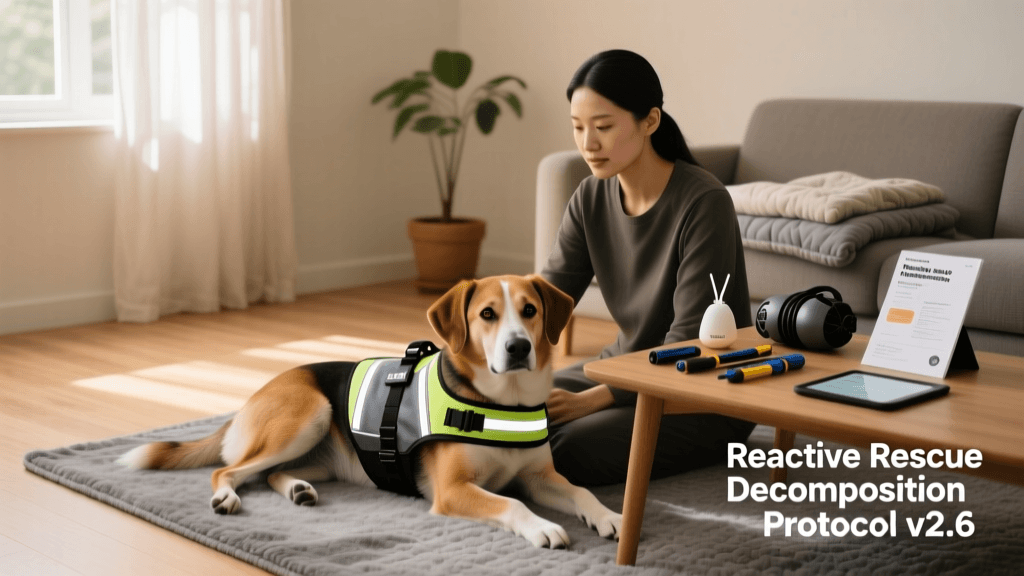
Equipping your home with the right tools before your dog arrives is critical. Here is the essential 2026 gear list for managing a reactive or highly anxious rescue:
- Ruffwear Front Range Harness (Approx. $40): For reactive dogs, traditional collars can exacerbate tracheal damage and trigger a panic response if they lunge. The Front Range offers dual leash attachment points (chest and back), giving you maximum control without choking the dog during a reactive episode.
- Fi Series 3 GPS Smart Collar (Approx. $129 + Subscription): Flight-risk rescues are a major concern. While newer models hit the market annually, the Fi Series 3 remains the 2026 gold standard for battery life and reliable geofencing. If your fearful dog slips out the door, you will track them instantly.
- Adaptil Calm Home Diffuser (Approx. $25): This synthetic pheromone diffuser mimics the comforting pheromones produced by a nursing mother dog. Plug it into the wall in your dog's designated "safe room" 24 hours before they arrive to pre-load the environment with calming chemical signals.
- LickiMat Soother & Snuffle Mats (Approx. $12 - $18 each): Licking and foraging are proven to release endorphins in a dog's brain. Smearing dog-safe peanut butter or plain yogurt on a LickiMat and freezing it provides a long-lasting, anxiety-reducing enrichment activity that requires zero social interaction.
Designing the Ultimate "Safe Room" for Flight-Risk Dogs
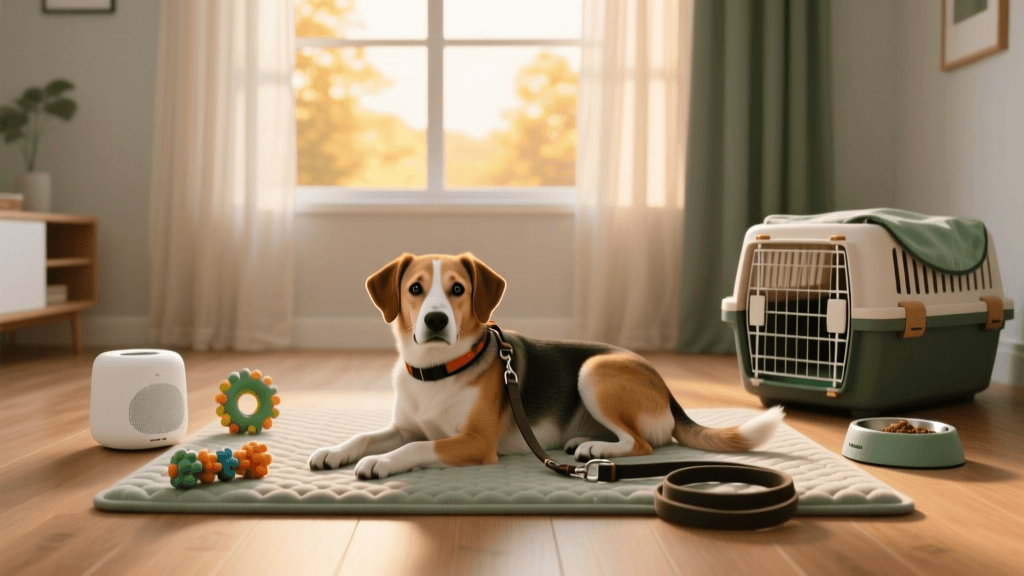
Do not give a newly adopted reactive dog full run of the house. Overstimulation will trigger reactivity. Instead, designate a "Safe Room" (a spare bedroom, a large bathroom, or a gated kitchen area).
Room Specifications and Setup
- Dimensions: Aim for a minimum of 10x10 feet. It must be large enough for the dog to stretch out fully and pace slightly without feeling trapped.
- Visual Barriers: If the room has windows, apply frosted window film or close blackout curtains. Visual triggers (squirrels, delivery trucks, pedestrians) are primary catalysts for barrier frustration and reactivity.
- Acoustic Dampening: Use a white noise machine or a smart speaker playing continuous brown noise (which has deeper frequencies than white noise and better masks outdoor traffic and neighborhood dogs).
- The "Bunker" Bed: Provide an enclosed, cave-style bed or a plastic airline crate draped heavily with a moving blanket. Reactive dogs need to feel that their back is protected while they sleep.
Comparison Chart: 2026 Calming Aids for Reactive Dogs
Not all calming aids work for every dog. Below is a comparison of the most effective, vet-approved calming interventions available in 2026 to help you choose the right combination for your rescue.
| Calming Aid Type | Best Used For | Onset Time | 2026 Avg. Cost |
|---|---|---|---|
| Synthetic Pheromones (e.g., Adaptil) | Baseline environmental anxiety, settling into a new home | 24-48 Hours | $20 - $30 |
| Nutritional Supplements (e.g., Zylkene, Solliquin) | Generalized anxiety, mild noise phobias, travel stress | 3-7 Days | $25 - $45 |
| Compression Wraps (e.g., Thundershirt) | Acute stress events (thunderstorms, fireworks, vet visits) | Immediate | $40 - $50 |
| Prescription Anxiolytics (e.g., Trazodone, Gabapentin) | Severe panic, extreme reactivity, sleep disruption | 1-2 Hours | $15 - $30 (Rx) |
Note: Always consult with a licensed veterinarian before introducing new supplements or medications, especially if your rescue's medical history is incomplete.
The First 72 Hours: Step-by-Step Decompression Protocol
The American Kennel Club's resources on anxiety highlight the importance of routine and low expectations during the initial transition. Follow this strict 72-hour protocol to prevent overwhelming your new dog.
Day 1: Arrival and Isolation
When you bring the dog home, walk them directly to their Safe Room on a leash. Keep the energy calm and quiet—no excited greetings, no neighborhood tours, and absolutely no visitors. Remove their leash, offer a bowl of water and a LickiMat, and leave the room. Let them decompress. Only enter the room to quietly drop off food and take them out on a leash to a designated, low-traffic potty spot in your yard.
Day 2: Observation and Scent Swapping
Continue the strict routine. Do not force affection. If the dog approaches you, offer a soft, averted gaze and toss high-value treats (like boiled chicken or freeze-dried liver) on the floor near them. This builds positive associations without the pressure of direct physical contact. Swap out their bedding with a t-shirt you have worn so they can acclimate to your scent passively.
Day 3: Expanding the Perimeter
If the dog appears relaxed (soft eyes, relaxed body posture, normal eating and elimination), you can open the Safe Room door and allow them to explore an adjacent, dog-proofed room at their own pace. Keep your household noise to a minimum. If they show signs of pacing, panting, or stiffening, gently guide them back to the Safe Room. They are not ready for more space yet.
Long-Term Management and Professional Support
Decompression is just the beginning. Once your dog's cortisol levels have normalized (usually around week three or four), you can begin assessing their true personality and triggers. For reactive dogs, this is the time to hire a certified professional dog trainer (CPDT-KA) or a veterinary behaviorist who utilizes force-free, fear-free methodologies. Punishment-based tools like prong collars or e-collars will only suppress warning signs and increase underlying anxiety, leading to unpredictable bites.
Adopting a reactive rescue in 2026 requires patience, the right environmental setup, and a deep commitment to emotional rehabilitation. By respecting their need for space and utilizing modern decompression gear, you will lay the foundation for a deeply bonded, trusting, and ultimately peaceful relationship with your new best friend.
robin-maitland
All our authors care for dogs every day — read more of their work on the authors page.